
Navigating the complex landscape of automotive insurance can feel like deciphering a foreign language. For residents and visitors alike who plan to drive in the Sunshine State, understanding Florida’s mandatory insurance requirements is not just a matter of compliance, but also of crucial financial protection. This guide delves into the minimum coverage mandated by the state, the implications of these requirements, and why opting for more than the bare minimum is often a wise decision for anyone planning a trip that involves driving through destinations like Orlando or exploring the beaches of Miami.
Understanding Florida’s No-Fault Insurance System
Florida operates under a “no-fault” insurance system. This means that regardless of who is at fault in an accident, your own insurance policy will cover a portion of your medical expenses and lost wages. This system is designed to expedite the payment of claims for minor injuries and reduce the number of lawsuits. However, it’s important to understand that “no-fault” does not mean “no responsibility” or “no need for adequate coverage.”
Personal Injury Protection (PIP)
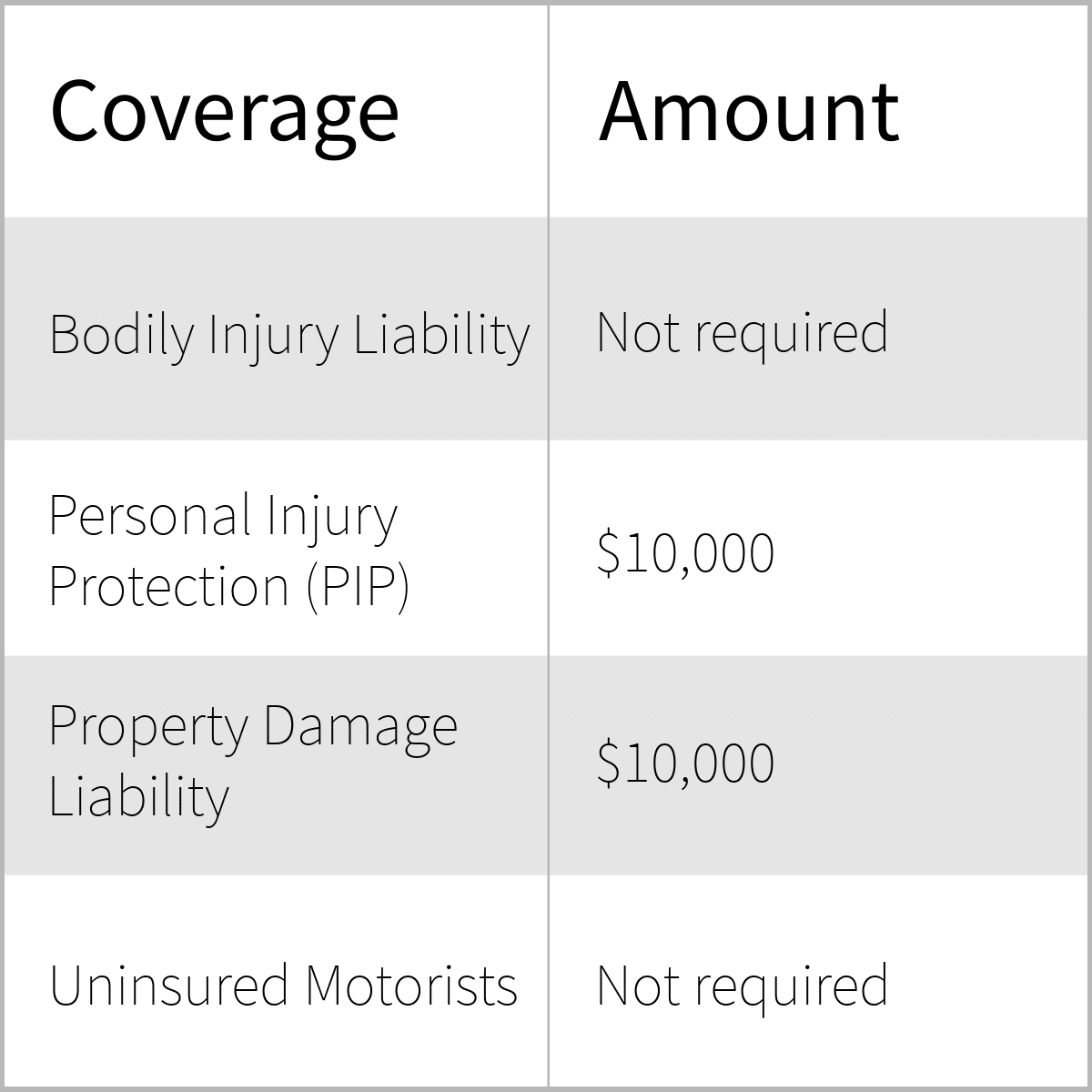
The cornerstone of Florida’s no-fault system is Personal Injury Protection (PIP). Every Florida driver must carry a minimum of $10,000 in PIP coverage. This coverage is designed to pay for 80% of your medical expenses and 60% of your lost wages, regardless of who caused the accident. It also extends to cover death benefits if the accident results in fatalities.
However, there are important stipulations to receiving full PIP benefits. To qualify for medical benefits beyond $10,000, you must have been diagnosed with an “emergency medical condition” (EMC) within 14 days of the accident. If your injuries are not deemed an EMC, your PIP coverage will be limited to $2,500 for medical treatment. This emphasizes the critical need to seek immediate medical attention after any collision, even if you feel unharmed.
Property Damage Liability (PDL)
While PIP addresses injuries to yourself and your passengers, the second mandatory component of Florida’s minimum coverage is Property Damage Liability (PDL). Drivers are required to carry a minimum of $10,000 in PDL coverage. This coverage pays for damage to other people’s property – primarily their vehicles – that you cause in an accident.
It is vital to recognize that $10,000 in PDL coverage can be insufficient in many accident scenarios. Modern vehicle repairs, especially for newer or more advanced models, can quickly exceed this limit. A fender-bender involving two sedans might fall within this range, but an accident involving a larger vehicle, multiple cars, or property damage to structures such as fences or buildings could easily surpass the $10,000 threshold, leaving you personally liable for the difference.
Bodily Injury Liability (BIL) – A Crucial Consideration
While Florida’s minimum requirements focus on PIP and PDL, it’s important to note that Bodily Injury Liability (BIL) is not mandated as part of the state’s minimum coverage. This is a critical distinction that often causes confusion and can lead to significant financial risk.
The Absence of Mandatory BIL
The absence of mandatory BIL coverage means that if you are at fault in an accident that causes injury or death to another person, your insurance will not cover their medical bills or lost wages. This is a stark contrast to the PIP system, which covers your own expenses. If you cause an accident and the other party sustains injuries, they can sue you directly for their damages, which can include medical expenses, lost income, pain and suffering, and more. Without BIL, you would be personally responsible for covering these costs, which could potentially lead to devastating financial consequences, including the loss of your home or savings.
Why BIL is Essential for Peace of Mind
Given the potential for severe injuries in car accidents, carrying adequate BIL is not just advisable; it’s practically essential for responsible driving. Many financial advisors and insurance professionals recommend a minimum of $50,000 per person / $100,000 per accident in BIL coverage. For those who drive frequently, live in densely populated areas, or own significant assets, even higher levels of coverage may be prudent. This protects not only your finances but also provides a buffer against the emotional and legal stress that can accompany a serious accident.
Understanding Coverage Limits and Deductibles
Beyond the type of coverage, it’s important to understand the concepts of coverage limits and deductibles.
Coverage Limits
Coverage limits represent the maximum amount your insurance policy will pay out for a covered claim. For example, a $10,000 PDL limit means your insurer will pay up to $10,000 for damage you cause to another person’s property. Any costs exceeding this limit are your responsibility. When considering minimum coverage, it’s crucial to remember that these are the lowest amounts allowed by law, not necessarily the amounts that will adequately protect you.

Deductibles
A deductible is the amount of money you agree to pay out-of-pocket before your insurance coverage kicks in. For example, if you have a $500 deductible on your comprehensive or collision coverage (which are optional but recommended), you will pay the first $500 of any repair costs before your insurance pays the remainder. While deductibles don’t apply to the mandatory PIP and PDL minimums, they are a significant factor in the overall cost of your insurance policy, particularly for optional coverages. Choosing a higher deductible can lower your premium, but it means you’ll pay more if you need to file a claim.
Beyond the Minimum: Optional Coverages for Comprehensive Protection
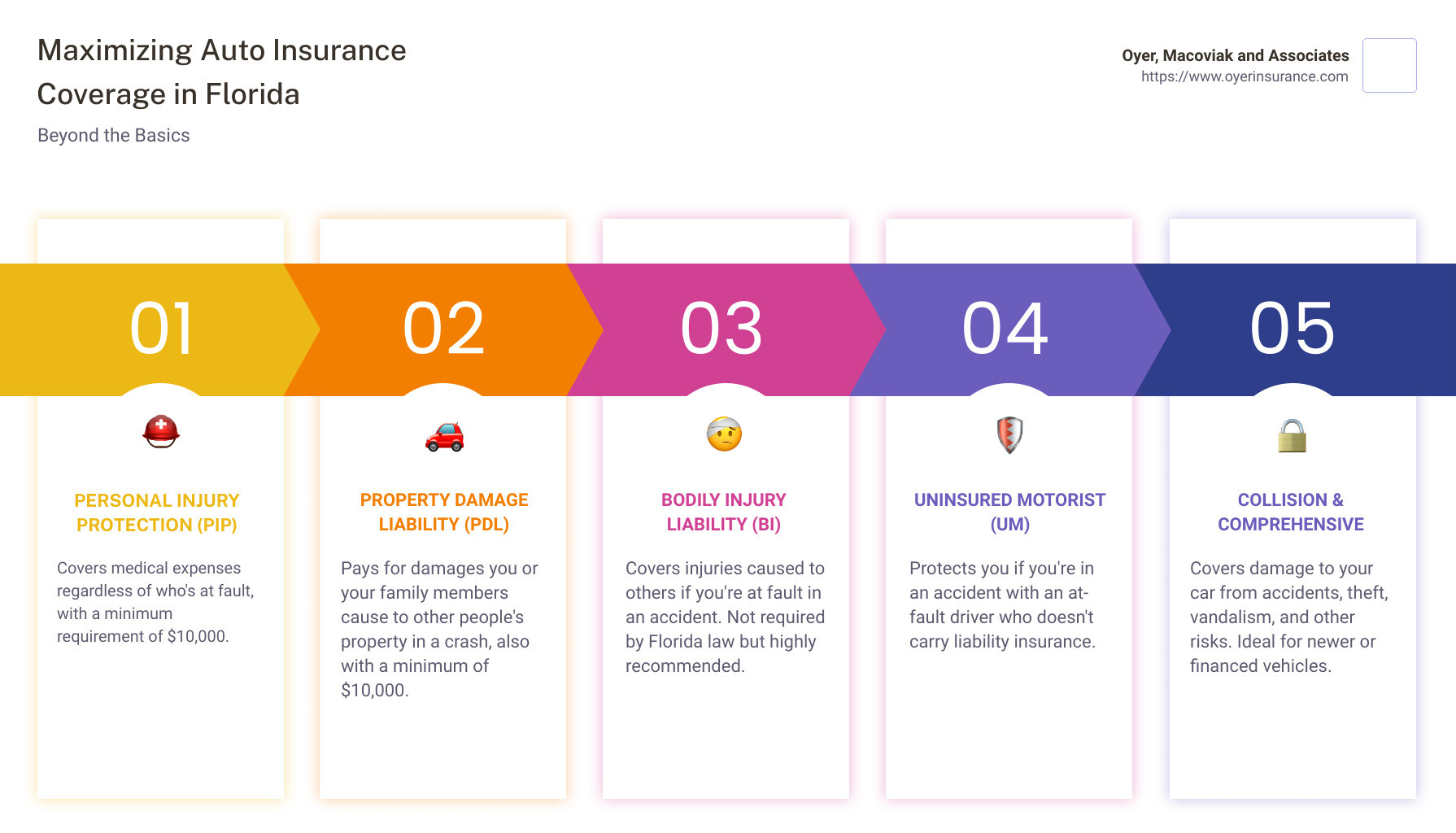
While Florida law mandates $10,000 in PIP and $10,000 in PDL, these minimums are often insufficient for true financial security. Several optional coverages can significantly enhance your protection and provide peace of mind, especially when exploring the diverse attractions of the state, from the theme parks of Orlando to the natural beauty of the Everglades.
Bodily Injury Liability (BIL)
As previously discussed, BIL is arguably the most crucial optional coverage. Without it, you are exposed to immense financial risk if you cause an accident resulting in injuries to others. Given the potential for high medical costs and legal settlements, investing in adequate BIL coverage is a fundamental step in protecting yourself from financial ruin.
Collision Coverage
Collision coverage pays for damage to your own vehicle resulting from a collision with another object (like a car, fence, or tree) or if your vehicle overturns. This coverage is particularly important if you drive a newer or more valuable car, or if you live in an area prone to accidents. Without collision coverage, you would have to pay for all repairs to your vehicle out-of-pocket after an accident you cause.
Comprehensive Coverage
Comprehensive coverage pays for damage to your vehicle that is not caused by a collision. This includes theft, vandalism, fire, falling objects, and natural disasters like floods or hurricanes, which are common concerns in Florida. Comprehensive coverage is essential for protecting your investment in your vehicle against a wide range of unexpected events.
Uninsured/Underinsured Motorist (UM/UIM) Coverage
This is another critically important optional coverage. Uninsured Motorist (UM) coverage protects you if you are injured by a driver who has no insurance. Underinsured Motorist (UIM) coverage protects you if you are injured by a driver who has insurance, but their policy limits are not high enough to cover the full extent of your damages. In a state where a significant number of drivers may be operating without insurance, or with only the bare minimum required, UM/UIM coverage is a vital safety net. It ensures that your medical bills and lost wages can still be covered even if the at-fault driver cannot pay.
Making Informed Decisions for Your Florida Driving Experience
When planning a trip to or residing in Florida, understanding the minimum insurance requirements is just the first step. The $10,000 PIP and $10,000 PDL minimums are designed to offer a baseline level of protection, but they are often inadequate to cover the true costs of an accident.
Assessing Your Risk Profile
Your individual circumstances should guide your insurance choices. Consider the value of your vehicle, your personal assets, your driving habits, and the potential risks associated with the areas you frequent. If you plan to drive extensively, perhaps to visit attractions like Walt Disney World Resort or explore the historic streets of St. Augustine, a higher level of coverage is a wise investment.
The Cost of Protection vs. The Cost of Being Uninsured
The premiums for comprehensive insurance policies with higher coverage limits might seem higher than the minimum requirements. However, it is crucial to weigh these costs against the potential financial devastation of an accident without adequate protection. The cost of defending yourself in a lawsuit, paying for extensive medical bills, or replacing a damaged vehicle can far exceed the cost of robust insurance coverage over several years.
Consulting with an Insurance Professional
Navigating insurance options can be complex. Consulting with a licensed insurance agent who specializes in Florida policies is highly recommended. They can help you assess your needs, understand the various coverage options available, and find a policy that provides the right balance of protection and affordability for your specific situation. Whether you are renting a car to explore the Keys or own a vehicle for daily commutes, making informed choices about your car insurance is paramount to a safe and secure driving experience in the Sunshine State.
LifeOutOfTheBox is a participant in the Amazon Services LLC Associates Program, an affiliate advertising program designed to provide a means for sites to earn advertising fees by advertising and linking to Amazon.com. Amazon, the Amazon logo, AmazonSupply, and the AmazonSupply logo are trademarks of Amazon.com, Inc. or its affiliates. As an Amazon Associate we earn affiliate commissions from qualifying purchases.