
Understanding the minimum wage in Florida is crucial for anyone living, working, or planning to visit the Sunshine State. This figure significantly impacts the cost of living, the viability of businesses, and the overall economic landscape, particularly for those in the vibrant tourism and hospitality sectors that Florida is renowned for. Whether you’re a local resident planning your budget, a business owner setting payroll, or a traveler curious about the economic underpinnings of your vacation destination, knowing the current minimum wage is essential.
This article delves into the current minimum wage in Florida, its history, how it’s determined, and its implications, especially within the context of the state’s thriving tourism industry. We’ll explore the factors that influence this wage and how it compares to national and other state standards.

The Current Minimum Wage Landscape in Florida
As of the latest official updates, the minimum wage in Florida is set at a specific hourly rate. This rate is not static; it is subject to annual adjustments to account for inflation and other economic factors, ensuring that its purchasing power is maintained over time.
Florida’s Minimum Wage for 2024
For the calendar year 2024, the minimum wage in Florida stands at $13.00 per hour. This represents a notable increase from previous years, reflecting a commitment to gradually raising the wage floor. This figure applies to most employees in the state.
It’s important to distinguish between the general minimum wage and the minimum wage for tipped employees. In Florida, tipped employees have a separate, lower base wage, with the expectation that tips will bring their total earnings up to at least the standard minimum wage.
Minimum Wage for Tipped Employees
For employees who customarily and regularly receive more than $30 per month in tips, Florida law allows employers to pay a reduced direct wage. As of 2024, the minimum wage for tipped employees in Florida is $10.00 per hour. This means employers must pay at least $10.00 per hour in wages, and the employee’s tips, combined with this wage, must equal at least $13.00 per hour. If the tips do not bring the employee’s earnings up to the full $13.00 per hour, the employer is obligated to make up the difference.
This distinction is particularly relevant in the hospitality industry, which heavily relies on tipped positions such as servers, bartenders, and baristas. Understanding this dual-rate system is vital for both employers and employees in restaurants, cafes, and other service-oriented establishments across the state, from Miami to Orlando.
Historical Context and Future Projections
The minimum wage in Florida has a history of gradual increases, often driven by public sentiment and legislative action. Understanding this trajectory provides valuable insight into the state’s approach to labor economics.
The Journey to the Current Minimum Wage
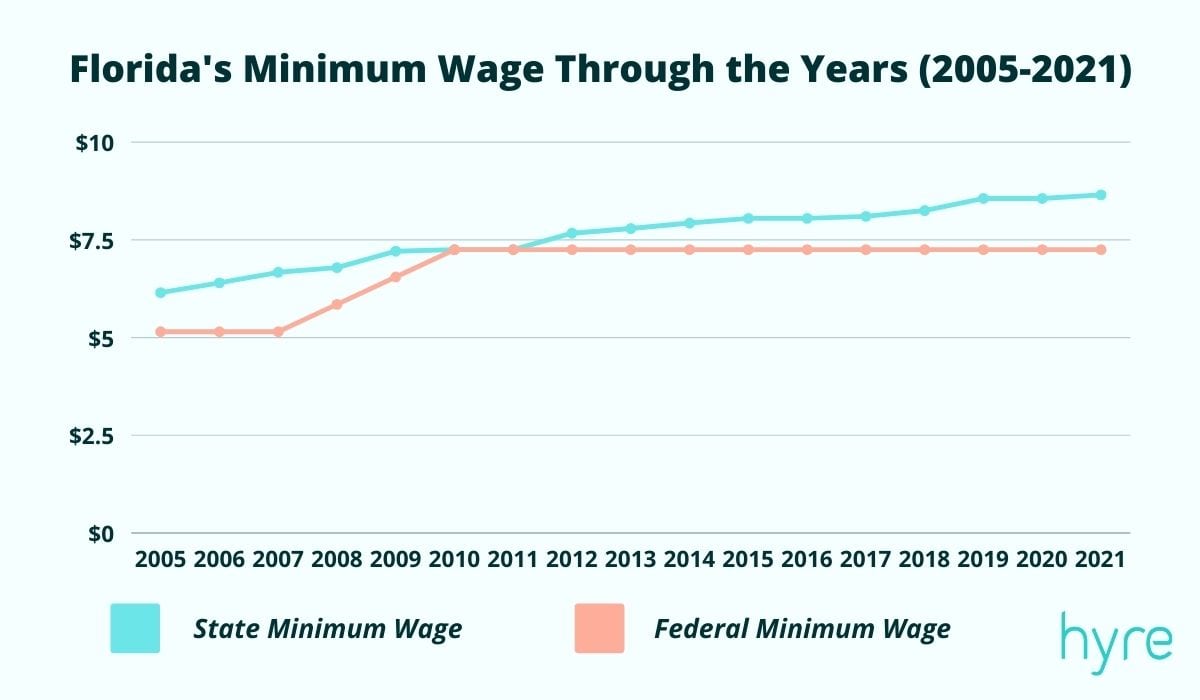
Florida voters approved a constitutional amendment in 2004 to establish a state minimum wage that would be adjusted annually for inflation. This amendment marked a significant shift, moving away from a wage that was previously tied to the federal minimum wage and allowing for independent state-level adjustments. Since then, the minimum wage has steadily climbed.
Prior to 2023, the minimum wage was $11.00 per hour. The 2023 increase to $12.00 per hour and the subsequent rise to $13.00 per hour in 2024 are part of a planned schedule of increases that will continue over the next few years. This phased approach aims to provide businesses with time to adjust to rising labor costs while gradually improving the financial standing of low-wage workers.
Future Minimum Wage Increases
The constitutional amendment that established the inflation-adjusted minimum wage includes provisions for further annual increases. These adjustments are typically based on the percentage increase in the Consumer Price Index (CPI) for All Urban Consumers in the South region, as determined by the U.S. Bureau of Labor Statistics.
Based on this mechanism, Florida is projected to see its minimum wage continue to rise:
- 2025: Expected to increase to $13.94 per hour.
- 2026: Projected to reach $14.94 per hour.
- 2027: Anticipated to be $15.94 per hour.

These projections highlight a clear trend towards a higher minimum wage floor in Florida, aligning with broader national discussions about living wages and economic equity. This steady ascent will have significant implications for the cost of travel and the operational budgets of businesses, particularly those in the tourism sector.
Minimum Wage and Florida’s Thriving Tourism Industry
The tourism industry is a cornerstone of Florida’s economy, attracting millions of visitors annually to its world-class attractions, pristine beaches, and vibrant cities. This sector is also a major employer, providing a vast number of jobs, many of which are at or near the minimum wage. Therefore, changes in the minimum wage have a direct and profound impact on this vital industry.
Impact on Businesses and Employees in Tourism
For businesses in the tourism sector, such as hotels like the Grand Hyatt Hotel or the Ritz-Carlton Orlando Grande Lakes, resorts, theme parks like Walt Disney World Resort, and countless restaurants and attractions, the rising minimum wage means increased labor costs. Employers must either absorb these costs, potentially impacting profit margins, or find ways to offset them. This could involve adjusting pricing for services, improving operational efficiency, or even reducing staff levels in some cases, although the latter is often a difficult decision given the labor-intensive nature of the industry.
However, for employees in these roles, the increase in minimum wage is a welcome development. It means higher take-home pay, improved purchasing power, and a better ability to afford basic necessities and even discretionary spending. For individuals working in service roles, often on a tipped wage, the increase in the base wage combined with tips can lead to a more stable and predictable income. This can also lead to increased employee morale and reduced staff turnover, which can, in turn, benefit businesses by saving on recruitment and training costs.
Consumer Spending and Economic Growth
The ripple effect of a higher minimum wage extends beyond individual businesses and employees. As low-wage workers earn more, they tend to spend a larger portion of their income on goods and services. This increased consumer spending can boost demand across various sectors, including retail, dining, and local attractions. For Florida, where tourism is a significant driver of the economy, this increased spending by both residents and visitors can lead to broader economic growth.
Furthermore, a higher minimum wage can contribute to a reduction in income inequality and poverty. It can empower individuals and families to invest in education, healthcare, and other areas that contribute to long-term well-being and productivity. This can create a more robust and dynamic economy that benefits everyone.
Navigating Minimum Wage Regulations and Considerations
Understanding the nuances of minimum wage laws is essential for compliance and informed decision-making. This includes knowing who is covered by the law, what exceptions might exist, and how to stay updated on changes.
Who is Covered by Florida’s Minimum Wage Law?
In general, most employees working in Florida are covered by the state’s minimum wage law. This includes full-time and part-time employees, as well as minors. The law applies to businesses of all sizes, though there can be specific exemptions or variations depending on the industry and the nature of the employment.
However, federal law also establishes a minimum wage, and in cases where the federal and state minimum wages differ, employees are entitled to the higher of the two. Currently, the federal minimum wage is $7.25 per hour, which is significantly lower than Florida’s $13.00 per hour. Therefore, employers in Florida must adhere to the state’s higher minimum wage.
Potential Exemptions and Special Cases
While the vast majority of employees are covered, there are certain categories of workers who may be exempt from minimum wage requirements or subject to different rules. These can include:
- Independent Contractors: Individuals classified as independent contractors are not employees and therefore not covered by minimum wage laws. However, the classification of workers as independent contractors versus employees is a complex legal issue, and misclassification can lead to significant penalties for employers.
- Certain Agricultural Workers: Some agricultural labor may have specific regulations or exemptions.
- Students Working for Colleges or Universities: In some limited circumstances, students employed by their educational institutions may be subject to different wage provisions.
- Nannies and Live-in Companions: Certain domestic service workers might fall under different wage structures.
It is crucial for employers to consult with legal counsel or relevant labor authorities to ensure they are correctly classifying their employees and complying with all applicable wage laws.
Staying Informed
The minimum wage in Florida is subject to annual review and adjustment. For the most up-to-date information, it is recommended to consult official sources such as the Florida Department of Economic Opportunity or the U.S. Department of Labor. This ensures that businesses and individuals are always working with the latest figures and regulations, preventing potential compliance issues and ensuring fair compensation for all workers in the Sunshine State. This vigilance is especially important for the dynamic hospitality sector, which spans everything from the bustling streets of Tampa to the tranquil shores of the Florida Keys.
LifeOutOfTheBox is a participant in the Amazon Services LLC Associates Program, an affiliate advertising program designed to provide a means for sites to earn advertising fees by advertising and linking to Amazon.com. Amazon, the Amazon logo, AmazonSupply, and the AmazonSupply logo are trademarks of Amazon.com, Inc. or its affiliates. As an Amazon Associate we earn affiliate commissions from qualifying purchases.