
The Salton Sea, a vast and often enigmatic body of water nestled in southeastern California, stands as a testament to both natural forces and profound human intervention. Far from a conventional natural lake, its very existence is a fascinating narrative of geological happenstance, ambitious agricultural pursuits, and the complex ecological challenges that arise when human endeavors reshape landscapes. As a landmark, the Salton Sea is less about picturesque beauty and more about a stark, compelling story — a dynamic canvas reflecting over a century of environmental transformation, historical ambition, and ongoing efforts to manage a unique, yet troubled, ecosystem. Understanding the Salton Sea requires delving into its dramatic origins, its rise as a vibrant ecosystem and resort destination, and its current status as a critically important, yet imperiled, natural feature. It is a landmark that provokes thought, challenges conventional notions of natural preservation, and serves as a powerful reminder of our intertwined relationship with the environment.

A Geographical Enigma: Formation and Location
The Salton Sea’s origin story is as dramatic as its current predicament. Unlike most natural lakes that form over millennia through glacial carving or tectonic shifts, the Salton Sea as we know it today is a relatively recent, largely accidental creation, forged by a confluence of engineering mishap and the relentless power of a major river. Its location in a hypersaline basin makes it geologically unique, setting it apart from other significant bodies of water across the globe.
The Colorado River’s Accidental Creation
The current Salton Sea was not always there. For centuries, the basin it occupies was an intermittent dry lakebed, occasionally filled by the meandering and unpredictable flows of the Colorado River. This ancient lakebed, part of the larger Salton Trough, would fill and evaporate over long cycles, leaving behind saline deposits. The modern chapter began in 1905 when an engineering miscalculation during the construction of irrigation canals meant to divert water from the Colorado River into the Imperial Valley led to a catastrophic breach. For nearly two years, the entire flow of the Colorado River poured unchecked into the Salton Sink, creating the largest lake in California in an event that fundamentally reshaped the landscape. This accidental deluge laid the foundation for the landmark we recognize today, establishing a vast inland sea in what was previously a desert depression.
California’s Largest Lake: Size and Scope
At its peak in the 1950s and 60s, the Salton Sea encompassed an impressive area of approximately 376 square miles (974 square kilometers), stretching roughly 35 miles long and 15 miles wide. This made it by far the largest lake in California, dwarfing many better-known freshwater bodies. Despite its significant shrinkage in recent decades, it retains this distinction, albeit with a continually changing shoreline. Its immense size alone positions it as a dominant geographical feature in the region, visible even from space. The sheer scale of this inland body of water in the midst of arid desert makes it an anomaly and a powerful testament to the transformative power of water in a parched landscape.
Situated in the Salton Trough
The Salton Sea is situated within the geologically active Salton Trough, a pull-apart basin formed by the tectonic forces of the San Andreas Fault system. This basin is a significant depression, reaching depths far below sea level. The bottom of the Salton Sea is approximately 228 feet (69 meters) below sea level, making it one of the lowest land elevations in the United States. This geological context is crucial: the basin is a terminal one, meaning water flows in but has no natural outlet, only evaporation. This characteristic is central to understanding the Salton Sea’s evolving salinity and ecological challenges, as minerals and salts accumulate over time, concentrating as water evaporates. The geothermal activity within the Salton Trough also adds another layer of unique natural phenomena to the area, influencing both the chemistry of the water and the potential for renewable energy projects.
A Century of Ecological Transformation
The century following its creation has seen the Salton Sea undergo profound ecological changes, evolving from a vibrant freshwater-fed haven to a hypersaline, increasingly toxic environment. This transformation has had dramatic consequences for the diverse array of flora and fauna that once thrived there, making the Salton Sea a living laboratory for observing ecological succession and decline in real-time.
From Agricultural Oasis to Hypersaline Terminal Lake
Initially, after the Colorado River breach was contained, the Salton Sea was primarily fed by agricultural runoff from the surrounding Imperial and Coachella Valleys. This runoff, laden with pesticides, fertilizers, and salts leached from the soil, began to accumulate in the terminal lake. Over decades, as water evaporated and pollutants concentrated, the Salton Sea’s salinity steadily increased, eventually surpassing that of the Pacific Ocean by a significant margin. This escalating hypersalinity has fundamentally altered the lake’s chemistry and biological makeup, pushing its ecosystem to the brink and forcing out species unable to adapt to such extreme conditions.
Avian Haven and Biodiversity Hub (Past and Present)
Despite its unique and challenging conditions, the Salton Sea became an unexpected oasis for migratory birds. Located along the Pacific Flyway, a major avian migration route, the lake historically supported millions of birds, including endangered and threatened species. Birds like the eared grebe, American white pelican, and various shorebirds found abundant food sources in the tilapia and other fish species that adapted to the early, less saline conditions. The Sonny Bono Salton Sea National Wildlife Refuge, established in 1930, underscores the lake’s critical role for wildlife. While the avian populations have suffered due to the lake’s decline, it still remains a vital, albeit increasingly precarious, stopover for a significant number of migratory birds, highlighting its enduring ecological importance even in its degraded state.
The Decline: Pollution, Salinity, and Shrinkage
The decline of the Salton Sea’s ecosystem is a multifaceted issue driven primarily by increasing salinity, pollution, and water shrinkage. Reduced freshwater inflows, largely due to water conservation measures and transfers (such as the Quantification Settlement Agreement), have exacerbated evaporation and the concentration of salts and contaminants. The exposed playa, or lakebed, is a significant source of toxic dust, containing naturally occurring heavy metals and agricultural chemicals, which can become airborne and pose severe health risks to nearby communities. Massive fish die-offs and avian botulism outbreaks became frequent occurrences in the late 20th and early 21st centuries, signaling the severe stress on the ecosystem. The shrinking water body and deteriorating water quality paint a grim picture, transforming what was once a vibrant hub into a landscape marked by environmental degradation.
The Salton Sea’s Historical Significance
Beyond its ecological trajectory, the Salton Sea also boasts a rich human history, from ancient indigenous presence to a mid-20th century resort boom and even a role in national defense. These layers of human interaction further solidify its status as a unique historical landmark, reflecting changing societal values and technological capabilities.
Early Human Settlements and Indigenous Ties

Before the 1905 inundation, and even during previous natural fillings of the basin, the Salton Sink and its intermittent freshwater bodies supported various indigenous communities for millennia. Tribes such as the Cahuilla, Quechan, and Kumeyaay utilized the natural resources of the area, including fish, waterfowl, and desert plants. Evidence of their presence, such as ancient fish traps and pottery shards, can be found around the historical shorelines. These early inhabitants demonstrated a profound understanding of the desert ecosystem, adapting their lives to its cycles of abundance and scarcity. The Salton Sea, therefore, is not just a modern phenomenon but a place with deep historical roots tied to California’s first peoples, whose connection to the land long predates modern engineering feats.
The Resort Era: A Fading Dream
In the mid-20th century, particularly from the 1950s to the 1970s, the Salton Sea experienced an unlikely boom as a popular resort destination. Promoters envisioned it as the “Riviera of California” or a “desert playground.” Towns like Bombay Beach, Salton City, and Desert Shores sprang up, featuring marinas, hotels, yacht clubs, and golf courses. Boating, water skiing, and fishing were popular activities, drawing celebrities and families from across Southern California. The allure was the promise of a vast inland lake for recreation in the desert. However, the dream was short-lived. Rising salinity, recurrent fish die-offs, and the increasingly pungent odor from decaying algae and fish eventually drove tourists away. Today, the remnants of this era — crumbling marinas, abandoned subdivisions, and skeletal structures — serve as poignant reminders of a grand vision that succumbed to environmental realities.
A Cold War Relic: Military Testing Grounds
Adding another unique layer to its history, the Salton Sea also played a significant role during the Cold War. Its remote location and vast, relatively unpopulated expanse made it an ideal site for military testing. The Salton Sea Test Base, operated by the U.S. Navy, was used for weapons testing, including missile launches and drone experiments. The lake’s surface was utilized for amphibious aircraft operations and even for testing advanced aerospace technologies. This military history adds a fascinating, albeit less publicized, dimension to the Salton Sea’s identity as a landmark. It signifies a period when its unique characteristics were exploited for national security interests, further embedding human endeavors into its complex story.
Challenges and Conservation Efforts
The Salton Sea’s current state is one of significant environmental distress, posing substantial challenges to both the ecosystem and the surrounding human communities. Recognizing its critical importance as a landmark and an ecological resource, numerous conservation efforts are underway, striving to mitigate its decline and envision a more sustainable future.
Environmental Degradation: Dust and Odor
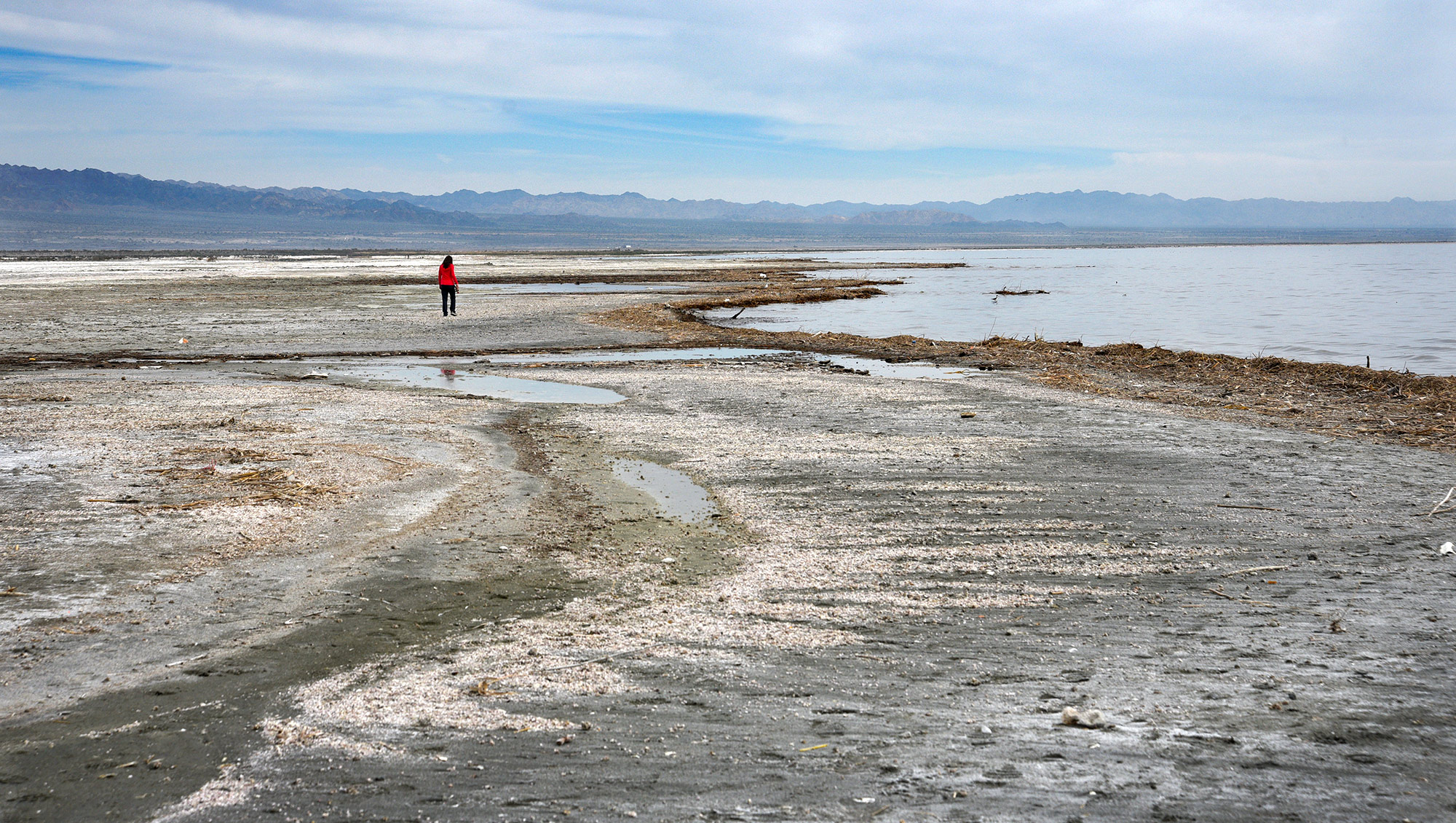
Perhaps the most immediate and visible challenges stemming from the Salton Sea’s degradation are the issues of dust and odor. As the lake recedes, vast stretches of exposed playa are left behind. This exposed lakebed, coated with years of agricultural runoff, heavy metals, and natural salts, becomes a source of fine, toxic dust when winds sweep across the basin. This particulate matter, containing known carcinogens and respiratory irritants, poses a severe public health risk to the predominantly low-income communities in the Imperial and Coachella Valleys. Simultaneously, the ongoing decomposition of organic matter in the increasingly stagnant and saline water, coupled with periodic algal blooms and fish die-offs, generates a pervasive, foul odor that can travel for miles, impacting air quality and quality of life for residents. These twin problems underscore the urgent need for intervention.
The Salton Sea Management Program (SSMP)
In response to the escalating environmental and public health crises, the State of California launched the Salton Sea Management Program (SSMP). This ambitious, multi-phase program aims to address the most critical issues at the Salton Sea, primarily by controlling dust emissions from exposed lakebed and creating and restoring aquatic habitats. The SSMP involves constructing dust suppression projects, such as habitat ponds and revegetation efforts, on exposed playa lands. It also focuses on developing long-term water management solutions and exploring various innovative approaches to stabilize the ecosystem. The program, a collaborative effort involving various state agencies like the California Department of Water Resources (DWR) and the California Department of Fish and Wildlife (CDFW), represents a significant commitment to rectifying past issues and securing a more sustainable future for this vital landmark.
Visions for Revival: Restoring a Troubled Landmark
Various proposals and visions for the Salton Sea’s revival have been put forward over the decades, ranging from grand engineering projects to more localized, incremental solutions. These include proposals for importing water from the Pacific Ocean (desalinated or otherwise), creating smaller, managed ponds within the existing basin, constructing barriers to separate highly saline areas, and exploring geothermal energy development in conjunction with restoration efforts. While the complexity and cost of these solutions are immense, the overarching goal is to stabilize the lake’s ecology, reduce dust and odor, and protect the migratory bird populations that depend on it. The sheer scale of the environmental challenge means that restoration is not about returning the Salton Sea to its pristine past but rather about creating a new, healthier equilibrium for this unique and significant California landmark.
The Salton Sea Today: A Landmark of Contrast
Today, the Salton Sea stands as a landmark of profound contrasts, embodying both haunting beauty and stark environmental reality. It is a place that challenges perceptions, offering an educational experience that transcends simple aesthetics. Its current state serves as a powerful reminder of humanity’s impact on natural systems and the complexities inherent in large-scale environmental management.
A Landscape of Eerie Beauty and Stark Reality
For many, the Salton Sea is a landscape of unsettling beauty. The vast, shimmering expanse of water, often reflecting dramatic desert sunsets, can be mesmerizing. Yet, this beauty is underscored by the stark realities of its decline. The exposed shoreline, littered with bleached fish bones and the ghostly remnants of former resorts, tells a story of ecological collapse. Towns like Bombay Beach embrace their post-apocalyptic aesthetic, with art installations and a resilient, if eccentric, community. The surreal landscape, where decayed structures meet a shimmering, yet often malodorous, lake, offers a unique photographic and contemplative experience. It is a place that evokes introspection, challenging visitors to confront the consequences of environmental mismanagement while still finding a peculiar charm in its desolation.
Educational and Scientific Importance
Despite its challenges, or perhaps because of them, the Salton Sea holds immense educational and scientific value. It serves as a living laboratory for studying hypersaline ecosystems, terminal lake dynamics, and the long-term effects of pollution and climate change on water resources. Researchers from universities and government agencies regularly study its unique chemistry, microbiology, and avian populations, gleaning critical insights into environmental resilience and degradation. The ongoing Salton Sea Management Program provides a real-world case study in large-scale environmental restoration and adaptive management, offering valuable lessons for other troubled ecosystems worldwide. Furthermore, for students and environmental enthusiasts, it offers a tangible example of human-environment interaction, resource management, and the complexities of balancing agricultural needs with ecological preservation.
A Symbol of Human-Environmental Interaction
Ultimately, the Salton Sea is more than just a lake; it is a powerful symbol of human-environmental interaction. Its accidental creation, its nurturing by agricultural runoff, its transformation into a resort hub, and its current struggle for survival all highlight the profound and often unintended consequences of human activity on natural landscapes. It stands as a cautionary tale of unchecked development and the delicate balance required to maintain ecological health. Yet, it also symbolizes resilience, both of nature and of the communities and scientists working tirelessly towards its rehabilitation. As a landmark, the Salton Sea is a dynamic, evolving entity that continues to inspire complex dialogues about water rights, desert ecology, public health, and the future of California’s natural resources, forever marking its place as a unique and significant feature of the American West.
LifeOutOfTheBox is a participant in the Amazon Services LLC Associates Program, an affiliate advertising program designed to provide a means for sites to earn advertising fees by advertising and linking to Amazon.com. Amazon, the Amazon logo, AmazonSupply, and the AmazonSupply logo are trademarks of Amazon.com, Inc. or its affiliates. As an Amazon Associate we earn affiliate commissions from qualifying purchases.