
When one thinks of the natural landmarks that define the United States, the mind often drifts to the towering redwoods of California or the jagged peaks of the Rocky Mountains. However, in the middle of the Pacific Ocean, the Hawaiian Islands boast a biological landmark that is as rare as it is resilient. The state bird of Hawaii is the Nene, also known as the Hawaiian Goose. Unlike many other state birds that are common across the mainland, the Nene is endemic to the islands, meaning it is found nowhere else on Earth. It serves as a living symbol of the archipelago’s unique evolutionary history and its ongoing commitment to environmental preservation.
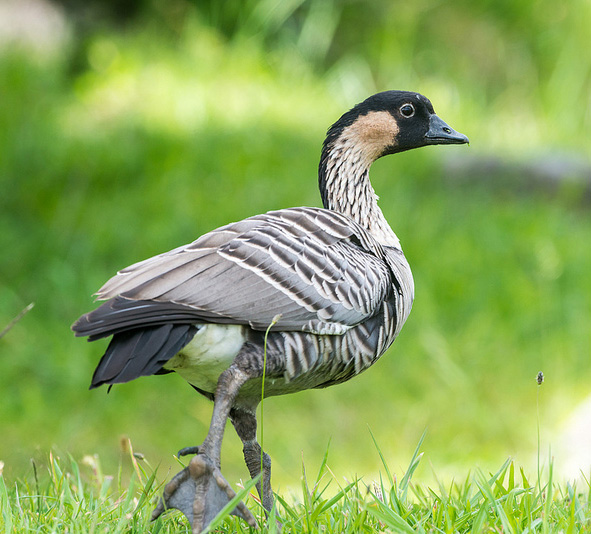
The Nene: Hawaii’s Living Natural Landmark
The Nene (Branta sandvicensis) was officially designated as the state bird of Hawaii on May 7, 1957. This selection was not merely a matter of aesthetic preference but a recognition of the bird’s deep roots in the volcanic soil of the islands. To understand the Nene is to understand the very nature of Hawaii itself—a place where life adapts in extraordinary ways to isolated conditions.
Evolution of the Hawaiian Goose
Scientific research suggests that the Nene evolved from the Canada Goose, which likely arrived in the islands approximately 500,000 years ago. This arrival coincided with the period when Mauna Loa and Mauna Kea were forming. Over millennia, the bird underwent significant physical changes to adapt to its new environment. Unlike its mainland ancestors, which thrive in wetlands and marshes, the Nene adapted to the rugged, solidified lava flows of the Big Island and Maui.
One of the most fascinating evolutionary shifts is seen in the bird’s feet. The Nene has less webbing between its toes than other geese. This allows it to navigate the sharp, uneven terrain of volcanic rock with greater agility. Its claws are also stronger, providing the necessary grip for climbing steep slopes. These adaptations have turned the Nene into a terrestrial landmark of evolutionary biology.
Physical Characteristics and Identification
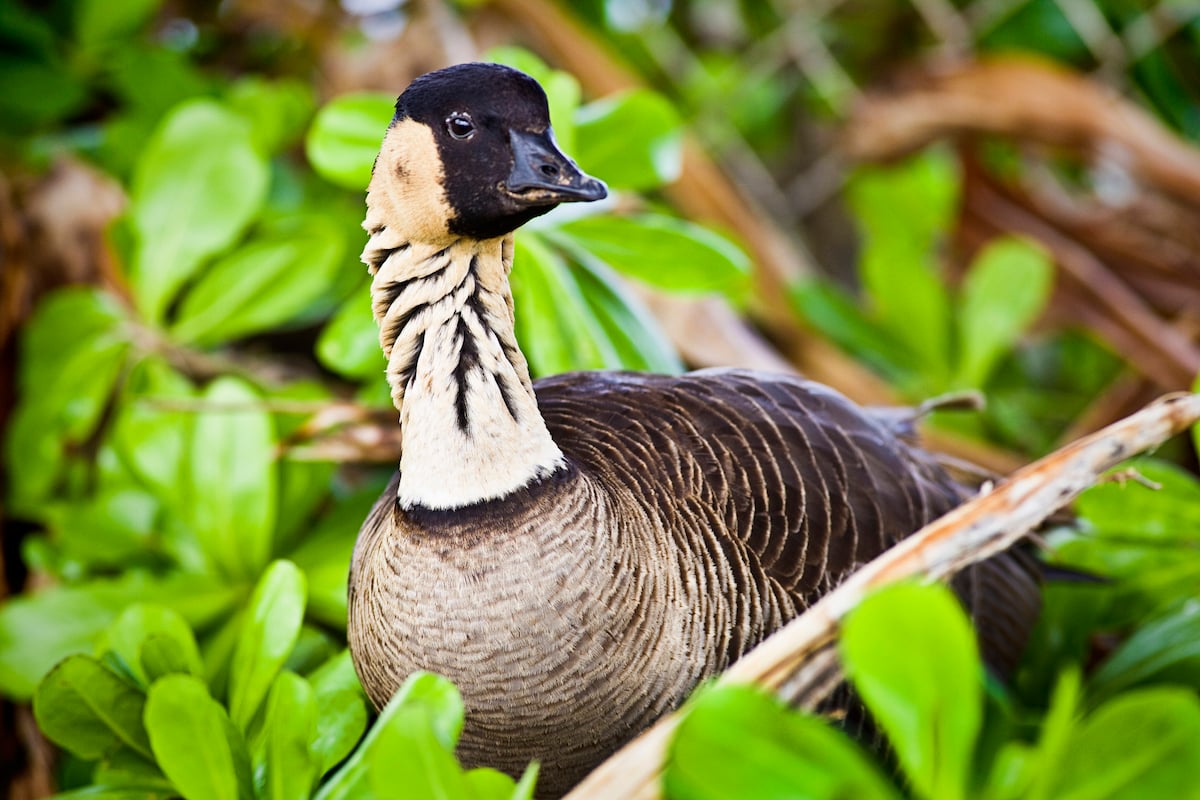
The Nene is a medium-sized goose, standing about 16 inches tall. It is characterized by its striking plumage—buff-colored cheeks and a black head, with a neck that features unique black and white diagonal stripes (furrows). These furrows are actually skin folds that give the neck a textured appearance. Its body is primarily grey-brown with a barred pattern.
While they are capable of flight, they are not migratory in the traditional sense. They may move between different elevations on an island to find food, but they do not fly across the vast reaches of the Pacific Ocean. Their diet consists of native grasses, seeds, and berries, such as the Ohelo Berry, which grows abundantly in the volcanic soils of Hawaii Volcanoes National Park.
Historical Significance and Cultural Heritage
The Nene is more than just a biological curiosity; it is a cultural landmark that has been intertwined with the history of the Hawaiian people for centuries. Its presence in the islands predates the arrival of the first Polynesian settlers, yet it quickly found a place in the local consciousness.
The Nene in Native Hawaiian Traditions
In the Native Hawaiian culture, all elements of nature are seen as interconnected. While the Nene does not feature as prominently in mythology as the Honu (Green Sea Turtle), it was a respected part of the ecosystem. The bird was traditionally considered a guardian of the land. Its gentle nature and distinct call—a soft “nay-nay” from which it derives its name—made it a familiar sight in the uplands.
Historical records indicate that the Nene was once widespread across most of the islands, including Oahu, Kauai, and Molokai. However, as human populations grew and introduced invasive species, the bird’s habitat began to shrink, turning it from a common sight into a rare treasure.
From Near Extinction to Recovery
The history of the Nene is also a story of one of the most successful conservation efforts in the United States. By the 1950s, the population had plummeted to fewer than 30 individuals, primarily due to habitat loss and the introduction of predators like mongooses, cats, and dogs. The bird was on the brink of becoming a lost landmark of the past.

In response, a captive breeding program was established at the Pohakuloa Training Area on the Big Island and even at the Slimbridge Wetland Centre in the United Kingdom. Through these Herculean efforts, the species was slowly reintroduced to its natural habitats. Today, there are over 3,000 Nene living in the wild, a testament to the importance of preserving Hawaii’s natural landmarks.
Where to See the Nene in the Hawaiian Islands
For nature enthusiasts and travelers, spotting a Nene is often a highlight of a trip to the islands. Because they are terrestrial and relatively comfortable around humans (though they should never be approached), they can often be seen in several iconic landmarks across the state.
Haleakala National Park on Maui
One of the best places to observe the state bird is Haleakala National Park on the island of Maui. The park, which protects the massive Haleakala shield volcano, provides the high-altitude shrubland that the Nene prefers. Visitors driving toward the summit often encounter the birds near the Hosmer Grove area. The contrast of the bird’s striped neck against the red volcanic cinders of the crater is a sight that captures the raw beauty of Maui.
Hawaii Volcanoes National Park on the Big Island
On the Big Island, the Nene is a frequent resident of Hawaii Volcanoes National Park. They are often spotted near the Kilauea Visitor Center or along the Chain of Craters Road. The park has established several “Nene Crossing” signs to alert drivers to their presence, as the birds often forage near the roadsides. Seeing the state bird wandering through a landscape shaped by recent eruptions from Kilauea offers a profound sense of the resilience of life in Hawaii.
Kauai’s Kilauea Point National Wildlife Refuge
The island of Kauai offers a different backdrop for Nene watching. At Kilauea Point National Wildlife Refuge, the birds can be seen against the backdrop of the Pacific Ocean and the historic Daniel K. Inouye Kilauea Point Lighthouse. The lush, coastal cliffs of Kauai provide a starkly different environment than the volcanic deserts of the Big Island, demonstrating the bird’s ability to adapt to various Hawaiian microclimates.
Conservation Efforts and the Future of the Species
While the recovery of the Nene is a success story, the species remains “threatened” and requires ongoing management. Protecting the bird is synonymous with protecting the natural landmarks and ecosystems of Hawaii.
Protecting the Nene’s Habitat
The primary threat to the Nene today is habitat fragmentation and the continued presence of non-native predators. Landmarks like the Hakalau Forest National Wildlife Refuge play a crucial role in providing safe havens. Conservationists work tirelessly to fence off areas to keep out wild pigs and goats, which destroy the native vegetation the birds rely on for food.
Furthermore, the Department of Land and Natural Resources in Hawaii monitors the populations closely, especially during the nesting season, which occurs between October and March. Unlike many birds that nest in trees, the Nene nests on the ground, making their eggs particularly vulnerable to predators.
How Visitors Can Help Preserve the State Bird
As the Nene is a symbol of the islands, visitors are encouraged to act as stewards of this natural landmark. The most important rule is to never feed the birds. Feeding Nene habituates them to humans and cars, which often leads to fatal accidents on the roads near Hilo or Kailua-Kona.
Travelers are also advised to keep a respectful distance. Observing the birds through binoculars or a camera lens allows you to appreciate their beauty without causing them stress. By respecting the Nene, tourists help ensure that this unique goose remains a permanent fixture of the Hawaiian landscape for generations to come.
In conclusion, the Nene is far more than just a state bird; it is a living landmark of the Hawaiian Islands. From its evolution on the slopes of Mauna Loa to its miraculous recovery from the brink of extinction, the Nene embodies the spirit of Hawaii. Whether you are exploring the volcanic craters of the Big Island or the coastal cliffs of Kauai, keep an eye out for this remarkable bird—a true icon of the Pacific.
LifeOutOfTheBox is a participant in the Amazon Services LLC Associates Program, an affiliate advertising program designed to provide a means for sites to earn advertising fees by advertising and linking to Amazon.com. Amazon, the Amazon logo, AmazonSupply, and the AmazonSupply logo are trademarks of Amazon.com, Inc. or its affiliates. As an Amazon Associate we earn affiliate commissions from qualifying purchases.