
The question “What is the state capital of Boston?” often elicits a moment of thoughtful pause, as it cleverly inverts the typical query. For clarity and directness, it’s essential to state unequivocally: Boston is the capital of the Commonwealth of Massachusetts. This vibrant city, nestled along the Atlantic coast, holds a distinguished position not only as a major economic and cultural hub but, more profoundly, as a historical and architectural landmark that has shaped the trajectory of the United States. Its status as a state capital is deeply interwoven with its identity, evident in the iconic governmental buildings, historic districts, and monuments that stand as silent witnesses to centuries of pivotal events. This article delves into Boston’s role as a capital city, exploring the landmarks and historical significance that cement its place in the nation’s fabric.

Boston: The Enduring Capital of Massachusetts
Boston’s position as the capital of Massachusetts is not merely a modern administrative designation; it is a legacy forged through centuries of pivotal events and strategic development. The city’s history is inextricably linked to its governmental function, making it a living museum of American democracy and a testament to enduring architectural grandeur.
A Legacy Forged in History
The story of Boston as a capital begins long before the formal establishment of the United States. Founded in 1630 by Puritan colonists from England, it quickly grew into the largest town in colonial Massachusetts and the de facto capital of the Massachusetts Bay Colony. Its bustling port made it an economic powerhouse and a vital center for trade, ideas, and dissent. This early prominence positioned Boston at the forefront of the American Revolution, hosting critical events such as the Boston Tea Party and the Battle of Bunker Hill. The city’s role as a hotbed of revolutionary thought and action solidified its symbolic importance and, consequently, its practical function as the seat of state government once independence was achieved. The historical landmarks scattered throughout the city, from the cobbled streets to the grand meeting halls, tell a continuous narrative of governance and liberty, making Boston itself a monument to democratic principles.
The Iconic Massachusetts State House
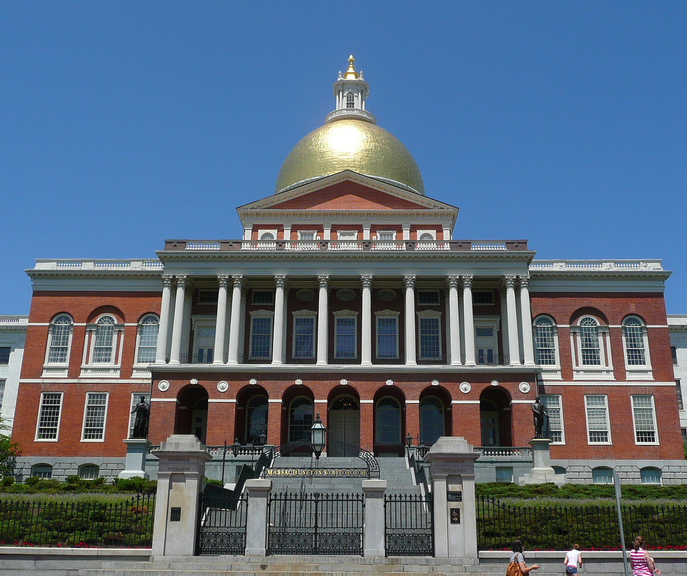
Central to Boston’s identity as a capital city is the magnificent Massachusetts State House. Perched atop Beacon Hill overlooking Boston Common, this architectural masterpiece, completed in 1798, is a prominent landmark and the official seat of the Massachusetts General Court (state legislature) and the Governor’s office. Designed by the renowned architect Charles Bulfinch, its distinctive golden dome is visible from many vantage points across the city and beyond.
The State House’s design is a blend of Federalist and Neoclassical styles, characterized by its elegant brick facade and grand portico. The original dome, initially made of wooden shingles, was famously gilded with 23-karat gold in 1874, making it one of the most recognizable features of the Boston skyline. Inside, the building is a treasure trove of art and history, with chambers, halls, and offices adorned with historical paintings, statues, and intricate detailing. Visitors can explore areas like the Doric Hall, the Grand Staircase, and various legislative chambers, gaining insight into the ongoing processes of state government and the rich heritage of Massachusetts. The Massachusetts State House is more than just an office building; it is a symbol of self-governance and a living landmark that continues to shape the future of the Commonwealth.
Architectural Grandeur and Governmental Hubs
The architectural landscape of Boston, particularly around its governmental core, is a profound testament to its status as a capital city. Grand structures, historic districts, and carefully planned urban spaces reflect centuries of civic pride and the enduring functions of government. These landmarks are not merely beautiful buildings but functional centers where the work of the Commonwealth unfolds daily.
Beacon Hill’s Historic Charm
The neighborhood of Beacon Hill, where the Massachusetts State House proudly stands, is perhaps the quintessential example of Boston’s architectural legacy. This charming area is renowned for its narrow, gas-lit streets, brick sidewalks, and impeccably preserved 19th-century Federal-style and Greek Revival row houses. It exudes an old-world elegance that transports visitors back in time. Beacon Hill has historically been, and remains, a prestigious residential district for many of the state’s political figures, lawyers, and influential citizens, creating a unique atmosphere where residential tranquility coexists with governmental activity.
The distinct architectural character of Beacon Hill is itself a landmark. Structures like the Nichols House Museum offer a glimpse into the opulent lifestyles of former residents and the prevailing design aesthetics of the period. Its proximity to the State House makes it a natural extension of the capital’s grandeur, contributing significantly to Boston’s visual identity and historical narrative. The neighborhood’s protection through strict preservation guidelines ensures that its unique charm and architectural integrity remain intact for generations to come.
Beyond the State House: Other Governmental Buildings
While the Massachusetts State House is the most prominent landmark of state governance, Boston hosts a multitude of other significant buildings that underscore its role as a capital. The nearby Suffolk County Superior Court, with its imposing architecture, represents the judicial branch of government, playing a crucial role in the state’s legal system. Further cementing Boston’s status as a governmental hub, federal institutions also have a significant presence. The John F. Kennedy Federal Building, an example of Brutalist architecture, houses various federal agencies and stands as a reminder of the city’s broader administrative importance within the United States.
Additionally, many state departments and agencies are headquartered in various buildings throughout downtown Boston, contributing to the city’s dynamic urban fabric. These structures, while perhaps less ornate than the State House, are vital components of the capital’s operational machinery. Together, they form a sprawling complex of governmental landmarks that collectively define Boston’s multifaceted role as a center of political power, legal justice, and public administration.
Boston’s Role as a Cultural and Historical Landmark
Boston’s identity as a state capital is not solely defined by its governmental buildings but also by its pervasive historical and cultural significance. The city itself is a vast, interconnected landmark, where every street and square seems to whisper tales of the past, illustrating how governance, culture, and history are deeply intertwined.
The Freedom Trail: A Path Through History
Perhaps no other landmark encapsulates Boston’s unique blend of history and capital significance as powerfully as the Freedom Trail. This 2.5-mile red-lined path weaves through downtown Boston, connecting 16 historically significant sites that were instrumental in the American Revolution and the early days of the republic. Many of these sites directly relate to the formation of self-governance and the ideals that underpin a state capital.
Notable stops on the Freedom Trail include the Massachusetts State House itself, symbolizing current governance; the Old State House, the oldest surviving public building in Boston and the seat of colonial government where the Declaration of Independence was first read to Boston citizens; and Faneuil Hall, known as the “Cradle of Liberty,” a marketplace and meeting hall where revolutionary sentiments were passionately debated. Each site on the Freedom Trail serves as a tangible link to the city’s foundational history and its evolution into a center of political thought and action. Walking the trail is an immersive experience, revealing how the very fabric of Boston is a monument to the principles of freedom and governance that define the Commonwealth.
Preserving the Past, Shaping the Future
Boston’s status as a capital necessitates a careful balance between preserving its immense historical integrity and embracing its role as a forward-looking urban center. The city’s commitment to conservation is evident in its meticulously maintained historical districts, such as Beacon Hill and the North End, where architectural guidelines ensure that new developments respect the established aesthetic. This dedication to preservation means that the landmarks of Boston’s past continue to inform its present and future.
At the same time, as a modern capital, Boston is a dynamic city of innovation, education, and commerce. Its universities, hospitals, and technology sectors are world-renowned, drawing talent and investment from across the globe. This blend of historical depth and contemporary dynamism makes Boston a unique capital—a place where the echoes of revolutionary figures mingle with the buzz of cutting-edge research. The city’s ability to maintain its landmark status while continually evolving speaks volumes about its enduring importance and vibrant character.
Experience Boston’s Capital Landmarks
For those seeking to understand and appreciate Boston’s singular identity as a state capital, engaging directly with its landmarks offers the most profound insight. These sites are not merely static displays but living testaments to history, architecture, and the ongoing process of governance.
Exploring the Heart of Government
A visit to the Massachusetts State House is an essential experience for anyone interested in Boston’s capital status. Free guided tours are often available, providing fascinating details about the building’s architecture, history, and function. Visitors can walk through the hallowed halls where legislative decisions are made, admire the intricate artwork, and appreciate the grandeur of a landmark designed by Charles Bulfinch. The views from Beacon Hill, particularly of the Boston Common stretching out below, offer a panoramic sense of the city’s historical layout and its connection to the seat of power. Exploring the charming streets of Beacon Hill itself, with its distinct Federal-style homes and gas lamps, provides an immediate sense of the historic context surrounding the State House.

Must-See Historical Sites
Beyond the immediate governmental buildings, several other landmarks are indispensable for understanding Boston’s capital heritage. The Old State House, nestled amidst modern skyscrapers, stands as a stark reminder of colonial governance and revolutionary fervor. Visitors can step inside to explore exhibits detailing the Boston Massacre and other pivotal events that unfolded on its very doorstep.
Similarly, Faneuil Hall offers another window into the city’s foundational role. Its ground floor still bustles as a marketplace, while the upper floor assembly room, where Samuel Adams and other patriots once stirred revolutionary spirit, can be visited. These sites, along with others on the Freedom Trail such as the Old South Meeting House and Paul Revere’s House, collectively paint a comprehensive picture of Boston’s journey from a colonial outpost to the vibrant capital of Massachusetts and a celebrated national landmark. Each visit reinforces the profound connection between the city’s physical structures and its enduring legacy of self-governance and liberty.
In conclusion, the answer to “What is the state capital of Boston?” is that Boston is the state capital—a distinction it holds with immense historical pride and architectural grandeur. The city is a living monument to its past, with landmarks like the Massachusetts State House, the historic streets of Beacon Hill, and the revolutionary sites of the Freedom Trail all testifying to its enduring significance. To explore Boston is to walk through centuries of American history, witnessing firsthand the places where the foundations of governance were laid and where the spirit of freedom continues to resonate. It remains an unparalleled destination for those who appreciate the profound connection between famous places, pivotal history, and iconic architecture.
LifeOutOfTheBox is a participant in the Amazon Services LLC Associates Program, an affiliate advertising program designed to provide a means for sites to earn advertising fees by advertising and linking to Amazon.com. Amazon, the Amazon logo, AmazonSupply, and the AmazonSupply logo are trademarks of Amazon.com, Inc. or its affiliates. As an Amazon Associate we earn affiliate commissions from qualifying purchases.