
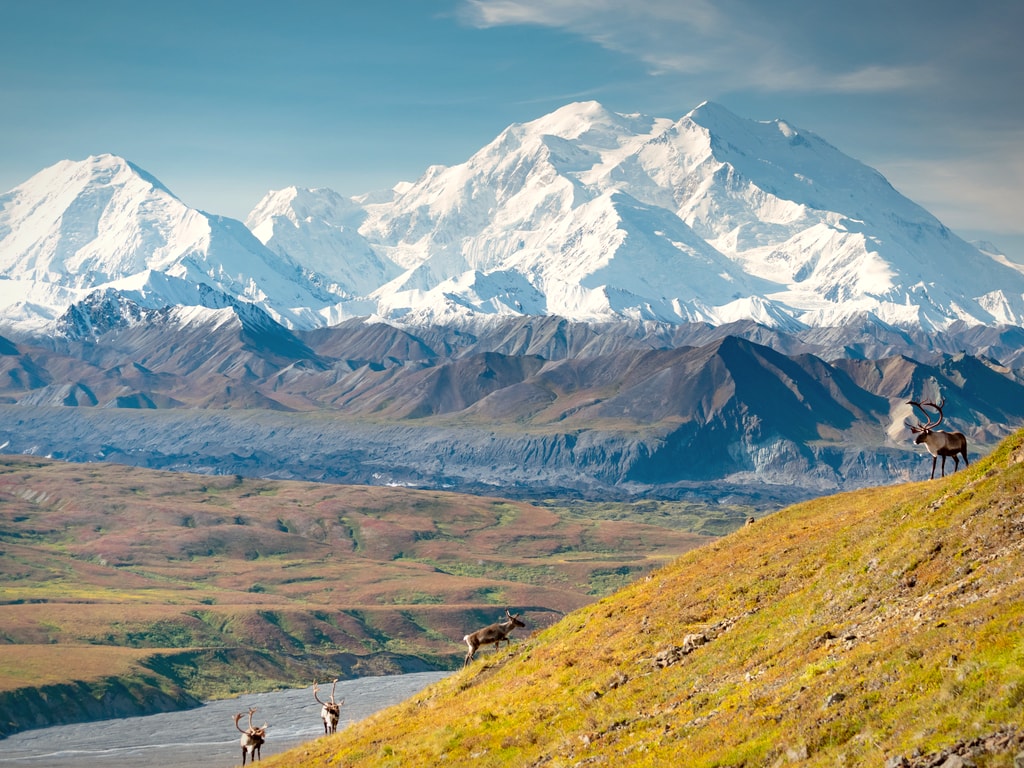
Towering majestically above the vast wilderness of Alaska stands Denali, the undisputed monarch of the North American continent. At an awe-inspiring elevation of 20,310 feet (6,190 meters) above sea level, it is not only the tallest peak in the United States and Alaska, but also the third most prominent and third most isolated peak on Earth, trailing only Mount Everest and Aconcagua in terms of its prominence. Its sheer scale and dramatic rise from relatively low-lying terrain make it a spectacle of nature, a beacon for mountaineers, and a critical component of the Alaskan identity.

Denali’s immense presence dominates the landscape, influencing weather patterns, shaping ecosystems, and inspiring countless individuals. It’s a landmark not just for its height, but for the profound sense of wilderness and raw power it evokes. For generations, this colossal peak has been a spiritual center for indigenous communities and a monumental challenge for explorers and climbers, etching its story into the very fabric of Alaska’s heritage. Understanding Denali is to grasp a fundamental piece of the world’s natural wonders.
The Geological Marvel of Denali
Denali’s grandeur is not just in its height but also in its unique geological story and dramatic physical characteristics. Unlike many other global peaks that rise from high-altitude plateaus, Denali ascends nearly from sea level, giving it the largest base-to-peak rise of any mountain entirely above sea level. This makes its vertical relief comparable to, or even greater than, that of Mount Everest, when considering the full extent of its rise from the surrounding lowlands.
A Towering Presence in the Alaska Range
Situated in the heart of the Alaska Range, Denali is a stratovolcano, though it’s not active. Its formation is primarily due to the ongoing collision of the Pacific and North American tectonic plates. This immense geological force has uplifted enormous blocks of rock, creating the rugged and expansive Alaska Range. Denali itself is composed primarily of granite, a testament to the slow cooling of magma deep within the Earth’s crust, which was then thrust upwards over millions of years.
The mountain’s topography is characterized by two significant summits: the South Summit, which is the higher of the two, and the slightly lower North Summit. These twin peaks are separated by a broad, glacier-filled saddle. The vast scale of Denali means it has its own localized weather systems, generating some of the most extreme weather conditions on Earth, including fierce winds, intense cold, and sudden, dramatic storms. These conditions are not just a challenge for climbers but also play a crucial role in shaping the mountain’s glaciated environment.
Glacial Systems and Permafrost
Denali is a nexus for several immense glaciers, including the Kahiltna Glacier (the longest glacier in the Alaska Range), the Muldrow Glacier, and the Ruth Glacier. These rivers of ice carve deep valleys, transport massive amounts of rock, and dramatically sculpt the landscape, making the mountain an ever-evolving geological entity. The presence of permafrost across much of the surrounding parkland further influences the hydrology and ecology, creating unique wetland ecosystems and challenging engineering projects. The glaciers also act as a natural repository of historical climate data, with ice cores revealing insights into past environmental conditions.
A Mountain of Many Names and Deep Cultural Roots
The tallest mountain in Alaska has held deep significance for various cultures and groups throughout history, reflected in the different names it has borne. Its most enduring name, and the one officially recognized today, reflects its indigenous heritage.
Indigenous Heritage: Denali, “The High One”
For centuries before European contact, the Koyukon Athabascan people, whose ancestral lands surround the mountain, called it Denali, meaning “The High One” or “The Great One.” This name perfectly encapsulates the profound respect and reverence held by these communities for the imposing peak that dominated their spiritual and physical landscape. Denali was not merely a geographical feature but a living entity, woven into their stories, traditions, and way of life. It served as a landmark for navigation, a source of resources, and a symbol of strength and endurance.
The McKinley Controversy and Restoration of Denali
The name “Mount McKinley” was given to the peak in 1896 by a gold prospector named William Dickey, who named it after then-presidential candidate William McKinley of Ohio. Despite McKinley’s eventual presidency, the name was largely imposed by external forces and lacked any connection to the mountain’s actual history or the region’s indigenous people.
For decades, there was a persistent effort by Alaskans, particularly indigenous groups, to restore the mountain’s original name. The state of Alaska officially recognized the name Denali in 1975, but federal recognition was stalled for forty years due to political opposition, primarily from Ohio politicians. Finally, in August 2015, under the administration of President Barack Obama, the United States Department of the Interior announced that the mountain would officially be known as Denali, restoring its historical and cultural identity and rectifying a long-standing historical injustice. This act was celebrated as a victory for indigenous rights and a tribute to the deep cultural significance of the mountain.
Denali National Park and Preserve: A Pristine Wilderness
The grandeur of Denali is best experienced within the boundaries of Denali National Park and Preserve, a magnificent protected area spanning over 6 million acres. Established in 1917, the park was initially created to protect the region’s abundant wildlife, particularly its Dall sheep, but has since expanded to encompass the mountain itself and its vast surrounding ecosystems.
A Sanctuary for Arctic and Sub-Arctic Wildlife

The park is a vibrant ecosystem teeming with iconic Alaskan wildlife. Visitors often encounter grizzly bears, black bears, moose, caribou, wolves, and the elusive Dall sheep, which navigate the steep, rocky terrain with incredible agility. Over 160 species of birds migrate through the park, adding to its rich biodiversity. The varied landscape, from lowland taiga forests to high-alpine tundra and glaciated peaks, supports this incredible array of flora and fauna, making it a premier destination for wildlife viewing and photography.
The park’s unique environment is also home to a diverse range of plant life, adapted to the harsh conditions. During the brief Alaskan summer, the tundra bursts into a kaleidoscope of wildflowers, offering a stark contrast to the permanent ice and snow of the higher elevations. This delicate balance of life is a testament to the resilience of nature and the importance of conservation efforts within the park.
Visitor Activities and Access
Access to Denali National Park and Preserve is primarily via a single 92-mile park road, much of which is restricted to park buses during the summer season to minimize human impact and maximize wildlife viewing opportunities. This system allows for an immersive and less disruptive experience of the wilderness. Visitors can embark on bus tours, go hiking, backpacking, camping, and even mountain biking on designated trails. Ranger-led programs offer insights into the park’s natural and cultural history.
For those seeking an even more profound connection with the wilderness, permitted backcountry travel allows experienced individuals to explore vast tracts of undeveloped land, offering a true sense of solitude and adventure. Whether viewing Denali from a distant viewpoint on a clear day or experiencing its raw power up close, the park provides unparalleled opportunities to connect with one of the world’s most impressive natural landmarks. The gateway towns of Talkeetna and Cantwell serve as primary access points, offering services and accommodations for travelers.
Conquering the Giant: Mountaineering on Denali
Denali stands as one of the ultimate tests for high-altitude mountaineers globally, renowned not just for its extreme height but also for its severe weather, glaciated terrain, and remote location. It is considered a more challenging climb than many higher peaks due to its latitude, which results in lower atmospheric pressure and colder temperatures, making the effective physiological altitude much higher than its measured elevation.
Technical Challenges and Extreme Conditions
Climbing Denali is a grueling endeavor that typically takes 2-4 weeks, depending on weather and acclimatization. The primary challenges include:
- Extreme Cold: Temperatures can plummet to -75°F (-60°C), with wind chills making it feel even colder. Frostbite is a constant threat.
- High Winds: Jet stream winds can create hurricane-force gusts, pinning climbers in their tents for days.
- Altitude Sickness: Despite being lower than 8,000-meter peaks, the lower atmospheric pressure at this latitude means the air contains less oxygen, demanding careful acclimatization.
- Glacier Travel: Climbers must navigate crevassed glaciers, often requiring ropes and specialized equipment.
- Self-Sufficiency: Unlike some other major peaks, there are no fixed ropes, porters, or extensive rescue services beyond what the climbers bring or the National Park Service provides in extreme emergencies. Climbers must carry all their gear, food, and fuel.
The most popular route, the West Buttress, still presents significant technical challenges and demands a high level of physical fitness, experience, and mental fortitude. All climbers must register with the National Park Service and adhere to strict safety and environmental regulations.
Notable Ascents and Mountaineering Legacy
The first successful ascent of Denali’s South Summit was made on June 7, 1913, by a team led by Hudson Stuck, Harry Karstens, Walter Harper, and Robert Tatum. This monumental achievement solidified Denali’s place in mountaineering history. The slightly lower North Summit was first climbed in 1910 by a group of local Alaskan miners.
Over the decades, thousands of climbers have attempted to reach Denali’s summit, each seeking to test their limits against one of nature’s grandest challenges. The success rate hovers around 50%, underscoring the formidable nature of the climb. Each year, stories of triumph, resilience, and sometimes tragedy, add to the mountain’s mystique and enduring allure, drawing adventurers from across the globe to the heart of the Alaska Range.
Denali: A Symbol of Preservation and Enduring Legacy
Beyond its physical attributes and mountaineering challenges, Denali stands as a powerful symbol of wilderness preservation and a living testament to the pristine beauty of Alaska. Its protected status ensures that this majestic landmark and its surrounding ecosystems will endure for future generations, offering solace and inspiration in an increasingly urbanized world.
Environmental Stewardship and Climate Change
The management of Denali National Park and Preserve focuses heavily on environmental stewardship, balancing public access with the imperative to protect its fragile Arctic and sub-Arctic environments. Researchers actively monitor the park’s glaciers, wildlife populations, and permafrost to understand the impacts of climate change, which is profoundly affecting Alaska at an accelerated rate. Changes in glacial melt, wildlife migration patterns, and vegetation zones are observed, highlighting the urgent need for global conservation efforts to protect such vital natural landmarks.
The park serves as a natural laboratory, providing invaluable data for climate scientists and conservationists. The health of Denali and its ecosystems is a barometer for the broader health of the planet, making its preservation a concern far beyond the borders of Alaska.
An Icon of Wilderness and Adventure
Denali continues to captivate the human imagination, representing the pinnacle of natural beauty and an enduring spirit of adventure. It is a place where one can still experience true wilderness, where the scale of nature humbles and inspires. Whether viewed from a distance, shimmering on the horizon, or experienced intimately during a challenging ascent, Denali leaves an indelible impression.
As the tallest mountain in Alaska, Denali’s legacy is one of geological wonder, cultural depth, and environmental significance. It is a landmark that embodies the wild heart of Alaska, a testament to the power of nature, and a beacon for all who seek to explore, understand, and protect the planet’s most magnificent places. Its story is far from over, continually evolving with the forces of nature and the ongoing human interaction with this extraordinary peak.
LifeOutOfTheBox is a participant in the Amazon Services LLC Associates Program, an affiliate advertising program designed to provide a means for sites to earn advertising fees by advertising and linking to Amazon.com. Amazon, the Amazon logo, AmazonSupply, and the AmazonSupply logo are trademarks of Amazon.com, Inc. or its affiliates. As an Amazon Associate we earn affiliate commissions from qualifying purchases.