
The question of time zones in Florida, United States, might seem straightforward, but it’s a detail that can significantly impact travel plans, business operations, and even daily life within the Sunshine State. While most of Florida observes one time zone, a distinct portion operates on another, creating a fascinating dynamic that travelers, residents, and businesses alike need to understand. For anyone planning a trip, booking accommodation, or coordinating activities across the state, a clear grasp of Florida’s time zone geography is essential for a seamless and enjoyable experience.
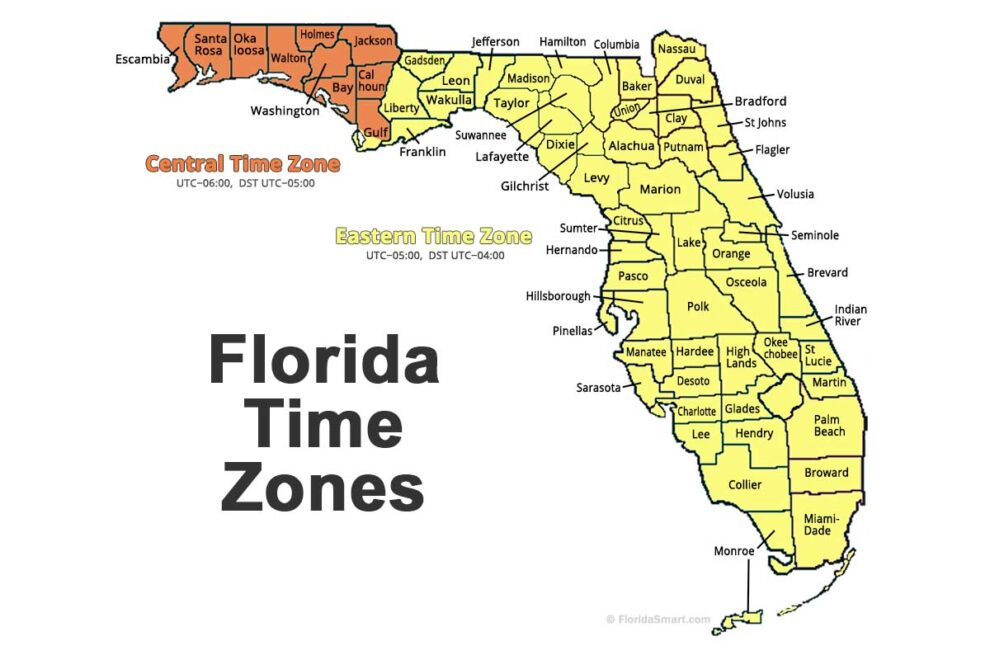
The majority of Florida adheres to the Eastern Time Zone (ET), which is five hours behind Coordinated Universal Time (UTC-5). This encompasses the state’s most populous regions and iconic travel destinations. However, a significant part of the Florida Panhandle, particularly the westernmost counties, falls within the Central Time Zone (CT), which is six hours behind Coordinated Universal Time (UTC-6). This division, while geographically sensible, can sometimes catch unsuspecting visitors off guard, leading to missed appointments, delayed flights, or confusion when communicating across state lines.
Understanding this dual time zone system is more than just a matter of knowing what time it is; it’s about appreciating the nuances of Florida’s diverse geography and how it influences everything from local tourism to long-term stays. Whether you’re planning a luxurious escape to a resort in Miami, a family adventure at Walt Disney World Resort in Orlando, or a serene beach vacation in Destin, knowing which time zone you’ll be operating in is a fundamental piece of information for any savvy traveler. This article will delve into the specifics of Florida’s time zones, offering practical advice for navigating them, and highlighting how this geographical detail shapes the lifestyle and tourism landscape of this vibrant state.

Navigating Florida’s Dual Time Zones: Eastern and Central
Florida’s unique geographical shape, stretching far to the west at its northern reaches, is the primary reason for its dual time zone system. This arrangement ensures that different parts of the state align with their neighboring states, promoting consistency in business, travel, and daily activities.
The Eastern Time Zone Dominance
The vast majority of Florida, including the entire peninsula, observes Eastern Time (ET). This encompasses nearly all of the state’s major metropolitan areas, popular tourist destinations, and business hubs. From the bustling streets of Miami on the southern tip to the historic charm of St. Augustine on the Atlantic Coast, and from the theme park capital of Orlando in the center to the vibrant Gulf Coast cities like Tampa and St. Petersburg, everyone operates on ET.
This means that iconic landmarks and attractions such as Walt Disney World Resort, Universal Studios Florida, Kennedy Space Center, Everglades National Park, and the lively South Beach area in Miami Beach are all synchronized to Eastern Time. For travelers arriving at major airports like Orlando International Airport (MCO), Miami International Airport (MIA), or Tampa International Airport (TPA), their watches will immediately align with ET upon arrival. This simplifies planning for tours, restaurant reservations, and check-in times at luxury hotels such as the Waldorf Astoria Orlando or the Ritz-Carlton Naples. Most of the state’s political and economic activities, centered around cities like Tallahassee, also run on Eastern Time, ensuring seamless communication with federal agencies and other East Coast states.
The Panhandle’s Central Time Distinction
The exception to Florida’s Eastern Time norm lies in its westernmost region, the Florida Panhandle. A segment of counties along the Gulf Coast observes Central Time (CT). This decision is primarily due to their geographical proximity and economic ties to neighboring states like Alabama, which is entirely within the Central Time Zone.
The counties that observe Central Time are:
- Escambia County (including Pensacola)
- Santa Rosa County
- Okaloosa County (including Fort Walton Beach and Destin)
- Walton County
- Holmes County
- Washington County
- Bay County (including Panama City)
- Western parts of Calhoun County, Gulf County, and Franklin County

The boundary between ET and CT in Florida is an invisible line that typically runs along the Apalachicola River in Calhoun County. This means that a short drive can literally transport you an hour forward or backward in time. For visitors to these beautiful Gulf Coast destinations, renowned for their pristine beaches and charming coastal towns, being aware of this time zone difference is crucial. Booking flights to Pensacola International Airport (PNS) or Northwest Florida Beaches International Airport (ECP) in Panama City requires careful attention to the time zone specified on tickets to avoid any miscalculations. Many resorts and vacation rentals in this region, from Destin to Panama City Beach, will explicitly state their time zone to assist guests with their plans.
Practical Implications for Travelers and Tourists
For those embarking on a journey through Florida, understanding the time zone distinctions is not merely an academic exercise; it has very real, practical implications for every aspect of their trip. From coordinating arrivals and departures to making reservations and scheduling activities, a clear awareness of whether you’re in Eastern or Central Time can make or break the flow of your travel experience.
Planning Your Itinerary: Flights, Bookings, and Activities
Imagine booking a flight that lands in Pensacola at 3:00 PM Eastern Time, only to discover upon arrival that it’s actually 2:00 PM Central Time. Or, conversely, departing from Panama City at 10:00 AM Central Time for a connecting flight in Orlando at 11:30 AM Eastern Time, thinking you have ample layover time when in reality, you have very little. These are common pitfalls for travelers unaware of Florida’s dual time zones.
- Flight Schedules: Always double-check the time zone specified on your flight itinerary, especially if your journey involves flying into or out of the Florida Panhandle. Arrival and departure times are typically listed in the local time of the airport.
- Hotel Check-ins and Check-outs: Most hotels and accommodation providers will operate on the local time of their specific location. Confirm check-in and check-out times, particularly if you are moving between time zones on the same day. A charming boutique hotel in Key West will adhere to ET, while a luxury resort in Destin will follow CT.
- Restaurant Reservations and Tour Bookings: Whether you’re planning a sunset dinner in Sarasota (ET) or a fishing charter off the coast of Fort Walton Beach (CT), ensure your reservations are confirmed in the local time zone to avoid disappointment. Online booking systems usually adjust to your device’s local time, but it’s always prudent to confirm the time zone of the service provider.
- Business Meetings and Communications: For business travelers or those coordinating remote work, setting clear expectations regarding time zones for meetings and deadlines is paramount. A 9 AM call with a Jacksonville-based client will be at 8 AM for a colleague in Pensacola.
Seamless Travel Between Time Zones
Traveling across the time zone boundary within Florida can be an interesting experience. The boundary is not always marked, and depending on your mode of transport, you might not even realize you’ve crossed it until your phone automatically updates. For those embarking on a road trip, a clear understanding of the counties observing Central Time is invaluable. The invisible line usually follows the Apalachicola River, with counties to the east on Eastern Time and counties to the west on Central Time. This is especially relevant if you’re exploring the more rural areas of the Panhandle or moving from a city like Tallahassee (ET) to Panama City (CT).
Here are some tips for seamless time zone transitions:
- Set your devices to automatic time updates: Smartphones, smartwatches, and GPS devices are usually adept at recognizing time zone changes and updating automatically. However, it’s wise to manually check once you’ve crossed the boundary, especially in remote areas.
- Carry a traditional watch: For those who prefer a low-tech approach, keeping a traditional watch set to your original time zone or the destination time zone can be a simple way to keep track.
- Communicate clearly: When making plans with others, especially locals or other travelers, explicitly state the time zone to avoid confusion (e.g., “Let’s meet at 5 PM Eastern Time”).
- Factor in the hour difference: Always account for the one-hour difference when calculating travel times or arrival expectations between the two zones. A two-hour drive might effectively become a three-hour time difference if you’re losing an hour at the border.
Beyond Time Zones: Florida’s Diverse Offerings
Beyond the technicalities of time zones, Florida presents a rich tapestry of experiences that cater to every lifestyle and travel preference. From world-class tourism attractions to serene natural beauty, the state’s diverse geography and culture are profoundly appealing.
Iconic Destinations in Eastern Time
The Eastern Time Zone in Florida is home to some of the world’s most renowned destinations, offering a spectrum of activities from high-octane adventure to tranquil relaxation.
- Central Florida’s Theme Park Wonderland: Orlando is undeniably the heart of family tourism, hosting the magical Walt Disney World Resort with its Magic Kingdom, Epcot, Hollywood Studios, and Animal Kingdom parks. Nearby, Universal Studios Florida and Islands of Adventure offer thrilling rides and immersive worlds, while SeaWorld Orlando provides marine life encounters. The plethora of hotels, from budget-friendly options to opulent choices like the Four Seasons Resort Orlando at Walt Disney World Resort or Loews Portofino Bay Hotel, ensures accommodation for every taste.
- South Florida’s Glamour and Nature: Miami and Fort Lauderdale epitomize luxury lifestyle, with their vibrant nightlife, exquisite dining, and stunning beaches like South Beach. The Art Deco Historic District of Miami Beach offers a glimpse into architectural history. Further south, the Florida Keys, culminating in Key West, provide a tropical paradise for boating, fishing, and relaxation, with unique accommodation options and access to Dry Tortugas National Park.
- Historic and Coastal Charms: St. Augustine, the nation’s oldest continuously inhabited European-established settlement, offers rich history with landmarks like the Castillo de San Marcos. Along the Gulf Coast, Sarasota and Naples are known for their cultural attractions, upscale resorts, and beautiful beaches like Siesta Key Beach. Iconic hotels such as The Don CeSar in St. Pete Beach offer luxurious stays.
Exploring the Central Time Zone’s Charm
The Florida Panhandle, operating on Central Time, offers a different, often more laid-back, experience, famous for its “sugar-white” sand beaches and emerald waters.
- Emerald Coast’s Natural Beauty: Destinations like Destin, Fort Walton Beach, and Panama City Beach are jewels of the Gulf Coast, attracting families and spring breakers with their stunning natural landscapes and abundant outdoor activities. From deep-sea fishing to dolphin cruises, the tourism here is centered around the pristine marine environment. Vacation rentals, apartments, and family-friendly resorts are common accommodation options.
- Historic Pensacola: Pensacola boasts a rich history, being the first Spanish settlement in Florida. Its charming downtown, historic forts, and the National Naval Aviation Museum provide cultural attractions that complement the beach lifestyle.
- Outdoor Adventures: Beyond the beaches, the Panhandle offers extensive opportunities for hiking, kayaking, and exploring state parks, appealing to those seeking an active outdoor lifestyle.
Understanding Daylight Saving Time in Florida
Adding another layer to Florida’s time zone discussion is the observance of Daylight Saving Time (DST). Like most of the United States, Florida observes DST, meaning clocks “spring forward” one hour in March and “fall back” one hour in November. This applies uniformly across both the Eastern and Central Time Zones within the state.
When DST is in effect:
- Eastern Time (ET) becomes Eastern Daylight Time (EDT), shifting from UTC-5 to UTC-4.
- Central Time (CT) becomes Central Daylight Time (CDT), shifting from UTC-6 to UTC-5.
This means that the one-hour difference between the two zones is maintained throughout the year, even during DST. While the state has, at times, considered legislation to permanently adopt DST or abolish it, for now, the traditional twice-yearly clock change remains. In 2018, the Florida Legislature passed the “Sunshine Protection Act,” which would make DST permanent year-round. However, this change requires congressional approval from the United States government, which has not yet been granted. So, until federal law changes, Florida continues to observe DST.
Impact on Daily Life and Tourism
For locals and long-term residents, DST simply means adjusting their clocks and routines twice a year. However, for tourism and travel, it’s another factor to consider:
- Longer Daylight Hours: DST in Florida translates to more daylight in the evenings, which is a significant boon for tourism. Visitors can enjoy theme parks, beaches, outdoor dining, and other attractions for longer into the evening, enhancing their overall experience. This aligns perfectly with the “experiences” aspect of travel on our website.
- Coordination with Other States: When planning trips that involve states outside Florida, it’s important to remember that not all states (or countries) observe DST, or they may do so on different schedules. This can affect connecting flights, cross-state road trips, or virtual meetings.
- Booking Systems: Most modern booking platforms for flights, hotels, and activities automatically account for DST. However, always confirm the local time displayed on your confirmation to avoid any errors.
In conclusion, while the question “What is the time zone in Florida, United States?” initially points to a simple answer, the reality is a nuanced system of two time zones and the annual shift of Daylight Saving Time. For anyone looking to explore the vibrant cities of Miami and Orlando, relax on the pristine beaches of Destin, or immerse themselves in the history of St. Augustine, a keen awareness of these time differences is a small but crucial detail that ensures a smooth, enjoyable, and perfectly timed Florida adventure.
LifeOutOfTheBox is a participant in the Amazon Services LLC Associates Program, an affiliate advertising program designed to provide a means for sites to earn advertising fees by advertising and linking to Amazon.com. Amazon, the Amazon logo, AmazonSupply, and the AmazonSupply logo are trademarks of Amazon.com, Inc. or its affiliates. As an Amazon Associate we earn affiliate commissions from qualifying purchases.