
Navigating the world of employment as a teenager in Texas can be an exciting prospect, offering a chance to earn money, gain experience, and develop valuable life skills. While the age of 14 might seem young to some, Texas law, like in many other states, permits individuals of this age to engage in certain types of work, provided specific guidelines are followed. This exploration delves into the opportunities available for 14-year-olds seeking employment in the Lone Star State, considering the broader context of travel, tourism, and lifestyle experiences that Texas offers, and how these sectors might provide avenues for young workers.

The primary considerations for any job-seeking 14-year-old revolve around labor laws designed to protect minors. In Texas, these laws dictate the types of jobs, hours of work, and conditions under which young people can be employed. Generally, for 14 and 15-year-olds, work is permitted during non-school hours, and there are limits on the number of hours they can work per day and per week, especially during the school year. The jobs available are typically in non-hazardous occupations, focusing on roles that are safe and do not interfere with their education.
Understanding these legal frameworks is the first step. The Texas Workforce Commission (TWC) is the primary body that oversees child labor laws in the state. They provide clear guidelines on permissible work for minors. For 14 and 15-year-olds, common areas of employment include retail, food service, and recreational facilities. These industries often have a high demand for part-time help and can provide a welcoming environment for young employees.
Exploring Employment Avenues in Texas
The diverse landscape of Texas offers a rich tapestry of industries where 14-year-olds might find their first employment. From bustling cities to scenic rural areas, opportunities abound, often linked to the state’s vibrant tourism and hospitality sectors. These sectors are particularly well-suited for younger workers due to the nature of the tasks involved and the flexibility they often offer.
Retail and Customer Service Roles
The retail sector is a classic entry point for teenagers. Malls, shopping centers, and individual stores across Texas frequently hire young individuals for various roles. These positions often involve assisting customers, stocking shelves, maintaining cleanliness, and operating cash registers.
- Grocery Stores: Stores like H-E-B or Kroger often have openings for baggers, stockers, and cart attendants. These roles are usually at the younger end of the hiring spectrum for minors. Bagging groceries is a common task, requiring speed and accuracy. Stocking shelves involves organizing merchandise and ensuring it is presented well.
- Clothing Boutiques and Department Stores: Stores such as Macy’s or smaller independent boutiques might hire 14-year-olds as sales assistants. Responsibilities can include folding clothes, tidying fitting rooms, helping customers find items, and learning basic sales techniques.
- Bookstores: Independent bookstores or larger chains like Barnes & Noble can be great places for teens who love reading. Roles might involve shelving books, assisting customers with locating titles, and maintaining the organization of the store.
- Amusement Parks and Entertainment Venues: Places like Six Flags Fiesta Texas in San Antonio or Schlitterbahn Waterpark in New Braunfels often have numerous entry-level positions during peak seasons. These can range from game attendant to food service worker, or even helping with basic guest services. These environments are dynamic and can offer a fun introduction to the workforce.
These retail positions not only provide a paycheck but also invaluable experience in customer interaction, problem-solving, and time management. Learning to handle customer queries politely and efficiently is a skill that transcends many professions.
Food Service and Hospitality Opportunities
The food service industry is another significant employer of teenagers in Texas. The demand for quick, friendly, and efficient service means that young workers can find ample opportunities.
- Fast Food Restaurants: Chains like McDonald’s, Chick-fil-A, and Whataburger are well-known for hiring younger staff. Typical roles include cashier, order taker, kitchen helper, and dining area attendant. These jobs require a good attitude, the ability to follow instructions, and a capacity to work in a fast-paced environment.
- Ice Cream Shops and Cafes: Businesses specializing in desserts or coffee often have positions for counter staff. These roles involve preparing orders, handling payments, and maintaining a clean and welcoming atmosphere.
- Pizza Parlors: Local pizza places may also hire 14-year-olds for roles such as front counter staff, helping with phone orders and customer greetings.
Working in food service teaches important skills like teamwork, hygiene, and speed. It can also build resilience, as these jobs often require juggling multiple tasks simultaneously. For those interested in the culinary arts or the broader hospitality industry, these roles offer a foundational understanding of operations.
Beyond the Traditional: Recreational and Service-Based Jobs

The appeal of working in Texas extends beyond conventional retail and food service. The state’s emphasis on outdoor activities, family entertainment, and community events creates a demand for services that 14-year-olds can fulfill.
Recreational Facilities and Event Support
Texas boasts a variety of recreational facilities and hosts numerous events throughout the year, providing unique employment opportunities for young individuals.
- Movie Theaters: Cinema complexes in cities like Dallas or Houston frequently hire teenagers for roles such as ticket takers, concession stand workers, and ushers. These jobs involve interacting with patrons, keeping the theater clean, and ensuring a positive movie-going experience.
- Community Pools and Water Parks: During the warmer months, local pools and smaller water parks often need lifeguards (though age requirements for lifeguards may be higher) or attendants who can assist with pool operations, manage admissions, and ensure safety guidelines are followed.
- Summer Camps: Many summer camps, especially day camps, look for junior counselors or assistants. These roles involve helping lead activities, supervising children, and assisting with camp logistics. This can be a highly rewarding experience for those who enjoy working with younger children and outdoor activities.
- Sports Facilities: Local sports complexes or recreational centers might hire help for maintaining fields, assisting with event setup, or directing attendees during games and tournaments.
These positions offer a chance to work in environments that are often fun and engaging, fostering skills in responsibility, leadership, and group management. The experience gained can be particularly beneficial for those considering careers in education, recreation, or event planning.
Supporting the Travel and Tourism Ecosystem
While 14-year-olds typically won’t be booking flights or planning intricate travel itineraries, they can play a role in supporting the broader travel and tourism industry in Texas.
- Hotels and Resorts (Limited Roles): While front-desk or concierge roles are generally reserved for older individuals, some larger hotels or resorts might have very limited, age-appropriate positions for younger teens, perhaps in very basic cleaning support roles or assisting with amenities distribution, always under strict supervision and in compliance with labor laws. However, these are less common and highly dependent on individual hotel policies and local regulations.
- Local Attractions: Museums, zoos, and historical sites in Texas might employ teenagers for tasks such as ticket taking, assisting visitors with general information, or helping with gift shop operations. For example, a 14-year-old might find a role at the Perot Museum of Nature and Science in Dallas or the San Antonio Zoo.
- Amusement/Theme Parks (as mentioned previously): These are prime examples of how tourism directly creates entry-level jobs for younger individuals, contributing to the overall visitor experience.
These roles provide a glimpse into the operational side of the tourism and hospitality sectors, teaching valuable customer service skills and an understanding of how to cater to visitors. It connects the abstract concepts of travel and attractions to practical, everyday work.
Legal Considerations and Finding Opportunities
It’s crucial for both 14-year-olds and their parents or guardians to be aware of the specific regulations governing child labor in Texas. The Texas Child Labor Act sets forth these rules, including:
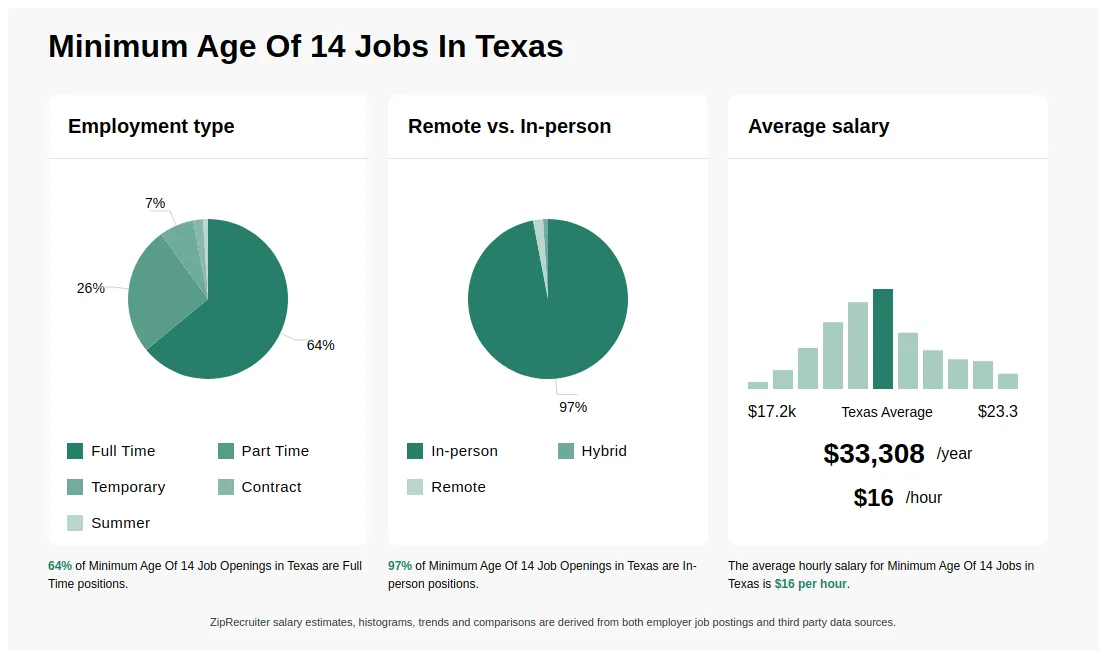
- Hours of Work: During the school year, 14 and 15-year-olds are generally limited to working no more than 8 hours on a non-school day, 18 hours in a school week, and 40 hours in a non-school week. They also cannot work before 7 a.m. or after 7 p.m. (except during school breaks when the evening hour is extended to 9 p.m.). During the summer break, the limitations are similar to non-school weeks.
- Permissible Occupations: Certain jobs are prohibited for minors due to safety concerns. These often include operating hazardous machinery, working with certain chemicals, or engaging in tasks that involve significant physical risk. The U.S. Department of Labor and the Texas Workforce Commission provide detailed lists of hazardous occupations.
- Work Permits: In Texas, minors aged 14-17 are required to obtain a Statement of Age (also known as a work permit or age certificate) from their local school district or the Texas Workforce Commission. This document verifies their age and is essential for legal employment.
How to Search for Jobs
- Local Businesses: The most direct approach is to visit businesses in your neighborhood and inquire about job openings. Many businesses, especially smaller ones, might not advertise all their entry-level positions online.
- Online Job Boards: While many platforms cater to older job seekers, some allow filtering by age or entry-level positions. Websites like Indeed, LinkedIn (though often for older individuals), and specific youth employment sites can be useful. Look for keywords like “teen jobs,” “part-time,” or “entry-level.”
- School Career Centers: High school career counselors can be invaluable resources, often aware of local businesses that actively recruit younger students and understanding the necessary paperwork.
- Networking: Inform friends, family, and neighbors that you are looking for a job. Word-of-mouth referrals can be very effective.
- Texas Workforce Commission (TWC): The TWC website offers resources for job seekers, including information on youth employment programs and potentially job listings.
Securing a job at 14 in Texas is not only about earning money but also about personal development. It’s an opportunity to build a work ethic, learn responsibility, and gain a practical understanding of the economy. The lifestyle choices available to adults are often built upon the foundations laid during these early working years, whether it’s understanding the value of money for budget travel or developing discipline for future luxury travel aspirations. The experiences gained can shape future career paths and personal growth, making that first job in Texas a significant step towards independence and success.
LifeOutOfTheBox is a participant in the Amazon Services LLC Associates Program, an affiliate advertising program designed to provide a means for sites to earn advertising fees by advertising and linking to Amazon.com. Amazon, the Amazon logo, AmazonSupply, and the AmazonSupply logo are trademarks of Amazon.com, Inc. or its affiliates. As an Amazon Associate we earn affiliate commissions from qualifying purchases.