
The question “What number of state is [Oregon]?” often arises from a place of historical curiosity and a desire to understand how [United States] territories were admitted into the Union. While not a question of immediate practical importance for a visitor planning a trip or a traveler exploring its unique landscapes, it delves into the foundational narrative of [Oregon] as a constituent part of the [United States]. Understanding this historical context enriches the appreciation of [Oregon]’s distinct identity and its journey to statehood.
The Path to Statehood: A Numbered Entry
[Oregon] officially became the 33rd state in the [United States] on February 14, 1859. This designation places it squarely in the middle ranks of the fifty states, reflecting a period of significant westward expansion and territorial growth in the mid-19th century. The process of achieving statehood was a complex one, involving the establishment of a territorial government, the development of a constitution, and the eventual approval by the [United States] Congress.
From Territory to State: A Gradual Evolution
The journey to statehood for [Oregon] was not a swift one. Its origins as a U.S. entity began with claims and exploration in the early 19th century, particularly following the Lewis and Clark Expedition. The establishment of the [Oregon Territory] in 1848 was a crucial step, formalizing the federal government’s administrative presence and paving the way for organized governance. This territorial phase allowed for the development of infrastructure, settlement patterns, and the articulation of political aspirations that would eventually lead to statehood. Key figures and events during this period shaped the identity and future of the region, laying the groundwork for its admission as the 33rd star on the [American] flag.
Understanding State Numbering and U.S. History
The numbering of states reflects the chronological order in which they were admitted to the Union. Each number represents a specific point in [American] history, marking a stage in the nation’s territorial consolidation and expansion. For [Oregon], being the 33rd state places its admission within a cluster of states that joined during the latter half of the 19th century, a period characterized by rapid growth, the exploitation of natural resources, and significant demographic shifts.
The Significance of Sequential Admission
The sequential admission of states is more than just a historical footnote; it’s a testament to the evolving vision of the [United States] as a unified nation. Each new state brought its unique culture, resources, and political perspectives, contributing to the diverse tapestry of the Union. The 33rd state, [Oregon], with its rich natural beauty and pioneering spirit, added a distinct flavor to this growing nation. Its admission was a culmination of years of settlement, political negotiation, and the growing realization of its potential as a self-governing entity.
The State of Oregon: A Traveler’s Perspective
While the numerical designation of [Oregon] as the 33rd state offers a historical perspective, the true allure of [Oregon] lies in its diverse landscapes, vibrant cities, and unique cultural offerings. Visitors are drawn to its dramatic coastline, the majestic [Cascade Mountains], fertile agricultural valleys, and the high desert east of the mountains.
Exploring Diverse Regions and Attractions
-
The Coastline: [Oregon]’s coast is renowned for its rugged beauty, with iconic spots like [Cannon Beach] featuring the distinctive [Haystack Rock]. Charming coastal towns such as [Cannon Beach] and [Depoe Bay] offer opportunities for whale watching, tide pooling, and enjoying fresh seafood. The [Oregon Coast Trail] provides a spectacular way to experience the diverse marine environments and dramatic cliffs.
-
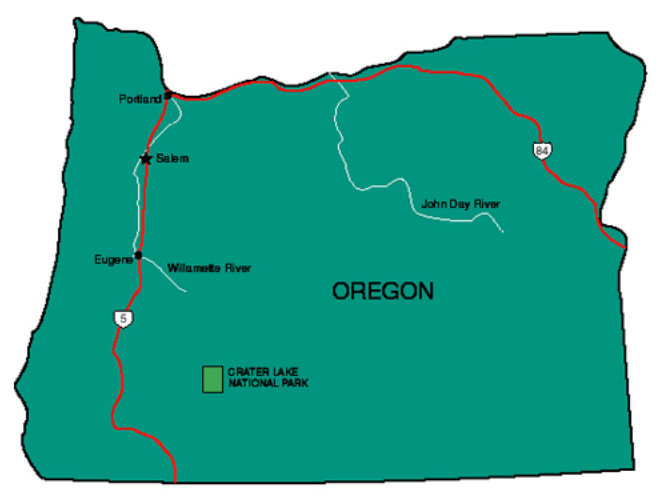
The Willamette Valley: This fertile region is the heart of [Oregon]’s wine country, boasting numerous vineyards producing world-class Pinot Noir. Cities like [Portland] and [Eugene] offer a blend of urban sophistication and outdoor adventure, with thriving arts scenes, culinary innovations, and proximity to natural wonders. [Portland] itself is famous for its quirky culture, craft breweries, and the iconic [Powell’s City of Books].
-
The Cascade Mountains: Home to several prominent peaks, including [Mount Hood], the state’s highest point, the Cascades offer unparalleled opportunities for hiking, skiing, and mountaineering. [Crater Lake National Park], with its stunningly blue lake formed in a volcanic caldera, is a must-see natural wonder.
-
Eastern Oregon: This vast region offers a starkly different landscape, characterized by high desert plains, canyons, and unique geological formations. The [John Day Fossil Beds National Monument] provides a glimpse into prehistoric life, while areas like [Wallowa Lake State Park] offer dramatic mountain scenery and outdoor recreation.
Experiencing Oregon’s Culture and Cuisine
[Oregon] has cultivated a reputation for its progressive ethos, its embrace of sustainability, and its vibrant culinary scene. From farm-to-table dining to innovative craft beverages, the state offers a delightful gastronomic journey. Visitors can explore bustling farmers’ markets, sample artisanal cheeses, and indulge in the diverse flavors of its growing restaurant scene. The state’s commitment to environmental stewardship is evident in its numerous parks, protected natural areas, and its emphasis on outdoor recreation. This dedication to preserving its natural heritage makes [Oregon] a prime destination for those seeking an authentic connection with nature.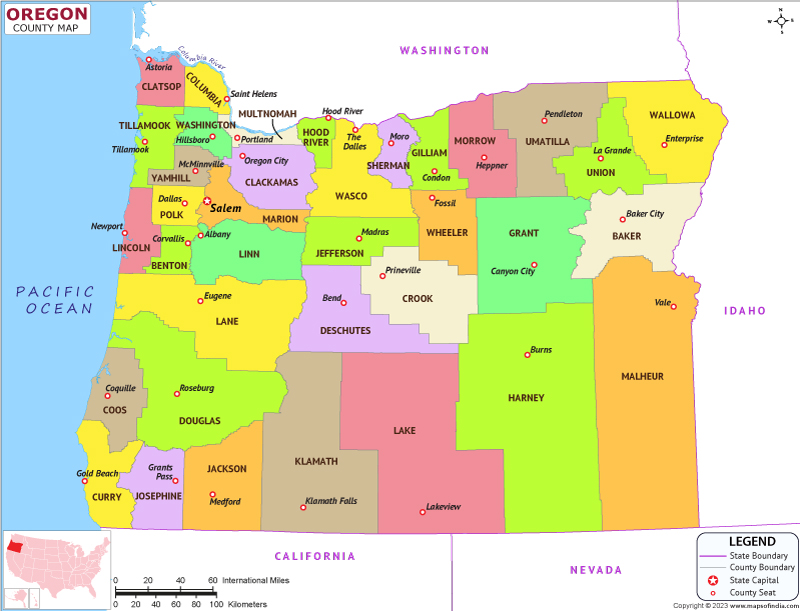
The Legacy of the 33rd State
The designation of [Oregon] as the 33rd state is a marker in time, a historical point of reference for its formal integration into the [United States]. However, the true legacy of [Oregon] extends far beyond its numerical standing. It is a state defined by its pioneering spirit, its breathtaking natural beauty, and its forward-thinking populace. From the coastal fog to the mountain peaks, and from the urban centers to the vast eastern plains, [Oregon] offers a rich tapestry of experiences that continue to captivate and inspire visitors and residents alike. Its journey from a contested territory to a thriving state is a compelling chapter in the ongoing story of the [American] West.
LifeOutOfTheBox is a participant in the Amazon Services LLC Associates Program, an affiliate advertising program designed to provide a means for sites to earn advertising fees by advertising and linking to Amazon.com. Amazon, the Amazon logo, AmazonSupply, and the AmazonSupply logo are trademarks of Amazon.com, Inc. or its affiliates. As an Amazon Associate we earn affiliate commissions from qualifying purchases.