
Navigating the regulations surrounding vehicle window tint in Texas can feel like deciphering a cryptic map. For many travelers and residents alike, understanding these rules is crucial not just for avoiding tickets, but also for enhancing the comfort and privacy of their journeys. Whether you’re a tourist exploring the vast landscapes of the Lone Star State or a local making daily commutes, knowing the permissible tint levels ensures a smooth and lawful experience. This guide delves into the specifics of Texas tint laws, offering clarity for all who use the road.
Understanding VLT: The Key to Tint Regulations
The cornerstone of window tint laws across the United States, including Texas, is the measurement of Visible Light Transmission (VLT). VLT refers to the percentage of sunlight that can pass through your vehicle’s windows. A lower VLT percentage means less light can penetrate, resulting in darker tint. Conversely, a higher VLT percentage allows more light through, meaning a clearer window.
The Science Behind VLT Measurement
The measurement of VLT is standardized and typically performed using a specialized tool called a tint meter. This device is placed on the outside of the window, and its readings provide an objective assessment of how much light is transmitted. Law enforcement officials in Texas are equipped with these meters to check compliance with state regulations. It’s important to note that even factory-tinted windows are subject to these VLT measurements, and their levels can sometimes exceed the legal limits.
Why VLT Matters for Vehicle Owners
The primary reasons for regulating VLT are safety and visibility. Extremely dark tints can obstruct a driver’s vision, particularly at night or in adverse weather conditions, increasing the risk of accidents. Additionally, excessively dark windows can make it difficult for law enforcement officers to see occupants inside a vehicle during a traffic stop, raising security concerns. Understanding VLT ensures you comply with these safety-oriented regulations while still benefiting from the advantages of window tint.
Specific Tint Percentages Allowed in Texas
Texas has specific guidelines for different windows of a vehicle. These rules are designed to strike a balance between allowing drivers to reduce glare and heat gain while maintaining adequate visibility for safety.
Front Windshield Tinting
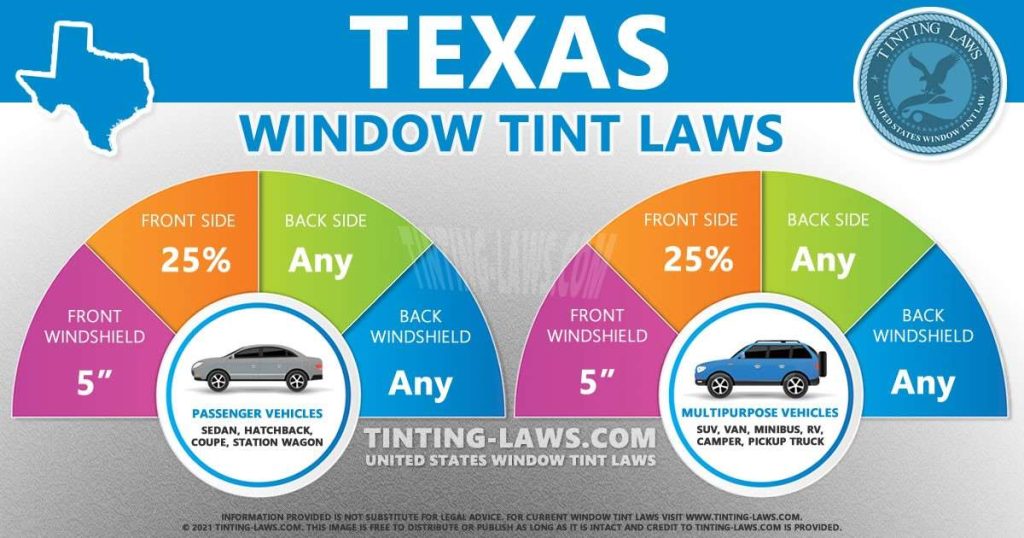
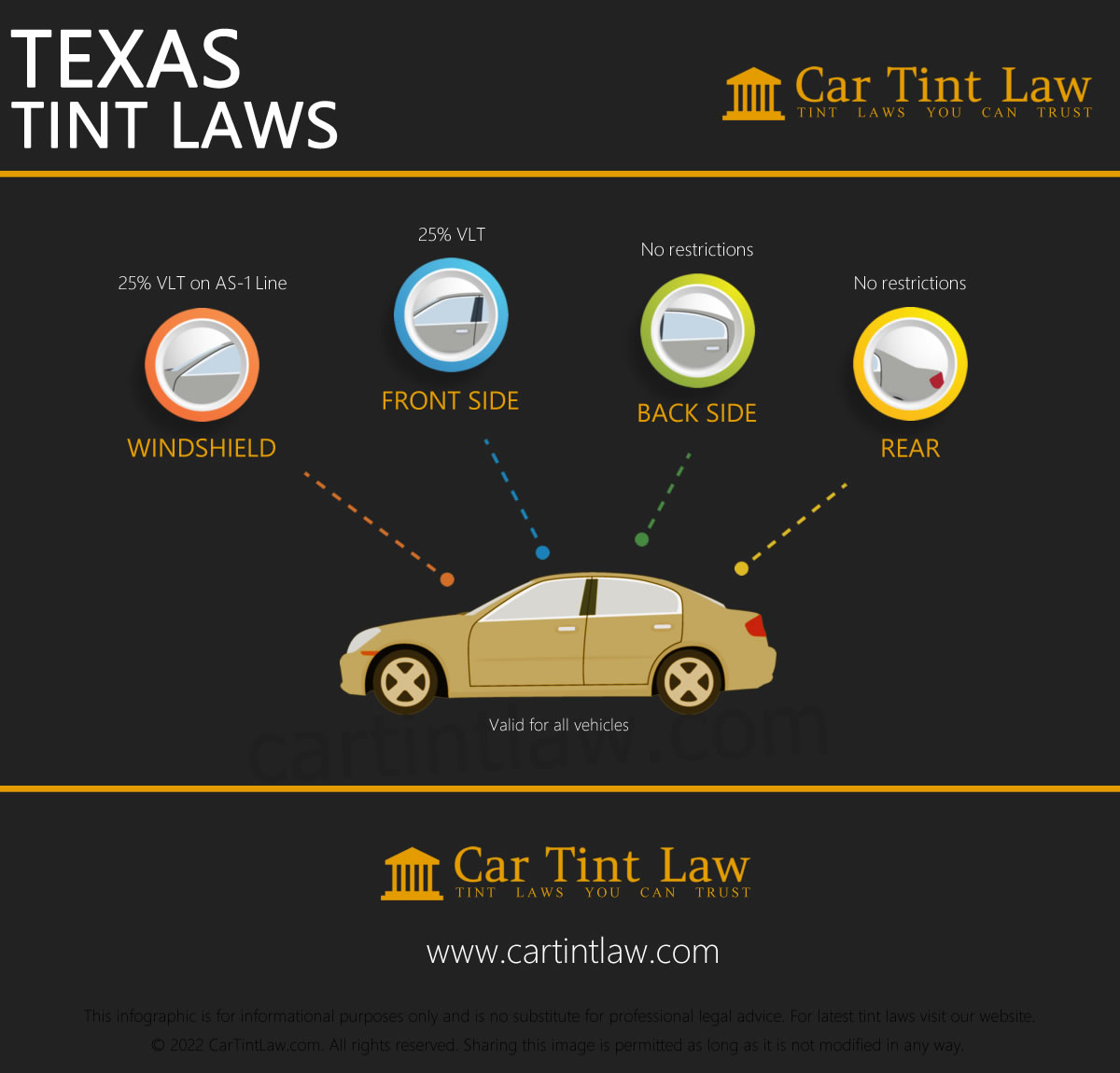
The rules for the front windshield are quite strict to ensure unobstructed driver vision. In Texas, the windshield can be tinted, but only the top portion. The law permits tinting the top six inches of the windshield or the portion above the manufacturer’s AS-1 line, whichever is greater. The AS-1 line is a standard marking found on most windshields that indicates the area where vision should not be obstructed. This allows for some reduction in sun glare without compromising the driver’s forward view.
Front Side Windows Tinting
For the front side windows (the driver’s and front passenger’s side windows), the regulations in Texas are also specific. These windows must allow at least 25% VLT. This means that no more than 75% of the light should be blocked. This level of tint is generally considered light to medium and is designed to provide some privacy and heat reduction without significantly impairing the driver’s ability to see other vehicles, pedestrians, and road conditions.
Rear Side Windows and Rear Windshield Tinting
The rules for the rear side windows and the rear windshield in Texas offer a bit more flexibility. These windows can be tinted to any darkness level, meaning there is no minimum VLT requirement. Drivers can opt for very dark tints on these windows for maximum privacy and heat rejection. However, it is still advisable to consider visibility, especially when backing up or changing lanes, and to ensure that any aftermarket tint is applied professionally to avoid potential issues with clarity or bubbling.
Exemptions to Texas Tint Laws
While the regulations are clear for most drivers, Texas does provide specific exemptions for certain individuals and vehicles. These exemptions are primarily in place to accommodate medical needs.
Medical Exemptions for Window Tint
Individuals with a documented medical condition that requires them to have darker window tint for protection from sunlight may be eligible for an exemption. This typically includes conditions like severe photosensitivity or certain skin disorders. To obtain a medical exemption, a physician licensed in Texas must certify the medical necessity for the darker tint. The vehicle owner must then apply for and receive an official exemption certificate from the Department of Public Safety. This certificate should be carried in the vehicle at all times as proof of legal compliance.
Documentation and Application Process for Exemptions
The process for obtaining a medical exemption involves a few key steps. First, the applicant must consult with their physician, who will assess their condition and determine if a tint exemption is medically warranted. If the physician agrees, they will complete the required medical certification form. The applicant then needs to submit this form, along with any other necessary documentation, to the Texas Department of Public Safety. Upon approval, the applicant will receive an exemption sticker or card. It is crucial for individuals with exemptions to understand that the exemption typically applies only to the specific windows and tint levels deemed necessary by the physician.
The Benefits of Tinting Your Vehicle’s Windows
Beyond compliance with the law, applying window tint to your vehicle offers a range of practical benefits that can enhance your driving experience, especially when traveling through the diverse climates of Texas.
Heat and UV Protection
One of the most significant advantages of window tint is its ability to block a substantial amount of solar heat and ultraviolet (UV) rays. During the hot Texas summers, this can make a considerable difference in the interior temperature of your vehicle. A cooler car means less reliance on the air conditioning system, which can lead to improved fuel efficiency. Furthermore, UV rays are known to cause damage to skin and can fade and degrade your car’s interior materials, such as upholstery and dashboard components, over time. High-quality tints offer excellent protection against these harmful rays.
Enhanced Privacy and Security
Window tint can significantly increase the privacy of your vehicle’s occupants. It makes it more difficult for people outside the car to see into the cabin, offering a greater sense of security and personal space, particularly when parked or traveling in busy areas. This also adds a layer of security by deterring potential thieves who may be looking for visible valuables inside the car. While tint alone does not make a vehicle impenetrable, it can serve as a passive deterrent.
Glare Reduction and Improved Driving Comfort
Excessive glare from the sun can be a major distraction and cause eye strain for drivers, leading to fatigue and potentially hazardous driving conditions. Window tint reduces this glare, making it easier to see the road clearly and comfortably, especially during sunrise and sunset. This improved visibility contributes to a safer and more pleasant driving experience, whether you’re cruising down I-35 or exploring scenic routes near the Big Bend National Park.
Ensuring Legal Tint for Your Vehicle in Texas
To ensure your vehicle’s tint complies with Texas law, it’s essential to be informed and choose reputable installers.
Choosing a Reputable Tint Installer
When deciding to tint your vehicle’s windows, selecting a professional and reputable installer is paramount. Experienced technicians will be knowledgeable about Texas tint laws and will use high-quality materials that meet the legal VLT requirements. They can advise you on the best tint options for your needs while ensuring compliance. Always ask about their experience with state regulations and look for installers who offer warranties on their work. A good installer will also be able to explain the VLT percentages of the films they offer.
Aftermarket vs. Factory Tint
It’s important to distinguish between aftermarket tint and factory tint. Many new vehicles come with a degree of factory tinting, often referred to as “privacy glass.” This is not applied film but rather a dyeing process within the glass itself. As mentioned earlier, even factory tint must comply with the same VLT regulations. If your factory-tinted windows are darker than the legal limit, you may still be in violation. Aftermarket tint is film applied to the glass. When getting aftermarket tint, ensure the installer measures the existing VLT of your windows before applying new film to guarantee you remain within legal limits.
Periodic Checks and Maintenance
Even legally tinted windows can sometimes be affected by wear and tear or accidental damage. It’s a good practice to periodically check your tint to ensure it hasn’t begun to bubble, peel, or delaminate, which could potentially alter its light transmission properties or become a visual obstruction. If you notice any issues, it’s best to have them addressed by a professional installer promptly. Staying informed about any potential updates or changes to Texas tint laws is also advisable, though regulations tend to remain consistent over extended periods. By understanding and adhering to these guidelines, you can enjoy the benefits of window tinting throughout your travels in Texas.
LifeOutOfTheBox is a participant in the Amazon Services LLC Associates Program, an affiliate advertising program designed to provide a means for sites to earn advertising fees by advertising and linking to Amazon.com. Amazon, the Amazon logo, AmazonSupply, and the AmazonSupply logo are trademarks of Amazon.com, Inc. or its affiliates. As an Amazon Associate we earn affiliate commissions from qualifying purchases.