
The Mississippi River, a colossal artery of the United States, is a natural wonder that has shaped the nation’s history, economy, and culture for millennia. Its immense journey, from its humble beginnings as a trickle in northern Minnesota to its sprawling delta in Louisiana, touches the lives of millions and serves as a vital corridor for commerce and exploration. For travelers, understanding the states the Mississippi River traverses is the first step in planning an unforgettable adventure along its banks, uncovering a tapestry of diverse landscapes, vibrant cities, and rich historical narratives.
A Journey Downstream: Tracing the Mighty Mississippi’s Course
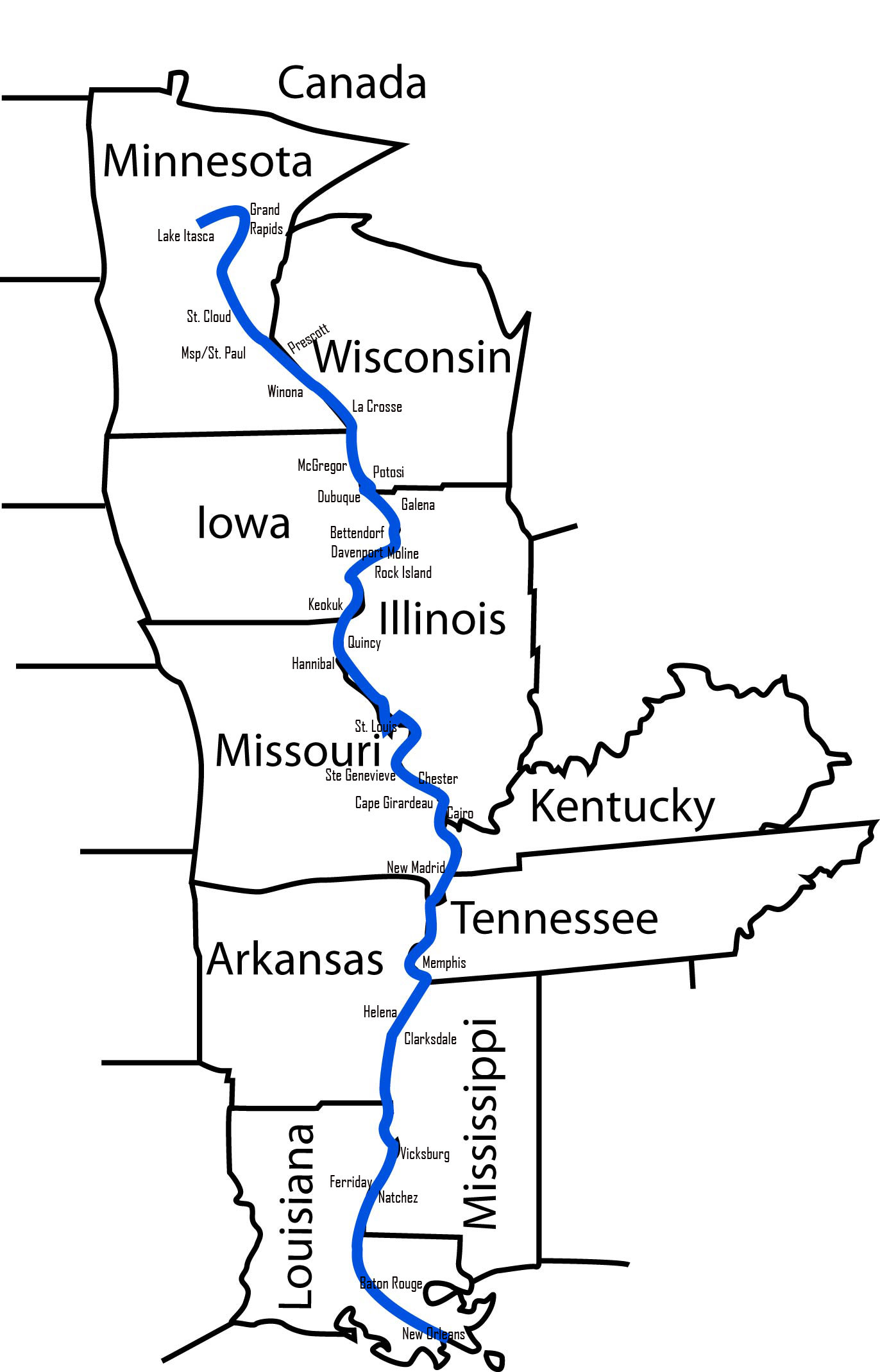
The Mississippi River is the second-longest river in North America, surpassed only by the Missouri River, which is actually a tributary that flows into the Mississippi. Together, they form the fourth-longest river system in the world. Its drainage basin is the third-largest on the planet, encompassing all or parts of 32 U.S. states and two Canadian provinces. However, the main stem of the Mississippi River itself flows through a specific set of ten states, each contributing a unique character to its grand passage.
The Headwaters: Minnesota’s Pristine Beginning
Our journey begins in the serene wilderness of northern Minnesota, where the Mississippi River emerges from Lake Itasca. This picturesque state park is a must-visit for anyone seeking to witness the river’s genesis. The easily accessible spot where visitors can step across the nascent Mississippi is a popular attraction, offering a tangible connection to the river’s epic 2,320-mile (3,730 km) voyage. From here, the river is a youthful, energetic force, meandering through forests and lakes, gradually gathering strength as it heads south. Minnesota offers a blend of natural beauty and charming towns, providing an excellent starting point for exploring the river’s upper reaches. Visitors can enjoy canoeing, kayaking, and fishing in the clear waters, with opportunities to spot abundant wildlife.
The Upper Mississippi: A Gateway to Midwestern Charm
As the Mississippi River flows southward, it forms the border between Minnesota and Wisconsin before entering Wisconsin entirely for a stretch. This upper section of the river is characterized by its dramatic bluffs, rolling hills, and lush valleys.
Wisconsin’s Scenic Beauty
Wisconsin boasts numerous state parks and recreational areas along the Mississippi, offering stunning vistas and ample opportunities for outdoor activities. Towns like La Crosse and Pepin are charming hubs for river tourism, providing access to scenic drives, historic sites, and local breweries. The river’s current here is still relatively swift, carving its path through ancient landscapes.
Iowa’s Agricultural Heart
The Mississippi River then becomes the eastern border of Iowa. This agricultural heartland is defined by vast cornfields and fertile plains, with the river playing a crucial role in transporting the region’s bounty. Cities like Dubuque and Davenport offer a glimpse into the river’s economic importance, with bustling ports and historic riverfront districts. Iowa’s contribution to the Mississippi’s narrative is one of prosperity and connection to the land. The riverfronts here are often lined with parks, museums, and restaurants, reflecting a deep appreciation for their watery neighbor.
Illinois’s Historical Significance
Continuing its southerly flow, the Mississippi River forms the western border of Illinois. This state holds a significant place in the river’s history, serving as a gateway to the American West and a vital transportation route for centuries. Galena, with its remarkably preserved 19th-century architecture, offers a step back in time, while Rock Island is home to the Arsenal, a historic military installation on an island in the river. St. Louis, Missouri, though not directly on the Mississippi‘s border with Illinois at this point, is a major city heavily influenced by the river, and the Illinois shore here is dotted with charming towns and historical markers. Illinois‘s role in the Mississippi’s story is one of commerce, conflict, and westward expansion.
The Middle Mississippi: Crossroads of America
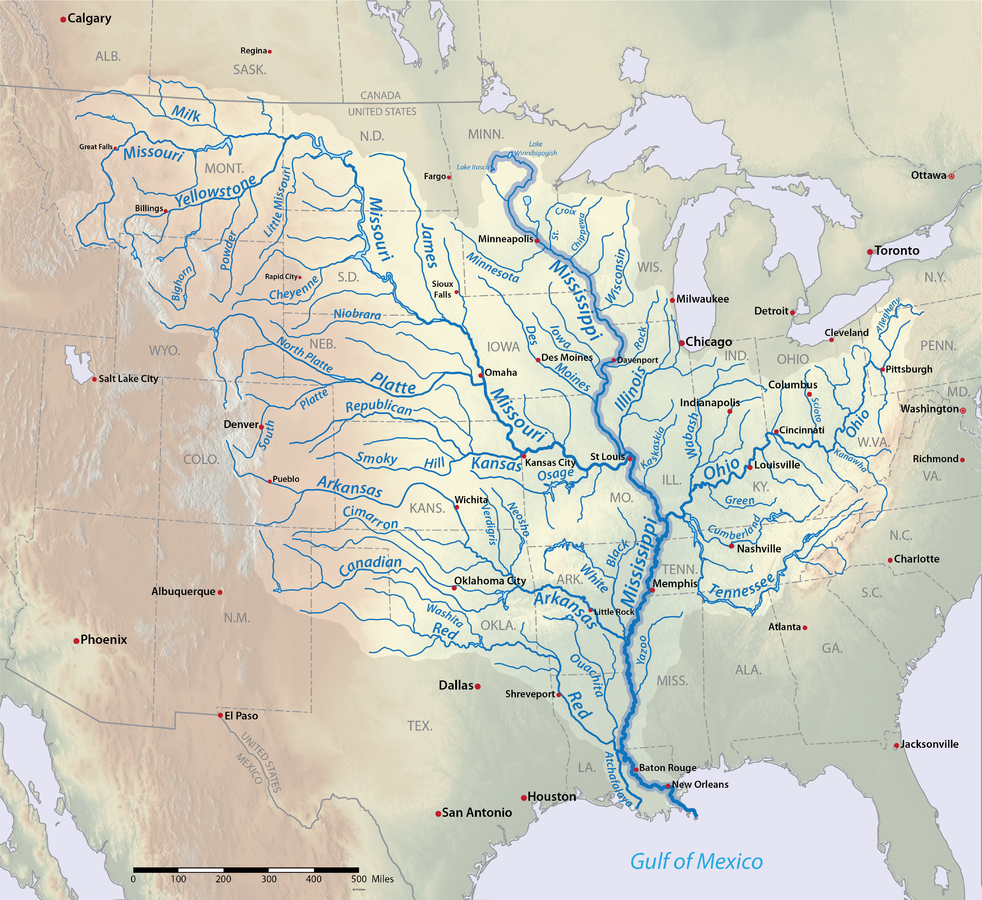
As the Mississippi River enters its middle section, it broadens and slows, becoming a more majestic and navigable waterway. This region is a critical economic and cultural hub for the United States.
Missouri’s Gateway to the West
The Mississippi River forms the eastern border of Missouri. This state is inextricably linked to the Mississippi’s legacy, particularly through St. Louis. Here, the iconic Gateway Arch, a soaring monument to westward expansion, stands as a testament to the river’s role in shaping the nation’s destiny. St. Louis itself is a vibrant city with a rich musical heritage, excellent cuisine, and numerous attractions, all deeply connected to the flow of the Mississippi. Further south, charming towns like Hannibal, the boyhood home of author Mark Twain, offer a romanticized view of river life that has captivated readers for generations. Missouri‘s contribution is one of ambition, exploration, and enduring literary influence.
Kentucky’s Gentle Embrace
The Mississippi River then forms the western border of Kentucky for a relatively short but significant stretch. While Kentucky is more widely known for its bluegrass music and bourbon distilleries, its westernmost tip embraces the mighty Mississippi. This less-traveled section offers a more tranquil experience of the river, with opportunities for birdwatching and exploring natural habitats.
Tennessee’s Western Edge
Similarly, the Mississippi River also forms the western border of Tennessee. The notable city of Memphis is a cultural powerhouse situated directly on the riverbanks. Famous for its blues music scene, barbecue, and historical significance related to the civil rights movement, Memphis embodies the spirit of the Mississippi. The National Civil Rights Museum at the Lorraine Motel and Graceland, the former home of Elvis Presley, are major draws for visitors interested in the city’s rich cultural tapestry and its intimate connection to the river.
Arkansas’s Natural Wonders
The Mississippi River then becomes the eastern border of Arkansas. This state’s delta region is a fertile plain, deeply influenced by the river’s annual floods and sediment deposits. The Mississippi River Trail offers cycling and recreational opportunities, allowing visitors to experience the natural beauty and agricultural landscapes of the Arkansas delta. Helena-West Helena is a town with a significant history tied to river trade and music.
The Lower Mississippi: The Delta’s Soul
As the Mississippi River approaches the Gulf of Mexico, it enters its final, most dramatic stage. This is the region of the Mississippi Delta, a land of bayous, swamps, and a vibrant, unique culture.
Mississippi’s Rich Heritage
The Mississippi River flows through the state of Mississippi for a considerable distance, lending its name to the state and deeply influencing its culture and history. The state is renowned for its contributions to blues music, literature, and Southern cuisine, all of which have been shaped by the river’s presence. Towns like Vicksburg, with its pivotal Civil War battlefield, and Natchez, known for its antebellum homes, offer profound historical insights. The Mississippi state offers a profound immersion into the soul of the South, with the river as its ever-present heartbeat.

Louisiana’s Grand Finale
Finally, the Mississippi River flows through the state of Louisiana, culminating in its magnificent delta. This is where the river truly expands, fanning out into a complex network of channels, bayous, and wetlands before emptying into the Gulf of Mexico. New Orleans, a world-renowned city, is built upon the alluvial plains of the Mississippi. Its unique blend of French, Spanish, African, and American influences, its iconic jazz music, its Creole cuisine, and its vibrant festivals are all intrinsically linked to the river’s historical role as a vital port and cultural melting pot. The French Quarter, the Garden District, and the bustling port are testaments to the Mississippi’s enduring legacy. The Atchafalaya Basin, a massive swampland that is the state’s official recreational area, is also a crucial part of the Mississippi‘s hydrological system, showcasing the immense power and beauty of this aquatic landscape. Louisiana provides the grand, unforgettable conclusion to the Mississippi’s epic voyage.
The Mississippi River is more than just a waterway; it’s a living, breathing entity that has witnessed and shaped the course of American history. From the pristine lakes of Minnesota to the bustling port of New Orleans, each state it touches adds a unique chapter to its ongoing story, offering travelers an unparalleled journey through the heart and soul of a nation.
LifeOutOfTheBox is a participant in the Amazon Services LLC Associates Program, an affiliate advertising program designed to provide a means for sites to earn advertising fees by advertising and linking to Amazon.com. Amazon, the Amazon logo, AmazonSupply, and the AmazonSupply logo are trademarks of Amazon.com, Inc. or its affiliates. As an Amazon Associate we earn affiliate commissions from qualifying purchases.