
Navigating the daily rhythms of a vibrant metropolis like New York can be a captivating experience, especially for those who seek to align their spiritual practices with the pulse of the city. For observant Muslims, understanding the prayer times, particularly the dawn prayer known as Fajr, is fundamental. This guide delves into the intricacies of determining Fajr time in New York City, offering insights for residents and visitors alike to seamlessly integrate this crucial prayer into their urban itinerary.
Understanding Fajr Prayer
Fajr is the first of the five daily obligatory Islamic prayers (Salah) and is performed before sunrise. Its significance lies in its position as the prayer that ushers in the day, a moment of spiritual connection and reflection before the world awakens. The exact timing of Fajr is determined by the position of the sun: it begins when the first light of dawn appears in the eastern sky and ends at sunrise.

The Astronomical Basis of Prayer Times
Islamic prayer times are intrinsically linked to celestial observations. Fajr prayer begins when the true dawn appears, a phenomenon characterized by a faint, diffused light spreading across the horizon. This is distinct from twilight, which precedes it. The end of Fajr time is precisely at the moment the sun’s upper limb becomes visible above the horizon.
Factors Influencing Fajr Timing in New York
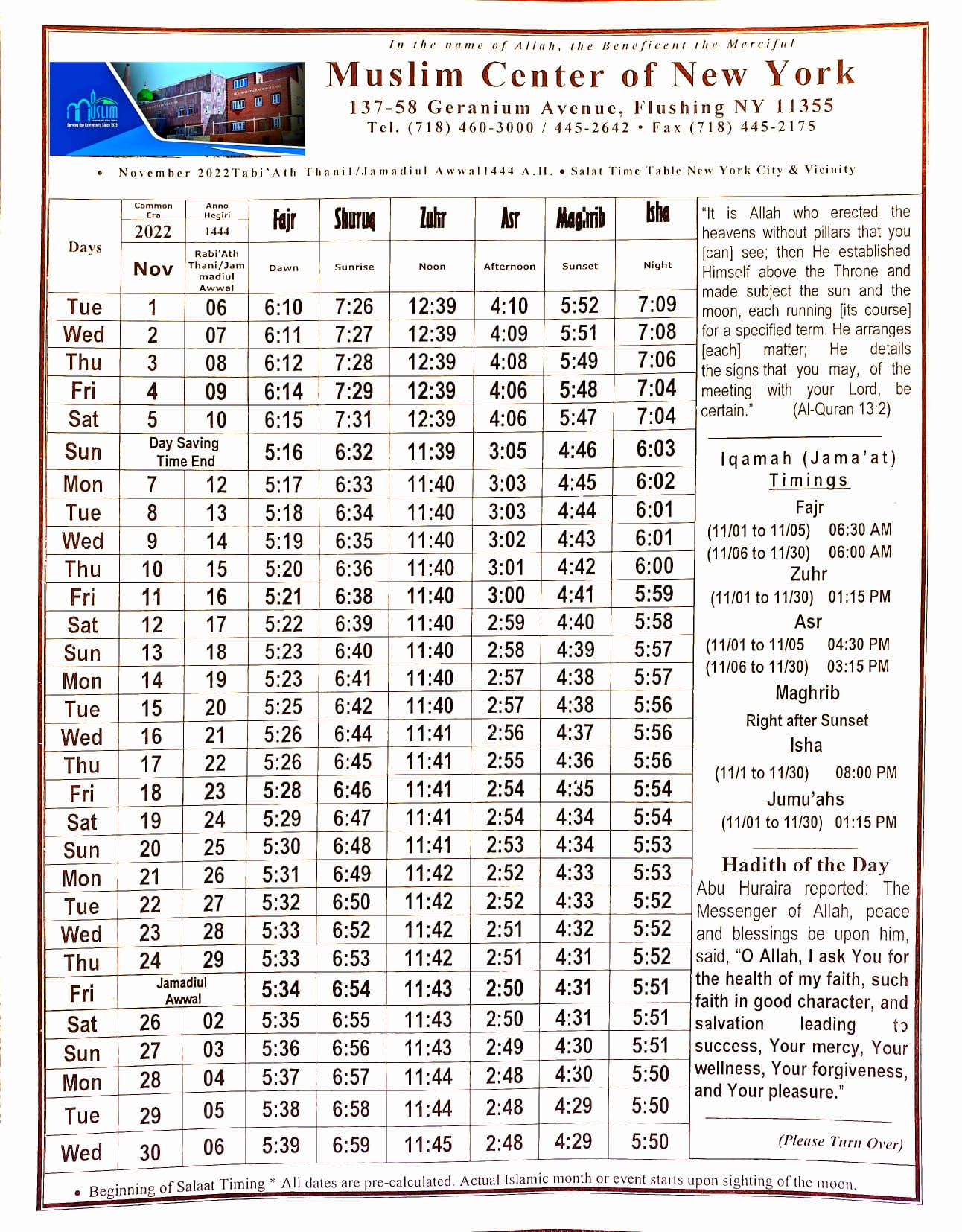
The duration of daylight and the precise timing of sunrise and sunset vary significantly throughout the year due to the Earth’s axial tilt and its orbit around the sun. This fluctuation directly impacts the timing of Fajr prayer. In New York City, located at approximately 40.7 degrees North latitude, these seasonal variations are pronounced. During the summer months, days are longer, meaning Fajr prayer occurs much earlier in the morning, often in the pre-dawn hours. Conversely, winter brings shorter days, pushing Fajr prayer time later into the morning, though still before sunrise.
Calculating Fajr Time in New York
Calculating Fajr prayer times accurately requires a sophisticated understanding of astronomical principles and geographical coordinates. While manual calculation is possible, it is complex and prone to error. Modern technology and specialized applications have made this process considerably more accessible.
Traditional Methods vs. Modern Tools
Historically, Muslims relied on observatories, local imams, and visual observation of the sky to determine prayer times. In contemporary New York, however, a plethora of digital tools offer precise and up-to-date Fajr timings. These range from smartphone applications to dedicated websites.
Popular Prayer Time Applications
Several widely used applications provide accurate Fajr times for New York City and other locations worldwide. These apps often utilize advanced algorithms that factor in latitude, longitude, date, and selected calculation methods to deliver precise timings. Users can typically set customizable alerts to be notified as Fajr time approaches, ensuring they do not miss the prayer. Some popular options include Muslim Pro, Prayer Times by Salams, and IslamicFinder.
Online Prayer Time Calculators
For those who prefer not to install an app or need a quick lookup, numerous websites offer online prayer time calculators. These platforms typically require the user to input their location (often by selecting from a list or entering a ZIP code) and the desired date. They then display the calculated prayer times, including Fajr, Dhuhr, Asr, Maghrib, and Isha. Websites like IslamicFinder, MuslimVillage, and many local New York mosque websites provide such services.
The Importance of Location and Calculation Method
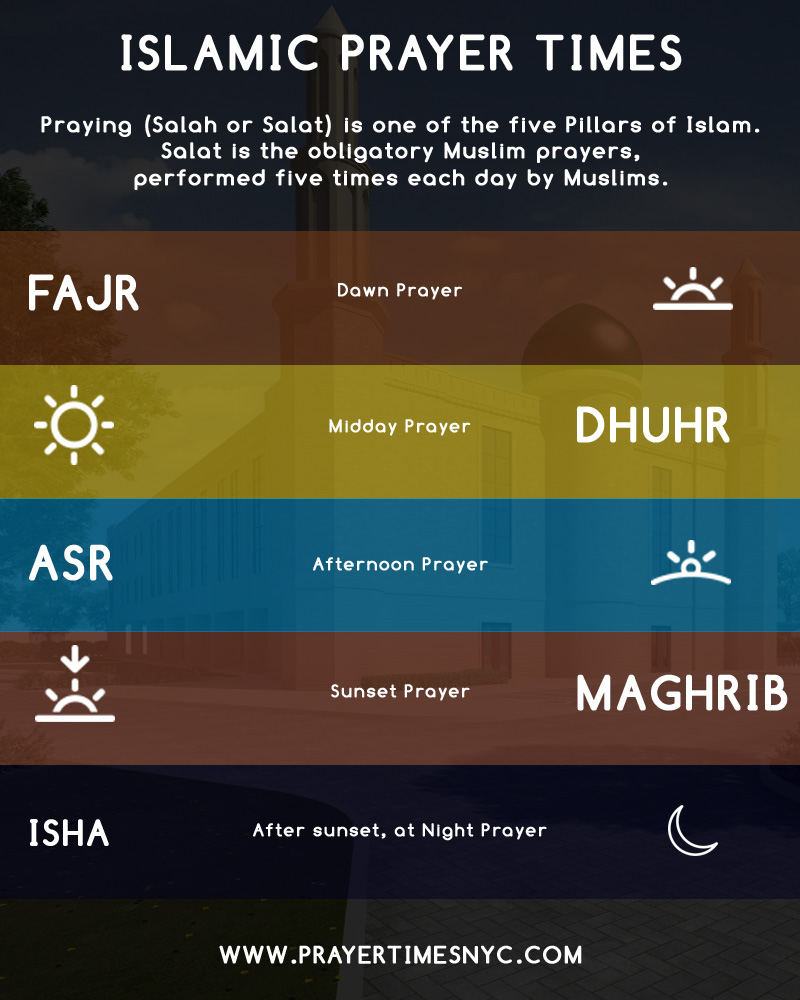
It is crucial to note that prayer time calculations can vary slightly depending on the specific method used. Different Islamic scholarly traditions and organizations employ various formulas to determine Fajr and Isha times, particularly in higher latitudes where twilight can persist for extended periods. Common methods include the Muslim World League (MWL) method, the University of Islamic Sciences (Karachi) method, and the Shafi’i method, among others. Most prayer time apps and websites allow users to select their preferred calculation method, ensuring adherence to their specific fiqh (jurisprudence). For New York, the default settings of most reputable applications are generally accurate and widely accepted.
Experiencing Fajr in New York City
Observing Fajr prayer in New York offers a unique spiritual encounter, blending personal devotion with the city’s dynamic energy. Whether one is attending a local mosque or performing the prayer in a private space, the experience can be profoundly moving.
Mosques in New York City
New York City boasts a rich tapestry of Islamic centers and mosques, serving a diverse Muslim population. These institutions are vibrant hubs of community, faith, and learning. Many offer congregational Fajr prayers, providing an opportunity for collective worship and connection. Some of the prominent mosques include the Islamic Cultural Center of New York on the Upper East Side, the Masjid At-Taqwa in Brooklyn, and the Al-Hikmah Mosque in Queens. Visitors are often welcome to attend prayers, and many mosques provide information about prayer times on their websites or through dedicated signage.
Navigating to a Mosque for Fajr
For visitors or new residents, planning a visit to a mosque for Fajr requires checking the mosque’s specific schedule and location. Public transportation in New York is extensive, with subways and buses running throughout the night, making it feasible to reach most mosques for early morning prayers. It is advisable to check the route and schedule in advance, especially for prayers occurring before typical public transport operating hours.
Performing Fajr Individually
For those who prefer to pray individually, or when attending a congregational prayer is not feasible, performing Fajr in one’s accommodation or a quiet public space is permissible. Many hotels in New York are accommodating, and with prior notice, some may offer amenities or guidance for guests observing religious practices. Finding a quiet corner in a park or even a secluded spot in a transit hub can also serve as a prayer space, provided it is done respectfully and discreetly.
Planning Your Day with Fajr
Integrating Fajr prayer into a daily schedule in New York requires a mindful approach, especially when engaging with the city’s many attractions and activities.
Morning Activities and Fajr
For early risers, the quiet hours after Fajr present a unique opportunity to experience New York before the bustling crowds descend. This could be a peaceful walk through Central Park, a visit to a local coffee shop for an early breakfast, or simply enjoying the city’s skyline from a vantage point. Many tourist attractions also open early, allowing for visits before the peak hours. For instance, visiting the 9/11 Memorial & Museum or taking an early ferry to the Statue of Liberty can be facilitated by an early start after Fajr.
Fajr and Accommodation Choices
When selecting accommodation in New York, proximity to a mosque can be a consideration for some travelers. However, with the availability of accurate prayer time applications and the city’s efficient public transport, this is not always a necessity. Hotels like the The Plaza, the Mandarin Oriental New York, or even more budget-friendly options across the boroughs can serve as comfortable bases from which to perform Fajr prayers. The key is to be organized and to utilize the available tools to stay on track with prayer timings.
Conclusion
Understanding and observing Fajr prayer in New York is a testament to the enduring presence of faith within a global metropolis. By leveraging modern technology and embracing the city’s diverse offerings, Muslims can find spiritual fulfillment and engagement within the dynamic rhythm of New York City. Whether you are a resident, a visitor, or simply curious about the spiritual landscape of this iconic city, knowing the time for Fajr is a fundamental step in connecting with a significant aspect of daily life for many New Yorkers.
LifeOutOfTheBox is a participant in the Amazon Services LLC Associates Program, an affiliate advertising program designed to provide a means for sites to earn advertising fees by advertising and linking to Amazon.com. Amazon, the Amazon logo, AmazonSupply, and the AmazonSupply logo are trademarks of Amazon.com, Inc. or its affiliates. As an Amazon Associate we earn affiliate commissions from qualifying purchases.