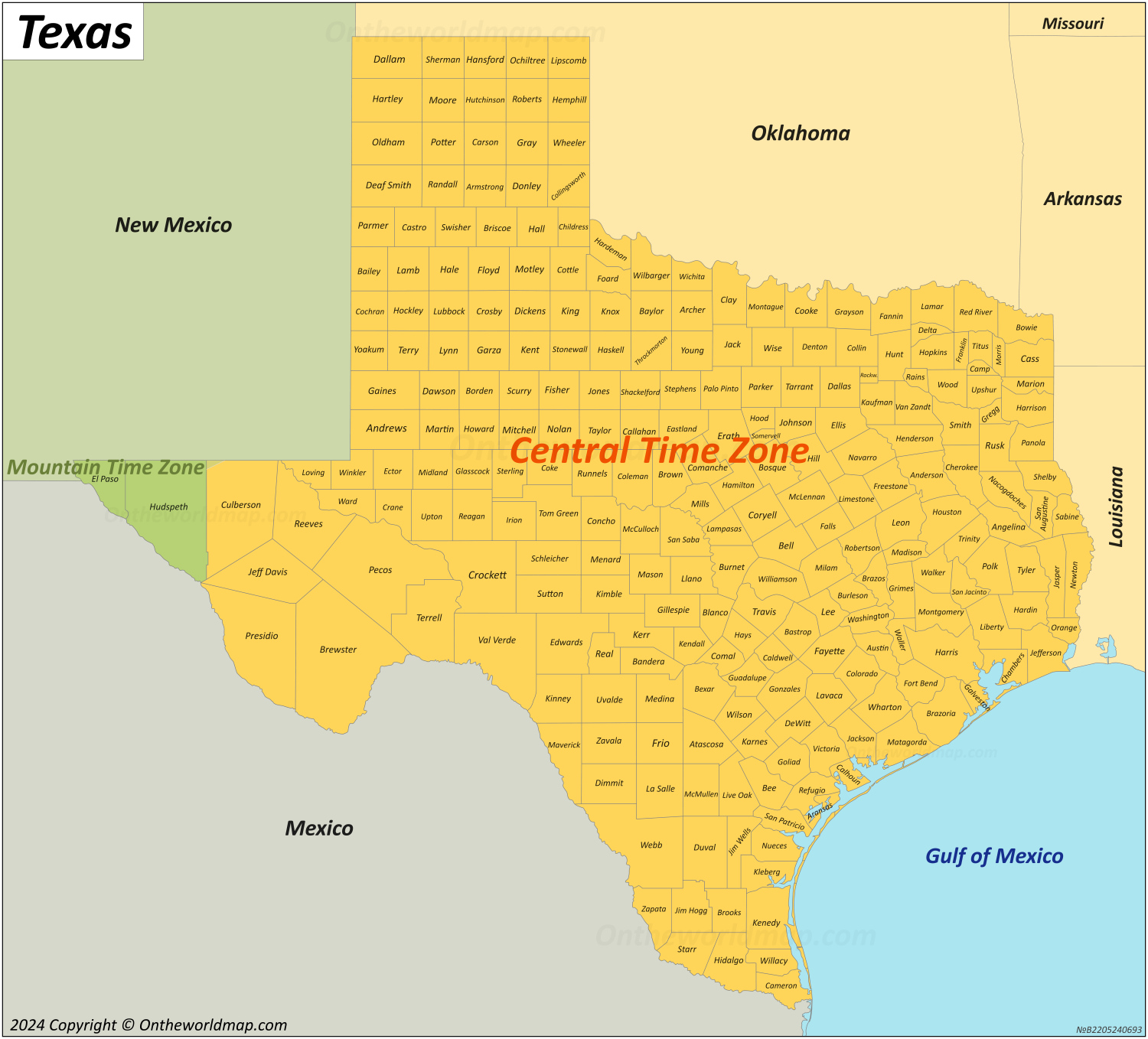
Texas, the second-largest state in the United States by both area and population, is a vast land of diverse landscapes, vibrant cities, and rich history. From the piney woods of East Texas to the deserts of the West, and from the bustling metropolises of Houston and Dallas to the cultural gems of Austin and San Antonio, this state offers an unparalleled array of experiences for travelers. However, its sheer size brings with it an important logistical consideration for anyone planning a visit or conducting business: time zones. While the majority of Texas operates on one primary time zone, a significant portion in the far west adheres to another, creating a unique dynamic that savvy travelers and residents alike must understand.
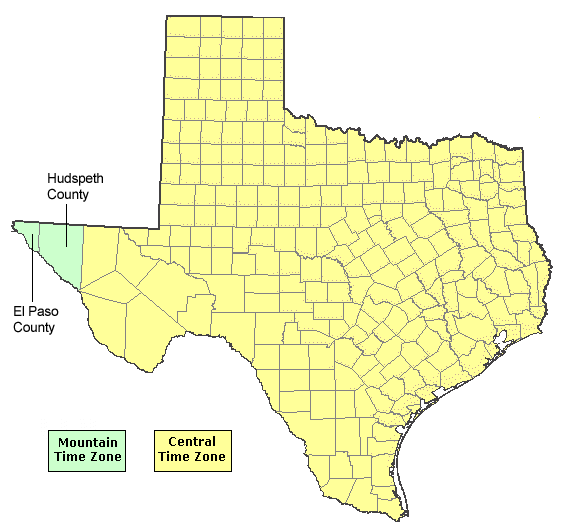
Understanding the time zones of Texas is crucial for seamless travel planning, booking accommodations, coordinating meetings, and making the most of your tourism activities. Whether you’re flying into DFW International Airport in Dallas, exploring the historic Alamo in San Antonio, or venturing into the rugged beauty of Big Bend National Park near El Paso, being aware of the local time will ensure your itinerary runs smoothly and your experience is stress-free.
Understanding Texas’s Time Zone Landscape
The division of time zones across large geographical areas like Texas is a fascinating consequence of the Earth’s rotation and the need for standardized timekeeping. Historically, local time was determined by the sun’s position, leading to countless variations. The introduction of standardized time zones in the late 19th and early 20th centuries aimed to simplify travel, communication, and commerce across vast regions. For Texas, its position within the continental United States places it predominantly in one major time zone, with a notable exception.
Central Standard Time (CST): The Dominant Zone
The overwhelming majority of Texas observes Central Standard Time (CST), which is UTC-6 during standard time and UTC-5 during Daylight Saving Time (CDT). This encompasses all of the major population centers and popular tourist destinations, including Houston, Dallas, Austin, San Antonio, Fort Worth, and Corpus Christi. When people typically refer to “Texas time,” they are almost always referring to CST/CDT.
This means that if you’re planning a trip that involves flying into George Bush Intercontinental Airport in Houston, enjoying the Riverwalk in San Antonio, or exploring the vibrant music scene in Austin, you’ll be operating on Central Time. This consistent time zone across the most frequently visited parts of the state simplifies travel logistics considerably for most visitors.
Mountain Standard Time (MST): The Western Exception
While the vast majority of Texas is on Central Time, there’s a significant exception in the far western reaches of the state. The city of El Paso and the two westernmost counties, Hudspeth County and Culberson County, observe Mountain Standard Time (MST), which is UTC-7 during standard time and UTC-6 during Daylight Saving Time (MDT). This means that these areas are one hour behind the rest of Texas.
This time zone demarcation is a natural extension of the Mountain Time Zone that covers states to the west, such as New Mexico and Arizona. For travelers venturing into this ruggedly beautiful part of Texas, home to attractions like Guadalupe Mountains National Park and the gateway to Big Bend National Park, it’s crucial to remember this time difference. A flight from Dallas to El Paso, for example, will appear to take an hour less than its actual duration due to the time change.
Daylight Saving Time in Texas
Like most of the United States, Texas observes Daylight Saving Time (DST). This means that on the second Sunday in March, clocks “spring forward” one hour, and on the first Sunday in November, they “fall back” one hour.
- During DST, Central Standard Time becomes Central Daylight Time (CDT), which is UTC-5.
- During DST, Mountain Standard Time becomes Mountain Daylight Time (MDT), which is UTC-6.
This biannual adjustment affects both time zones within Texas simultaneously, maintaining the one-hour difference between the Central and Mountain Time portions of the state. Travelers should always verify whether their travel dates fall within or outside of Daylight Saving Time to avoid any confusion, especially when planning arrivals and departures.
Planning Your Texas Journey: Time Zones and Travel
The diverse geography and dual time zones of Texas necessitate careful planning, especially for those embarking on extensive road trips or multi-city itineraries. From flight schedules to hotel check-ins and tour timings, understanding the local time is paramount for a smooth and enjoyable experience.
Navigating Flights, Trains, and Road Trips
When planning travel across Texas, especially if your journey includes the westernmost counties, time zone changes become a critical factor.
- Flights: Airline tickets will always display departure and arrival times in local time. If you’re flying from Houston (CDT) to El Paso (MDT), a 2.5-hour flight might show a 1:00 PM departure and a 2:30 PM arrival. This seemingly short duration is because you gain an hour crossing into the Mountain Time Zone. Conversely, flying from El Paso to Dallas would make the flight appear an hour longer. Always account for the actual duration plus the time zone shift.
- Road Trips: For travelers enjoying the freedom of a road trip, particularly along Interstate 10 which spans both time zones, it’s easy to forget the change. As you drive west past Hudspeth County, you’ll effectively turn your clock back an hour. This can impact meal plans, hotel check-ins, and scheduled activities. Signs indicating the time zone change are often present, but it’s wise to double-check.
- Public Transport: Amtrak and bus services will also operate on local times. Always confirm with the operator if you’re uncertain about how time zone changes might affect arrival or departure times, particularly on long-distance routes that cross multiple time zones, connecting Texas to neighboring states like Louisiana, Oklahoma, or New Mexico.

Seamless Hotel Bookings and Check-ins
Booking accommodations in Texas is generally straightforward, but understanding the local time is crucial for hassle-free check-ins and check-outs.
- Confirmation Times: All booking confirmations from hotels like Marriott, Hilton, or Hyatt will specify times in the hotel’s local time zone. This is particularly important if you’re arriving from a different time zone. A late check-in specified for 10:00 PM CDT might be 9:00 PM MDT if you’re calling from El Paso, or 11:00 PM EST if you’re calling from the East Coast.
- Amenities and Services: Hotel amenities, such as breakfast hours, pool access, and gym opening times, are always displayed in local time. If you’re battling jet lag or have just crossed a time zone, be mindful of these schedules to avoid missing out. For business travelers, arranging early morning conference calls requires a clear understanding of the local time zone of your hotel.
- Long-term Stays: For those looking into long-term stays or apartment rentals in cities like Austin or Dallas, your daily routine will naturally align with Central Time. If you then decide to take a weekend trip to Big Bend or Guadalupe Mountains, remember to adjust your internal clock for the one-hour shift.
Maximizing Your Tourism Experiences and Attractions
Texas boasts an incredible array of attractions, from historical landmarks to natural wonders and thrilling theme parks. Time zones can play a subtle but significant role in how you experience them.
- Attraction Hours: Most tourist attractions, such as Space Center Houston, The Alamo, Six Flags Over Texas, or Schlitterbahn Waterpark, clearly post their operating hours in local time. For example, if AT&T Stadium offers a 9:00 AM tour, it will be 9:00 AM CDT.
- Guided Tours and Excursions: When booking guided tours, whether it’s a food tour in Austin or a scenic drive near Big Bend, confirm the start times relative to your current location, especially if you’re traveling across the time zone boundary on the day of the tour.
- Outdoor Activities: For outdoor enthusiasts heading to South Padre Island or a state park, sunrise and sunset times will vary not only geographically but also by time zone. This affects optimal times for fishing, hiking, or simply enjoying the natural beauty. A sunset in El Paso will occur roughly an hour later by the clock than a sunset in [Houston](https://lifeoutofthebox.com/houston], even accounting for geographical longitude differences within their respective time zones.
Time Zones and the Texas Lifestyle
Beyond travel logistics, time zones are deeply interwoven into the fabric of the Texas lifestyle, affecting everything from daily routines to state-wide communications and business operations.
Business and Family Connections Across the State
For residents and frequent visitors, managing a network of contacts across Texas’s dual time zones is a routine part of life.
- Business Operations: Companies with offices in both Central Texas and El Paso must always account for the one-hour difference when scheduling meetings, deadlines, or inter-office communications. A 9:00 AM meeting in Dallas is an 8:00 AM start for colleagues in El Paso.
- Family Visits: Texans often have family spread across the state. Coordinating holiday gatherings, phone calls, or video chats requires a quick mental adjustment, especially for those living near the time zone boundary or who frequently travel between the two. Imagine calling a family member in El Paso from Austin at 8:00 PM – it’s already 7:00 PM for them, potentially cutting into their evening plans.
- Government and Services: State government offices, like those in Austin, operate on Central Time. If you’re dealing with state-level services or agencies from El Paso, their closing time of 5:00 PM CDT effectively means 4:00 PM MDT for you.
Event Planning and Local Rhythms
Planning events in Texas, whether it’s a concert, a sporting event, or a festival, always adheres to the local time zone of the venue. For large state-wide events or broadcasts, schedules are typically announced in CDT, with a note for MST observers.
The rhythm of daily life – when shops open, when restaurants serve dinner, when local news airs – all follow the local clock. Travelers crossing into the Mountain Time Zone might notice that businesses open and close an hour “later” by their Central Time internal clock, or that dinner is served “later” in the evening. This creates a slightly different pace of life that visitors often appreciate when exploring the unique culture of West Texas.
Tips for Travelers: Conquering Texas Time Differences
Navigating Texas’s time zones is straightforward with a few smart strategies:
- Always Confirm Local Times: When booking flights, hotels, or tours, pay close attention to the specified time zone. Most reputable booking platforms will show times in the local zone of the destination.
- Set Your Devices to Automatic: Ensure your smartphone, tablet, and other electronic devices are set to automatically update their time zone. This is the simplest way to keep track of the local time.
- Use a World Clock App: A world clock app can be invaluable for quickly checking the time in different Texas cities if you’re planning a multi-zone itinerary.
- Allow for Adjustment: If you’re traveling a significant distance across time zones (e.g., from California to Texas, or even from El Paso to Houston), factor in some adjustment time, especially if you have important meetings or activities scheduled shortly after arrival. While a one-hour shift isn’t severe, it can still affect your energy levels.
- Communicate Clearly: When coordinating with others, especially across the Central and Mountain Time divide, explicitly state the time zone (e.g., “Let’s meet at 2 PM CDT” or “The event starts at 7 PM MDT”).
- Be Mindful of Daylight Saving Time: Remember the twice-yearly clock changes. Double-check schedules around these dates to avoid any confusion.
In conclusion, while the question “What timezone is Texas?” primarily points to Central Standard Time, the existence of the Mountain Standard Time zone in its western reaches adds an intriguing layer to travel and lifestyle considerations. By understanding and accounting for these differences, visitors and residents can effortlessly navigate the diverse and expansive landscape of the Lone Star State, ensuring every journey, booking, and experience is perfectly timed.