
While the allure of Connecticut often conjures images of charming New England towns, picturesque coastlines, and vibrant autumn foliage, its historical significance runs far deeper than its scenic beauty. Nestled within this rich tapestry of the past lies a foundational document that profoundly influenced the development of American governance: the Fundamental Orders of Connecticut. Often hailed as the first written constitution in North America, this document, adopted in 1639, laid the groundwork for a self-governing society, predating even the United States Constitution by over a century.
This exploration delves into the origins, content, and enduring legacy of the Fundamental Orders, examining its place within the broader narrative of early American history, its connection to the burgeoning settlements of the region, and its relevance to understanding the principles of representative government that continue to shape the United States.
The Crucible of Creation: Genesis of the Fundamental Orders
The seeds of the Fundamental Orders were sown in the fertile ground of religious and political dissent in England. Many of the early settlers in what would become Connecticut were Puritans, a group who sought to reform the Church of England and establish a society governed by their religious principles. Facing persecution and seeking greater autonomy, they journeyed across the Atlantic to establish new communities in the New World.
Religious and Political Motivations
The Puritans’ desire for religious freedom was intrinsically linked to their vision of a godly commonwealth. They believed that their government should reflect their understanding of biblical law and that only those who were members of their church should have a voice in civic affairs. This strict adherence to religious tenets, while a driving force for their migration, also presented challenges in establishing a stable and inclusive society.
The founding of the Connecticut Colony was not a singular event but rather a consolidation of several independent settlements that emerged along the Connecticut River. These settlements included Hartford, Wethersfield, and Windsor. Each had its own nascent form of governance, but as the settlements grew and interacted, a need for a unified and formalized structure became apparent.
The Influence of Reverend Thomas Hooker
A pivotal figure in the creation of the Fundamental Orders was Reverend Thomas Hooker. A respected clergyman and theologian, Hooker was known for his progressive views on governance. He believed that the authority of the government derived from the consent of the governed, a radical concept for the time. His influential sermon, delivered in 1638, is often cited as the ideological precursor to the Fundamental Orders, advocating for a government that was both divinely ordained and popularly supported. Hooker’s vision resonated with the settlers, who were eager to establish a system that allowed for greater participation in their own governance.
The Charter of the Massachusetts Bay Colony and the Need for Autonomy
The settlers in Connecticut had initially been part of the Massachusetts Bay Colony. However, they found the governance of Massachusetts to be too centralized and restrictive. The distance from the governing bodies in Massachusetts and the differing priorities of the settlers in the Connecticut River Valley fostered a strong desire for independent administration. The Fundamental Orders were thus born out of a practical necessity for self-governance, coupled with a deeply held belief in the right of a community to establish its own laws and elect its own leaders.
The Framework of Governance: Key Provisions of the Fundamental Orders
The Fundamental Orders of Connecticut, though a relatively brief document, contained principles that were remarkably advanced for their era. It established a framework for a representative democracy, outlining the structure of government, the rights and responsibilities of citizens, and the process for electing officials.
Structure of Government and Separation of Powers
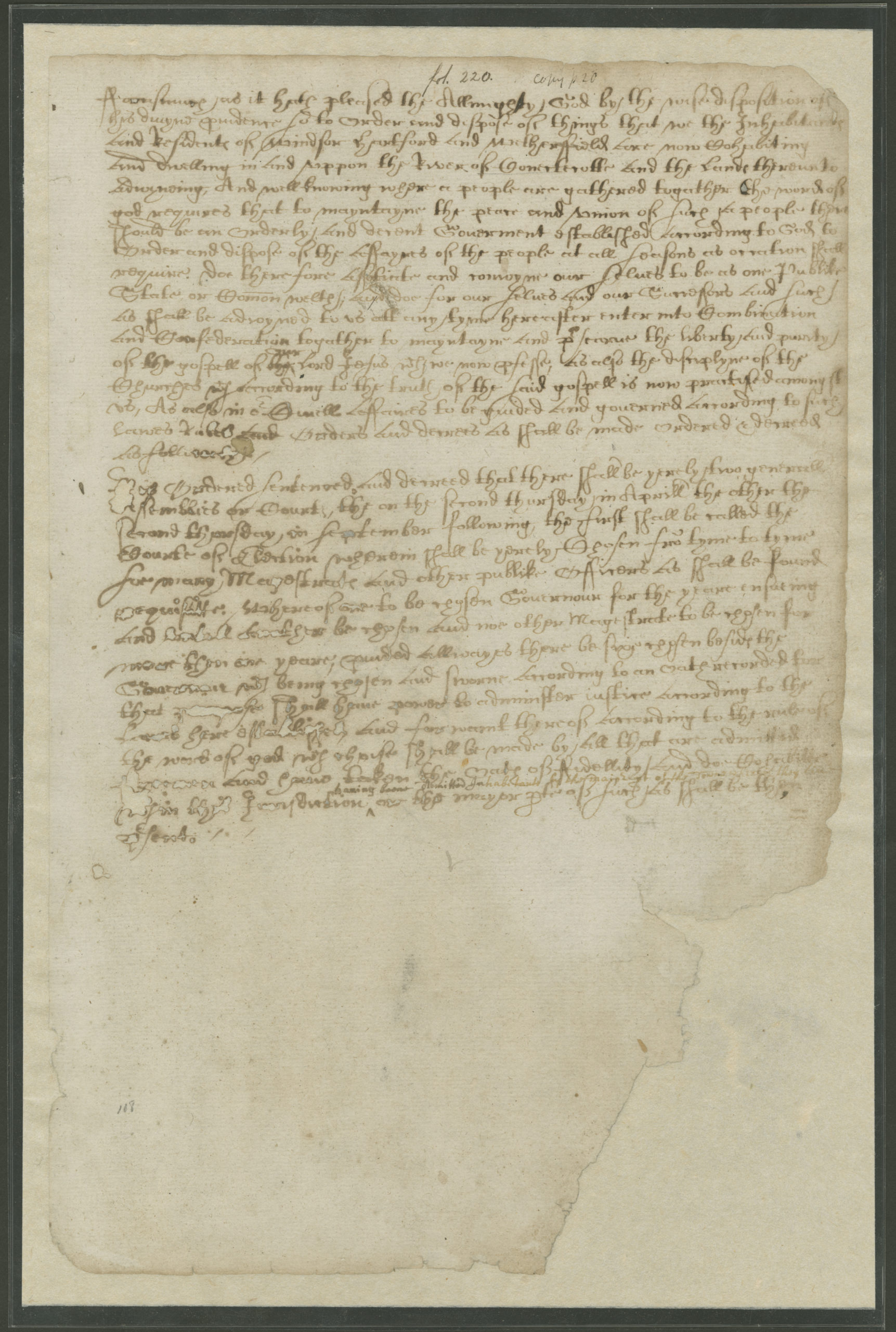
The Fundamental Orders established a General Court, which served as the legislative body. This court was composed of elected representatives from each town. The executive branch was headed by a Governor and a Deputy Governor, elected annually by the freemen (eligible voters). The judicial branch was also established, with magistrates appointed to hear cases.
A significant aspect of the Fundamental Orders was its implicit, and in some ways explicit, separation of powers. While the Governor and magistrates were elected, they were not to be perpetual rulers. The General Court held the power to enact laws, and the Governor was accountable to the freemen. This division of authority was crucial in preventing the concentration of power in any single individual or group.
Eligibility for Office and the Concept of Citizenship
Crucially, the Fundamental Orders expanded the concept of who could participate in government. While religious conformity remained a factor, eligibility for freemanship and thus the right to vote and hold office was not solely tied to church membership, as it was in some other colonies. The document stipulated that freemen were to be men who had taken an oath of fidelity to the colony and were of good character. This broader definition of eligible citizens, while still restrictive by modern standards, represented a step towards a more inclusive political system.
The document also outlined the rights and duties of the inhabitants, emphasizing the importance of law and order for the good of the community. It established a system where laws were to be made by the representatives of the people and enforced by elected officials.
The Role of the Governor and the General Court
The Governor and the Deputy Governor, elected annually, were tasked with presiding over the General Court and ensuring the execution of laws. However, their power was not absolute. The General Court, composed of deputies from each town, held the ultimate legislative authority. The deputies were elected by the freemen in their respective towns, ensuring that the government was responsive to the will of the people. The General Court convened regularly to debate and pass laws, approve budgets, and address the needs of the growing colony.
Enduring Significance and Legacy
The Fundamental Orders of Connecticut may not be as widely recognized as the Declaration of Independence or the United States Constitution, but its impact on the trajectory of American governance is undeniable. It served as a crucial stepping stone in the evolution of democratic ideals and practices in North America.
A Blueprint for Self-Governance
The Fundamental Orders provided a practical model for a written constitution and a representative government. It demonstrated that a colony could establish its own governing framework, elect its own leaders, and create its own laws, all while maintaining a degree of independence from the mother country. This spirit of self-governance, so vividly embodied in the Fundamental Orders, became a cornerstone of the American revolutionary spirit. The document’s emphasis on the consent of the governed and the rule of law resonated with future generations of American leaders and thinkers.
Influence on Subsequent Documents and Ideals
Historians widely regard the Fundamental Orders as a significant precursor to later foundational documents of American democracy. The principles enshrined within it – popular sovereignty, representative government, and the rule of law – directly influenced the development of other colonial charters and, eventually, the United States Constitution. The concept of a written constitution, providing a clear framework for government and protecting the rights of citizens, owes a considerable debt to this early Connecticut document.

The Fundamental Orders in Modern Context
While the specific provisions of the Fundamental Orders may seem archaic by today’s standards, the underlying principles of self-governance, representation, and accountability remain central to modern democratic societies. In a state like Connecticut, which prides itself on its historical roots, the Fundamental Orders serve as a tangible reminder of the enduring quest for liberty and effective governance. It stands as a testament to the innovative spirit of early American settlers and their profound contribution to the development of democratic ideals.
When visiting Connecticut, one can explore historical sites, museums, and libraries that preserve and interpret the legacy of documents like the Fundamental Orders. Understanding these foundational texts allows for a deeper appreciation of the landmarks and the historical context that shaped the state and the nation. Whether one is interested in luxury travel, budget travel, or exploring the rich local culture, delving into the historical underpinnings of American governance offers a unique and enriching dimension to any travel experience. The Fundamental Orders of Connecticut are not merely a dusty relic of the past but a living testament to the enduring power of ideas that have shaped the very fabric of the United States.
LifeOutOfTheBox is a participant in the Amazon Services LLC Associates Program, an affiliate advertising program designed to provide a means for sites to earn advertising fees by advertising and linking to Amazon.com. Amazon, the Amazon logo, AmazonSupply, and the AmazonSupply logo are trademarks of Amazon.com, Inc. or its affiliates. As an Amazon Associate we earn affiliate commissions from qualifying purchases.