
Florida, the “Sunshine State,” beckons millions of visitors each year with its diverse attractions, from the vibrant theme parks of Orlando to the pristine beaches of the Florida Keys. Its allure, however, extends far beyond its modern-day leisure appeal. Understanding Florida’s historical journey, including its admission into the Union, offers a deeper appreciation for the rich tapestry of this captivating state. The question of “What year did Florida become a state?” is not merely a trivia point; it is a gateway to exploring the pivotal moments that shaped its identity and its enduring significance within the United States.
The Path to Statehood: From Spanish Colony to American Territory
Florida’s story is one of shifting sovereignties and a gradual transition from a strategically important, yet sparsely populated, colonial outpost to a fully-fledged American state. The process was complex, marked by territorial disputes, cultural exchanges, and the undeniable westward expansion of the nascent United States.
Early European Encounters and Spanish Rule
The first European to claim Florida was the Spanish explorer Juan Ponce de León in 1513, during his quest for the mythical Fountain of Youth. He named the land “La Florida” in honor of the Easter season, Pascua Florida, and the abundant floral landscape he encountered. For over three centuries, Florida remained under Spanish rule, though its development was slow and punctuated by conflicts with other European powers, notably the British and the French.
During this extended period of Spanish control, significant cultural and architectural legacies were established. St. Augustine, founded in 1565 by Pedro Menéndez de Avilés, stands as the oldest continuously inhabited European-established settlement in the United States. Its historic architecture and fortifications, such as the Castillo de San Marcos, offer a tangible connection to this colonial past. However, the Spanish were not the only Europeans to leave their mark. The British briefly controlled East and West Florida in the late 18th century after gaining them in the Treaty of Paris in 1763, but the Spanish regained control in 1783 after the American Revolutionary War.
The United States Acquires Florida
The early 19th century saw increasing pressure from the burgeoning United States to acquire Florida. Concerns over border security, the presence of Native American tribes like the Seminole who sometimes raided settlements in neighboring Georgia, and the desire to control trade routes all contributed to this objective.
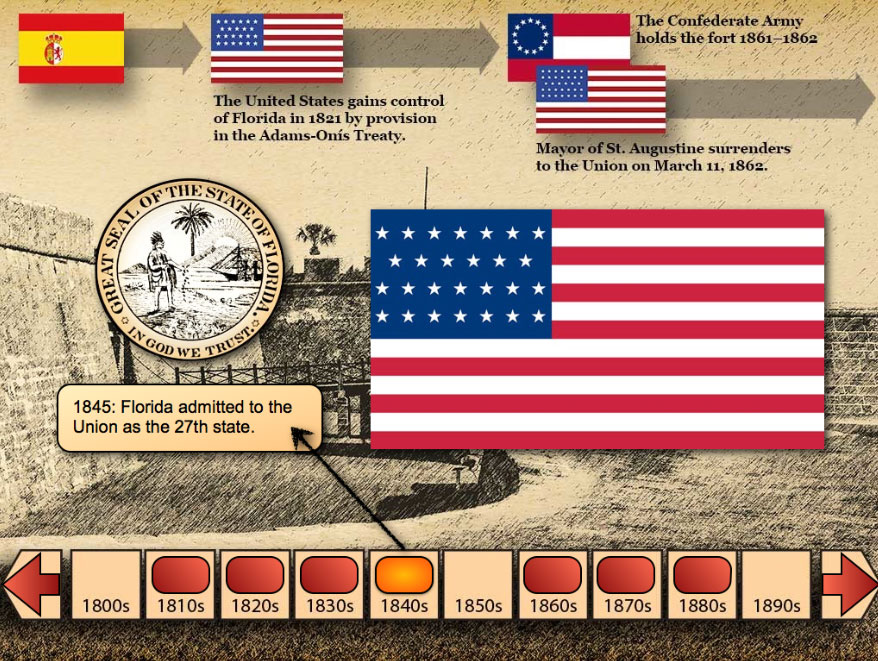
The pivotal moment arrived with the Adams-Onís Treaty of 1819. Negotiated between Secretary of State John Quincy Adams and Spanish Minister Luis de Onís y González-Vara, the treaty ceded Florida to the United States in exchange for the U.S. relinquishing its claims to parts of Texas and paying Spanish debts. This agreement formally transferred sovereignty, marking the end of centuries of Spanish dominion and ushering in a new era for the peninsula.
Territorial Years: Laying the Foundation for Statehood
Following the treaty, Florida entered a transitional phase as an organized territory of the United States. From 1821 to 1845, the process of establishing governance, developing infrastructure, and encouraging settlement took precedence. This period was crucial in shaping Florida’s identity as it prepared for the responsibilities and privileges of statehood.
During this territorial period, key decisions were made regarding land surveys, the establishment of counties, and the development of a legal framework. The capital was initially located in Tallahassee, chosen for its central position and access to navigable waterways, a decision that cemented its role as the state’s political heartland. The population grew significantly during this time, driven by the promise of fertile land for agriculture, particularly for cotton and sugar cultivation, and the strategic importance of its coastal ports. However, this expansion also led to increased friction with the indigenous Seminole population, culminating in the protracted and costly Seminole Wars.
Florida’s Admission into the Union
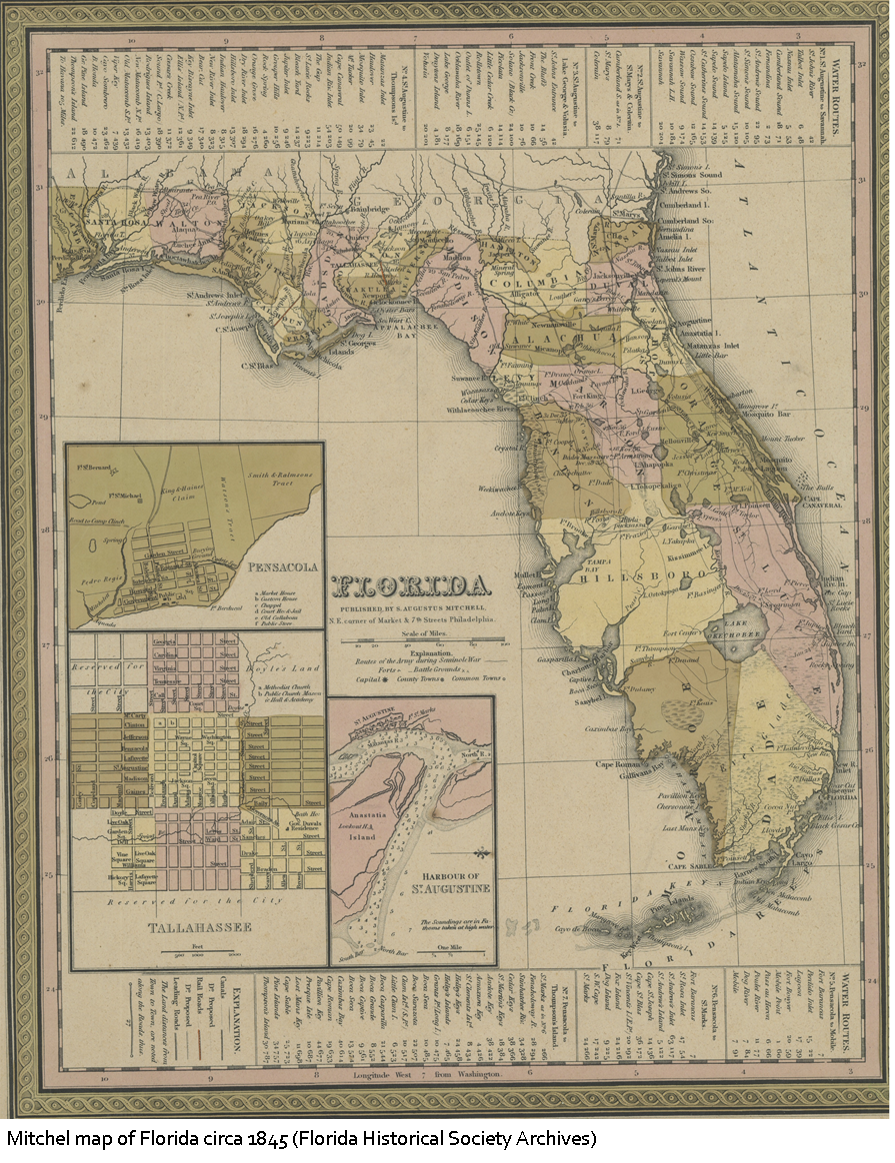
The journey from territory to statehood was not instantaneous. It involved meeting specific requirements set by Congress, including a minimum population threshold and the establishment of a republican form of government. For Florida, this process was influenced by national debates, particularly concerning the issue of slavery.
The Statehood Movement and Constitutional Convention
As Florida’s population grew and its infrastructure developed, the desire for self-governance intensified. A significant milestone in this movement was the convening of a constitutional convention in 1838 in St. Joseph (now known as St. Joseph Peninsula State Park, though the original settlement is submerged). Delegates from across the territory gathered to draft a state constitution. This document, largely influenced by the constitutions of other southern states, established the framework for Florida’s government and, crucially, enshrined the legality of slavery, a prerequisite for admission into the Union at that time.
The constitution also outlined provisions for public education, taxation, and the structure of the judiciary and legislature. The debates during the convention reflected the aspirations and concerns of the burgeoning Floridian society, balancing the need for economic growth with the social and political realities of the era. The choice of St. Joseph as the convention site was strategic, aiming to stimulate development in the undeveloped western panhandle.
Congressional Approval and the Act of Statehood
With a constitution in place and its population meeting the required criteria, Florida’s application for statehood was presented to the U.S. Congress. The admission of new states was, and remains, a complex political process, often influenced by the balance of power between free and slave states. Florida’s pro-slavery stance meant its admission was intertwined with national discussions and compromises regarding the expansion of slavery into new territories.
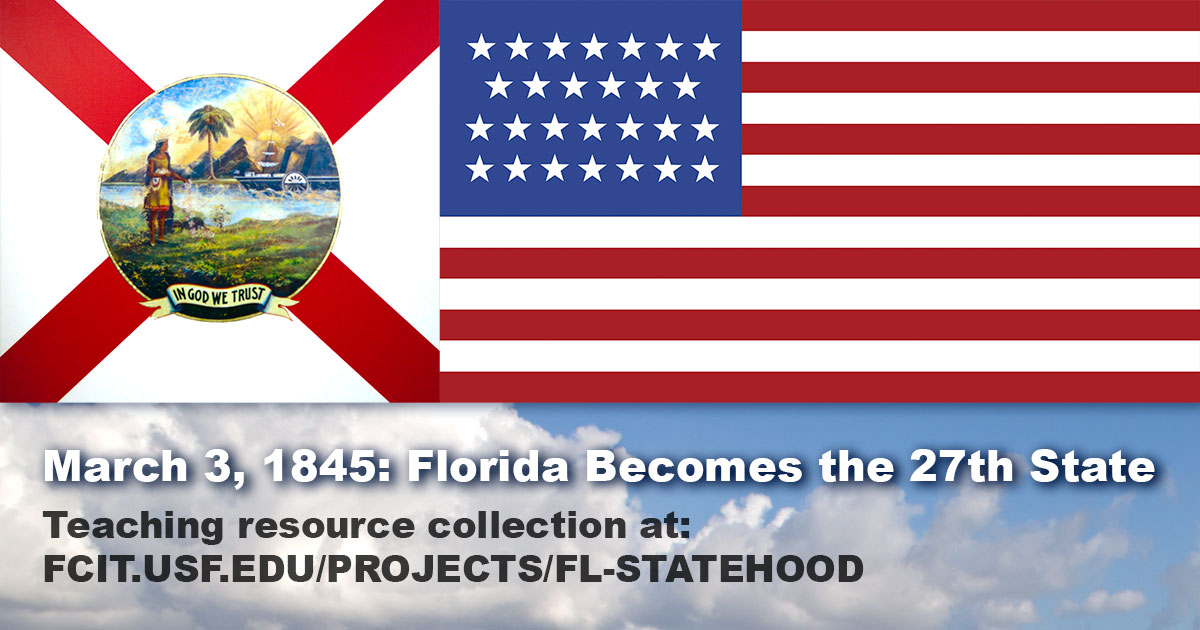
After considerable debate and negotiation, Congress passed an act admitting Florida into the Union. This legislation officially recognized Florida as the 27th state. The process culminated on March 3, 1845. This date marks Florida’s entry as a sovereign entity within the United States, granting its citizens the full rights and responsibilities of American statehood. The admission of Florida occurred just days before the inauguration of President James K. Polk, underscoring the timing and political significance of the event.
The Significance of Florida’s Statehood
The year 1845 represents a crucial turning point in Florida’s history. It marked the transition from a territorial possession to an integral part of the United States, influencing its development, its economy, and its cultural landscape for generations to come.
Economic and Social Transformation
Upon becoming a state, Florida gained greater control over its internal affairs, including land management and economic development policies. This autonomy spurred further settlement and agricultural expansion, particularly in the central and southern parts of the state. The focus on agriculture, especially citrus and sugar, began to define Florida’s economic identity. The development of infrastructure, such as railroads and ports, facilitated trade and further boosted the state’s growth.
Socially, statehood brought a more formalized system of governance and law enforcement. However, it also entrenched the institution of slavery, a legacy that would have profound and lasting consequences for the state and the nation. The period following statehood saw a continued push for development, often at the expense of the natural environment and the indigenous Seminole population, who continued to resist displacement.
Florida’s Evolving Role in the Nation
As the 27th state, Florida began to carve out its unique place within the American narrative. Its strategic location and natural resources made it a valuable asset to the nation. Over time, its economy diversified, moving beyond its agricultural roots to embrace tourism, aerospace, and technology. The opening of Walt Disney World in 1971, for example, dramatically reshaped the state’s tourism industry and cemented its reputation as a premier vacation destination.
The question of “What year did Florida become a state?” thus serves as a reminder of the state’s long and complex evolution. From its initial discovery by Europeans to its territorial struggles and eventual admission into the Union, Florida’s journey is a testament to the forces of exploration, conquest, compromise, and growth that have shaped the United States itself. Its rich history, evident in its preserved landmarks and its vibrant culture, continues to fascinate and draw visitors from around the globe.
LifeOutOfTheBox is a participant in the Amazon Services LLC Associates Program, an affiliate advertising program designed to provide a means for sites to earn advertising fees by advertising and linking to Amazon.com. Amazon, the Amazon logo, AmazonSupply, and the AmazonSupply logo are trademarks of Amazon.com, Inc. or its affiliates. As an Amazon Associate we earn affiliate commissions from qualifying purchases.