
The vibrant city of Boston, a cornerstone of American history and culture, holds a rich narrative rooted deeply in its founding. To understand the essence of Boston today, from its cobblestone streets to its iconic architecture, one must look back to its precise origins. Boston was founded in 1630 by Puritan colonists from England, marking the beginning of an extraordinary journey that would shape not only a city but a nation. This foundational year is not merely a date; it represents the birth of a settlement imbued with a distinct vision, which through centuries of evolution, has left an indelible mark on the landscape of the United States.
The Formative Years: Laying Boston’s Foundations
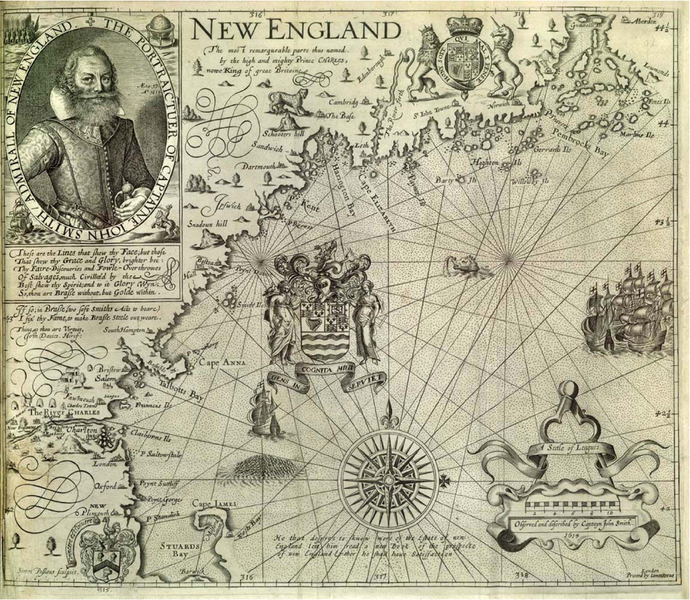
The year 1630 was pivotal for the nascent Massachusetts Bay Colony. Under the leadership of Governor John Winthrop, a fleet of ships carrying approximately 700 Puritan settlers arrived in the new world. Their initial landing was near Salem, but they soon sought a more suitable location with better access to fresh water. This quest led them to the Shawmut Peninsula, a narrow neck of land surrounded by the Charles River and the Boston Harbor.
The peninsula was initially inhabited by a solitary English eccentric, William Blackstone, who had settled there several years prior. Blackstone invited the struggling Puritans to his spring-fed land, offering them a prime location for their new settlement. On September 7, 1630 (Old Style calendar, which translates to September 17 by modern reckoning), the settlers officially voted to name their new town Boston, after the town in Lincolnshire, England, from which many of them originated. This act solidified the town’s identity and set it on a course toward becoming a major center of colonial life.
The motivations behind the founding were deeply religious and ideological. The Puritans, seeking religious freedom from persecution by the Church of England, envisioned a “city upon a hill”—a model society guided by strict religious principles. This ambition fueled their tenacity in the harsh colonial environment. Early challenges included disease, scarcity of food, and unfamiliar terrain. However, the strong communal bonds and shared religious fervor allowed the settlement to not only survive but to gradually thrive, attracting subsequent waves of settlers during the Great Migration of the 1630s and 1640s. The strategic location, with its natural harbor and defensive capabilities, also played a crucial role in its eventual growth and prominence.
From Puritan Village to Colonial Powerhouse
Following its 1630 founding, Boston quickly outgrew its initial designation as a mere village. Its excellent natural harbor made it an indispensable port for trade, facilitating the exchange of goods between the colonies, England, and other parts of the world. Ships laden with furs, timber, and fish departed Boston for European markets, returning with manufactured goods, textiles, and other necessities. This burgeoning commerce transformed Boston into the largest and most prosperous town in British North America by the mid-18th century.
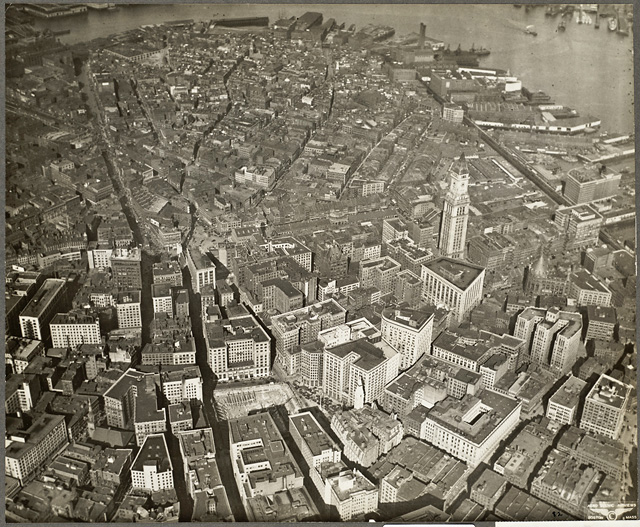
The physical landscape of Boston during this colonial period began to reflect its growing status. The narrow, winding streets that characterize much of downtown Boston today are a direct legacy of its unplanned, organic growth during the 17th and 18th centuries. Unlike many later American cities designed with grid systems, Boston’s early layout evolved from cow paths and property lines, resulting in its famously intricate street network. Significant infrastructure projects, albeit rudimentary by modern standards, included wharves, marketplaces, and public buildings essential for governance and community life.
Educational and religious institutions also quickly took root, underscoring the Puritans’ commitment to learning and piety. The establishment of the Boston Latin School in 1635, the first public school in America, and Harvard College (just across the Charles River in Cambridge) in 1636, laid the intellectual groundwork for future generations. Churches like the First Church of Boston (founded in 1630) and later edifices such as the Old North Church (1723) became not only places of worship but also central landmarks in the community, shaping the city’s skyline and serving as focal points for social and political gatherings. This period of rapid expansion and cultural development solidified Boston’s position as an intellectual, economic, and political beacon in the colonies, setting the stage for its crucial role in the American Revolution.
Boston’s Enduring Historical Landscape
The 1630 founding of Boston is not just a historical fact; it is a palpable presence woven into the very fabric of the modern city. Countless landmarks serve as tangible reminders of its Puritan origins and subsequent colonial development, offering visitors and residents alike a direct link to the past. Exploring these sites is akin to walking through living history, where each brick and cobblestone whispers tales of early settlers, revolutionary fervor, and the birth of a nation.
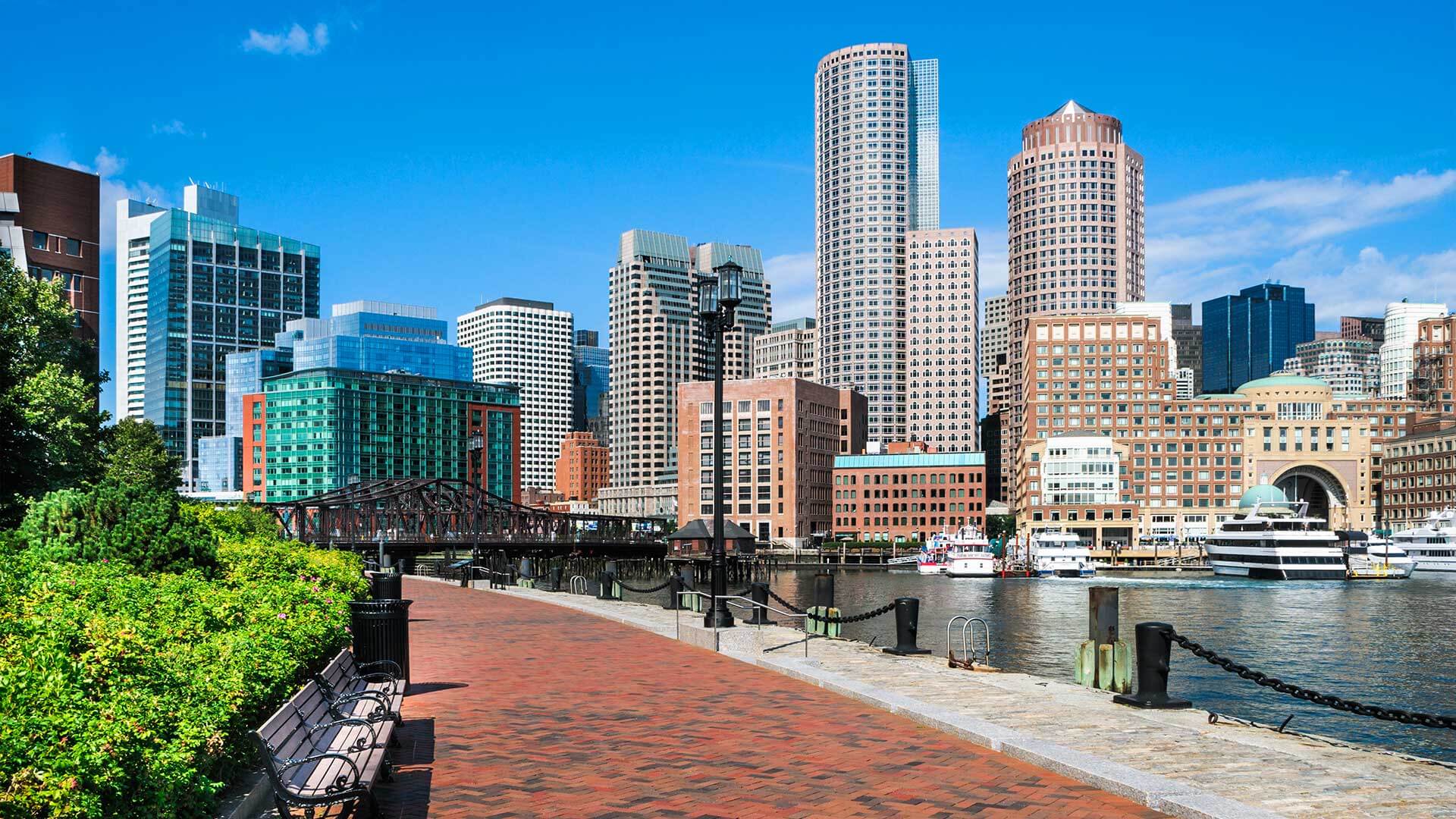
One of the most comprehensive ways to experience Boston’s historical core is by following the Freedom Trail. This 2.5-mile red-lined path connects 16 historically significant sites, many of which date back to or were heavily influenced by the city’s founding era. Among these, Boston Common stands out as the oldest public park in the United States, purchased by the Puritan founders in 1634 for common pasturage and military training. It remains a vital green space, hosting public gatherings and reflecting its enduring role in community life.
Further along the Freedom Trail, the Granary Burying Ground, established in 1660, serves as the final resting place for many prominent figures from Boston’s early history, including John Hancock, Samuel Adams, and the victims of the Boston Massacre. Its weathered headstones and colonial-era epitaphs offer a poignant glimpse into the lives and beliefs of the city’s early inhabitants. Nearby, King’s Chapel, built in 1686, was the first Anglican church in a predominantly Puritan town, a symbol of the evolving religious landscape. The current stone structure, completed in 1754, exemplifies elegant Georgian architecture and still hosts active congregations.
The Old State House, constructed in 1713, is another magnificent example of colonial architecture and governmental hub. It served as the seat of the colonial government and was the site from which the Declaration of Independence was first read to the people of Boston. Its imposing brick facade and historical significance make it a critical landmark. Similarly, Faneuil Hall, often called the “Cradle of Liberty,” has served as a marketplace and a meeting house since 1742. Its Great Hall hosted fiery speeches by figures like Samuel Adams and James Otis, laying the intellectual groundwork for the revolution, directly inheriting the legacy of open discourse from its Puritan forebears. These structures, among many others, are not mere relics; they are living testaments to the continuous narrative of Boston since its founding in 1630.
Architectural Legacy of Early Boston
The architectural landscape of Boston is a rich tapestry that visually narrates its history, from the modest constructions of its 1630 founding to the grander edifices of the colonial era. The earliest buildings, primarily made of wood, were functional and austere, reflecting the Puritan values of simplicity and pragmatism. While few original 17th-century structures survive due to fires and urban development, their influence can be seen in the narrow street patterns and the foundational spirit of early American architecture.
As Boston grew in wealth and sophistication during the 18th century, a more refined style emerged: Georgian architecture. Characterized by its symmetry, classical detailing, and often red-brick construction, the Georgian style dominated the colonial period and is still prominently featured in many of Boston’s most cherished landmarks. The Old State House and Faneuil Hall are prime examples, with their balanced facades, sash windows, and often a cupola or steeple providing a focal point. King’s Chapel is another exceptional Georgian structure, notable for its stone construction, which was less common in the colonial period but signaled the wealth and permanence of its congregation.
Post-Revolution, the Federal style gained popularity, characterized by lighter, more delicate ornamentation and an emphasis on elegant proportions. While technically later than the founding era, Federal architecture built upon the Georgian tradition and defined much of Boston’s late 18th and early 19th-century appearance. The row houses of Beacon Hill exemplify this transition, often featuring elegant fanlights above doorways and ornate ironwork.
Preservation efforts in Boston are crucial for maintaining this architectural heritage. Sites like the Paul Revere House (circa 1680), though modified over time, offer a rare glimpse into a 17th-century domestic dwelling. The Old North Church (1723), a Georgian masterpiece, with its tall steeple, served as a crucial beacon during the American Revolution, forever linking its architecture to a pivotal moment in history. These enduring structures are more than just buildings; they are physical archives, offering insights into the evolving aesthetic tastes, construction techniques, and social values that have shaped Boston since its inception. They remind us that the city’s architectural legacy is a continuous narrative, with each era building upon, and often preserving, the foundations laid in 1630.
The Spirit of Boston: A Living History
The founding of Boston in 1630 initiated a historical trajectory that continues to define the city’s unique spirit and identity. From the earnest aspirations of its Puritan founders to its pivotal role in the struggle for American independence, Boston’s past is not merely confined to history books but actively lives on in its landmarks, culture, and character. Understanding the year of its founding provides the essential context for appreciating the depth and significance of these sites.
The city’s compact, walkable core, with its blend of ancient burying grounds, stately colonial buildings, and bustling modern life, creates an immersive historical experience that few other American cities can rival. The very street plan, a result of early organic growth, invites exploration and discovery around every turn. Landmarks such as the USS Constitution, though launched later, stands as a testament to the naval power and maritime legacy that sprang from Boston’s early port importance. The enduring presence of institutions like Boston Common and the Old State House offers a direct connection to the communal and political life that began almost four centuries ago.
To walk the Freedom Trail is to trace the footsteps of revolutionaries who inherited the spirit of self-determination from their Puritan predecessors. To admire the Georgian architecture of King’s Chapel or the Old North Church is to witness the evolving aesthetics and religious pluralism that characterized colonial Boston. These landmarks are not static monuments; they are vibrant historical anchors that continuously inform the city’s present and future. They serve as educational tools, reminding new generations of the sacrifices, ideals, and hard work that went into building one of the nation’s most iconic cities from its 1630 genesis. Boston’s foundational year thus remains a crucial touchstone, underpinning its enduring reputation as a city rich in history, architectural beauty, and an indomitable spirit.
LifeOutOfTheBox is a participant in the Amazon Services LLC Associates Program, an affiliate advertising program designed to provide a means for sites to earn advertising fees by advertising and linking to Amazon.com. Amazon, the Amazon logo, AmazonSupply, and the AmazonSupply logo are trademarks of Amazon.com, Inc. or its affiliates. As an Amazon Associate we earn affiliate commissions from qualifying purchases.