
The California Gold Rush stands as a monumental chapter in American history, an event that single-handedly reshaped the demographic, economic, and political landscape of a nascent nation. While the allure of gold had been known throughout human civilization, the specific discovery in the vast, untamed territories of California ignited a frenzy that transcended continents. To answer the fundamental question: the California Gold Rush officially began in 1848, profoundly altering the course of the 19th century and leaving an indelible mark visible in countless landmarks today. This period of intense migration and fortune-seeking offers a compelling narrative of human ambition, hardship, and the dramatic birth of a state, with its echoes still reverberating through the region’s historical sites and cultural heritage.

The Spark of Discovery: Setting the Stage
The genesis of the California Gold Rush can be pinpointed to a singular, serendipitous moment that forever changed the trajectory of the United States. At the time, California was a sparsely populated frontier, having recently become a possession of the United States following the conclusion of the Mexican-American War in February 1848, though news of the treaty had yet to fully disseminate across the vast distances.
James W. Marshall and Sutter’s Mill
On January 24, 1848, a carpenter named James W. Marshall was overseeing the construction of a sawmill for his employer, entrepreneur John Sutter. The mill was located on the South Fork of the American River, near present-day Coloma, a site that would soon become synonymous with the dawning of an era. Marshall, while inspecting the mill’s tailrace—the channel that carried water away from the waterwheel—noticed glistening flecks in the sediment.
The Initial Revelation: January 24, 1848
These flecks, upon closer inspection, proved to be gold. Marshall initially tried to keep his discovery quiet, understanding the potential ramifications for Sutter’s fledgling agricultural empire. However, the secret was too immense to contain. News began to leak, primarily through Sutter’s Mill employees, despite efforts to maintain secrecy. The original site of the discovery, now known as Marshall Gold Discovery State Historic Park, stands as a powerful landmark, preserving the very spot where the world’s perception of California irrevocably shifted. It is here that visitors can connect directly with the starting point of an epic journey, witnessing recreations of the mill and the serene river that cradled its glittering secret.
The Rush Begins: From Rumor to Reality
Initially, the news of gold was met with skepticism. Tales of fortunes were common on the frontier, often exaggerated or entirely fabricated. However, concrete evidence, coupled with strategic dissemination, soon transformed whispers into a roar that would echo across the globe.
The Role of Sam Brannan
One of the key figures in igniting the rush was Sam Brannan, a savvy entrepreneur and newspaper publisher in San Francisco. In May 1848, Brannan famously paraded through the streets of San Francisco, holding aloft a bottle of gold dust and shouting, “Gold! Gold! Gold from the American River!” This dramatic public display, coupled with his confirmation of the discovery in his newspaper, the California Star, served as the ultimate catalyst. It provided irrefutable proof, dispelling doubts and sending the first wave of prospectors scrambling toward the goldfields. His strategic move effectively turned a local phenomenon into a widespread fever, cementing San Francisco’s role as the primary port of entry and supply hub for the burgeoning gold economy.
Mass Migration: The Forty-Niners
By the close of 1848, word of the gold strike had reached the eastern United States and beyond. President James K. Polk’s confirmation of the gold discovery in his December 1848 address to Congress officially stamped the event with national credibility. This declaration ignited a stampede known as the California Gold Rush. In 1849, an estimated 90,000 individuals—dubbed “Forty-Niners”—flocked to California, seeking their fortunes. This massive influx of people from all corners of the globe, including Europe, Latin America, and Asia, transformed California into a vibrant, chaotic, and diverse melting pot. The sheer scale of this migration is a testament to the magnetic pull of gold, an event that reshaped the demographics of the entire Western frontier. The routes these pioneers took, whether arduous overland treks or perilous sea voyages, are now enshrined in historical memory, some even marked by trails and monuments.
Routes to Riches: Land and Sea Journeys
The journey to the California goldfields was perilous and protracted, a testament to the determination of the Forty-Niners. Prospectors from the eastern United States primarily had three options, each fraught with its own dangers and challenges.
Firstly, the overland trails, such as the California Trail, offered a direct but brutal passage across vast plains, mountains, and deserts. Wagons, disease, starvation, and encounters with indigenous tribes were common hazards, making this a test of extreme endurance. Landmarks like Donner Pass stand as grim reminders of the ultimate price some paid for their dreams.
Secondly, a sea route around Cape Horn at the southern tip of South America provided an alternative, albeit incredibly long and expensive, journey. This voyage could take several months, exposing travelers to rough seas and often cramped, unsanitary conditions.
The third popular option involved sailing to the Isthmus of Panama, crossing the narrow strip of land by various means, and then securing another ship on the Pacific side for the final leg to San Francisco. While shorter than the Cape Horn route, it presented dangers of tropical diseases and logistical nightmares. Each of these routes contributed to the legend of the Gold Rush, creating temporary settlements and hubs that would later evolve into significant cities or become ghost towns, all part of the vast network of landmarks tracing the relentless pursuit of gold.
The Golden Age and Its Transformations
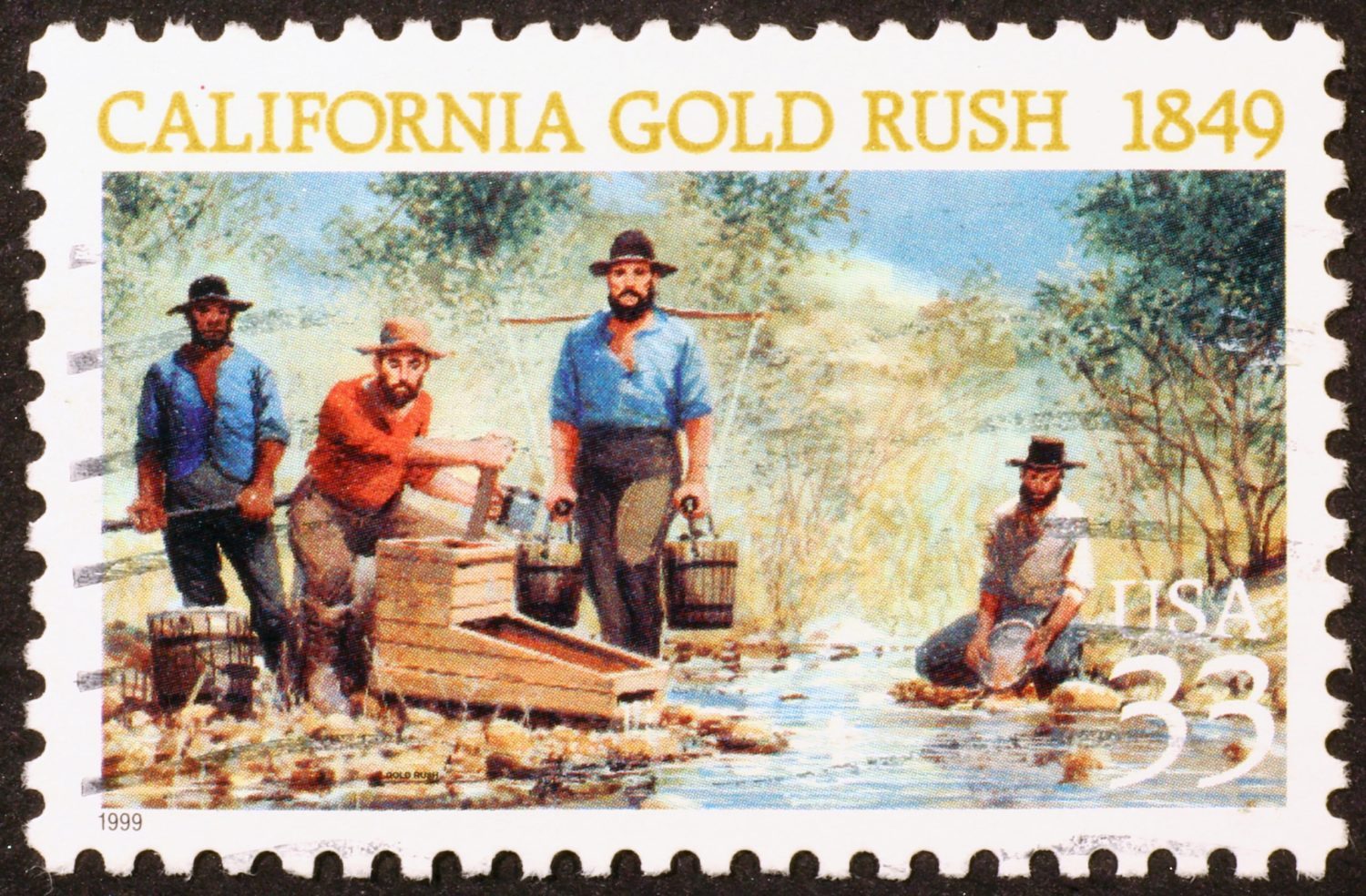
The initial years of the California Gold Rush, roughly from 1848 to the mid-1850s, represented a period of unprecedented change and rapid development. The discovery of gold did more than just attract prospectors; it initiated a complete overhaul of the regional economy, society, and governance.
The Boomtown Phenomenon
The influx of prospectors led to the spontaneous eruption of “boomtowns” across the goldfields. Settlements like San Francisco and Sacramento grew from small villages into bustling cities almost overnight. San Francisco, in particular, transformed from a sleepy port to a chaotic metropolis, a vital entry point for goods, people, and capital. Its waterfront expanded dramatically with abandoned ships forming makeshift docks and structures. These cities, alongside countless smaller mining camps, became centers of commerce, entertainment, and sometimes, lawlessness. Many of these boomtowns, such as Columbia (now Columbia State Historic Park), preserve their historical architecture and layout, allowing visitors to step back in time and experience the raw energy of the Gold Rush era. The ghost towns that dot the landscape, like Bodie State Historic Park, offer a more melancholic, yet equally poignant, glimpse into the transient nature of these communities once the gold dried up.
Methods of Gold Extraction: Panning, Sluicing, and Hydraulic Mining
The early days of the rush saw simple methods of gold extraction. Panning, the iconic image of the lone prospector, allowed individuals to separate gold from gravel in riverbeds. As the easy surface gold dwindled, more sophisticated and collaborative techniques emerged. Sluice boxes, essentially elongated pans, allowed for processing larger quantities of material. Eventually, industrial-scale operations took hold, most notably hydraulic mining. This method involved using high-pressure water cannons to blast away hillsides, eroding vast amounts of earth to expose gold-bearing gravel. While incredibly efficient, hydraulic mining caused devastating environmental damage, silting rivers and destroying agricultural land, an impact still visible in certain scarred landscapes today. These varied mining techniques, from the individual endeavor to industrial operations, shaped not only the land but also the social structures of the mining communities.
Social and Economic Impact on California
The Gold Rush’s impact on California was profound and multifaceted. Economically, it spurred rapid development, transforming the region from an agrarian outpost into a major economic force. California became a state in 1850 as part of the Compromise of 1850, largely due to the sudden population surge. The influx of diverse populations led to a complex social fabric, often marked by both opportunity and severe racial tensions, particularly against Chinese and Native American populations. The Gold Rush also contributed to the decline of the traditional Native American way of life, as their lands were encroached upon and resources depleted. From infrastructure development like roads and telegraph lines to the establishment of financial institutions, the Gold Rush laid the foundation for modern California’s robust economy and diverse society, making the state itself a living landmark of this transformative period.
Legacy and Lasting Landmarks
The California Gold Rush may have peaked in the early 1850s, but its legacy continues to shape the physical and cultural landscape of California. The historical footprint of this era is meticulously preserved and celebrated in numerous landmarks and institutions.
California State Parks Preserving History
California State Parks play a crucial role in safeguarding the sites of the Gold Rush. Marshall Gold Discovery State Historic Park in Coloma is arguably the most significant, marking the exact spot where gold was first discovered. Visitors can explore the recreated Sutter’s Mill and learn about James W. Marshall’s pivotal finding. Further south, Columbia State Historic Park offers an unparalleled immersive experience, presenting a remarkably preserved Gold Rush town. Its original brick buildings now house shops, restaurants, and museums, where costumed docents bring the past to life. Similarly, Empire Mine State Historic Park near Grass Valley showcases the technological advancements of hard rock mining, providing a glimpse into the industrial scale of later gold extraction. These parks serve as invaluable educational resources and tangible links to the adventurous spirit of the Forty-Niners.
The Enduring Spirit of Enterprise
Beyond the physical landmarks, the Gold Rush ingrained a spirit of innovation, resilience, and risk-taking into the very character of California. The rapid development of infrastructure, the pioneering spirit that drew people from across the globe, and the boom-and-bust cycles established patterns that would reappear in subsequent California industries, from agriculture to technology. The Gold Rush fostered a unique entrepreneurial environment, where fortunes could be made (or lost) overnight, driving intense competition and innovation. This enduring spirit of enterprise, often associated with the ‘California Dream’, can be seen as a direct descendant of the frantic pursuit of gold that began in 1848.
Modern-Day California Shaped by Gold
The Gold Rush’s influence extends into the modern state of California. The state capital, Sacramento, emerged as a major city largely due to its strategic location as a supply hub for the goldfields. San Francisco’s status as a global port and financial center was similarly accelerated by the rush. The diversity of California’s population, its multicultural heritage, and its reputation as a land of opportunity are all deeply rooted in the Gold Rush era. The very landscape of the Sierra Nevada foothills, often referred to as the Mother Lode, is dotted with historical markers, museums, and restored towns that bear witness to the profound impact of gold. The Gold Rush, initiated in 1848, was not merely a historical event; it was the crucible in which modern California was forged.
Visiting Gold Rush Country Today
For those eager to experience this pivotal historical period firsthand, Gold Rush Country, predominantly located along California’s Mother Lode region in the Sierra Nevada foothills, offers a captivating journey back in time. It’s a region rich with tangible landmarks, living history, and educational opportunities that illuminate the incredible story of the 1848 discovery and its aftermath.
Historical Sites and Museums
The most direct way to connect with the California Gold Rush is to visit its well-preserved historical sites. Old Sacramento State Historic Park, for example, allows visitors to wander through a district of restored buildings from the Gold Rush era, including saloons, shops, and the impressive California State Railroad Museum. This park provides insight into how a capital city emerged from a frontier town. The California State Mining and Mineral Museum in Mariposa houses an extensive collection of gold specimens, mining equipment, and historical artifacts, offering a comprehensive look at the geological and technological aspects of the rush. Other smaller museums and historical societies, such as the California Historical Society, located throughout the region, provide localized perspectives and unique collections that further enrich the narrative.

Experiencing the Past: Recreations and Interpretive Centers
Beyond static exhibits, many locations offer dynamic experiences that transport visitors to the 19th century. At Marshall Gold Discovery State Historic Park, one can try their hand at gold panning in the American River, a direct nod to the methods of the original prospectors. Columbia State Historic Park frequently hosts historical reenactments, stagecoach rides, and demonstrations by artisans in period attire, making the past come alive. The Gold Rush Trail, a network of roads and highways connecting these significant sites, offers a self-guided tour through the heart of this historical region. These immersive opportunities transform a historical date into a living, breathing experience, illustrating how the events that commenced in 1848 continue to resonate and inform our understanding of California‘s unique character.
LifeOutOfTheBox is a participant in the Amazon Services LLC Associates Program, an affiliate advertising program designed to provide a means for sites to earn advertising fees by advertising and linking to Amazon.com. Amazon, the Amazon logo, AmazonSupply, and the AmazonSupply logo are trademarks of Amazon.com, Inc. or its affiliates. As an Amazon Associate we earn affiliate commissions from qualifying purchases.