
The California Roll, a staple in sushi restaurants across the globe, often sparks curiosity. Is it truly a taste of the Golden State, or is its name merely a playful nod to its origins? This article delves into the culinary landscape of a California Roll, exploring its iconic ingredients, its historical roots, and why it holds a special place in the world of Japanese-American cuisine.
The Anatomy of a California Roll
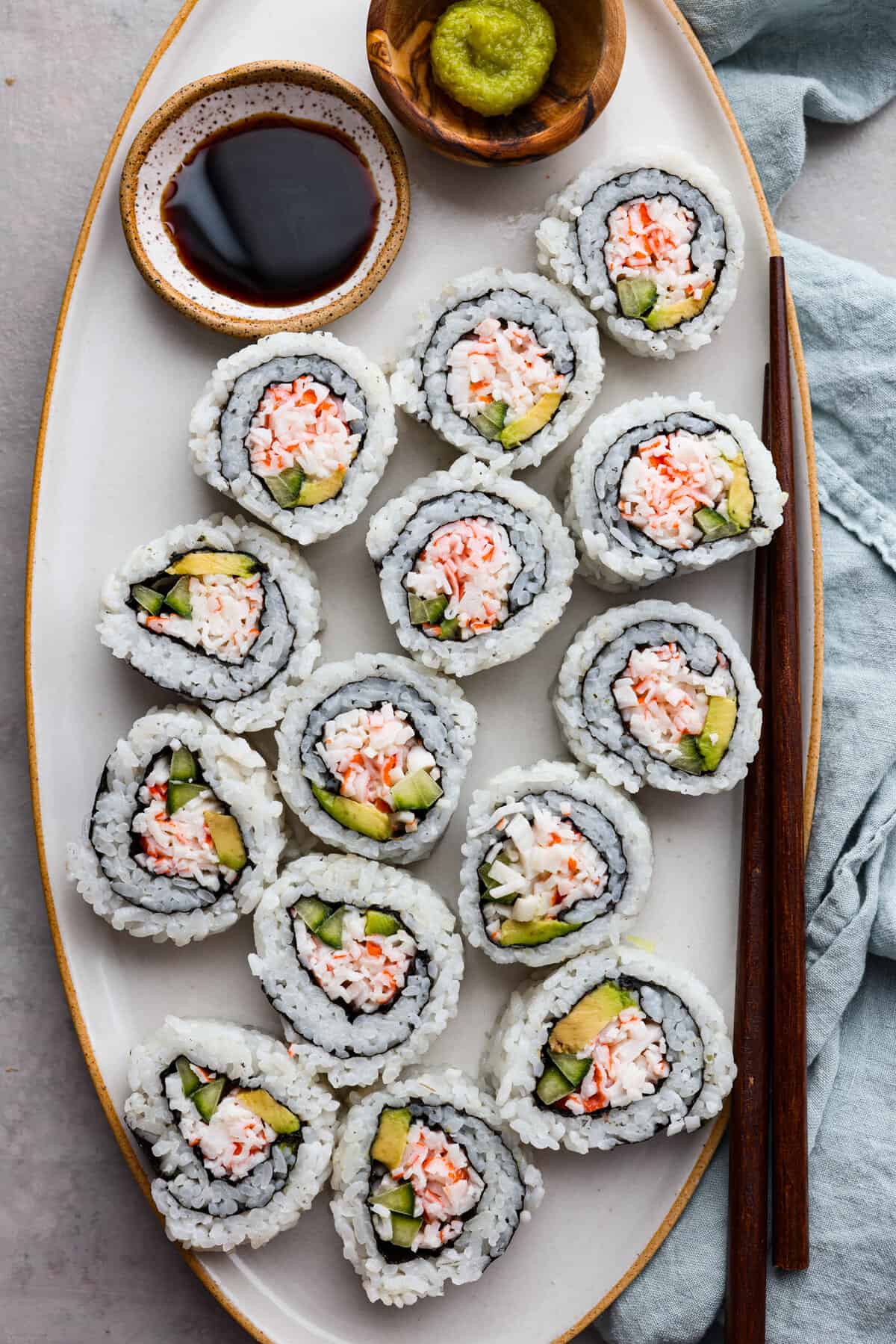
At its core, a California Roll is an urimaki sushi, meaning the rice is on the outside and the seaweed (nori) is on the inside. This construction is a key differentiator from more traditional makizushi where the nori encases the fillings. This outward-facing rice is often coated in toasted sesame seeds or tobiko (flying fish roe) for added texture and visual appeal.

Key Ingredients
-
Crab Meat (or Imitation Crab): This is arguably the defining ingredient. Traditionally, fresh crab meat, often from the Dungeness crab found along the Pacific Coast, was used. However, due to cost and availability, imitation crab, known as surimi, has become exceedingly common. Surimi is a processed seafood product made from white fish paste, flavored and colored to mimic crab. The quality and type of crab substitute can significantly influence the overall taste and texture of the roll.
-
Avocado: The creamy, buttery texture of ripe avocado is crucial for balancing the other components of the roll. Its richness provides a smooth counterpoint to the slight chewiness of the rice and nori, and the subtle sweetness of the crab. The avocado’s mild flavor also allows the other ingredients to shine.
-
Cucumber: Thinly sliced cucumber adds a refreshing crunch and a hint of coolness. This crisp element provides textural contrast, preventing the roll from becoming too soft or one-dimensional. The subtle vegetal notes of the cucumber also contribute to the overall palate cleansing effect.
-
Sushi Rice: Seasoned with rice vinegar, sugar, and salt, the sticky short-grain sushi rice is the foundation of any sushi roll. Its slightly sweet and tangy profile is essential for the characteristic flavor of the California Roll. The careful cooking and seasoning of the rice are paramount to achieving the desired texture and taste.
-
Nori: The thin, dried sheet of seaweed (nori) acts as the wrapper, holding all the ingredients together. When toasted, it imparts a subtle, umami-rich flavor and a delicate crispness that softens as it absorbs moisture from the rice.
Optional Enhancements
While the core ingredients remain consistent, some variations might include:
- Mayonnaise: A thin layer of Japanese mayonnaise can be incorporated with the crab to create a creamy binder and add another dimension of flavor.
- Sesame Seeds: As mentioned, toasted sesame seeds are a common exterior coating, offering a nutty flavor and a pleasant crunch.
- Tobiko or Masago: These small, colorful fish roes add a burst of salty flavor and a delightful pop with every bite. Tobiko is typically orange or red, while masago is smaller and often orange.
The Genesis of the California Roll: A Culinary Myth?
The exact origins of the California Roll are a subject of much debate, with several individuals and establishments in Los Angeles laying claim to its invention in the 1960s or 1970s. While the narrative is not as definitively etched in history as some other culinary creations, the consensus points to its birth in the American West, a fusion of Japanese technique with ingredients more readily available and palatable to the Western palate.
Competing Origin Stories
One popular theory credits Hidekazu Tojo, a chef at Tojo’s Restaurant in Vancouver, British Columbia, Canada. He claims to have created the roll in the early 1970s for American diners who were initially hesitant about eating raw fish. He supposedly substituted avocado for raw tuna, creating a more approachable option. This narrative is often cited, though the geographical location raises questions given the “California” moniker.
Another claimant is Ichiro Mashita, a chef at the Tokyo Kaikan restaurant in Little Tokyo, Los Angeles, California. He is said to have developed the roll around 1963, also as a way to introduce sushi to American customers. His innovation involved using avocado to mimic the texture and color of tuna, and rolling it inside-out to disguise the nori for those unaccustomed to it.
A third narrative points to Noritoshi Kanai, a Japanese-American businessman who, along with his chef Kenji Nishida, opened the restaurant Kawafuku in Little Tokyo, Los Angeles in the 1960s. They are said to have introduced the roll, possibly by modifying the traditional temaki (hand roll) by including avocado and cucumber, and then popularizing it.

Regardless of the precise inventor, the creation of the California Roll is widely accepted as a product of the burgeoning sushi scene in California during the mid-20th century. It represents an early and highly successful example of fusion cuisine, specifically, Japanese-American cuisine.
The “California” Connection
The name itself is intrinsically linked to the state’s abundant produce. California is a major producer of avocado, and its coastal identity likely inspired the inclusion of crab, even if in imitation form. The roll offered a familiar taste and texture profile for Americans, making it an accessible entry point into the world of sushi. It was a strategic adaptation, catering to local palates while still employing classic Japanese sushi-making techniques.
Why the California Roll is a Global Phenomenon
The California Roll’s popularity transcends its humble beginnings. It has become a gateway sushi for many, and a comforting classic for seasoned sushi enthusiasts. Its success can be attributed to several factors:
Palate Friendliness and Approachability
The absence of raw fish in its most common iteration makes the California Roll incredibly approachable for individuals who are new to sushi or have an aversion to raw seafood. The cooked crab meat (or imitation crab) and the mild flavors of avocado and cucumber are familiar and generally well-liked by a broad audience.
Textural Harmony
The combination of soft rice, creamy avocado, crisp cucumber, and the slight chewiness of the crab meat creates a pleasing textural experience. The optional crunch of sesame seeds or the pop of roe further enhances this, making each bite interesting and satisfying.
Visual Appeal
The reversed roll, with its vibrant orange or white rice (often adorned with sesame seeds or roe), coupled with the green of the avocado and cucumber, presents an aesthetically pleasing dish. It’s visually inviting, contributing to its widespread appeal.
Adaptability and Versatility
While the classic recipe is well-loved, the California Roll serves as an excellent base for variations. Chefs worldwide have experimented with adding ingredients like mango, spicy mayonnaise, or different types of seafood, further cementing its place as a versatile item on sushi menus.
Cultural Significance
The California Roll is more than just a sushi roll; it’s a symbol of how cuisine can evolve and adapt through cultural exchange. It represents the successful integration of Japanese culinary artistry with Western tastes, paving the way for a broader acceptance and appreciation of Japanese food in non-Japanese cultures. It’s a testament to culinary innovation that bridges continents and palates.
Serving and Enjoying Your California Roll
A perfectly crafted California Roll is best enjoyed with traditional accompaniments that enhance its flavors without overpowering them. The typical serving includes:
- Soy Sauce: A small dish of soy sauce for dipping. For a subtler saltiness, consider using less soy sauce and letting the natural flavors of the roll take precedence.
- Wasabi: A small dollop of wasabi (Japanese horseradish) provides a sharp, pungent kick that cuts through the richness and sweetness. Use sparingly, as its heat can be intense.
- Pickled Ginger (Gari): Thin slices of pickled ginger are served on the side. Gari is intended to be eaten between different sushi pieces to cleanse the palate, allowing you to appreciate the distinct flavors of each item.
When consuming a California Roll, it’s common practice to pick it up with chopsticks or your fingers. A gentle dip into the soy sauce, perhaps with a tiny touch of wasabi, is customary. The goal is to savor the interplay of textures and tastes – the yielding rice, the creamy avocado, the crisp cucumber, and the satisfying crab.
The California Roll has undeniably earned its place in the global culinary lexicon. It stands as a delicious testament to the power of adaptation and the exciting possibilities that arise when different food cultures converge, offering a delightful taste of California with every bite.
LifeOutOfTheBox is a participant in the Amazon Services LLC Associates Program, an affiliate advertising program designed to provide a means for sites to earn advertising fees by advertising and linking to Amazon.com. Amazon, the Amazon logo, AmazonSupply, and the AmazonSupply logo are trademarks of Amazon.com, Inc. or its affiliates. As an Amazon Associate we earn affiliate commissions from qualifying purchases.