
Understanding the economic landscape of any destination is crucial for both visitors and those considering a move or business venture. For Las Vegas, Nevada, a city synonymous with entertainment and tourism, the minimum wage plays a significant role in its operational costs, the livelihoods of its workforce, and the overall visitor experience. This exploration delves into the current minimum wage regulations in Las Vegas, how they are determined, and their potential impact on the thriving Nevada tourism sector.
Nevada’s Minimum Wage Framework
Nevada operates with a unique approach to its minimum wage, offering two different rates based on whether employers provide qualifying health benefits to their employees. This distinction is a key factor that distinguishes the state’s labor laws from many others. The state’s minimum wage is adjusted annually to account for inflation, ensuring that its purchasing power remains relatively stable over time.
The Two-Tiered Rate System
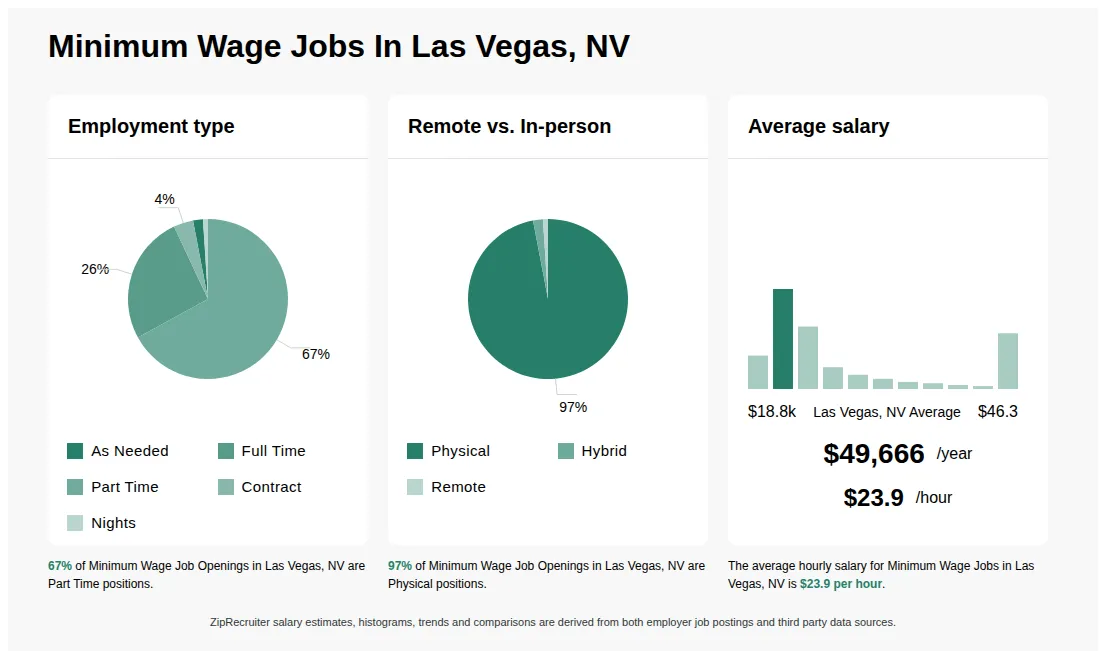
Since July 1, 2022, Nevada has implemented a two-tiered minimum wage system.
- With Qualifying Health Benefits: For employees whose employers provide them with qualifying health benefits, the minimum wage is set at a lower rate. This incentive encourages employers to offer comprehensive health coverage, contributing to the well-being of their staff.
- Without Qualifying Health Benefits: Conversely, if an employer does not offer qualifying health benefits, they are required to pay their employees at a higher minimum wage rate. This higher rate aims to compensate employees for bearing the full cost of their healthcare.
The exact figures for these rates are subject to annual adjustments. For the period from July 1, 2023, to June 30, 2024, the minimum wage in Nevada is:
- $11.25 per hour for employees who receive qualifying health benefits from their employer.
- $12.00 per hour for employees who do not receive qualifying health benefits from their employer.
It’s important for both employers and employees to understand which category they fall into, as this directly impacts payroll. The definition of “qualifying health benefits” is specific and generally includes medical, surgical, and hospital expense insurance, or a health benefit plan.
Impact of Inflation and Annual Adjustments
The mechanism for adjusting Nevada’s minimum wage is designed to keep pace with the rising cost of living. The calculation is typically based on the Consumer Price Index (CPI) for the Las Vegas-Henderson-Paradise metropolitan area. This ensures that the minimum wage reflects prevailing economic conditions and maintains its real value. The adjustments usually take effect on July 1st of each year.
For instance, if inflation drives up the cost of goods and services significantly, the minimum wage will likely see a corresponding increase. This process is vital for supporting the economic stability of minimum wage earners, particularly in a high-cost area like Las Vegas.
Minimum Wage in Las Vegas: A Deeper Look
Las Vegas, being the largest city in Nevada, is heavily influenced by the state’s minimum wage laws. The state’s regulations apply uniformly across all counties, including Clark County where Las Vegas is located. Therefore, the minimum wage rates applicable statewide are directly in effect within the city.
Industries Most Affected
The tourism and hospitality industries, which form the backbone of the Las Vegas economy, are the most significantly impacted by minimum wage regulations. This includes a vast number of workers employed in:
- Hotels and Resorts: From front desk staff and housekeeping to restaurant servers and kitchen assistants, many roles within the city’s iconic hotels and resorts are paid at or near minimum wage.
- Casinos: Gaming support staff, cocktail waitresses, and many other positions within the casinos are subject to these wage floors.
- Food and Beverage Services: Restaurants, bars, and cafes across the city employ a large number of individuals in service roles, many of whom earn the minimum wage.
- Entertainment and Attractions: Ushers, ticket takers, and support staff for shows and attractions also fall under these wage regulations.
- Retail: Numerous retail establishments on the Las Vegas Strip and throughout the city employ individuals at minimum wage.
The two-tiered system means that employers in these sectors have a strategic decision to make: offer robust health benefits to pay the lower wage, or forgo these benefits and pay the higher rate. This decision can have significant implications for their operational costs and employee retention strategies.
The Role of Tipped Employees
It is crucial to note that Nevada law, like many other states, has specific provisions for tipped employees. For these workers, who customarily receive more than $30 per month in tips, employers can pay a lower direct wage, provided that the tips earned bring their total hourly compensation up to the standard minimum wage.

As of July 1, 2023, the tipped minimum wage in Nevada is $10.25 per hour if the employer provides qualifying health benefits, and $11.00 per hour if the employer does not provide qualifying health benefits. This means that the combination of the employer’s direct wage and the employee’s tips must meet or exceed the respective full minimum wage rate ($11.25 or $12.00). If tips do not bring the total earnings to the full minimum wage, the employer must make up the difference. This is a critical point for understanding the take-home pay of many service industry workers in Las Vegas.
Economic Implications and Visitor Experience
The minimum wage in Las Vegas has multifaceted economic implications that can indirectly affect the visitor experience.
Impact on Business Costs
For businesses, particularly those in labor-intensive industries, the minimum wage represents a significant operational cost. Higher minimum wages can lead to increased labor expenses, which businesses may seek to offset through various means.
- Price Adjustments: Businesses might increase prices for goods and services, meaning that the cost of dining, entertainment, and even some accommodation could see slight increases passed on to consumers.
- Automation and Efficiency: To manage rising labor costs, businesses may invest in automation or streamline operations to reduce their reliance on human labor for certain tasks.
- Hiring and Staffing Levels: In some cases, businesses might adjust staffing levels or the mix of full-time versus part-time employees to manage their wage budgets.
Impact on Worker Livelihoods
On the other hand, a higher minimum wage directly benefits a substantial portion of the Las Vegas workforce. It increases disposable income for low-wage earners, which can lead to greater consumer spending within the local economy. This can, in turn, support local businesses and contribute to overall economic growth. A workforce that feels financially secure is also more likely to be engaged and productive, potentially leading to better service experiences for visitors.
The Visitor Perspective
For tourists visiting Las Vegas, the minimum wage might not be a direct concern in their daily spending, but its effects are felt indirectly. As mentioned, higher operational costs for businesses can translate into higher prices for attractions, dining, and souvenirs. However, the increased spending power of local workers can also fuel demand for the very services and experiences that attract visitors, creating a dynamic economic ecosystem.
The presence of a competitive minimum wage, especially one that is adjusted for inflation, helps to ensure a stable and motivated workforce. This can translate into higher quality service from hotel staff, restaurant servers, and casino employees, ultimately enhancing the overall Las Vegas experience for tourists.
Future Outlook and Considerations
The minimum wage in Las Vegas, governed by Nevada state law, is subject to ongoing observation and potential future adjustments.
Legislative and Economic Factors
The future of minimum wage legislation in Nevada will likely be influenced by several factors:
- Inflationary Trends: Continued inflation could necessitate higher minimum wage adjustments to maintain the real value of earnings.
- Economic Performance: The overall health of the Nevada economy, particularly the tourism sector, will play a role in policy discussions.
- Political Landscape: Changes in state and federal political priorities can influence debates around labor laws and wage standards.
- Advocacy Groups: Labor unions and advocacy organizations will continue to push for wage increases and better working conditions for low-wage employees.
The Debate on Minimum Wage
The debate surrounding the minimum wage is multifaceted. Proponents argue that it is essential for reducing poverty, increasing economic equality, and stimulating consumer demand. They emphasize that a fair wage allows workers to meet basic needs and contribute more meaningfully to the economy.
Opponents often raise concerns about potential negative impacts on businesses, such as job losses, reduced hiring, and increased prices. They may argue that market forces should primarily dictate wages and that government intervention can distort the labor market.
In Las Vegas, a city with a heavy reliance on service industries and a significant low-wage workforce, finding a balance that supports both workers and businesses is a continuous challenge. The current two-tiered system, tied to health benefits, represents an attempt to navigate this complex terrain, incentivizing employers to provide benefits while ensuring a baseline wage for all.
For travelers, understanding these economic underpinnings provides a richer appreciation for the city’s operational dynamics. It highlights the interconnectedness of the workforce, the businesses that employ them, and the vibrant, albeit complex, economy that makes Las Vegas such a unique destination. Whether it’s enjoying a meal at a world-class restaurant, experiencing a dazzling show, or staying at one of the many famed hotels, the minimum wage is an integral, though often unseen, component of the Las Vegas experience.
LifeOutOfTheBox is a participant in the Amazon Services LLC Associates Program, an affiliate advertising program designed to provide a means for sites to earn advertising fees by advertising and linking to Amazon.com. Amazon, the Amazon logo, AmazonSupply, and the AmazonSupply logo are trademarks of Amazon.com, Inc. or its affiliates. As an Amazon Associate we earn affiliate commissions from qualifying purchases.