
Miami, a jewel of South Florida, beckons with its vibrant energy, sun-drenched beaches, and a cultural tapestry woven from diverse influences. Understanding the prevailing weather conditions is paramount for any traveler planning a visit, ensuring that excursions are planned around optimal comfort and enjoyment. The daily temperature in Miami is not merely a statistic; it’s a gateway to experiencing the city’s unique rhythm, from the languid warmth of its afternoons to the balmy evenings that invite al fresco dining and lively entertainment.
Understanding Miami’s Climate
Miami’s climate is characterized by its tropical monsoon nature, marked by distinct wet and dry seasons. This classification, defined by the Köppen climate system, suggests consistently warm temperatures throughout the year, with a significant amount of rainfall concentrated in the warmer months. The city’s proximity to the Atlantic Ocean and the Gulf Stream plays a crucial role in moderating its temperatures, preventing extreme heat and cold and contributing to its reputation as a year-round destination.

Seasonal Variations
While Miami is often associated with perpetual sunshine, there are subtle yet significant shifts in temperature and weather patterns throughout the year, each offering a unique facet of the city’s charm.
Winter (December to February)
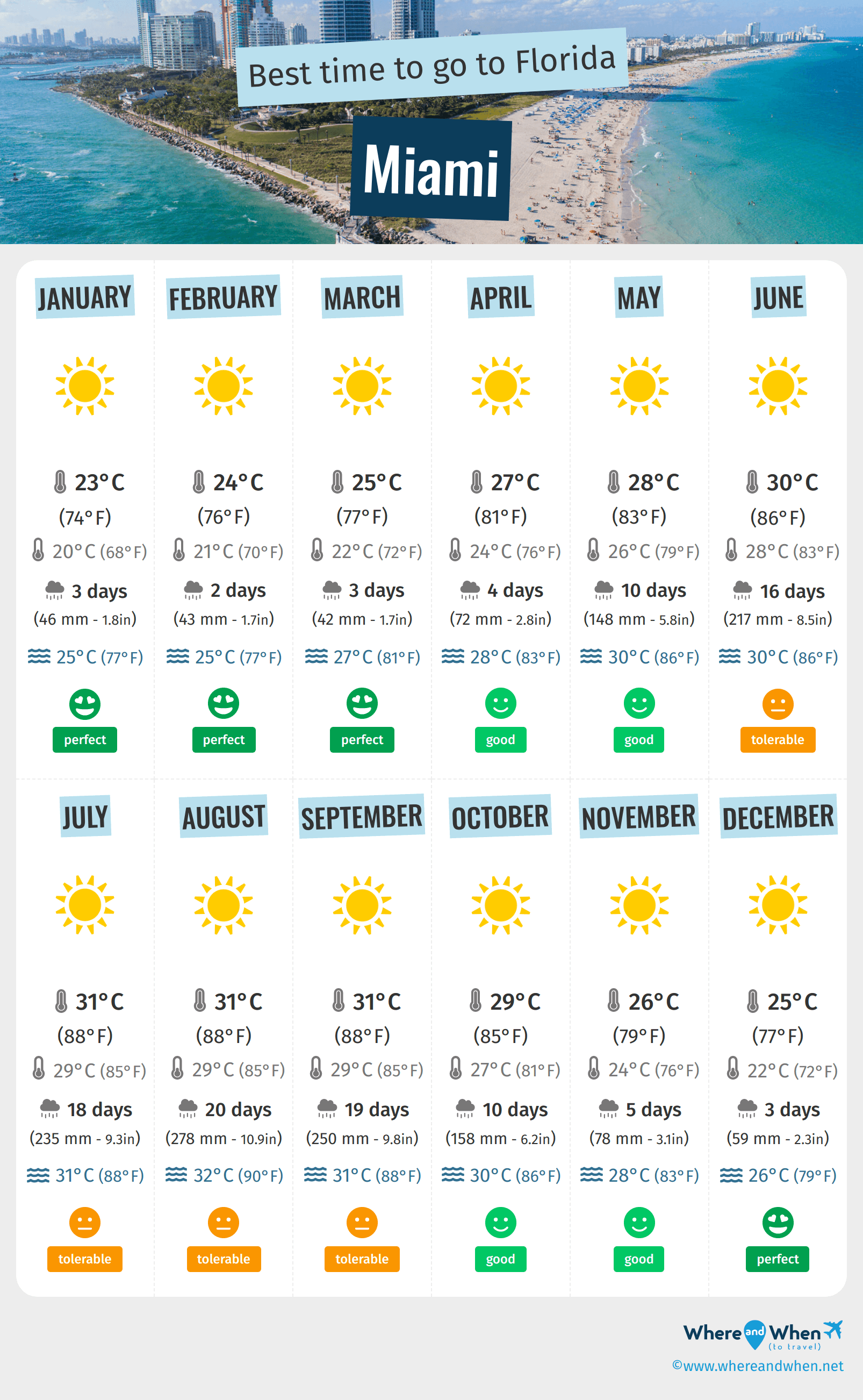
The winter months are generally considered the most pleasant in Miami. Temperatures typically range from the low 70s to the low 80s Fahrenheit (around 21-28°C). This period is characterized by lower humidity and a welcome reprieve from the intense heat of summer. These cooler, drier conditions are ideal for outdoor activities, exploring the city’s many attractions, and simply relaxing on the beach without the oppressive heat. The gentle breezes off the ocean make even the warmest days feel comfortable.
Spring (March to May)
As spring arrives, Miami begins to warm up, with temperatures gradually climbing into the mid-80s Fahrenheit (around 29°C). Humidity levels also start to increase, signaling the transition towards the wetter season. The early spring months can still offer very pleasant weather, making it a popular time for visitors. By late spring, the increased moisture can lead to pop-up afternoon showers, though these are typically short-lived and often followed by sunshine.
Summer (June to August)
Summer in Miami is synonymous with heat and humidity. Daytime temperatures frequently reach the upper 80s and low 90s Fahrenheit (around 31-33°C), with heat index values often feeling much higher. The summer months are also the heart of the wet season, with a high likelihood of daily thunderstorms, usually occurring in the late afternoon or early evening. Despite the heat and rain, summer is a vibrant time in Miami Beach, with a lively atmosphere and plenty of indoor and outdoor activities to enjoy, provided one plans for the weather.
Autumn (September to November)
Autumn in Miami offers a gradual cooling trend and a decrease in humidity. September can still feel quite warm and humid, with the tail end of hurricane season still a consideration. However, by October and November, temperatures begin to settle back into the comfortable 70s and low 80s Fahrenheit (around 21-28°C). This period is excellent for enjoying outdoor dining, exploring neighborhoods like Wynwood and Little Havana, and taking advantage of the pleasant weather before the winter crowds arrive.
Factors Influencing Daily Temperature
Several geographical and atmospheric factors contribute to the daily temperature fluctuations in Miami. The ocean currents, particularly the warm Gulf Stream, have a significant moderating effect, preventing extreme temperature drops. The city’s latitude places it firmly in the tropics, ensuring warm temperatures year-round. Additionally, the interplay between high and low-pressure systems, prevailing winds, and the presence of moisture in the atmosphere all contribute to the daily forecast.
Planning Your Miami Itinerary Based on Temperature
Knowing the anticipated temperature for your visit to Miami is the first step in crafting an unforgettable experience. This knowledge allows for strategic planning, ensuring you can maximize your enjoyment of the city’s diverse offerings while remaining comfortable.
Embracing the Warmth: Activities for Hot Days
When the thermometer climbs, Miami truly shines. The city offers a plethora of activities perfectly suited for warm weather.
Beach Bliss and Water Activities
Of course, the iconic South Beach is a must-visit. Here, the sun’s rays are best enjoyed with a dip in the azure waters of the Atlantic. Beyond sunbathing and swimming, the warm temperatures are ideal for a range of water sports. Consider trying stand-up paddleboarding, kayaking along the coast, or embarking on a boat tour to explore the surrounding islands and enjoy the ocean breeze. Many hotels and resorts, such as the Fontainebleau Miami Beach or the Faena Hotel Miami Beach, offer direct beach access and water sports rentals.
Cooling Down Indoors
For those seeking respite from the midday sun, Miami boasts a vibrant indoor cultural scene. The Pérez Art Museum Miami offers world-class exhibitions in a stunning architectural setting. Exploring the unique street art of Wynwood Walls is best done in the early morning or late afternoon, but the surrounding galleries offer a cool escape during the hottest parts of the day. The Vizcaya Museum & Gardens provides a historical and architectural marvel, with its beautiful gardens offering shaded areas for contemplation.
Evening Delights
As the sun begins to set, the city’s temperature often becomes more forgiving, opening up a world of evening activities. The vibrant nightlife of Ocean Drive comes alive, with its art deco architecture bathed in the golden light of dusk. Enjoying dinner at one of Miami’s many acclaimed restaurants, many of which offer outdoor seating, is a quintessential experience. The warm evenings are also perfect for a stroll through neighborhoods like Brickell or for catching a live performance.
Preparing for Cooler Days and Evenings
Even in a tropical climate, there are days and evenings that call for a light layer. Understanding the typical temperature ranges for different times of the year will help you pack appropriately.
Dressing for Comfort
During the cooler winter months or on the occasional cooler spring or fall day, temperatures can hover in the 60s and low 70s Fahrenheit (around 15-22°C). This is the perfect weather for exploring the Art Deco Historic District on foot, visiting Bayside Marketplace, or taking a scenic drive. A light jacket or sweater will be sufficient for these occasions, especially in the evenings when the temperature can drop a few degrees.
Evening Breezes
Even during the height of summer, the ocean breeze can sometimes bring a refreshing coolness after sunset. While you might not need a heavy coat, a light shawl or a long-sleeved shirt can be useful for evenings spent dining al fresco or enjoying the waterfront.
Real-Time Temperature Updates and Forecasting
For the most accurate and up-to-the-minute information on Miami’s temperature, reliable weather resources are essential. Planning your day or week around real-time forecasts ensures you can adapt your activities to the prevailing conditions.
Utilizing Weather Apps and Websites
Numerous weather applications and websites provide detailed forecasts for Miami. These tools often offer hourly updates, historical data, and severe weather alerts, which are particularly important during the hurricane season. Services like the National Weather Service offer comprehensive and reliable meteorological information. Many travel planning apps also integrate weather forecasts, allowing you to see temperature trends alongside hotel bookings and flight information.
Understanding Weather Phenomena
Beyond just temperature, it’s beneficial to be aware of other weather phenomena that can impact your visit. Humidity levels, while not always reflected in the temperature reading, significantly affect how hot it feels. Rainfall patterns, especially the afternoon thunderstorms common in the summer, should be factored into your daily plans. Awareness of potential tropical storms or hurricanes during the designated season (June 1st to November 30th) is also crucial for safety and planning.

Conclusion: Miami’s Temperature as a Guide
The temperature in Miami today, and indeed any day, is more than just a number. It’s a dynamic element that shapes the visitor experience, dictating everything from the choice of swimwear to the timing of an outdoor concert. By understanding the nuances of Miami’s tropical climate and utilizing real-time weather information, travelers can unlock the full potential of this enchanting city, ensuring their visit is filled with sunshine, comfort, and unforgettable memories. Whether you’re seeking the warmth of the sun on South Beach, the cool tranquility of a museum, or the vibrant energy of its nightlife, the weather in Miami is your key to a perfectly tailored adventure.
LifeOutOfTheBox is a participant in the Amazon Services LLC Associates Program, an affiliate advertising program designed to provide a means for sites to earn advertising fees by advertising and linking to Amazon.com. Amazon, the Amazon logo, AmazonSupply, and the AmazonSupply logo are trademarks of Amazon.com, Inc. or its affiliates. As an Amazon Associate we earn affiliate commissions from qualifying purchases.