
Planning a trip to a sun-drenched destination like Fort Lauderdale, Florida, invariably raises a crucial question: “What’s the weather like?” Understanding the climatic patterns of this vibrant South Florida city is not merely a matter of curiosity; it’s the bedrock of a well-planned and thoroughly enjoyable travel experience. The weather dictates everything from what to pack to the best time for beach activities, sightseeing, or exploring the region’s unique natural beauty. Known for its extensive canal system, pristine beaches, and bustling arts and entertainment scene, Fort Lauderdale truly shines when visitors are prepared for its tropical climate. This guide delves into the nuances of Fort Lauderdale’s weather, offering insights to help you optimize your visit and embrace all that the “Venice of America” has to offer, no matter the season.

Fort Lauderdale’s Tropical Climate Explained
Fort Lauderdale is blessed with a tropical monsoon climate, characterized by hot, humid summers and warm, dry winters. This translates to consistently pleasant temperatures for much of the year, making it an attractive destination for escaping colder northern climates. However, “tropical” also brings with it specific characteristics that travelers should be aware of, particularly regarding humidity and rainfall patterns.
A Year-Round Sunny Disposition
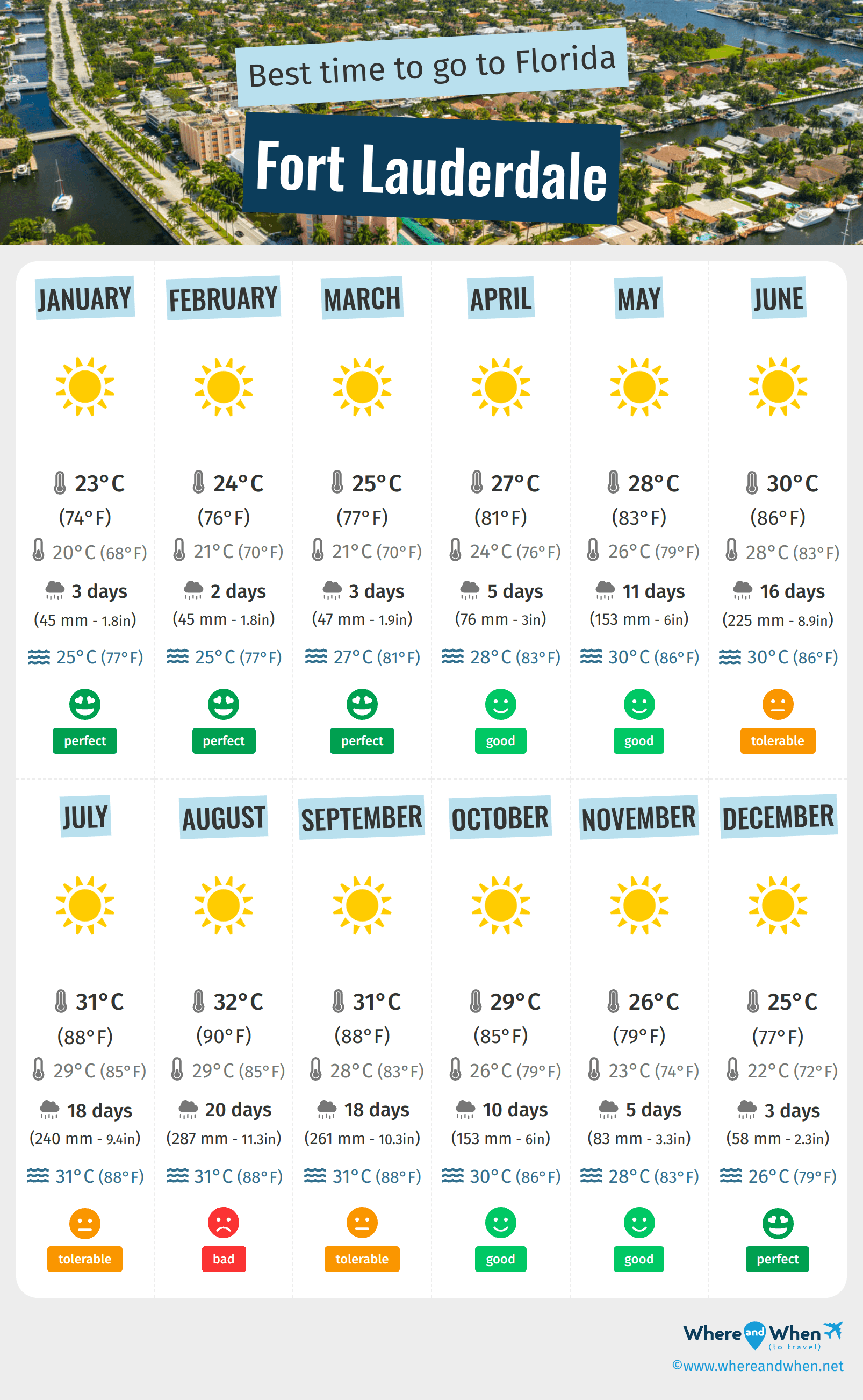
The defining feature of Fort Lauderdale’s climate is its abundant sunshine. The city boasts an impressive number of sunny days annually, contributing significantly to its appeal as a vacation spot. Even during the wetter months, clear skies often prevail, especially in the mornings, before the typical afternoon showers roll in. Average temperatures rarely dip below 60°F (15°C) even in the coldest months, and often soar into the 80s and 90s°F (27-32°C) during the summer. This consistent warmth ensures that outdoor activities, particularly those involving water, are almost always on the agenda. The ocean water remains invitingly warm throughout the year, with surface temperatures ranging from the mid-70s°F (24°C) in winter to the mid-80s°F (30°C) in summer, perfect for swimming, snorkeling, or paddleboarding.
Humidity: A Constant Companion
While sunshine is a constant, so too is the presence of humidity, especially outside of the peak dry season. Humidity levels in Fort Lauderdale can be quite high, particularly from May through October. This high moisture content in the air can make the summer heat feel even more intense, with “real feel” temperatures often exceeding the actual thermometer reading. For many, this is part of the authentic South Florida experience, fostering lush vegetation and a vibrant ecosystem. However, sensitive individuals might find the humidity a bit challenging, especially during periods of high exertion. Air-conditioned indoor spaces and frequent dips in the pool or ocean become essential strategies for staying comfortable during the more humid periods. Understanding and preparing for this pervasive humidity is key to enjoying the city’s outdoor attractions and activities.
Navigating the Seasons: Best Times to Visit
Fort Lauderdale’s weather patterns clearly define two primary seasons: a dry, cooler season and a wet, hotter season. Each offers a distinct experience, allowing travelers to choose the timing that best suits their preferences and desired activities.
The Dry Season: Winter’s Perfect Escape (December – April)
Without a doubt, the period from December through April is widely considered the prime time to visit Fort Lauderdale. During these months, the city enjoys remarkably pleasant weather. Temperatures are comfortably warm, typically ranging from the low 70s to low 80s°F (21-27°C) during the day, with cooler, refreshing evenings in the 60s°F (15-20°C). Rainfall is significantly lower, and humidity levels drop considerably, creating ideal conditions for outdoor exploration and relaxation. This is the perfect time for beach days, sailing, golfing, or dining al fresco along Las Olas Boulevard. The abundance of clear, sunny days with gentle breezes makes it an idyllic escape from harsh winter climates. Consequently, this is also peak tourist season, meaning larger crowds and potentially higher prices for accommodations and flights. Booking well in advance is highly recommended if you plan to travel during this popular window.
The Wet Season: Summer’s Lush & Lively Embrace (May – November)
From May to November, Fort Lauderdale transitions into its wet season, also characterized by higher temperatures and increased humidity. Daytime temperatures consistently hover in the upper 80s to low 90s°F (30-34°C), and the evenings remain warm and humid. This period sees the majority of the city’s annual rainfall, often manifesting as brief, intense afternoon thunderstorms. These showers are usually short-lived, clearing up quickly to reveal sunshine once more, and they serve to cool down the air, albeit temporarily. While the heat and humidity are more pronounced, the wet season offers its own advantages, including fewer crowds and often lower prices. It’s also an excellent time to witness the lushness of South Florida’s subtropical vegetation.
Within this wet season, it’s crucial to acknowledge hurricane season, which officially runs from June 1st to November 30th. While direct hurricane strikes are relatively rare, the possibility exists, and travelers should monitor weather forecasts closely if planning a trip during these months. Modern forecasting provides ample warning, allowing for adjustments to travel plans if a storm threatens. Many hotels and airlines offer flexible cancellation policies during hurricane season, providing some peace of mind for travelers. Despite the increased rainfall and hurricane potential, many visitors still enjoy Fort Lauderdale during these months, taking advantage of the quieter atmosphere and the vibrant natural beauty invigorated by the summer rains.
Packing Essentials for Fort Lauderdale’s Weather
Packing smart for Fort Lauderdale means preparing for warmth and potential wetness, regardless of the season. A strategic wardrobe will ensure comfort and readiness for all the city has to offer.
Wardrobe for Warmth
Lightweight, breathable clothing is paramount for a Fort Lauderdale vacation. Think cotton, linen, and moisture-wicking synthetic fabrics. Shorts, t-shirts, sundresses, and skirts will be your go-to items. Swimwear is an absolute must, as you’ll likely spend significant time at the beach, by the pool, or enjoying water sports. Even in the “cooler” winter months, long pants and sweaters are rarely needed during the day, though a light jacket or cardigan can be comfortable for breezy evenings, especially if dining outdoors or on a boat. Comfortable sandals or open-toed shoes are ideal for daytime wear, while a slightly dressier pair might be preferred for evening dining.
Preparing for Precipitation
While the dry season sees minimal rain, the wet season makes rain gear a sensible addition to your luggage. A lightweight, packable rain jacket or a compact umbrella can be invaluable for navigating unexpected afternoon downpours. Quick-drying fabrics for clothing are also a wise choice, as they help manage the humidity and accidental splashes from water activities. Don’t forget a waterproof bag or pouch for electronics, especially if you plan on spending time near the water or during the wetter months.
Sun Protection is Key
Given Fort Lauderdale’s year-round sunshine, robust sun protection is non-negotiable. High-SPF sunscreen (and reapplying it frequently), a wide-brimmed hat, and sunglasses are essential items to protect yourself from the strong Florida sun. Consider bringing UV-protective clothing, especially if you plan on extended outdoor activities like fishing, boating, or spending hours on the beach. Protecting your skin and eyes will ensure your vacation memories are happy, not sunburned.
Weather’s Influence on Fort Lauderdale Experiences
The local weather significantly shapes the availability and enjoyment of various activities in Fort Lauderdale, from its iconic beaches to its vibrant urban centers.
Beach & Water Activities
The primary draw for many visitors to Fort Lauderdale is its stunning coastline and extensive waterways. The consistent warmth of the ocean, even in winter, means swimming, snorkeling, diving, and paddleboarding are viable year-round. During the dry season, calm waters and abundant sunshine create perfect conditions for extended beach days and boating excursions. In the wet season, morning beach visits are often ideal before the afternoon thunderstorms roll in. Many water sports operators adjust their schedules to accommodate the weather patterns, ensuring safety and enjoyment. For those interested in exploring the unique Everglades National Park nearby, the cooler, drier months often provide more comfortable conditions for airboat rides and wildlife viewing, as mosquitoes are less prevalent.
Exploring Beyond the Coast
Fort Lauderdale’s charm extends far beyond its beaches. The weather plays a role in how you explore its cultural and entertainment offerings. Strolling down Las Olas Boulevard with its boutiques, art galleries, and outdoor cafes is particularly delightful during the cooler, drier months. Similarly, exploring the Riverwalk Arts & Entertainment District or taking a water taxi tour is most comfortable when temperatures are moderate. During the hot and humid summer, indoor attractions like the Museum of Discovery and Science or the Bonnet House Museum & Gardens become more appealing during the peak afternoon heat. Evening activities, such as dining at waterfront restaurants or catching a show, are enjoyable year-round, with the cooler dry season offering more opportunities for outdoor seating. Even exploring nearby areas like Pompano Beach for its pier and diving opportunities will be influenced by the comfort provided by favorable weather.
Hurricane Season Preparedness
For those traveling during the wet season, particularly from August to October, it’s wise to stay informed about tropical weather forecasts. Modern meteorological tools provide extensive lead time for potential storms, allowing travelers to make informed decisions. Many hotels in Fort Lauderdale have robust hurricane preparedness plans, and travel insurance that covers weather-related cancellations can offer peace of mind. While the risk of a direct hit is statistically low, awareness and flexibility are key to ensuring a safe and stress-free trip during these months.
Real-Time Weather Resources for Travelers
Staying informed about current and forecasted weather conditions is crucial for any trip, especially to a tropical destination. Reliable resources are readily available to help you plan your daily activities.
Reliable Forecasts for Your Trip
Before and during your trip, make it a habit to check trusted weather forecast services. Websites and apps from organizations like the National Weather Service (NWS) or reputable commercial meteorologists provide up-to-date information, including temperature, humidity, wind speed, and rain chances. For localized details, specifically for Fort Lauderdale, look for forecasts that break down conditions by morning, afternoon, and evening, as tropical weather can change rapidly. Pay attention to marine forecasts if you plan on boating or spending time offshore.
Local Insights and Tips
Beyond official forecasts, local news channels and tourism websites often provide valuable insights into current conditions and how they might affect events or attractions. Many hotels also offer daily weather updates. Don’t hesitate to ask hotel staff or locals for their recommendations on managing the day’s weather, whether it’s the best time to visit a particular outdoor attraction or tips for staying cool during a heatwave. Their firsthand experience can be incredibly helpful in making the most of your visit, rain or shine.
In conclusion, understanding “What’s the weather in Fort Lauderdale, Florida?” is more than just knowing temperatures; it’s about embracing a tropical lifestyle. Whether you prefer the idyllic, dry warmth of winter or the vibrant, lush energy of summer, Fort Lauderdale offers a unique charm. By being prepared for its sunny disposition, understanding its humidity, and planning around its seasonal rainfall patterns, you can unlock the full potential of this captivating South Florida gem and create unforgettable travel memories.
LifeOutOfTheBox is a participant in the Amazon Services LLC Associates Program, an affiliate advertising program designed to provide a means for sites to earn advertising fees by advertising and linking to Amazon.com. Amazon, the Amazon logo, AmazonSupply, and the AmazonSupply logo are trademarks of Amazon.com, Inc. or its affiliates. As an Amazon Associate we earn affiliate commissions from qualifying purchases.