
The allure of Minneapolis, Minnesota, beckons travelers with its vibrant urban landscape, rich cultural tapestry, and stunning natural beauty. From the iconic Stone Arch Bridge to the bustling shops and diverse culinary scene, there’s a wealth of experiences waiting to be discovered. However, like any destination, understanding the local climate is paramount to crafting the perfect itinerary. Knowing what to expect from the weather in Minneapolis allows for more informed planning, ensuring your trip is comfortable, enjoyable, and filled with the best that this Midwestern gem has to offer.
Whether you’re planning a visit for a specific event, a relaxing getaway, or an adventurous exploration of its many attractions, a grasp of the seasonal variations in Minneapolis will significantly enhance your travel experience. This guide delves into the typical weather patterns throughout the year, offering insights that will help you pack appropriately, choose the ideal time for your visit, and make the most of your stay, from securing the perfect accommodation to exploring its many landmarks.
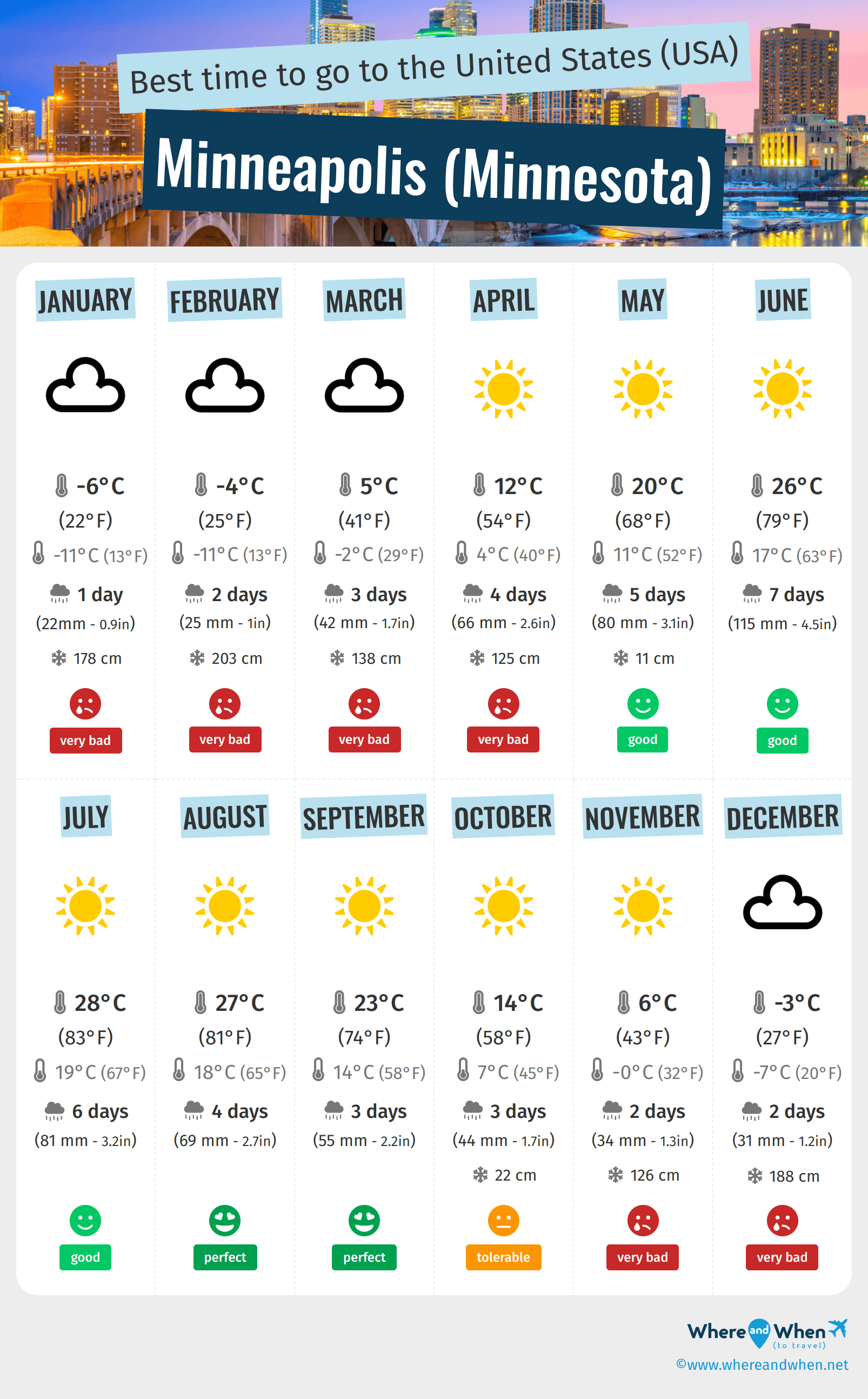
Embracing the Seasons: A Year-Round Guide to Minneapolis Weather
Minneapolis experiences a distinct four-season climate, each offering its unique charm and set of weather conditions. Understanding these seasonal shifts is key to planning a successful trip, whether you’re seeking winter wonderland activities or enjoying the warmth of a summer breeze.
Spring: A Gentle Awakening (March – May)
Spring in Minneapolis marks a welcome transition from the harsh grip of winter to the blooming beauty of warmer months. However, this transition can be somewhat unpredictable.
March: The Lingering Winter
March often feels like an extension of winter, with average temperatures hovering around the freezing point. Snowfall is still common, and icy conditions can persist. Days are gradually getting longer, offering more daylight for exploration, but bundling up is still essential. Outdoor activities might be limited, but the chance to witness the city shake off its snowy cloak can be a unique experience.
April: A Mix of Seasons
April in Minneapolis is notoriously variable. You might experience crisp, sunny days that feel like early summer, only to be followed by snow showers or chilly rain. Average temperatures begin to climb, typically reaching into the 40s and 50s Fahrenheit (around 5-15 degrees Celsius). This is a good time to pack layers – light jackets, sweaters, and perhaps a waterproof outer shell are advisable. The city’s numerous indoor attractions, such as the Minneapolis Institute of Art or the numerous shops at the Mall of America, become particularly appealing during these cooler, wetter days.
May: Spring in Full Bloom
By May, Minneapolis truly embraces spring. Temperatures become consistently milder, with average highs in the 60s and 70s Fahrenheit (15-25 degrees Celsius). The city bursts into vibrant color as trees leaf out and flowers bloom in parks like Minnehaha Park. This is an ideal time for outdoor activities, exploring the Chain of Lakes by bike or foot, or enjoying a picnic. The weather is generally pleasant, making it perfect for sightseeing and experiencing the local culture, including the burgeoning farmers’ markets.
Summer: Warmth and Vibrancy (June – August)
Summer is arguably the most popular time to visit Minneapolis, thanks to its warm temperatures and long daylight hours.
June: The Start of Summer Bliss
June in Minneapolis typically offers warm and sunny weather, with average temperatures in the 70s and 80s Fahrenheit (20-30 degrees Celsius). Humidity can start to increase, but it’s generally manageable. The city comes alive with outdoor festivals, concerts, and events. The Stone Arch Bridge is a particularly pleasant spot for an evening stroll. It’s the perfect time to enjoy the city’s many parks, outdoor dining options, and water-based activities on the Mississippi River or the Chain of Lakes.
July: Peak Summer Heat
July is usually the warmest month in Minneapolis, with average highs consistently in the high 70s and 80s Fahrenheit (25-30 degrees Celsius). Heat waves can occur, pushing temperatures into the 90s Fahrenheit (above 30 degrees Celsius), often accompanied by humidity. Thunderstorms are also common during this period, usually occurring in the afternoon or evening, bringing a refreshing but sometimes dramatic change in weather. Staying hydrated and seeking shade during the hottest parts of the day is recommended. This is prime time for exploring attractions like the Walker Art Center and its sculpture garden, or enjoying the lively atmosphere of downtown Minneapolis.
August: Lingering Warmth
August continues the warm summer trend, with temperatures remaining high, though often slightly less humid than July. Average highs are still in the 70s and 80s Fahrenheit (25-30 degrees Celsius). The season begins to subtly shift towards autumn towards the end of the month, with cooler evenings becoming more frequent. It’s still an excellent time for outdoor exploration, from visiting the Mill City Museum to enjoying the vibrant nightlife in neighborhoods like the North Loop.
Autumn: A Tapestry of Colors (September – November)
Autumn in Minneapolis is renowned for its stunning fall foliage and pleasant, crisp air, offering a beautiful and comfortable time to visit.
September: The Golden Embrace
September is often considered one of the most beautiful months in Minneapolis. The weather is typically mild and pleasant, with average temperatures in the 60s and 70s Fahrenheit (15-25 degrees Celsius). Humidity drops, and the skies are often clear and blue. The city’s parks and tree-lined streets explode with vibrant fall colors, creating a picturesque backdrop for any activity. This is an ideal time for walking tours, exploring neighborhoods, and enjoying the final days of outdoor dining.
October: Crisp Air and Falling Leaves
October brings cooler temperatures to Minneapolis, with average highs in the 50s Fahrenheit (10-15 degrees Celsius). The fall foliage reaches its peak, painting the landscape in hues of red, orange, and yellow. You might experience frost on some mornings, and the possibility of early snowfall increases towards the end of the month. Packing layers, including a warm jacket and possibly a hat and gloves, is essential. This is a great time to visit attractions like the Guthrie Theater or enjoy cozy evenings in the city’s many restaurants and bars.
November: The Arrival of Winter’s Chill
November marks the definitive transition into winter in Minneapolis. Temperatures drop significantly, with average highs struggling to get above the freezing point. Snowfall becomes more common, and icy conditions can return. Daylight hours shorten considerably. While outdoor activities become more limited, the city’s indoor attractions remain a fantastic option. The festive holiday decorations begin to appear, offering a glimpse of the approaching winter holiday season. It’s a time for hearty meals and enjoying the warmth of your chosen accommodation, perhaps a cozy suite at a downtown hotel.

Winter: A Snowy Spectacle (December – February)
Winter in Minneapolis is characterized by cold temperatures, snow, and opportunities for unique winter activities.
December: A Winter Wonderland
December in Minneapolis is undeniably cold, with average temperatures well below freezing, often in the teens and single digits Fahrenheit (around -15 to -5 degrees Celsius). Snowfall is common, and the city can be transformed into a picturesque winter wonderland. This is an ideal time for winter sports enthusiasts, with opportunities for ice skating at outdoor rinks like the one at The Depot Minneapolis, or exploring nearby cross-country ski trails. The holiday spirit is in full swing, with festive lights and events adding cheer to the chilly air.
January: The Heart of Winter
January is typically the coldest month in Minneapolis. Temperatures regularly plummet into the single digits and below zero Fahrenheit (below -15 degrees Celsius). Wind chills can make it feel even colder. Snowfall is often abundant, providing excellent conditions for winter sports and activities. Despite the extreme cold, Minneapolis is well-equipped for winter, with an extensive network of indoor walkways connecting many downtown buildings, making it easy to navigate between attractions, shops, and restaurants. This is a time to embrace the city’s cozy indoor offerings, from museums to theaters.
February: Still Winter’s Grip
February continues the cold winter pattern in Minneapolis, with temperatures remaining frigid. While the days begin to lengthen, the chill is still very much present. Snowfall remains a possibility, and the city often maintains its snowy, wintery appearance. Towards the end of the month, there can be hints of spring’s eventual arrival, but for the most part, winter’s grip is still firm. This is still a prime time for enjoying winter activities and the warmth of Minneapolis‘s hospitality sector, from boutique hotels to comfortable apartments.
Planning Your Trip: Choosing the Best Time to Visit
The “best” time to visit Minneapolis, Minnesota, ultimately depends on your personal preferences and what you hope to experience. Each season offers a unique perspective on the city.
Summer for Outdoor Enthusiasts and Festival Goers
If you thrive in warm weather and enjoy a city buzzing with outdoor activities, then June, July, and August are your prime months. The longer daylight hours are perfect for exploring the Chain of Lakes, biking along the Mississippi River, attending outdoor concerts, and enjoying al fresco dining. The lively atmosphere and abundance of festivals make it an exciting time to be in Minneapolis. Be prepared for heat and humidity, and pack accordingly.
Fall for Scenic Beauty and Mild Temperatures
For those who appreciate stunning natural beauty and comfortable walking weather, September and October are hard to beat. The vibrant fall foliage provides a breathtaking backdrop for exploring the city’s many parks and landmarks, such as the Minnehaha Falls. The cooler, crisp air is ideal for leisurely strolls and enjoying the city’s cultural offerings without the intensity of summer heat.
Winter for a Cozy and Active Getaway
If you don’t mind the cold and are looking for a unique winter experience, December, January, and February offer a distinct charm. Minneapolis transforms into a winter wonderland, perfect for ice skating, cross-country skiing, or simply enjoying the festive holiday atmosphere. The city’s excellent indoor connections make it easy to stay warm and comfortable while still experiencing its vibrant heart. Consider this season for a different pace and a chance to experience the resilience and beauty of a snow-covered city.
Spring for a Gradual Thaw and Blooming City
April and May present a transition period, offering a blend of unpredictable weather and the gradual awakening of nature. While early spring can still be chilly, by May, Minneapolis is in full bloom, offering pleasant temperatures and a city coming back to life. This season can be ideal for budget travelers looking to avoid peak summer prices, and for those who enjoy seeing a city emerge from its winter slumber.
Packing Essentials Based on Minneapolis Weather
Regardless of the season, packing smartly is crucial for enjoying your trip to Minneapolis.
Spring and Fall: Layering is Key
During spring and fall, the weather can be highly variable. The most important packing strategy is layering. Pack:
- Base layers: T-shirts, long-sleeved shirts.
- Mid-layers: Sweaters, fleeces, or light jackets.
- Outer layers: A waterproof and windproof jacket is essential, as spring can bring rain and fall can bring crisp, chilly winds.
- Comfortable walking shoes: You’ll likely be doing a lot of exploring.
- Scarf, hat, and gloves: Especially for early spring and late fall.
- Umbrella: A compact umbrella is a lifesaver for unpredictable showers.
Summer: Light and Breathable
In the summer months, pack light and breathable clothing.
- Shorts and t-shirts: Made from cotton or moisture-wicking fabrics.
- Light dresses or skirts.
- A light sweater or cardigan: For cooler evenings or air-conditioned indoor spaces.
- Sunscreen, sunglasses, and a hat: To protect yourself from the sun.
- Comfortable sandals or walking shoes.
- Swimwear: If you plan on visiting any of the city’s lakes or pools.
Winter: Warmth is Paramount
Winter in Minneapolis demands serious warm clothing.
- Heavy, insulated winter coat: Waterproof and windproof is ideal.
- Warm hats, gloves, and scarves: Wool or fleece are good options.
- Thermal base layers: Long johns and thermal tops.
- Warm sweaters and hoodies.
- Waterproof and insulated boots: Essential for walking in snow and on ice.
- Wool socks: To keep your feet warm.
- Hand and foot warmers: For extra comfort on extremely cold days.
By understanding the weather patterns of Minneapolis, Minnesota, and packing accordingly, you can ensure a comfortable and memorable journey, allowing you to fully immerse yourself in the city’s diverse attractions, from its iconic landmarks like the Stone Arch Bridge to its renowned cultural institutions. Whether you’re booking a stay at a luxury resort or a budget-friendly apartment, being prepared for the elements will undoubtedly enhance your overall travel experience.
LifeOutOfTheBox is a participant in the Amazon Services LLC Associates Program, an affiliate advertising program designed to provide a means for sites to earn advertising fees by advertising and linking to Amazon.com. Amazon, the Amazon logo, AmazonSupply, and the AmazonSupply logo are trademarks of Amazon.com, Inc. or its affiliates. As an Amazon Associate we earn affiliate commissions from qualifying purchases.