
Navigating the tax landscape of any state can be a complex endeavor, and Florida is no exception. While the Sunshine State is renowned for its beautiful beaches, vibrant theme parks, and rich cultural tapestry, understanding its tax obligations is crucial for both residents and businesses. This guide aims to demystify when various Florida taxes are due, offering clarity and practical insights for those planning a visit, considering a move, or operating a business within the state. Understanding these deadlines is not just about avoiding penalties; it’s about seamless integration into the Florida lifestyle, whether you’re enjoying the Walt Disney World Resort or managing a growing enterprise in Miami.
Understanding Florida’s Tax Structure
Florida stands out for its absence of a state income tax for individuals. This is a significant draw for many relocating to the state, offering a considerable financial advantage compared to states with progressive income tax systems. However, this does not mean there are no tax considerations. Florida relies heavily on sales tax, property tax, and various business taxes to fund its public services, from maintaining the pristine shores of Clearwater Beach to supporting its renowned educational institutions.
Sales and Use Tax
The most commonly encountered tax for visitors and residents alike is the sales and use tax. This tax is levied on the retail sale of tangible personal property and certain services. The statewide rate is 6%, with an additional discretionary sales surtax that counties can impose, bringing the total rate to as high as 7.5% in some areas.
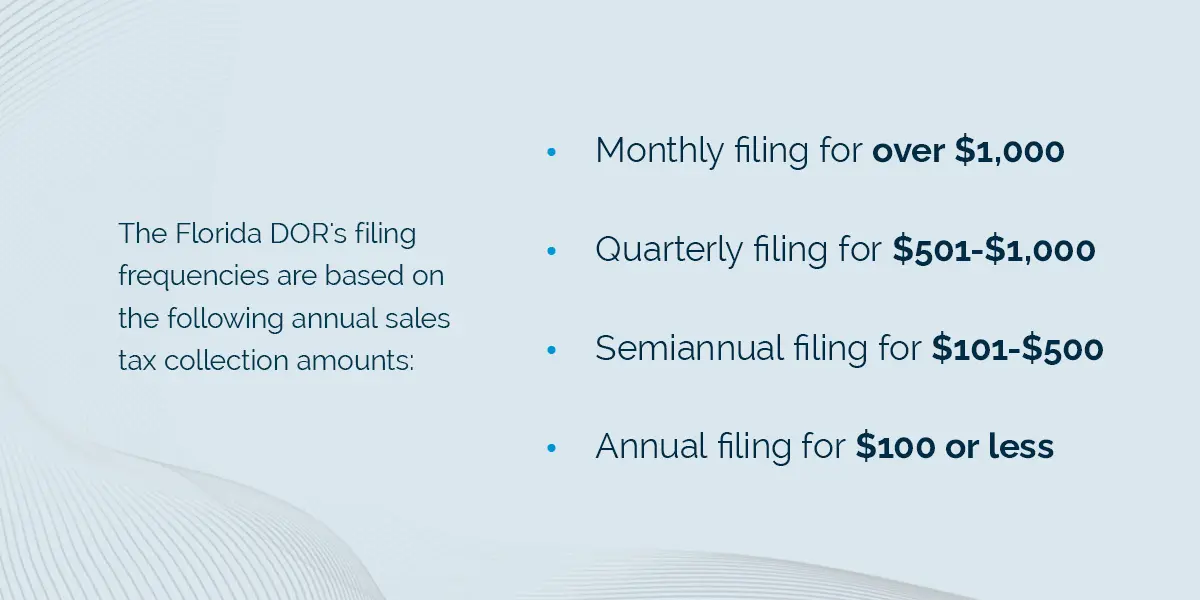
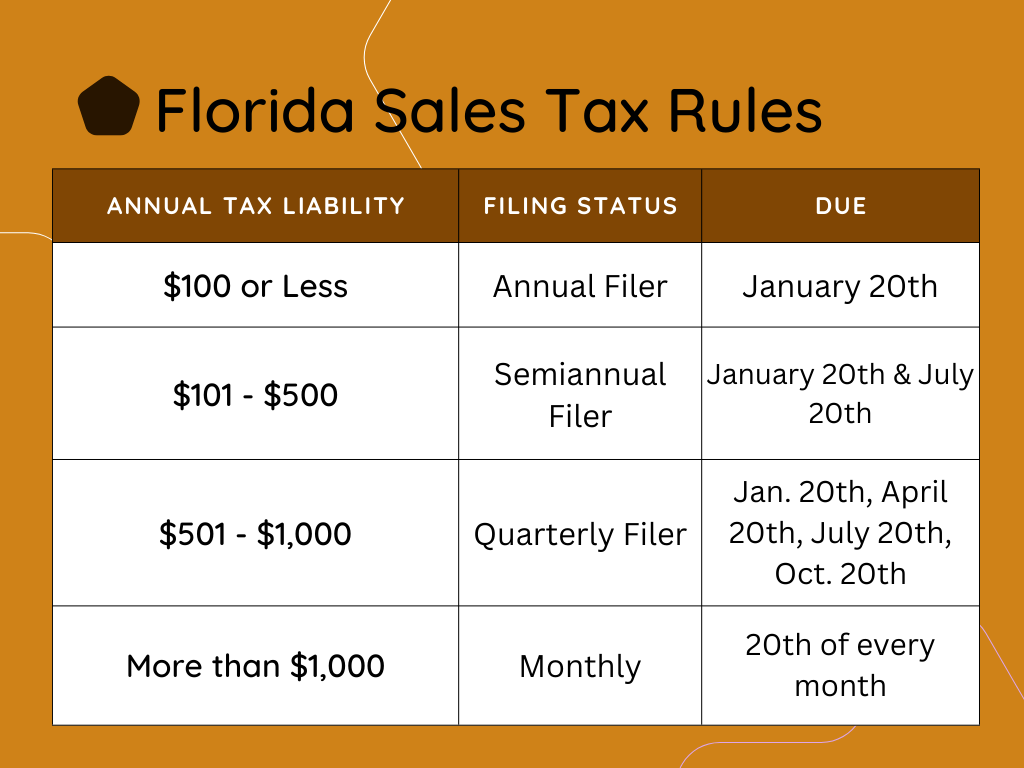
- Filing Frequency: The frequency of sales and use tax filings depends on the taxpayer’s gross sales volume.
- Monthly Filers: Businesses with a gross tax liability of $1,000 or more per month are typically required to file monthly.
- Quarterly Filers: Businesses with a gross tax liability between $200 and $999 per month are generally quarterly filers.
- Annual Filers: Businesses with a gross tax liability of less than $200 per month may be eligible to file annually.
- Due Dates:
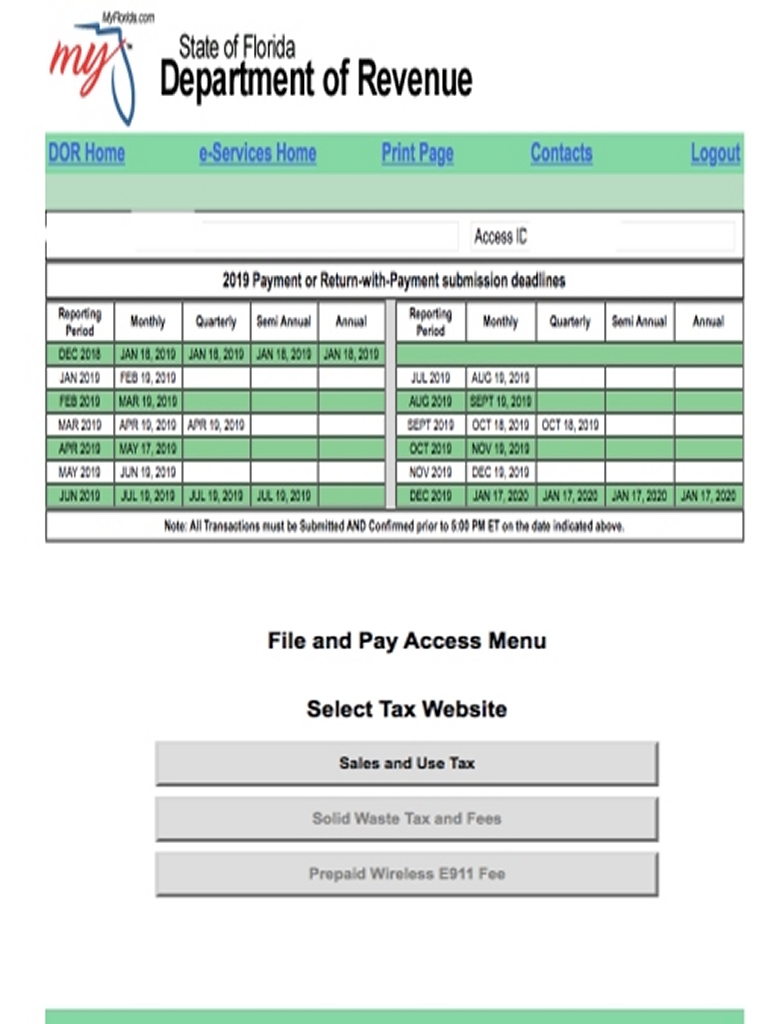
- Monthly Returns: The due date is the 20th day of the month following the reporting period. For example, the January return is due by February 20th.
- Quarterly Returns: The due date is the 20th day of the month following the end of the calendar quarter. For example, the January-March quarter is due by April 20th.
- Annual Returns: The due date is typically January 20th of the year following the reporting period.
- Online Filing: The Florida Department of Revenue strongly encourages and often requires electronic filing and payment of sales and use taxes. The Florida Department of Revenue’s website provides a user-friendly portal for these transactions.
- Special Considerations: Certain industries, such as transient accommodations (hotels, vacation rentals), may have specific reporting requirements and due dates. For instance, taxes on short-term rentals, often booked through platforms like Airbnb or managed by local property management companies, are due on the same schedule as general sales tax, but the specific collection and remittance responsibilities should be confirmed with the Florida Department of Revenue.
Property Tax
Property taxes are a significant source of revenue for local governments in Florida, funding schools, police, fire departments, and other essential services. These taxes are levied by county property appraisers and collected by county tax collectors.
- Assessment: Property taxes are based on the assessed value of real estate and tangible personal property. The assessment for a given tax year is typically made as of January 1st.
- Tax Bills: Property tax bills are usually mailed in early November.
- Due Date: Property taxes are due on March 31st of the year following the assessment. However, a discount is offered for early payment:
- 4% discount if paid in November.
- 3% discount if paid in December.
- 2% discount if paid in January.
- 1% discount if paid in February.
- No discount if paid in March.
- Delinquency: Taxes not paid by March 31st become delinquent, and interest and penalties begin to accrue. Tax certificates are then issued for delinquent properties, which can eventually lead to a tax deed sale.
- Homestead Exemption: Homeowners who reside in their property and claim it as their primary residence may be eligible for a homestead exemption, which reduces the taxable value of their home. Applications for homestead exemptions must typically be filed by March 1st.
Business Taxes
Beyond sales tax, Florida imposes various other taxes and fees on businesses. The due dates and requirements vary significantly depending on the type of business and the specific tax.
- Reemployment Tax (formerly Unemployment Tax): This tax is paid by employers to fund unemployment benefits. The due dates are generally quarterly:
- First Quarter (January-March): Due April 30th.
- Second Quarter (April-June): Due July 31st.
- Third Quarter (July-September): Due October 31st.
- Fourth Quarter (October-December): Due January 31st of the following year.
- Employers with a significant payroll may be required to file monthly.
- Corporate Income Tax: While individuals do not pay state income tax, corporations operating in Florida are subject to corporate income tax. The tax rate is 5.5% on net taxable income.
- Estimated Tax Payments: Corporations are generally required to make estimated tax payments throughout the year. These are typically due on the 15th day of the 4th, 6th, 9th, and 12th months of the tax year.
- Annual Return: The annual corporate income tax return is due on the 15th day of the fourth month following the close of the corporation’s tax year. For calendar-year taxpayers, this is April 15th. Extensions are often available.
- Other Business Taxes: Depending on the industry, businesses may be subject to excise taxes, insurance premium taxes, documentary stamp taxes, and other specific levies. The Florida Department of Revenue’s website is the primary resource for detailed information on these. For example, businesses operating in the hospitality sector, such as the Hard Rock Hotel Daytona Beach, will have specific reporting and remittance obligations related to the taxes on lodging.
Preparing for Tax Season in Florida
While Florida offers an attractive tax environment, staying organized and informed about due dates is paramount. This is especially true for those who might be new to the state, perhaps drawn by the allure of a villa in the Florida Keys or a new business opportunity in Tampa.
Key Dates to Remember
To avoid late fees and penalties, it is beneficial to have a clear understanding of the critical tax deadlines:
- January 1st: Property value assessment date. Homestead exemption applications are open.
- January 20th: Due date for annual sales and use tax returns for eligible businesses. Due date for the final estimated corporate income tax payment.
- January 31st: Due date for the fourth quarter reemployment tax return.
- February 20th: Due date for monthly sales and use tax returns for the previous month.
- March 1st: Deadline for filing homestead exemption applications.
- March 31st: Final due date for property taxes to avoid delinquency and loss of early payment discounts.
- April 15th: Due date for calendar-year corporate income tax returns. Due date for the first estimated corporate income tax payment.
- April 20th: Due date for quarterly sales and use tax returns for the January-March quarter.
- April 30th: Due date for the first quarter reemployment tax return.
- May 1st: Property taxes become delinquent if not paid.
- June 15th: Due date for the second estimated corporate income tax payment.
- July 20th: Due date for monthly sales and use tax returns for June.
- July 31st: Due date for the second quarter reemployment tax return.
- August 15th: Due date for the third estimated corporate income tax payment.
- October 20th: Due date for monthly sales and use tax returns for September.
- October 31st: Due date for the third quarter reemployment tax return.
- November 20th: Due date for monthly sales and use tax returns for October. Property tax bills are typically mailed.
- December 15th: Due date for the fourth estimated corporate income tax payment.
Leveraging Resources and Professional Advice
The Florida Department of Revenue (DOR) is the primary government agency responsible for administering state tax laws. Their website, FloridaRevenue.com, is an invaluable resource, offering:
- Tax Forms and Publications: Access to all necessary forms, instructions, and informational publications.
- Online Services: A portal for registering businesses, filing returns, making payments, and managing tax accounts.
- Taxpayer Assistance: Information on how to contact the DOR for specific questions or issues.
For complex tax situations or for peace of mind, consulting with a qualified tax professional, such as a Certified Public Accountant (CPA) or an Enrolled Agent (EA) specializing in Florida tax law, is highly recommended. They can provide personalized guidance, ensure compliance, and help identify potential tax-saving opportunities, whether you’re a frequent visitor to Orlando or a permanent resident.
Staying Ahead of Changes
Tax laws and regulations are subject to change. Staying informed about updates from the Florida Legislature and the Department of Revenue is crucial. Subscribing to official newsletters, following reputable tax news sources, and regularly visiting the DOR website will help ensure you are always up-to-date. For businesses, proactive tax planning is not merely a matter of meeting deadlines but a strategic element of financial management, supporting the continued success and enjoyment of operating within the thriving Florida economy, from the historic streets of St. Augustine to the bustling business districts of Jacksonville.
LifeOutOfTheBox is a participant in the Amazon Services LLC Associates Program, an affiliate advertising program designed to provide a means for sites to earn advertising fees by advertising and linking to Amazon.com. Amazon, the Amazon logo, AmazonSupply, and the AmazonSupply logo are trademarks of Amazon.com, Inc. or its affiliates. As an Amazon Associate we earn affiliate commissions from qualifying purchases.