
The elusive, mesmerizing dance of the Northern Lights, or Aurora Borealis, is a bucket-list spectacle for travelers worldwide. While visible in several high-latitude regions, Alaska stands out as one of the most accessible and consistently spectacular destinations to witness this natural wonder. However, timing is paramount to transform a hopeful dream into an unforgettable reality. Understanding the science behind the aurora and the specific seasonal and geographical factors unique to Alaska is key to planning a successful aurora-chasing adventure.
Understanding the Aurora Borealis in Alaska
The Northern Lights are a captivating celestial phenomenon caused by disturbances in the magnetosphere by solar wind. These disturbances are strong enough to alter the trajectories of charged particles in the solar wind and magnetospheric plasma. These particles, primarily electrons and protons, precipitate into the upper atmosphere (thermosphere/exosphere) at high altitudes, where they collide with atoms and molecules of atmospheric gases, primarily oxygen and nitrogen. The energy released during these collisions excites the atoms and molecules, causing them to emit light in various colors, most commonly green, but also pink, red, blue, and violet.

Alaska’s geographical position makes it an exceptional vantage point for aurora viewing. Much of the state lies within the “auroral oval,” a ring-shaped region centered around the Earth’s magnetic north pole where aurora activity is most intense and frequent. This strategic location, combined with vast expanses of wilderness offering minimal light pollution and consistently dark winter skies, elevates Alaska to a premier destination for aurora enthusiasts. The absence of significant mountainous terrain obstructing northern views in central Alaska further enhances visibility, allowing for an unobstructed canvas for the solar-powered light show.
The Optimal Season for Aurora Viewing
Pinpointing the best time to see the Northern Lights in Alaska hinges on a delicate balance of darkness, solar activity, and clear skies. While solar activity is unpredictable, the other two factors follow predictable seasonal patterns.
Peak Visibility Months
The prime season for viewing the Northern Lights in Alaska stretches from mid-August to late April. This eight-month window offers sufficient darkness for the aurora to be visible, provided there is enough solar activity and clear weather.
- Fall (Late August to October): Early fall is a popular time, particularly around the fall equinox (late September), when geomagnetic disturbances tend to be slightly more frequent. The advantage here is less extreme cold compared to deep winter, and the possibility of viewing the aurora reflecting off lakes and rivers before they freeze solid. The nights grow long enough to allow for good viewing opportunities, especially after 10 PM.
- Winter (November to February): This is arguably the most traditional and sought-after period. The nights are at their longest and darkest, maximizing the hours available for aurora spotting. In December and January, the sun barely rises in the far north, providing nearly continuous darkness. While temperatures can be brutally cold, the sheer length of night offers numerous opportunities to catch the lights. This period often coincides with other winter activities, such as dog sledding and ice sculpting festivals, making for a comprehensive Alaskan experience.
- Spring (March to Mid-April): Similar to fall, the spring equinox in March can also bring heightened geomagnetic activity. While the days start to lengthen, nights remain sufficiently dark through mid-April, particularly in interior Alaska. Temperatures begin to moderate slightly, making extended outdoor viewing more comfortable than in the depths of winter. This period is also popular for skiing and other snow-based adventures.
The Role of Darkness
Darkness is the most critical factor. The aurora, though intensely bright when active, is easily outshone by ambient light. This means that during Alaska’s famous “midnight sun” period in summer (May through mid-August), the sun simply doesn’t set long enough or low enough below the horizon to allow the aurora to be seen. Even if there’s significant solar activity, the persistent twilight makes viewing impossible. Therefore, a trip specifically for the Northern Lights should absolutely avoid the summer months. The longer and deeper the night, the higher the chance of seeing the lights.
Weather Considerations
Beyond darkness, clear skies are non-negotiable. Clouds, fog, or heavy snowfall will obscure the aurora, regardless of its intensity. Alaska’s weather can be notoriously unpredictable, especially in winter.
- Coastal areas, like Anchorage or Juneau, often experience more cloud cover due to their proximity to the ocean.
- Interior Alaska, particularly around Fairbanks, tends to have colder, drier air, which can lead to clearer skies. However, even here, prolonged cloudy periods are possible.
Planning for multiple nights (at least 3-5) significantly increases your chances, allowing flexibility to wait out less favorable weather conditions.
Best Locations in Alaska for Aurora Chasing
While much of Alaska is theoretically capable of seeing the aurora, certain locations offer superior conditions and infrastructure for aurora enthusiasts.
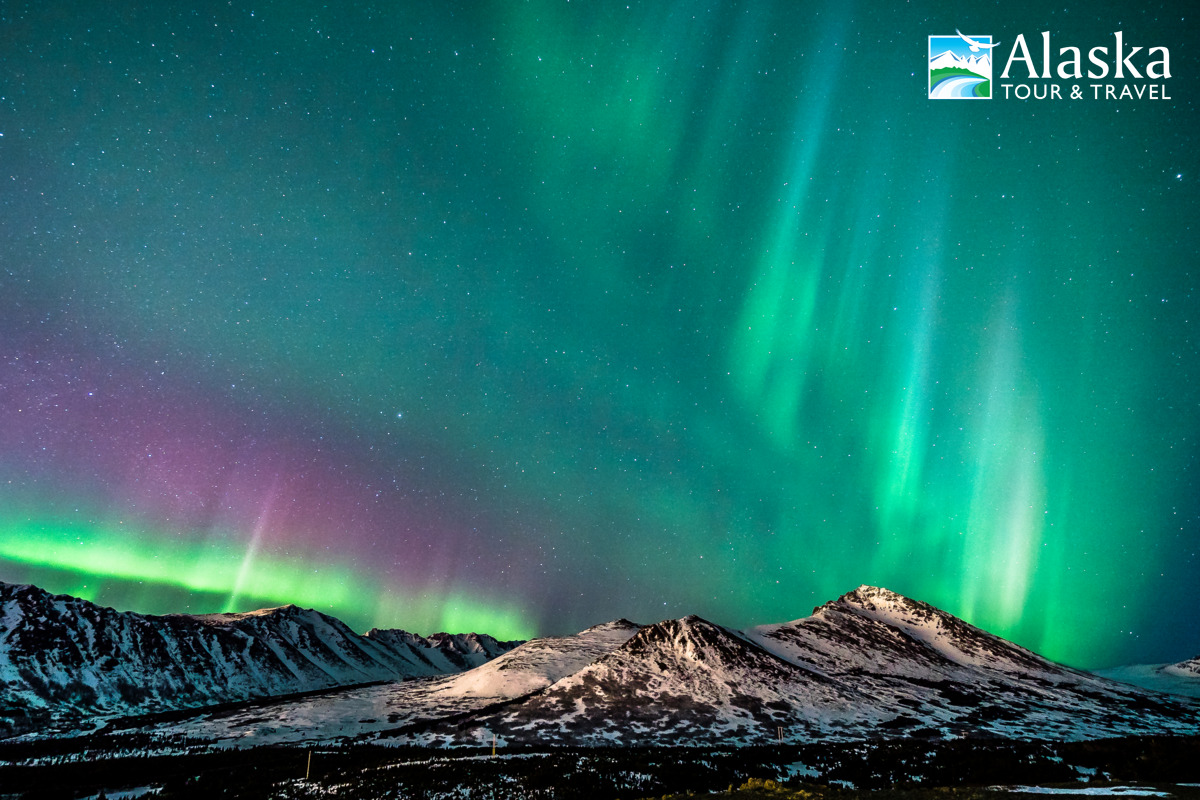
Fairbanks: The Aurora Capital
Fairbanks, located just below the Arctic Circle and squarely within the auroral oval, is widely considered the best place in Alaska to see the Northern Lights. Its northerly latitude means aurora activity is frequently overhead, and its interior location typically means less cloud cover than coastal areas.
- Accessibility: Fairbanks has an international airport and a robust tourism industry geared towards aurora chasers, including specialized tours, aurora-friendly accommodations, and dark sky viewing locations.
- Dedicated Viewing Spots: Popular spots around Fairbanks include Chena Hot Springs Resort (offering warm viewing opportunities), Ester Dome, Cleary Summit, and the expansive, dark landscapes north of town along the Steese Highway or Elliott Highway. Many tour operators offer comfortable, heated lodges or yurts for waiting out the lights.
Beyond Fairbanks: Other Excellent Spots
While Fairbanks is the epicenter, other Alaskan destinations offer unique aurora experiences.
- Anchorage: While Anchorage itself suffers from significant light pollution, the aurora can be seen on strong nights by driving 30-60 minutes outside the city, away from urban glow. Popular spots include Eklutna Lake, Turnagain Arm (facing away from the city), or towards Talkeetna and the Mat-Su Valley.
- Denali National Park and Preserve: Known for its pristine, dark skies, Denali offers unparalleled natural beauty as a backdrop to the aurora. However, access during the peak winter viewing season can be challenging, with much of the park road closed to private vehicles. Consider staying just outside the park entrance or flying into smaller, remote lodges.
- Far North Communities: Places like Barrow (now officially Utqiaġvik), Nome, or Coldfoot along the Dalton Highway are even further north and experience longer periods of darkness. However, these locations are more remote, logistically challenging, and costly to access, and involve facing extreme Arctic conditions. They are generally recommended for more adventurous and experienced travelers.
- Getting Away from City Lights: Regardless of your chosen destination, the golden rule for aurora viewing is to escape light pollution. Even a small town can dim a faint aurora. Driving out to rural areas, state parks, or simply finding a dark pull-off along a highway provides the best conditions.
Maximizing Your Chances: Tips for Aurora Enthusiasts
Seeing the Northern Lights involves more than just being in the right place at the right time; it requires preparation, patience, and a bit of luck.
Timing is Everything
- Check Aurora Forecasts: Utilize resources like the University of Alaska Fairbanks Geophysical Institute or the NOAA Space Weather Prediction Center. These forecasts predict the Kp-index, a scale from 0 to 9 indicating the intensity of geomagnetic activity. A Kp of 3 or higher typically offers good visibility in Fairbanks, while higher Kp values (5+) can make the aurora visible further south.
- Nightly Prime Time: While the aurora can appear at any time during dark hours, it’s most frequently seen between 10 PM and 3 AM. Be prepared for late nights (or early mornings!).
Patience and Persistence
The aurora is a natural phenomenon; there are no guarantees. Even during peak season with high forecasts, clouds can roll in, or solar activity might wane.
- Plan for Multiple Nights: Dedicate at least 3-5 nights to aurora chasing. This drastically improves your odds and allows for cloudy nights or less intense displays.
- Stay Flexible: If possible, keep your evenings open. Don’t schedule activities that prevent you from being ready to chase the lights when they appear.
Essential Gear
Preparation for Alaska’s winter conditions is critical for a comfortable and safe aurora experience.
- Warm Clothing: Layers are paramount. Insulated winter coat, snow pants, thermal base layers, wool socks, waterproof and insulated boots, a warm hat that covers your ears, and heavy-duty gloves or mittens are non-negotiable. Chemical hand/foot warmers are also highly recommended.
- Camera Equipment: For capturing the lights, you’ll need a camera with manual settings, a wide-angle lens, a sturdy tripod, a remote shutter release, and extra batteries (cold drains them quickly). A headlamp with a red light setting is useful for seeing without affecting your night vision or disturbing others.
- Comfort Items: A thermos with hot coffee, tea, or chocolate can be a lifesaver during long waits in the cold. Snacks are also a good idea.
Guided Tours vs. Self-Driving
Both options have their merits.
- Guided Tours: Offer convenience, local knowledge, transportation to optimal viewing spots, and often provide warm shelters or hot beverages. Guides monitor forecasts and conditions, maximizing your chances. This is ideal for those unfamiliar with winter driving or who prefer a structured experience.
- Self-Driving: Provides ultimate flexibility and freedom to explore different locations. However, it requires a reliable 4×4 vehicle suitable for winter conditions, experience driving on icy or snowy roads, and a good understanding of the area to find dark skies safely. Always inform someone of your plans, and carry an emergency kit.

Accommodations and Planning
- Book in Advance: Accommodations and aurora tours, especially in Fairbanks, book up quickly during the peak season. Plan and reserve well ahead of your travel dates.
- Aurora-Friendly Lodges: Some lodges and cabins are specifically designed for aurora viewing, offering wake-up calls when the lights appear or clear viewing areas directly from the property. Research these options for an enhanced experience.
Witnessing the Northern Lights in Alaska is a profound and often spiritual experience. By understanding the optimal timing, choosing the right location, and preparing diligently, you can significantly increase your chances of seeing this spectacular celestial ballet in the vast Alaskan wilderness.
LifeOutOfTheBox is a participant in the Amazon Services LLC Associates Program, an affiliate advertising program designed to provide a means for sites to earn advertising fees by advertising and linking to Amazon.com. Amazon, the Amazon logo, AmazonSupply, and the AmazonSupply logo are trademarks of Amazon.com, Inc. or its affiliates. As an Amazon Associate we earn affiliate commissions from qualifying purchases.