
The question of when Alabama legalized interracial marriage delves deep into the complex tapestry of American civil rights history, revealing a timeline that significantly lags behind the rest of the nation. It is a historical landmark in itself, not a physical monument, but a pivotal point in the social and legal evolution of the state, reflective of broader struggles for equality and justice. Understanding this specific historical journey provides crucial insight into the cultural and legal landscape that has shaped Alabama over decades, offering a lens through which to appreciate its unique place in the national narrative.

The Deep Roots of Miscegenation Laws
To understand Alabama’s’s particular trajectory, one must first grasp the pervasive nature of miscegenation laws across the United States. These laws, which prohibited marriage and sometimes even sexual relations between people of different races, were a cornerstone of racial segregation and white supremacy, particularly in the South.
Origins and Enforcement
Miscegenation laws in the United States date back to the colonial era, with the first such laws enacted in Maryland in 1661. Designed primarily to maintain racial hierarchies and prevent the perceived dilution of white racial purity, these statutes targeted unions between white individuals and Black individuals, and later, Native Americans and Asians. They reflected deeply entrenched racist ideologies and were enforced with varying degrees of severity, often resulting in severe penalties for those who defied them.
In Alabama, the prohibition against interracial marriage was codified in its state constitution and statutes for centuries. The post-Civil War era and the subsequent Reconstruction period saw attempts to establish greater equality, but these were largely rolled back by Jim Crow laws. The 1901 Alabama Constitution, a document steeped in segregationist principles, explicitly stated in Article IV, Section 102: “The legislature shall never pass any law to authorize or legalize any marriage between any white person and a negro, or descendant of a negro.” This constitutional mandate solidified Alabama’s’s position as one of the most resistant states to racial integration, a stance that extended far beyond public facilities to the most intimate of human relationships. The spirit of this law was not merely a legislative formality; it was deeply ingrained in the social fabric and cultural norms, often enforced by community pressure and violence, not just legal sanctions.
Loving v. Virginia: A National Turning Point
While Alabama maintained its staunch position, a landmark Supreme Court case in 1967 shattered the legal basis for miscegenation laws nationwide, including in Alabama. This case, Loving v. Virginia, represents a monumental victory for civil rights and a crucial historical landmark in the quest for racial equality.
Mildred and Richard Loving’s Courageous Stand
The case originated with Mildred Jeter and Richard Loving, an interracial couple from Virginia who married in the District of Columbia in 1958 to circumvent Virginia’s anti-miscegenation laws. Upon their return to their home in Caroline County, Virginia, they were arrested and charged under the state’s Racial Integrity Act of 1924. They were sentenced to one year in prison, with the sentence suspended on the condition that they leave Virginia and not return together for 25 years.
Refusing to accept this unjust exile from their home state and their families, the Lovings, with the support of the American Civil Liberties Union (ACLU), fought their conviction. Their case made its way through the judicial system, ultimately reaching the United States Supreme Court. Their quiet determination and unwavering belief in their right to marry who they chose became a powerful symbol against racial discrimination.
The Supreme Court’s Unanimous Decision
On June 12, 1967, the United States Supreme Court delivered a unanimous decision in Loving v. Virginia, striking down all state laws prohibiting interracial marriage. Chief Justice Earl Warren, writing for the Court, declared that Virginia’s anti-miscegenation law violated both the Equal Protection Clause and the Due Process Clause of the Fourteenth Amendment to the United States Constitution. The Court unequivocally stated, “The freedom to marry has long been recognized as one of the vital personal rights essential to the orderly pursuit of happiness by free men,” and “under our Constitution, the freedom to marry or not marry, a person of another race resides with the individual and cannot be infringed by the State.”
This ruling immediately invalidated similar laws in the 16 states that still had them, including Alabama. From a legal standpoint, Alabama’s prohibition on interracial marriage became null and void on June 12, 1967, due to the supremacy of federal law. This date is therefore the de jure (by law) answer to when interracial marriage was legalized in the state.
Alabama’s Delayed Constitutional Amendment
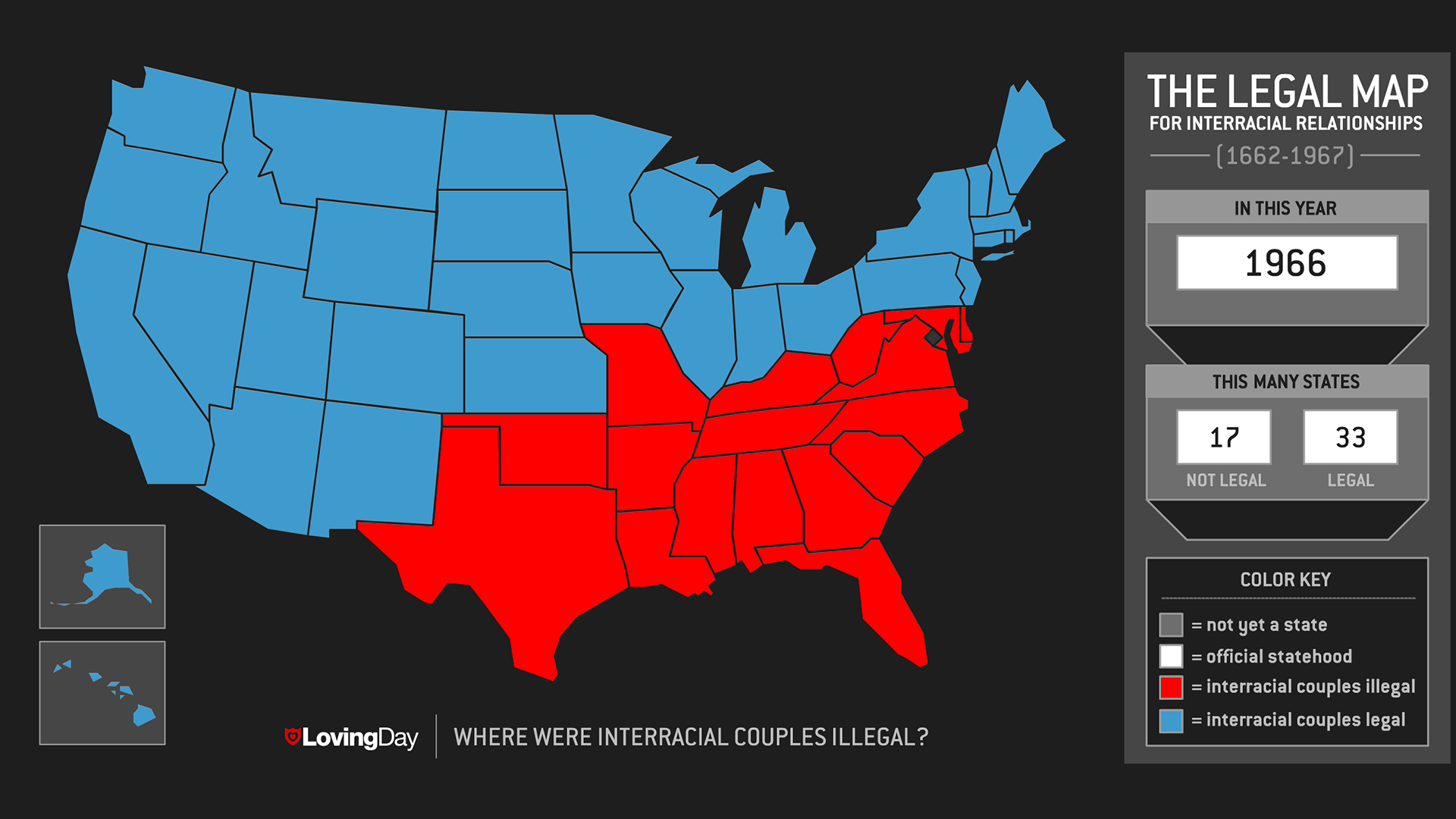
Despite the federal mandate established by Loving v. Virginia, Alabama’s journey to fully embrace racial equality in marriage was uniquely protracted. While the state could no longer enforce its ban, the offensive language remained embedded in its foundational document for decades.
A Stubborn Constitutional Anomaly
For 33 years after the Loving v. Virginia decision, Alabama’s state constitution continued to explicitly outlaw interracial marriage, rendering it a symbolic relic of a bygone era that nevertheless cast a long shadow. This was not merely an oversight; it reflected a segment of the population that remained resistant to the principles of racial integration, even in the face of federal law. The presence of this unconstitutional clause was a stark reminder of the state’s past and a poignant historical landmark in its own right, illustrating the enduring legacy of systemic racism. The Alabama Constitution, adopted in 1901, was a product of a period determined to disenfranchise Black citizens and enshrine segregation. Removing even its symbolic vestiges proved to be a prolonged battle.
Significant locations across Alabama, such as the Birmingham Civil Rights Institute and the Edmund Pettus Bridge in Selma, stand as physical landmarks commemorating the struggle against such discriminatory laws. These sites offer profound insights into the social and political climate that allowed the constitutional ban to persist for so long, and the incredible courage required by ordinary citizens to challenge the status quo.
The 2000 Referendum: A Modern Vote for Equality
It wasn’t until the year 2000 that Alabama finally took the step to formally remove the unconstitutional ban on interracial marriage from its state constitution. A statewide referendum, Amendment 2, was placed on the ballot, asking voters to approve the removal of Section 102.
The campaign leading up to the vote highlighted the moral imperative of the change, emphasizing that the clause was an embarrassing relic that misrepresented modern Alabama. Despite its symbolic nature—the law was already unenforceable—the debate was often contentious, revealing lingering racial biases among some segments of the population. When the votes were tallied, Amendment 2 passed with 59% in favor and 41% against. While the majority voted for removal, the significant percentage of “no” votes underscored the deep historical divisions and the slow pace of social change in some areas. This makes Alabama the last state in the United States to officially remove its anti-miscegenation laws from its constitution.
Thus, while interracial marriage became legal in Alabama on June 12, 1967, the state constitutionally acknowledged this legality only on November 7, 2000. This later date represents the final, formal act of reconciliation with federal law and a more inclusive vision of the state’s identity.
Understanding Alabama’s Historical Journey
The timeline of interracial marriage legalization in Alabama is more than a legal footnote; it is a profound historical narrative that informs our understanding of the state and the broader American experience.
Lessons from the Past
The saga of miscegenation laws and their eventual, if delayed, constitutional repeal in Alabama offers crucial lessons about the slow, often arduous process of social change and the enduring power of legal precedent. It illustrates how entrenched prejudices can persist even after legislative and judicial mandates. This history is particularly relevant for those visiting sites like the Legacy Museum and the National Memorial for Peace and Justice in Montgomery, where the painful legacies of slavery, Jim Crow, and racial terror are meticulously documented. These institutions provide a powerful context for understanding why a seemingly settled legal issue took so long to be fully embraced at the state constitutional level.
The history of interracial marriage laws is an integral part of the narrative of civil rights in America. It reminds us that progress is not always linear and that legal changes often precede full societal acceptance. The struggle for equal rights in marriage, from Mildred and Richard Loving’s brave stand to the voters in Alabama in 2000, reflects the ongoing journey towards a more just and equitable society.

The Significance for Modern Alabama
Today, modern Alabama is a diverse state, continuously grappling with its complex past while striving for a more inclusive future. The historical journey regarding interracial marriage is a critical component of its identity. It is a story of resistance, perseverance, and ultimately, progress. For visitors and residents alike, understanding this historical landmark—the long road from constitutional prohibition to constitutional removal—provides deeper appreciation for the ongoing work of civil rights and the continuous evolution of a society coming to terms with its history.
Exploring Alabama’s rich history, whether through its vibrant cities like Birmingham and Mobile or its numerous historical sites, inevitably means confronting these challenging but essential narratives. The legalization of interracial marriage, first by federal decree and later by state constitutional amendment, stands as a testament to the enduring fight for human dignity and equality, a fundamental piece of the state’s historical landscape.
LifeOutOfTheBox is a participant in the Amazon Services LLC Associates Program, an affiliate advertising program designed to provide a means for sites to earn advertising fees by advertising and linking to Amazon.com. Amazon, the Amazon logo, AmazonSupply, and the AmazonSupply logo are trademarks of Amazon.com, Inc. or its affiliates. As an Amazon Associate we earn affiliate commissions from qualifying purchases.