
The landscape of nursing licensure is constantly evolving, and for nurses considering a move to or a travel assignment in the Centennial State, understanding its compact status is paramount. The term “compact nursing state” refers to states that are part of the Nurse Licensure Compact (NLC). This agreement allows nurses to hold a multistate license, enabling them to practice in any other NLC member state without needing to obtain a new license in each jurisdiction. This significantly streamlines the process for nurses, particularly those who travel for work or live near state borders.
Understanding the Nurse Licensure Compact (NLC)
The Nurse Licensure Compact (NLC) is an interstate agreement that standardizes the licensing of nurses across participating states. Prior to the NLC, nurses were required to obtain individual licenses in every state where they wished to practice. This was a cumbersome and expensive process, especially for nurses who frequently relocated or worked across state lines. The NLC, first implemented in 2000, aimed to simplify this by creating a single multistate license.
Key Features of the NLC
- Multistate License: A nurse holding a multistate license can practice in any NLC member state, provided they meet the residency requirements of their primary state of licensure.
- Uniform Requirements: All NLC states adhere to a uniform set of educational, examination, and background check requirements for licensure. This ensures a consistent standard of practice across all participating states.
- Primary State of Residence: A nurse declares a single primary state of residence for their multistate license. This state is responsible for issuing and managing the license.
- Jurisdiction: When a nurse practices in a state other than their primary state of residence, they are subject to the laws and regulations of that remote state.
Evolution of the NLC
The NLC has undergone significant evolution. The original NLC (NLC-1) had 25 member states. In 2015, a new version, the Enhanced Nurse Licensure Compact (eNLC), was introduced. The eNLC includes updated provisions to address modern healthcare challenges and to further harmonize licensing standards. Most states have transitioned to the eNLC, and it is the prevalent form of the compact agreement today. The core principle of allowing multistate practice remains, but the eNLC introduced more stringent requirements for background checks and continuing education.
Colorado’s Stance on the NLC
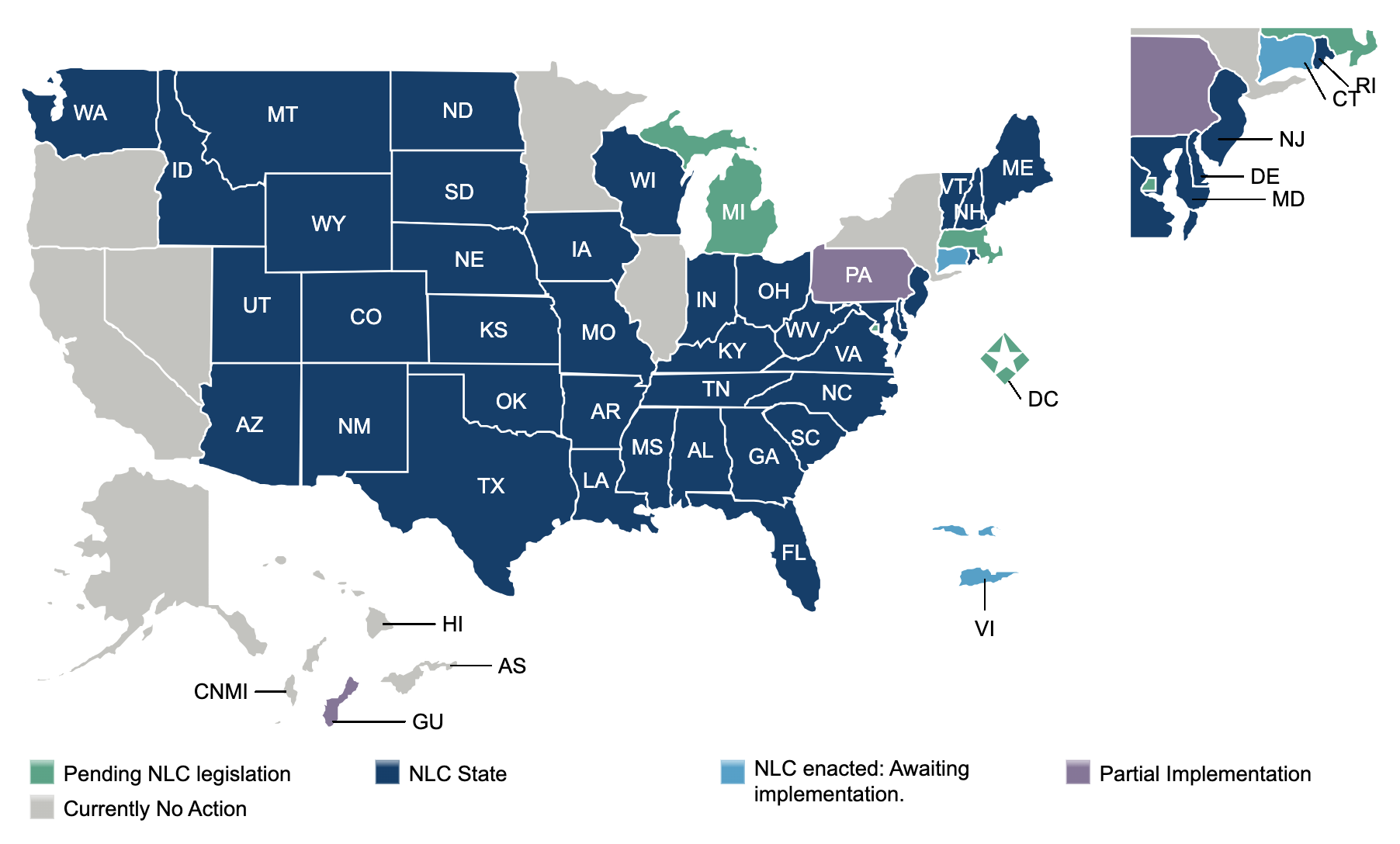
The crucial question for any nurse interested in practicing in Colorado is whether it is a member of the NLC. As of the latest updates and legislative actions, Colorado is a member of the Enhanced Nurse Licensure Compact (eNLC). This means that nurses who hold a multistate license issued by Colorado can practice in other eNLC states, and nurses who hold a multistate license from another eNLC state can practice in Colorado without needing to obtain a separate Colorado license, provided they meet the eNLC requirements.
The Journey to Compact Membership
Colorado’s path to becoming an eNLC state involved legislative action and careful consideration of the implications for nursing practice and public safety within the state. The decision to join the NLC was driven by several factors:
- Addressing Nursing Shortages: The NLC facilitates mobility for nurses, which can be particularly beneficial in addressing staffing shortages, especially in rural or underserved areas of Colorado. Travel nurses and nurses looking to relocate are more easily integrated into the workforce.
- Economic Benefits: For travel nurses and those working temporary assignments, the ease of practice across state lines can be a significant economic advantage. It also makes Colorado a more attractive destination for these professionals.
- Interstate Cooperation: The NLC fosters greater cooperation among nursing regulatory bodies across states, leading to more consistent standards and efficient disciplinary actions when necessary.
- Public Protection: While facilitating mobility, the eNLC also maintains rigorous standards for licensure and public protection through its uniform requirements and enhanced background checks.
Requirements for a Multistate License in Colorado
For nurses residing in Colorado, obtaining a multistate license under the eNLC requires meeting specific criteria set forth by the Colorado Board of Nursing. These typically include:
- Primary Residence: Proof that Colorado is your primary state of residence. This can be established through documents like a driver’s license, voter registration, or federal income tax returns.
- Education: Graduation from an approved nursing education program.
- Licensure Examination: Passing the NCLEX-RN or NCLEX-PN examination.
- Active License: Holding an active, unencumbered license in Colorado.
- Background Check: Successful completion of a federal criminal background check, including fingerprinting.
- No Discipline: The absence of any adverse disciplinary actions against your nursing license in any state.
Implications for Nurses Practicing in Colorado
Colorado’s status as an eNLC state has several significant implications for nurses:

For Nurses Currently Licensed in Colorado
If you hold a multistate license issued by the Colorado Board of Nursing and your primary state of residence is Colorado, you can now practice in any other eNLC member state without needing an additional license. This opens up a vast professional landscape, allowing for greater flexibility in career choices, including travel nursing assignments or simply working in a neighboring state.
For Nurses Moving to Colorado
If you are relocating to Colorado from another eNLC state and intend for Colorado to be your new primary state of residence, you will need to apply for a multistate license in Colorado. Your existing multistate license from your former state of residence will no longer be valid for practicing in Colorado once you have established residency. The Colorado Board of Nursing will process your application, verifying your qualifications and confirming your residency.
For Nurses Moving from Colorado to Another eNLC State
If you are a nurse holding a multistate license issued by Colorado and you are moving to another eNLC state and establishing residency there, you must apply for a multistate license in your new state of residence. Once you obtain your multistate license in the new state, your Colorado multistate license will become invalid for practice. You must then surrender your Colorado multistate license to the Colorado Board of Nursing.
For Nurses Considering Travel Assignments in Colorado
The eNLC status makes Colorado an attractive location for travel nurses. If you hold a multistate license from another eNLC state and your primary state of residence is that state, you can begin working in Colorado immediately, provided your license is active and in good standing. This eliminates the often lengthy process of obtaining a new state license, allowing you to transition to your assignment in Denver, Boulder, or elsewhere in Colorado much more quickly.
Navigating the eNLC in Colorado
While Colorado’s membership in the eNLC simplifies multistate practice, it’s essential for nurses to stay informed and adhere to the regulations.
Staying Updated on NLC Rules
The NLC is managed by the National Council of State Boards of Nursing (NCSBN). It is crucial for nurses to regularly check the NCSBN website and the Colorado Board of Nursing’s official communications for any updates or changes to the eNLC requirements or participating states. The list of eNLC states can change as new states join or existing members transition.
Understanding Jurisdictional Responsibilities
When practicing in a remote state (a state other than your primary state of licensure), you are subject to that state’s laws and regulations. This means understanding Colorado’s specific scope of practice, continuing education requirements (though harmonized by the eNLC, there can be nuances), and reporting requirements for any adverse actions. For example, if a nurse holding a multistate license from Texas practices in Colorado, they must adhere to Colorado’s nursing laws and can be subject to disciplinary action by the Colorado Board of Nursing for violations occurring within the state.
The Role of the Colorado Board of Nursing
The Colorado Board of Nursing plays a vital role in implementing and enforcing the eNLC within the state. They are responsible for:
- Issuing and renewing multistate licenses to eligible Colorado residents.
- Verifying the licensure status of nurses practicing in Colorado who hold multistate licenses from other eNLC states.
- Investigating complaints and taking disciplinary actions against nurses who violate the Nurse Practice Act, regardless of whether they hold a single-state or multistate license.
- Providing guidance and resources to nurses regarding NLC requirements.
Conclusion: Colorado as a Compact State
In conclusion, Colorado is indeed a compact nursing state, having adopted the Enhanced Nurse Licensure Compact (eNLC). This is a significant development that enhances the mobility and flexibility of the nursing profession within the state and across its borders. For nurses considering a career move, travel assignment, or simply seeking to understand their licensure options, knowing that Colorado is part of the NLC provides a clearer pathway and a more streamlined experience. It underscores Colorado’s commitment to supporting its nursing workforce while upholding robust standards for patient care and public safety.
LifeOutOfTheBox is a participant in the Amazon Services LLC Associates Program, an affiliate advertising program designed to provide a means for sites to earn advertising fees by advertising and linking to Amazon.com. Amazon, the Amazon logo, AmazonSupply, and the AmazonSupply logo are trademarks of Amazon.com, Inc. or its affiliates. As an Amazon Associate we earn affiliate commissions from qualifying purchases.