
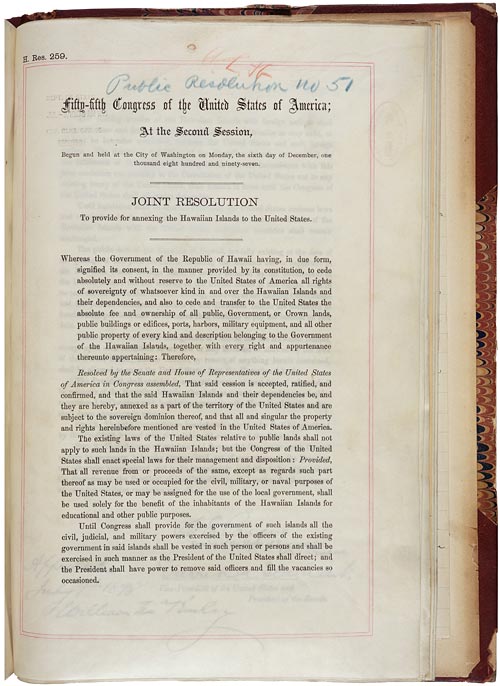
The history of Hawaii is a complex tapestry of royal heritage, colonial ambition, and strategic necessity. For many travelers visiting the islands today, the breathtaking landscapes and azure waters are the primary draw, yet beneath the surface lies a profound political history that forever changed the trajectory of the Pacific Ocean region. The central question—when did America annex Hawaii?—finds its answer in the summer of 1898. On July 7, 1898, President William McKinley signed the Newlands Resolution, officially making the United States the sovereign power over the archipelago. This event was not merely a signature on paper; it was the culmination of years of tension, a revolution, and a shift in global power dynamics that left behind a trail of historical landmarks across the island of Oahu and beyond.

The Newlands Resolution and the Formal Annexation of 1898
The official annexation of the islands by the United States occurred during a period of intense American expansionism. While the overthrow of the Hawaiian Kingdom had taken place five years earlier in 1893, the formal legal process of annexation was delayed by political debates in Washington D.C.. It was the onset of the Spanish-American War that finally catalyzed the decision. American leaders realized that to protect interests in the Philippines and Guam, they needed a permanent mid-Pacific fueling station.
The Geopolitical Context of the Spanish-American War
In 1898, the United States was at war with Spain. Conflict was raging in Cuba and the Philippines, and the logistics of transporting troops and supplies across the vast Pacific Ocean became a primary concern for the Navy. Hawaii was positioned perfectly as a “Crossroads of the Pacific.” By annexing the islands, America secured a strategic advantage that would eventually lead to the establishment of some of the most significant military landmarks in the world.
During this time, the city of Honolulu became a bustling hub for American steamships. The annexation provided a legal framework for the permanent presence of American forces, ensuring that no other world power—specifically Japan or the United Kingdom—could claim the islands. This geopolitical maneuver transformed Hawaii from an independent kingdom into a vital territory of the United States.
The Sovereignty Transition at Iolani Palace
On August 12, 1898, a formal ceremony was held in Honolulu to mark the transfer of sovereignty. The location chosen for this somber and momentous occasion was Iolani Palace, the former residence of the Hawaiian monarchs. As the Hawaiian flag was lowered and the American flag was raised, the era of the Republic of Hawaii ended, and the Territory of Hawaii began.
For the Native Hawaiian population, this was a day of mourning. Many stayed indoors, refusing to witness the end of their nation’s independence. Today, Iolani Palace stands as a powerful landmark, serving as a reminder of the delicate transition between a sovereign kingdom and an American territory. Visitors to Honolulu can walk the grounds where this ceremony took place, gaining a deeper understanding of the architectural and historical significance of the site.
Architectural and Historical Landmarks of the Annexation Era
The period surrounding the annexation left an indelible mark on the architecture and landscape of the islands. As the United States took control, new administrative buildings and monuments were erected, often juxtaposed against the existing royal structures. These sites now serve as essential stops for anyone interested in the history of the 50th state.
Iolani Palace: The Only Royal Palace on American Soil
Iolani Palace is arguably the most significant historical landmark in Hawaii. Completed in 1882 by King Kalakaua, it represents a style known as American Florentine, blending European palace traditions with local influences. It was here that Queen Liliuokalani, the last reigning monarch, was held under house arrest following the 1893 overthrow that preceded the annexation.
Touring the palace today offers a professional and insightful look into the lifestyle of the Hawaiian royals and the tragic end of their reign. The throne room, the private suites, and the grand staircase are preserved with meticulous detail. As a landmark, it stands in stark contrast to the nearby modern skyscrapers of Honolulu, serving as the spiritual heart of the Hawaiian sovereignty movement and a testament to the kingdom that existed before 1898.
The Statue of King Kamehameha I and Ali’iolani Hale
Located just across the street from the palace is Ali’iolani Hale, which today houses the Hawaii State Supreme Court. Originally designed as a palace but repurposed as a government building, it was the site where the Committee of Safety issued the proclamation to depose the Queen in 1893, setting the stage for the 1898 annexation.
In front of this building stands the iconic Statue of King Kamehameha I. This towering bronze figure, draped in a gold-leaf cloak, commemorates the monarch who first unified the islands. It is one of the most photographed landmarks in Hawaii. The contrast between the statue of the great unifier and the building where the kingdom’s sovereignty was challenged provides a poignant look at the layers of history embedded in the streets of Honolulu.
The Strategic Transformation: Pearl Harbor and Military Landmarks
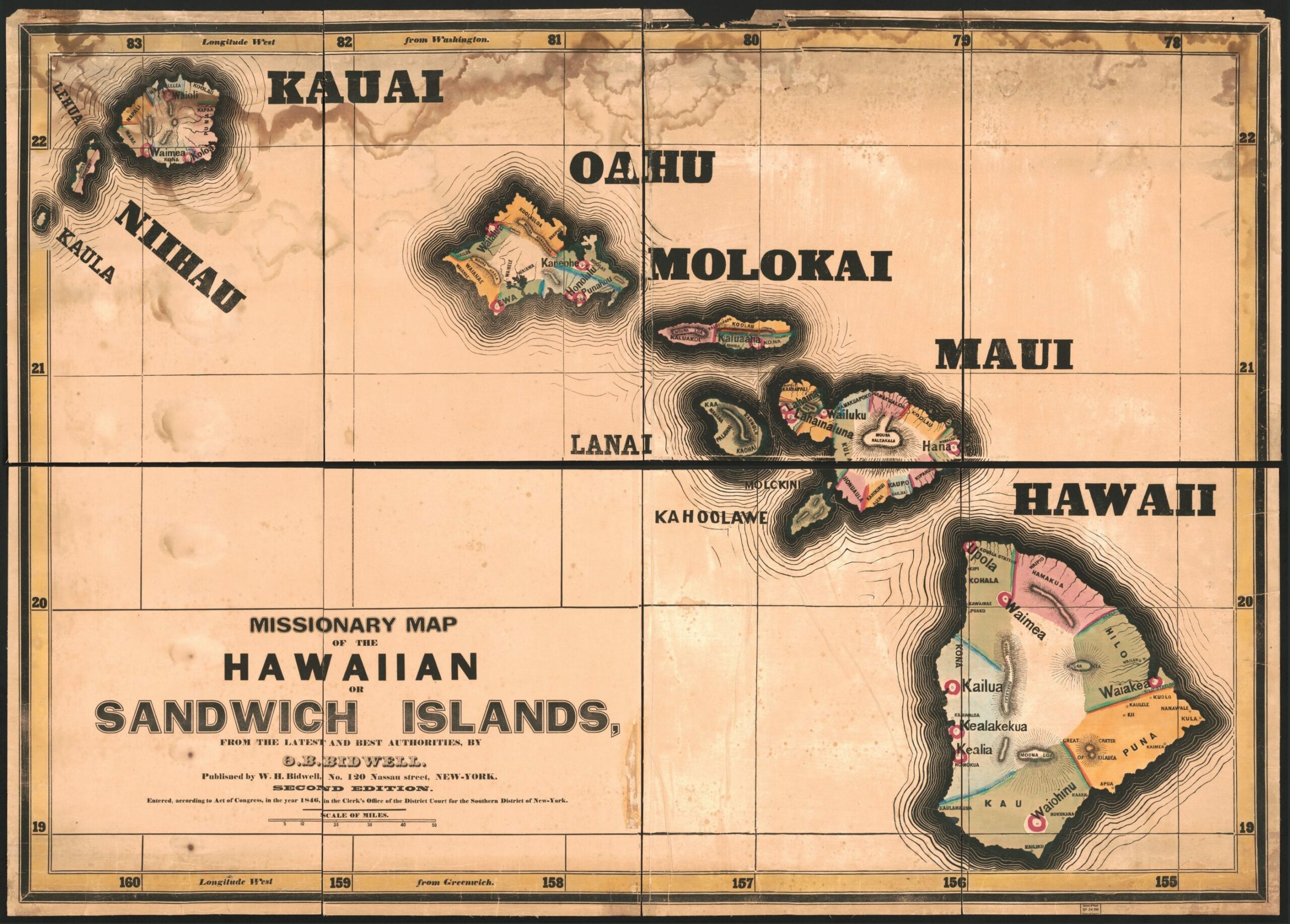
One of the primary drivers for annexation was the deep-water harbor known to the Hawaiians as Wai Momi, or “Waters of Pearl.” Once the United States officially annexed the islands in 1898, the development of Pearl Harbor as a world-class naval base began in earnest.
The Development of Naval Station Pearl Harbor
Following the annexation, the United States Navy began dredging the entrance to the harbor to allow for larger warships. The construction of dry docks, machine shops, and housing transformed the rural landscape of Oahu into a military powerhouse. By the early 20th century, Pearl Harbor was the center of American naval strategy in the Pacific Ocean.
Today, the Pearl Harbor National Memorial is a world-renowned landmark. While most visitors associate it with the events of 1941, its existence is a direct result of the 1898 annexation. The site includes the USS Arizona Memorial, which honors those who lost their lives during the attack that brought the United States into World War II. Understanding the 1898 annexation is key to understanding why this specific location became such a pivotal site in global history.
Ford Island and the Evolution of Pacific Defense
Located in the center of the harbor, Ford Island is another landmark that highlights the military evolution of the islands post-annexation. Originally used for agriculture, it was purchased by the military and became a focal point for naval aviation. The historic hangars and the control tower on the island are part of the Pearl Harbor Aviation Museum.
The strategic importance of Hawaii extended beyond Oahu. The annexation also solidified American claims to Midway Atoll and other smaller islands, creating a chain of defenses that stretched toward Asia. Travelers can see the remnants of this era in the coastal batteries at Diamond Head and the bunkers tucked into the cliffs of Makapuu.
Cultural Preservation and Modern Landmarks in Honolulu
While the annexation brought about political and military change, it also sparked a movement to preserve the indigenous culture and history that was at risk of being overshadowed. Several landmarks in Honolulu were established to ensure that the story of the Hawaiian people remained central to the islands’ identity.
The Bishop Museum: Safeguarding the Kingdom’s Heritage
Founded in 1889—just nine years before the formal annexation—the Bishop Museum was established by Charles Reed Bishop in honor of his late wife, Princess Bernice Pauahi Bishop. As the last direct descendant of the Kamehameha dynasty, the Princess left a vast collection of royal heirlooms and Hawaiian artifacts.
The museum became a sanctuary for Hawaiian culture during the tumultuous transition years of the late 19th century. Today, it is the premier natural and cultural history institution in the Pacific Ocean. For those seeking to understand the “When” and “How” of the annexation, the museum’s Hawaiian Hall provides a comprehensive look at the kingdom’s history, from the first voyagers from Polynesia to the arrival of the first missionaries and the eventual annexation by America.
The National Memorial Cemetery of the Pacific at Punchbowl Crater
High above the city in the Punchbowl Crater lies the National Memorial Cemetery of the Pacific. While this landmark was established after World War II, its location is deeply historical. The crater, known as Puowaina in Hawaiian, was once a site for royal burials and sacrificial rituals.
The transformation of this natural landmark into a military cemetery serves as a metaphor for the broader history of Hawaii. It is a place where the ancient Hawaiian past meets the American military present. From the lookout point, visitors can see the entire span of Honolulu, from the skyscrapers of Waikiki to the industrial docks of Pearl Harbor, offering a visual summary of the islands’ development since 1898.
Navigating the Legacy of Annexation Across the Islands
The events of July 7, 1898, resonate far beyond the capital city. While Honolulu holds the most prominent political landmarks, the impact of annexation can be seen across Maui, Kauai, Molokai, and Lanai. The shift in land ownership and the rise of the “Big Five” sugar corporations—which gained significant power after Hawaii became a territory—reshaped the geography of the entire chain.
In Maui, the town of Lahaina (prior to recent tragic events) served as a historical reminder of the islands’ whaling and missionary history. In Kauai, the vast sugar plantations that thrived under American territorial law changed the irrigation and ecology of the island forever.
For the modern traveler, understanding when America annexed Hawaii is the key to unlocking the story behind the landmarks. It allows one to see Iolani Palace not just as a beautiful building, but as a site of political upheaval. It turns a visit to Pearl Harbor into a lesson on global strategy and expansion. By recognizing the historical weight of 1898, visitors can engage with Hawaii in a way that is respectful, informed, and deeply appreciative of its unique place in the world.
Whether you are standing at the Nuuanu Pali Lookout surveying the windward coast or exploring the corridors of the Bishop Museum, the legacy of the annexation is always present. It is a story of a kingdom lost and a state gained, a narrative written into the very architecture and soil of these extraordinary islands.
LifeOutOfTheBox is a participant in the Amazon Services LLC Associates Program, an affiliate advertising program designed to provide a means for sites to earn advertising fees by advertising and linking to Amazon.com. Amazon, the Amazon logo, AmazonSupply, and the AmazonSupply logo are trademarks of Amazon.com, Inc. or its affiliates. As an Amazon Associate we earn affiliate commissions from qualifying purchases.