
The Unforgettable Day: January 19, 1977
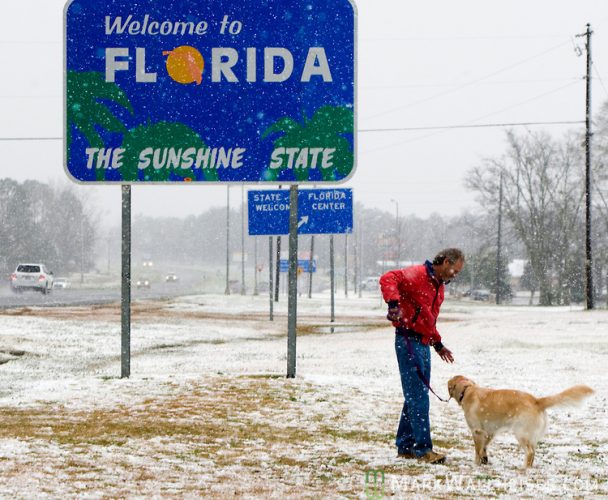
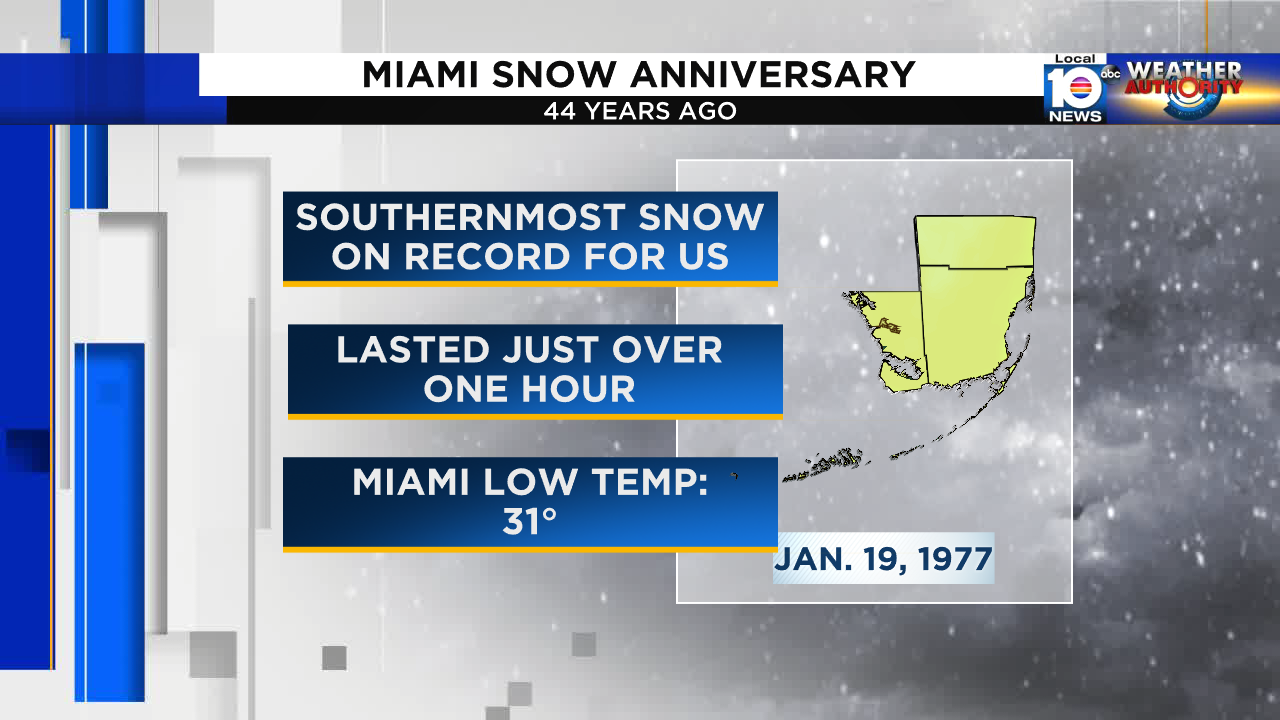
The date of January 19, 1977, remains etched in the historical narrative of Miami, Florida, as the singular, undisputed occasion when snow truly fell and accumulated in the metropolitan area. This meteorological anomaly, virtually unheard of in a region synonymous with sun-drenched beaches and balmy temperatures, transformed the subtropical landscape into a scene of bewildered wonder and fleeting beauty. For many residents, particularly those who had spent their entire lives in South Florida, it was a first, and likely a last, encounter with snowflakes descending from the sky. The event was not merely a weather phenomenon; it was a cultural touchstone, a moment that disrupted the very identity of a city defined by its perpetual warmth.

A Climate Anomaly in the Tropics
The geographical position of Miami, nestled near the Tropic of Cancer, places it firmly within a tropical monsoon climate zone, transitioning into a subtropical climate. This classification typically guarantees warm winters with average temperatures rarely dipping below 60 degrees Fahrenheit (15 degrees Celsius). Snow, by definition, requires temperatures at or below freezing, both at ground level and throughout the atmospheric column where precipitation forms and falls. For these conditions to align in Miami is extraordinarily rare.
On that historic morning, an unprecedented combination of atmospheric factors conspired to create the impossible. A massive, Arctic high-pressure system had pushed an incredibly cold air mass southward, sweeping across the Florida peninsula. Simultaneously, a low-pressure system developed offshore in the Gulf of Mexico, drawing moisture inland. As this moisture-laden air encountered the frigid Arctic front, it was lifted and cooled rapidly, leading to the formation of ice crystals. These crystals, rather than melting into rain as they typically would in South Florida’s warmer lower atmosphere, managed to maintain their crystalline structure as they fell, reaching the ground as actual snow. While the accumulation was minimal – a dusting that quickly melted – its mere presence was enough to ignite widespread disbelief and excitement across the region, from Miami-Dade County up through Fort Lauderdale and even as far north as Orlando.
The Immediate Impact and Public Reaction
The visual of snowflakes against palm trees and hibiscus flowers was an instant sensation. Television news anchors, often accustomed to reporting on sunshine and hurricane threats, struggled to contain their astonishment. Children, many of whom had only ever seen snow in films or books, rushed outside to witness the bizarre spectacle. Schools reported widespread absences as families opted to experience the once-in-a-lifetime event together. Roads were not prepared for even a dusting of snow, leading to minor traffic disruptions as drivers slowed down, not due to hazardous conditions, but out of sheer curiosity and a desire to capture photographs.
Adults, too, were captivated. People emerged from their homes and offices, some reaching out to feel the cold, wet flakes, others simply gazing up in silent awe. The novelty permeated every aspect of daily life. The typically bustling South Beach area, famed for its warmth, saw its iconic beaches briefly touched by a dusting of white. This collective experience forged a unique bond among those who lived through it, a shared memory that has been recounted and cherished for decades, a true landmark event in the city’s social history.
Understanding Miami’s Unique Climate
To fully appreciate the extraordinary nature of the 1977 snowfall, one must understand the fundamental characteristics that define Miami’s climate. The city’s geographical coordinates and proximity to warm ocean currents create an environment meticulously tuned for warmth, humidity, and abundant sunshine, making it one of the most unlikely places in the continental United States to ever experience snowfall.
Subtropical Haven: Why Snow is So Rare
Miami is situated at approximately 25 degrees North latitude, placing it within the lower latitudes where solar radiation is consistently high throughout the year. This geographical positioning is further enhanced by the influence of the Atlantic Ocean and the Gulf Stream, a powerful, warm ocean current that flows northward along the Florida coast. The Gulf Stream acts as a natural insulator, maintaining relatively high sea surface temperatures even in winter months. The warm waters moderate coastal temperatures, preventing the sustained deep freezes necessary for snow formation and accumulation.
Typically, winter cold fronts that reach South Florida are significantly modified and weakened by these warm influences. While temperatures can drop, they rarely persist below freezing for extended periods. The challenge for snow in Miami is two-fold: not only must temperatures at the surface be at or below freezing, but the entire atmospheric column from the clouds down to the ground must also remain at or below freezing to prevent snowflakes from melting into rain. This specific set of conditions is exceedingly difficult to achieve in such a warm, marine-influenced environment.
The Mechanics of a Cold Front in South Florida
Cold fronts are a regular feature of Florida’s winter weather. Originating from polar air masses, these fronts typically sweep across the continent, bringing cooler, drier air. However, as they move southward, they usually encounter increasingly warmer air and ocean temperatures. By the time they reach South Florida, their potency for extreme cold is often diminished.
The 1977 event was unique because the Arctic air mass was exceptionally deep and strong, extending unusually far south and persisting long enough to overcome the moderating effects of the surrounding warmth. The low-pressure system that developed offshore also played a crucial role, providing the necessary lift and moisture. This combination created a rare scenario where the dew point temperature—a measure of atmospheric moisture—was low enough, and the air temperature was cold enough throughout the column, for snow to form and reach the ground. It was a precise, fleeting alignment of atmospheric variables that, despite the regular passage of cold fronts, has not been replicated in the decades since. The event stands as a stark reminder of the planet’s dynamic climate systems, capable of producing profound surprises even in the most predictable environments.
The Aftermath and Legacy of the Snowfall
The 1977 snowfall in Miami was a brief meteorological event, lasting only a few hours before the sun and rising temperatures melted away all traces of the white dusting. Yet, its impact extended far beyond its ephemeral presence. It carved out a permanent niche in the collective memory of the region, becoming a legendary tale passed down through generations and a significant historical marker for the city.
A Collective Memory for Generations
For those who witnessed it, the snow in Miami became a definitive “where were you when…?” moment. Parents shared stories with their children, grandparents with their grandchildren, ensuring the narrative of “the day it snowed” endured. This shared experience fostered a unique sense of camaraderie among South Floridians, a testament to a collective wonder that transcended demographic lines. It became a quirky piece of local identity, a story to tell outsiders who doubted the possibility. The images captured—snowflakes on palm fronds, children playing in the brief dusting, bewildered adults—are treasured historical artifacts that continue to circulate, illustrating the improbable reality of that day. This cultural legacy reinforces the idea that even in a place renowned for its consistency, nature can surprise, creating a landmark memory.
Meteorological Records and Historical Significance
From a scientific perspective, the 1977 snowfall is meticulously documented in meteorological archives. It serves as a benchmark for extreme cold weather events in Florida’s subtropical zone. Weather stations across South Florida, including Miami International Airport, recorded freezing temperatures, and official reports confirmed the presence of snow. While there have been sporadic reports of “graupel” (soft hail) or “sleet” (ice pellets) in South Florida during unusually cold snaps, these are distinct phenomena from true snowfall, which consists of individual ice crystals forming intricate flakes. The 1977 event remains the only confirmed instance of genuine, accumulating snowfall in the recorded history of Miami. This makes it a rare and invaluable data point for climatologists studying climate variability and extreme weather patterns in tropical and subtropical regions, underscoring its historical and scientific significance as a natural landmark event.
Other Notable Weather Events in Florida’s History
While the 1977 snowfall stands as a unique historical landmark for its sheer improbability, Florida’s weather history is marked by a diverse range of extreme phenomena, though typically not involving snow. Understanding these more common, and often more impactful, events provides further context for just how exceptional the 1977 snowfall truly was.
Hurricanes: The More Common Threat
By far the most significant and recurring weather events shaping Florida’s history and identity are hurricanes. Situated squarely in the Atlantic hurricane belt, the state experiences annual threats from tropical cyclones that bring devastating winds, torrential rains, and destructive storm surges. Major hurricanes like Hurricane Andrew in 1992, which decimated South Florida, and Hurricane Irma in 2017, which impacted the entire state, have profoundly altered Florida’s landscape, infrastructure, and socio-economic fabric. These powerful storms are an integral part of the state’s natural history and pose a constant challenge for preparedness and resilience, making them arguably the most defining natural landmarks of its climate.
Unpredictable Cold Snaps and Their Effects
Beyond the unprecedented 1977 snowfall, Florida does occasionally experience severe cold snaps that, while not bringing snow to Miami, can still have significant impacts. These events typically involve strong Arctic air masses that push deep into the state, causing prolonged periods of freezing temperatures, especially in central and northern Florida. These cold snaps pose a substantial threat to the state’s agriculture, particularly its citrus groves, and can also impact marine life, leading to “cold stun” events for manatees and sea turtles. While rare, these cold waves serve as a reminder that even the Sunshine State is susceptible to the whims of continental weather patterns. However, none have ever replicated the precise atmospheric conditions necessary to transform Miami into a snowy landscape, cementing January 19, 1977, as a truly singular landmark in the city’s long and varied history.
LifeOutOfTheBox is a participant in the Amazon Services LLC Associates Program, an affiliate advertising program designed to provide a means for sites to earn advertising fees by advertising and linking to Amazon.com. Amazon, the Amazon logo, AmazonSupply, and the AmazonSupply logo are trademarks of Amazon.com, Inc. or its affiliates. As an Amazon Associate we earn affiliate commissions from qualifying purchases.