
The implementation of the federal REAL ID Act has significantly reshaped the landscape of identification requirements for travelers across the United States. For residents of the Lone Star State, understanding when Texas began issuing these federally compliant driver’s licenses and identification cards is crucial for seamless travel, particularly for accessing federal facilities and boarding commercial aircraft. The journey towards REAL ID compliance in Texas was a measured process, reflecting the state’s commitment to aligning with federal mandates while ensuring its citizens had adequate time to adapt.
The Genesis of REAL ID and Texas’s Initial Response
The REAL ID Act of 2005 was a legislative response to the September 11, 2001, terrorist attacks, aiming to establish minimum security standards for state-issued driver’s licenses and identification cards. These standards were designed to make identification more difficult to counterfeit, tamper with, and steal. The act mandated that all states must issue driver’s licenses and identification cards that meet these federal specifications if those cards are to be accepted for certain federal purposes, such as boarding federally regulated commercial aircraft or entering certain federal facilities.

Texas, like many other states, initially faced a complex process in adapting its existing identification systems to meet the new federal requirements. The transition involved significant technological upgrades, legislative adjustments, and procedural changes within the Texas Department of Public Safety (DPS). The primary goal was to ensure that Texas-issued identification would continue to be a valid and widely accepted form of personal identification for all essential purposes.
The state’s approach was characterized by a phased implementation, allowing for the development and deployment of the necessary infrastructure and public awareness campaigns. This deliberate pace was essential to avoid widespread disruption for its millions of residents. The complexities included securing new card materials, updating the software systems used for issuance, training personnel, and establishing new protocols for verifying applicant identities.
The Official Rollout: When Texas Began Issuing REAL ID Compliant Cards
Texas officially began issuing REAL ID-compliant driver’s licenses and identification cards on October 10, 2016. This date marked a significant milestone, signifying the state’s full transition to meeting the federal government’s requirements for identification. Residents applying for a new license or ID, or renewing an existing one, were then offered the option to obtain a REAL ID-compliant card.
Prior to this date, Texas had been operating under extensions granted by the Department of Homeland Security, allowing its existing state-issued driver’s licenses and ID cards to continue to be accepted for federal purposes. However, the October 2016 launch provided Texas residents with a clear pathway to obtain the federally compliant identification they would eventually need.
The introduction of REAL ID cards in Texas did not mean that all existing driver’s licenses and ID cards instantly became invalid. Instead, it established a timeline for when non-compliant cards would no longer be accepted. This phased approach was designed to give individuals ample time to visit a Texas DPS driver license office and provide the necessary documentation to obtain a REAL ID.
Understanding REAL ID and Standard Licenses
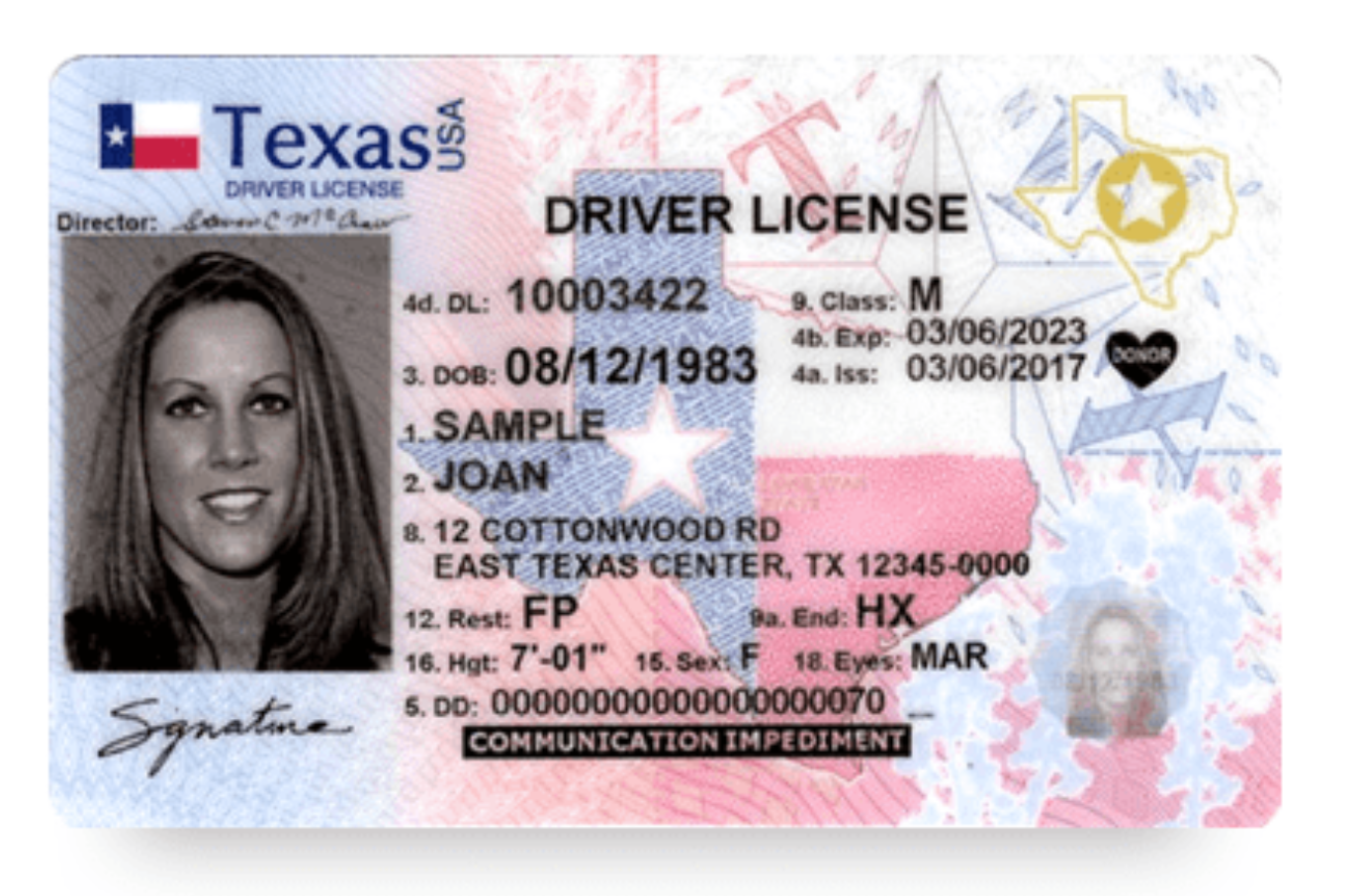
It’s important to distinguish between REAL ID-compliant cards and the standard Texas driver’s licenses and identification cards issued after the October 2016 date. While both are issued by the state, only the REAL ID-compliant cards bear a specific marking—a star—that signifies their compliance with the federal act.
Residents applying for a new license or ID, or renewing their existing one, are presented with a choice:
- REAL ID-Compliant License/ID: These cards meet the federal security standards and are required for boarding domestic commercial flights and entering certain federal facilities. To obtain one, applicants must present specific documentation proving identity, Social Security number, and residency.
- Standard Texas Driver’s License/ID: These cards are still valid for driving and for most state-level purposes within Texas. However, they will not be accepted for federal identification purposes after the enforcement deadline.
The distinction is crucial for travelers planning to fly domestically or needing access to secure federal buildings. The choice allows residents to decide whether they need the enhanced federal recognition or if a standard state-issued ID suffices for their needs.
The Documentation Maze: What You Need for a Texas REAL ID
Obtaining a REAL ID in Texas requires a more rigorous documentation process than a standard license or ID. The Texas Department of Public Safety has specific requirements designed to verify an applicant’s identity, Social Security number, and Texas residency. Failure to provide the correct documents can lead to a delayed or denied application.
The required documents typically fall into three categories:
1. Proof of Identity
Applicants must provide one acceptable document that verifies their identity. Examples include:
- U.S. Birth Certificate (original or certified copy)
- Valid U.S. Passport
- Certificate of Citizenship or Naturalization
- Valid Permanent Resident Card
The document must clearly show the applicant’s full legal name and date of birth.
2. Proof of Social Security Number
Applicants must present a document that clearly displays their Social Security number. Acceptable documents include:
- Social Security card (original or clear copy)
- W-2 form
- SSA-1099 form
- Paystub with Social Security number
The name on the Social Security document should match the name on the identity document.
3. Proof of Texas Residency
At least two different documents are needed to prove an applicant’s Texas residency. These documents must show the applicant’s current Texas address. Examples include:
- Utility bills (electricity, water, gas) from the last 60 days
- Lease agreement or mortgage statement
- Valid Texas Voter Registration Certificate
- Vehicle registration or title
- Bank statements
These documents help confirm that the applicant resides within the state and provides a link to their current location.
The Texas DPS website provides a comprehensive list of acceptable documents, and it is highly recommended that applicants review this list thoroughly before visiting a driver license office. Bringing all the necessary documentation upfront can save time and prevent the need for repeat visits.
The Road to Federal Enforcement: Deadlines and Implications for Travelers
The REAL ID Act established a phased enforcement schedule, with deadlines progressively pushing back as states worked towards compliance. For Texas residents, understanding these deadlines is critical to ensuring they can continue to travel freely and access necessary federal services.
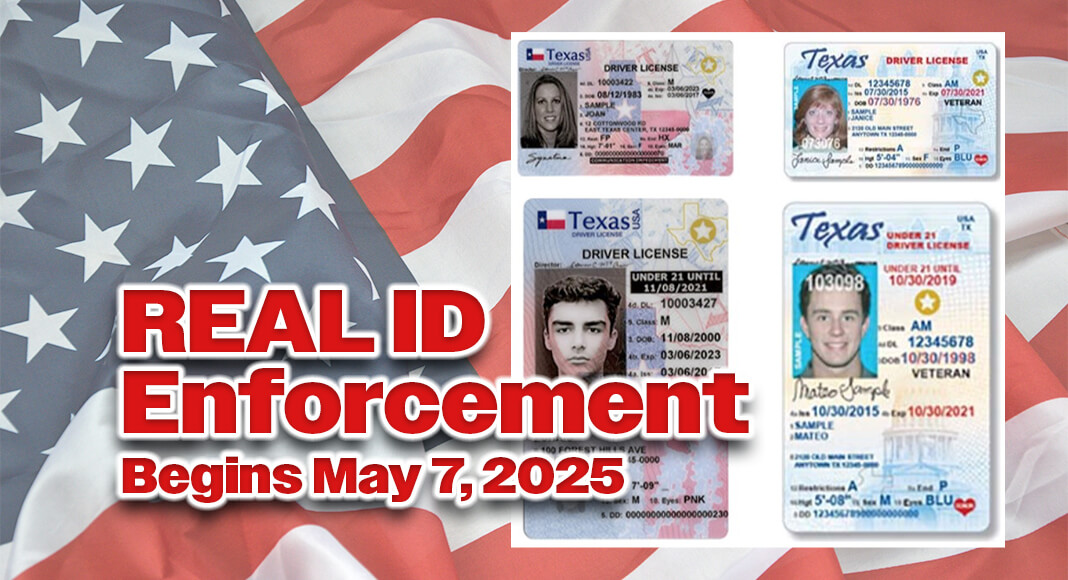
The ultimate enforcement deadline for requiring REAL ID-compliant identification for boarding domestic commercial aircraft and entering certain federal facilities has been extended multiple times. The current federal enforcement deadline is May 7, 2025. After this date, a standard Texas driver’s license or ID card that is not REAL ID-compliant will no longer be sufficient for these purposes.
What Happens After the Deadline?
Once the federal enforcement date arrives, travelers will need to present one of the following to board a domestic flight or enter certain federal buildings:
- A REAL ID-compliant Texas driver’s license or ID card.
- A valid U.S. passport.
- A U.S. passport card.
- A DHS trusted traveler program card (e.g., Global Entry, NEXUS, SENTRI).
- A U.S. Department of Defense ID.
- A Permanent Resident Card.
- Other acceptable forms of identification as specified by the Department of Homeland Security.
For many Texans, their driver’s license or ID card is the primary form of identification they carry. Therefore, obtaining a REAL ID is essential for those who wish to continue using their state-issued identification for air travel and federal access.
Planning Your REAL ID Visit
Given the upcoming deadline, it is advisable for Texas residents who do not yet have a REAL ID to plan their visit to a Texas DPS driver license office well in advance. Appointment availability can vary, and offices can experience significant wait times, especially as the deadline approaches.
Residents should ensure they have gathered all the required documentation as outlined by the DPS. This proactive approach will streamline the application process and ensure a smoother transition to compliant identification. While the initial rollout in October 2016 provided the opportunity, the approaching federal enforcement date makes it a necessity for continued seamless travel and access. The Texas Department of Public Safety has worked diligently to implement this system, and by understanding the requirements and deadlines, residents can navigate this change with confidence.
LifeOutOfTheBox is a participant in the Amazon Services LLC Associates Program, an affiliate advertising program designed to provide a means for sites to earn advertising fees by advertising and linking to Amazon.com. Amazon, the Amazon logo, AmazonSupply, and the AmazonSupply logo are trademarks of Amazon.com, Inc. or its affiliates. As an Amazon Associate we earn affiliate commissions from qualifying purchases.