
California, a land synonymous with sunshine, stunning coastlines, majestic forests, and vibrant cities like Los Angeles and San Francisco, holds a captivating allure for travelers worldwide. From the iconic Golden Gate Bridge to the serene Yosemite National Park, the state offers an unparalleled diversity of experiences. Yet, beneath this picturesque veneer lies a profound and complex challenge: the pervasive threat of wildfires. These blazes, an increasingly dominant feature of the California landscape, not only reshape natural ecosystems but also significantly impact human lives, infrastructure, and the very fabric of the state’s thriving tourism and hospitality industries. The question “When did the fire in California start?” isn’t a simple query with a single answer; rather, it opens a window into a long, intricate history of a state grappling with its unique geography, climate, and human footprint. It’s a question that delves into historical ecology, climate science, urban planning, and the resilience of communities and natural landmarks that define this extraordinary state. Understanding the origins and evolution of California’s wildfires is crucial for anyone looking to travel, invest, or simply appreciate the multifaceted reality of the Golden State.
A Historical Look: The Ancient Roots and Evolving Landscape of Fire
The relationship between fire and the California landscape is as old as the hills themselves. Before European settlement, fire was an integral part of the ecosystem, often ignited by lightning strikes or, more deliberately, by indigenous peoples. Native American tribes, through sophisticated land management practices, utilized prescribed burns for millennia. These low-intensity fires cleared underbrush, promoted new growth for food and materials, and created open forests less susceptible to catastrophic blazes. This historical context highlights that fire, in its natural and managed forms, was once a tool for ecological health, not primarily a harbinger of disaster.
With the arrival of European settlers, these practices largely ceased. A policy of fire suppression took hold, viewing all fires as destructive and to be extinguished immediately. While well-intentioned, this approach led to an unprecedented accumulation of dense vegetation, effectively creating vast fuel reservoirs across millions of acres of forest and chaparral. Add to this the natural characteristics of California’s climate – long, dry summers, often exacerbated by strong, dry winds like the Santa Ana winds in the south and Diablo winds in the north – and the stage was set for more intense and devastating wildfires.
The “start” of fire season in California is typically late spring, extending through summer and often peaking in the fall. However, in recent years, this “season” has stretched, almost year-round, blurring the traditional boundaries. Factors such as prolonged drought, rising temperatures linked to climate change, and the expansion of the wildland-urban interface (where human developments abut wild areas) have transformed sporadic events into an annual, often catastrophic, phenomenon. Many fires are human-caused, stemming from power lines, vehicle accidents, campfires, or arson, underscoring the delicate balance between human activity and environmental vulnerability.
Key Factors Contributing to Wildfire Severity
Several interconnected factors contribute to the increasing severity and frequency of California wildfires:
- Climate Change: Elevated temperatures and prolonged drought conditions dry out vegetation, making it more combustible. The state has experienced some of its driest years on record, leading to an abundance of dead trees and shrubs.
- Fuel Accumulation: Decades of fire suppression have resulted in overgrown forests and dense underbrush, providing ample fuel for fires to grow larger and hotter.
- Wildland-Urban Interface (WUI) Expansion: As communities grow, more homes and businesses are built in areas historically prone to wildfires. This increases the risk of ignition and the potential for structural damage, forcing costly evacuations and hindering firefighting efforts.
- Wind Events: The powerful, dry winds like the Santa Ana winds and Diablo winds can rapidly spread embers over vast distances, causing fires to explode in size and jump natural barriers. These winds are often most prevalent in the fall, which is why some of California’s most destructive fires have occurred in October and November.
Iconic Blazes: Tracing the Start of California’s Most Destructive Fires
To understand “when” fires start, it’s essential to look at specific events that have etched themselves into California’s modern history. These fires represent moments of profound loss, resilience, and learning, often coinciding with peak travel seasons or impacting vital tourist regions.
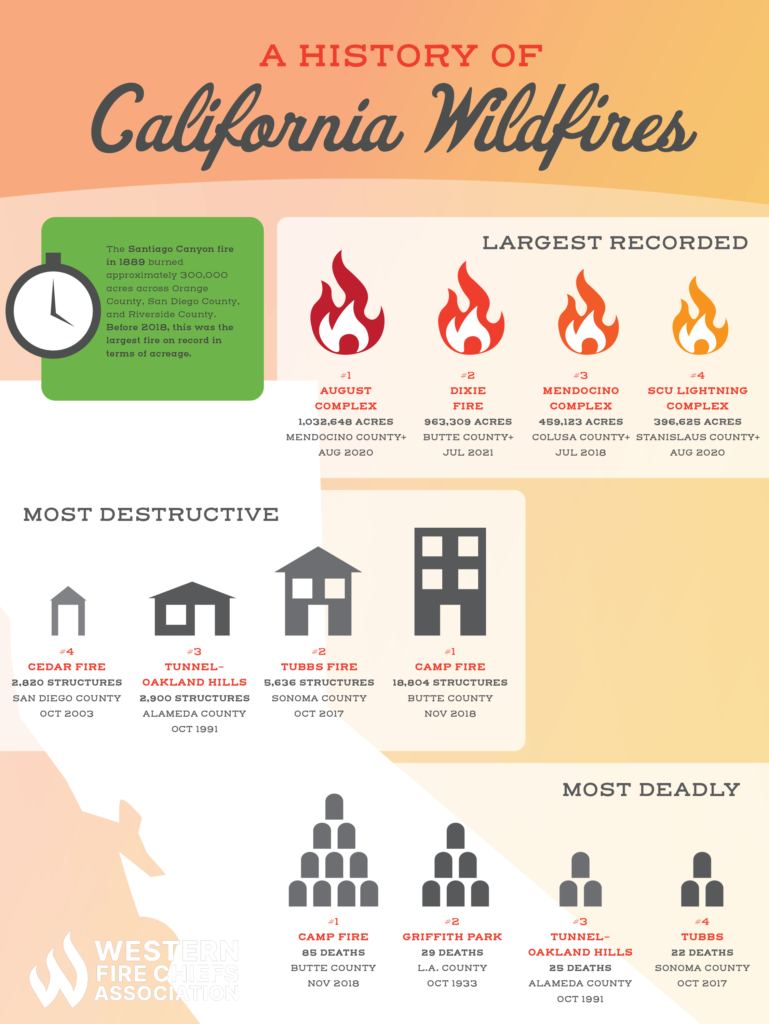
One of the earliest modern megafires was the Oakland Hills Firestorm, which began on October 20, 1991. While not the largest, it was incredibly destructive due to its urban interface, claiming 25 lives and destroying nearly 3,500 homes in Oakland and Berkeley. This fire underscored the vulnerability of communities nestled in highly vegetated areas.
Fast forward to the 21st century, and the scale of fires escalated dramatically. The Cedar Fire, ignited by a lost hunter in San Diego County on October 25, 2003, became California’s largest fire at the time, burning over 273,000 acres and killing 15 people. This fire, alongside others in the “October 2003 Firestorm,” highlighted how fast fires could spread under extreme Santa Ana wind conditions.
The year 2017 was particularly devastating, largely due to a series of October fires that ravaged Northern California’s wine country. The Tubbs Fire, starting on October 8, 2017, near Calistoga in Napa County, quickly spread into Sonoma County, destroying thousands of homes and businesses in Santa Rosa. This fire, along with the Atlas Fire and others, devastated prime tourism areas, impacting boutique hotels, wineries, and local accommodation options popular with both luxury travel and budget travel enthusiasts exploring the region’s culinary and viticultural delights. Later that year, the Thomas Fire began on December 4, 2017, in Ventura County, becoming the state’s largest fire at the time, burning into Santa Barbara County and threatening coastal communities.
The year 2018 brought the unspeakable Camp Fire, which ignited on November 8, 2018, near Pulga in Butte County. Propelled by strong Diablo winds, it swiftly engulfed the town of Paradise, killing 85 people and becoming the deadliest and most destructive wildfire in California history. Simultaneously, the Woolsey Fire started on November 8, 2018, in Ventura County, burning through Malibu and parts of Los Angeles County, devastating celebrity homes and vast natural areas, including parts of the Santa Monica Mountains National Recreation Area. These fires, occurring so late in the year, underscored the extended and dangerous nature of the fire season.
More recently, 2020 saw an unprecedented number of lightning-sparked blazes, particularly in August. The LNU Lightning Complex and SCU Lightning Complex both started around August 17-18, 2020, following massive dry lightning storms. These complexes of fires burned vast areas across multiple counties in Northern California, affecting regions from Napa Valley to Santa Clara County. Then, in 2021, the Dixie Fire, starting on July 13, 2021, grew to be the second-largest in state history, burning over 963,000 acres, destroying the historic town of Greenville, and impacting vast swathes of national forests, including parts of Lassen Volcanic National Park and Plumas National Forest. The sheer size of this fire, burning for months, further highlighted the escalating challenges.
The Broad Impact: Tourism, Accommodation, and Lifestyle in a Fiery Landscape
The relentless succession of California wildfires has profound and far-reaching impacts on numerous facets of life, most notably on the state’s vibrant tourism sector, the availability and quality of accommodation, and the overall lifestyle for both residents and visitors. When fires start, the ripple effects spread far beyond the immediate burn scar.
Disruptions to Travel and Destinations

For travelers planning a trip to California, wildfires introduce a significant layer of uncertainty. Iconic natural landmarks and attractions are often directly impacted. Yosemite National Park, a crown jewel of the national park system, has seen numerous closures or restricted access due to fires within or near its boundaries, and severe smoke intrusion, which can last for weeks. Similarly, Sequoia National Park and Kings Canyon National Park have faced severe threats, leading to evacuations and the heartbreaking loss of ancient giant sequoia trees.
Regions renowned for specific experiences, such as the world-famous wine regions of Napa Valley and Sonoma County, have suffered immense setbacks. Wineries, tasting rooms, and gourmet restaurants – integral to the local culture and tourism appeal – have been destroyed or forced to close. Even without direct fire impact, the lingering smoke can impart a “smoke taint” to grapes, affecting future vintages and the economic viability of the entire industry. This directly impacts travel guides and recommended itineraries, requiring travelers to stay updated on conditions.
Beyond natural parks and wine country, coastal areas and mountain communities popular for weekend getaways and long-term stays can be affected by road closures, mandatory evacuations, and poor air quality. A planned family trip to a cabin in the woods or a scenic drive along the coast can quickly turn into a logistical nightmare, impacting vacation plans and memories.
The Challenge for Hotels and Accommodation
The hospitality sector bears a significant brunt of wildfire impacts. Hotels, resorts, apartments, and villas in threatened areas face immediate closure and evacuation orders. Many have been completely destroyed, such as some luxury resorts in Malibu during the Woolsey Fire, or smaller inns in Paradise during the Camp Fire. The loss of these properties represents not just a financial blow but also the disappearance of vital local infrastructure and employment opportunities.
Even those properties that escape direct damage suffer from cancellations and a dramatic drop in bookings. Travelers are understandably hesitant to visit areas engulfed in smoke or under threat of evacuation. This creates a challenging environment for owners and employees of various accommodation types, from boutique hotels to large suites and vacation rentals, affecting their ability to offer amenities and maintain services. The need for emergency accommodation for evacuees also puts pressure on available rooms, often at short notice. Booking platforms and review sites become crucial sources of information and warnings for travelers.
Lifestyle and the New Normal
For residents and those considering a long-term lifestyle in California, wildfires are an ever-present concern. The fear of losing homes, the trauma of evacuation, and the health impacts of prolonged exposure to smoke become a part of daily life. This “new normal” influences everything from real estate decisions to where people choose to raise families or retire.
For travelers, adapting to this reality means being more informed and flexible. Consulting air quality indexes, checking road conditions, and having contingency plans are now essential elements of travel planning. Responsible tourism also means supporting local businesses during recovery efforts and being mindful of the environmental sensitivities of the areas visited. While the allure of California remains undiminished, understanding its challenges contributes to a deeper, more empathetic appreciation of its beauty and resilience.
Adapting to the Fire-Prone Future: Resilience and Responsible Travel
The question of “When did the fire in California start?” has morphed into “How do we live with fire in California?” The state, its communities, and its various industries, including travel and tourism, are constantly evolving their strategies to mitigate risks, respond effectively, and rebuild with greater resilience.
Mitigation and Prevention Efforts
Significant efforts are underway to address the root causes and immediate threats of wildfires. These include:
- Fuel Reduction: Increased prescribed burns, managed wildfires, and mechanical thinning of overgrown forests help reduce fuel loads, mimicking indigenous practices and preventing massive, uncontrolled blazes.
- Hardening Homes and Infrastructure: Encouraging homeowners to create defensible space around their properties and use fire-resistant building materials is crucial. Utility companies are also upgrading infrastructure, burying power lines, and implementing public safety power shutoffs during high wind events to prevent ignitions.
- Early Detection and Response: Investment in advanced satellite monitoring, drone technology, and expanded firefighting resources allows for quicker detection and more effective initial attacks on new fires.
- Community Preparedness: Education campaigns, evacuation drills, and clearly defined emergency plans empower communities to respond swiftly and safely when fires do start.
The Role of Tourism in Recovery and Resilience
Despite the challenges, California’s tourism industry remains remarkably resilient. In the aftermath of fires, visitors play a critical role in the recovery process. When it is safe to do so, returning to affected areas, staying in local hotels, dining at restaurants, and purchasing from local businesses injects vital funds into recovering economies. Many communities, such as those in Napa and Sonoma after the 2017 fires, emphasized that they were “open for business” once the immediate danger passed, encouraging visitors to return and support their rebuilding efforts.
For travelers, this means being a responsible tourist:
- Stay Informed: Before and during your trip, check official sources like CalFire, national park websites, and local emergency services for real-time updates on fire activity, road closures, and air quality.
- Be Flexible: Have alternative plans in case your intended destination is affected.
- Support Local: When visiting areas recovering from fires, make an effort to support local businesses. Your patronage directly aids their rebuilding.
- Practice Fire Safety: Be extremely cautious with any potential ignition sources, such as campfires, cigarettes, or hot vehicles, especially during fire season. Observe all fire restrictions.
- Consider Off-Season Travel: Traveling during less fire-prone times (e.g., late winter or spring) can still offer beautiful experiences while potentially reducing your exposure to fire impacts.
In conclusion, the question “When did the fire in California start?” leads us down a multifaceted path, revealing that fires have always been a part of the state’s narrative. However, the nature and intensity of these fires have dramatically changed, driven by complex interactions between climate, historical land management, and human expansion. While the challenges are immense, California’s spirit of innovation and resilience shines through. For those enchanted by its beauty and diverse attractions, understanding and respecting this fiery reality is key to experiencing the Golden State responsibly and fully appreciating its enduring appeal.
LifeOutOfTheBox is a participant in the Amazon Services LLC Associates Program, an affiliate advertising program designed to provide a means for sites to earn advertising fees by advertising and linking to Amazon.com. Amazon, the Amazon logo, AmazonSupply, and the AmazonSupply logo are trademarks of Amazon.com, Inc. or its affiliates. As an Amazon Associate we earn affiliate commissions from qualifying purchases.