
The question of when the Los Angeles fires started is one that encompasses both geological history and modern climate patterns. For those who view the city as a collection of iconic landmarks and sun-drenched beaches, the recurring threat of wildfire can seem like a modern anomaly. However, the history of fire in California is as old as the mountains themselves. Understanding the timeline of these events is essential for anyone interested in the preservation of the city’s natural and architectural heritage. In Los Angeles, fire is not merely an occasional disaster; it is a fundamental part of the ecosystem that has shaped the landscape for millennia.

Understanding the Historical Timeline of Los Angeles Fires
When we ask “when did the fires start,” we must distinguish between the prehistoric cycles of the land and the recorded history of urban conflagrations. Long before the first skyscrapers rose in North America, the basin was a site of frequent, lightning-ignited blazes that cleared old growth and prompted new life.
The Early Records and Native Land Management
Historical records of fire in the region date back to the indigenous peoples who first inhabited the area. The native tribes understood that fire was a tool for rejuvenation. By the time Spanish explorers arrived in the late 18th century, the landscape of Southern California was already adapted to a cycle of burning. Early journals from expeditions often mentioned the “Smokes of San Pedro,” describing the haze that frequently hung over the coastline. These were not always accidental; they were often controlled burns designed to enhance the growth of food sources and manage the thick brush that characterizes the foothills of the San Gabriel Mountains.
The 20th Century: Urban Expansion and Fire Hazards
As the city expanded throughout the early 1900s, the intersection of nature and civilization became more complex. The “modern” era of devastating fires arguably began in earnest during the mid-20th century, as residential developments pushed further into the wildland-urban interface. One of the most significant historical markers was the 1961 fire in Bel Air. This event destroyed hundreds of homes and fundamentally changed fire safety laws in the United States. It served as a wake-up call that the idyllic Hollywood Hills were situated in one of the most fire-prone environments on earth. Since then, “fire season” has become a recognized part of the local calendar, typically beginning in late summer and extending through the autumn months.
The Influence of Geography and Nature on Los Angeles Landmarks
To understand why fires start and persist in this region, one must look at the unique geographical landmarks that define the area. The topography of Los Angeles is a dramatic mix of steep mountain ranges and flat coastal basins, creating a funnel effect for weather patterns.
The Santa Monica Mountains and Fire Cycles
The Santa Monica Mountains run through the heart of the city, separating the San Fernando Valley from the coastal plains. This mountain range is a majestic landmark, home to miles of hiking trails and rare Mediterranean ecosystems. However, its chaparral vegetation is highly flammable. These plants have evolved to burn; many species even require the heat of a fire to crack their seed pods and allow for germination. Because the mountains are so central to the city’s layout, any fire that starts within their peaks poses an immediate threat to the historic homes and landmarks nestled within the canyons.
How the Santa Ana Winds Fuel the Flames
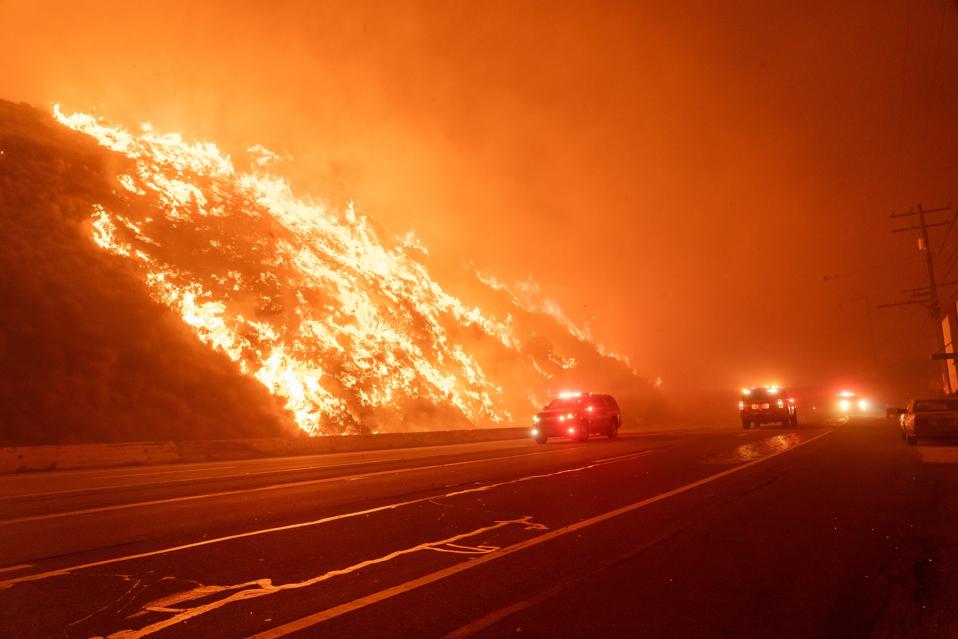
Perhaps the most famous—or infamous—environmental factor in the Western United States is the arrival of the Santa Ana Winds. These strong, extremely dry downslope winds originate from the inland deserts and pick up speed as they are squeezed through mountain passes toward the Pacific Ocean. When these winds arrive, usually between October and March, the fire risk skyrockets. A small spark, whether from a downed power line or a stray ember, can be whipped into a massive firestorm in minutes. The start of these winds often dictates the official “start” of the most dangerous period of the fire year, turning landmarks like Topanga Canyon into high-risk zones.
Significant Modern Wildfires and Their Impact on Tourism Landmarks
In recent decades, several fires have gained international attention due to their proximity to famous landmarks and the sheer scale of their destruction. These events have redefined how the city protects its cultural and historical assets.
The Getty Fire and Its Proximity to Art Icons
In 2019, the world watched as flames licked the edges of the hills surrounding the Getty Center. As one of the premier architectural and cultural landmarks in California, the museum’s safety was a primary concern. The fire started near the 405 freeway and spread rapidly toward the museum’s campus. Remarkably, the Getty Center was designed specifically with fire in mind. Its travertine exterior is fire-resistant, and its sophisticated air filtration system prevents smoke from damaging the priceless artwork inside. This event highlighted how modern landmarks in fire-prone areas must be built to withstand the inevitability of the landscape’s natural cycles.
The Griffith Park Fire and the Observatory
Another heart-stopping moment occurred in 2007 when a major fire broke out in Griffith Park. This park is one of the largest municipal parks with urban wildlands in the country and houses the iconic Griffith Observatory. The fire burned over 800 acres, threatening the observatory and the historic Greek Theatre. The sight of the glowing hillside behind the world-famous Hollywood Sign became an enduring image of the city’s vulnerability. While the structures were saved, the fire drastically altered the park’s landscape, leading to years of trail closures and ecological restoration.
Preserving the History and Natural Beauty of Southern California
The recurring nature of these fires has led to a culture of resilience and a deep focus on conservation. To preserve the landmarks that make Los Angeles unique, significant efforts are made in both reforestation and urban planning.
Reforestation and Conservation Efforts
Following major events like the Woolsey Fire, which devastated parts of Malibu and Ventura County, there has been a massive push for ecological recovery. Organizations work tirelessly to plant native species that are better suited for the local environment and to remove invasive plants that act as “ladder fuels,” allowing fire to climb into the canopy of trees. Landmarks such as the Angeles National Forest rely on these conservation efforts to maintain their biodiversity. The goal is not to stop fire entirely—which is impossible—but to ensure the land can recover quickly and naturally.

Visiting Los Angeles Safely During Fire Season
For those planning to visit the various landmarks of Southern California, it is important to be aware of the fire season. Traveling along Mulholland Drive or visiting the Mount Wilson Observatory offers breathtaking views, but these areas are often the first to be closed when fire risks are high. Visitors should always check local weather reports and “Red Flag Warnings.” These warnings indicate that weather conditions are perfect for a fire to start and spread. By respecting these closures and practicing fire safety—such as never using outdoor flames in high-risk areas—travelers can help protect the very landmarks they have come to see.
The story of when the Los Angeles fires start is a story of the land itself. It is a narrative that begins with the ancient movement of the Sierra Nevada and the drying of the western plains. While the fires often bring destruction, they also remind us of the power of the natural world and the importance of building a city that respects its environment. From the protective travertine walls of the Getty Center to the resilient oaks of Griffith Park, the landmarks of Los Angeles stand as a testament to the city’s enduring spirit in the face of nature’s most powerful force. Understanding this history doesn’t just answer a question of dates; it provides a deeper appreciation for the fragile beauty of the California coast.
LifeOutOfTheBox is a participant in the Amazon Services LLC Associates Program, an affiliate advertising program designed to provide a means for sites to earn advertising fees by advertising and linking to Amazon.com. Amazon, the Amazon logo, AmazonSupply, and the AmazonSupply logo are trademarks of Amazon.com, Inc. or its affiliates. As an Amazon Associate we earn affiliate commissions from qualifying purchases.