
The question “When did we get Florida?” may seem simple, yet its answer unravels a complex tapestry of exploration, imperial rivalries, diplomatic maneuvering, and frontier expansion that spans over three centuries. Far from being a singular event, the acquisition of Florida by the United States was the culmination of multiple shifts in sovereignty, each leaving an indelible mark on the Sunshine State’s unique cultural and historical identity. To truly understand when “we” — referring to the United States — acquired this coveted peninsula, one must delve into its tumultuous past under various European flags before it ultimately became American territory. This journey through history highlights Florida not just as a geographical landmark but as a testament to the enduring power struggles that shaped the Americas.
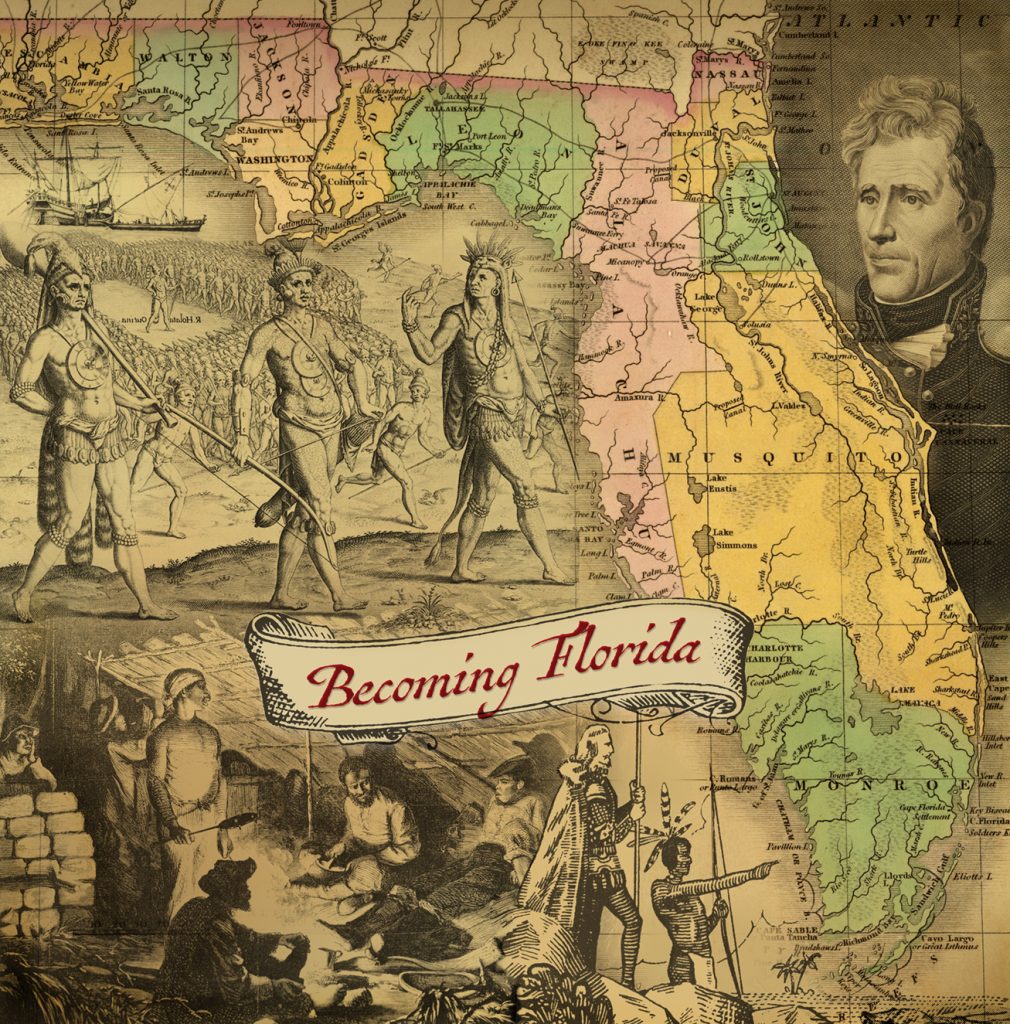
A Land of Perpetual Sunshine: Early European Encounters
The first recorded European encounter with Florida traces back to the early 16th century, marking the genesis of its complex colonial history. This initial contact set the stage for centuries of European claims, settlements, and conflicts that would ultimately define the region’s fate.
Ponce de León‘s Arrival and “La Florida”
In April 1513, Juan Ponce de León, a Spanish explorer and the first governor of Puerto Rico, landed on what he believed to be a large island. He named this vibrant, flower-filled land “La Florida,” likely due to its lush landscape and his arrival during Pascua Florida (the Easter season). His expedition, driven by a quest for new lands and perhaps the mythical Fountain of Youth, inaugurated a long era of Spanish presence in the region. Ponce de León’s claim was a foundational moment, asserting Spain’s dominion over a vast, ill-defined territory that stretched far beyond the peninsula itself. For decades, Spain viewed La Florida as a strategic buffer protecting its lucrative Caribbean trade routes and silver fleets from rival European powers.
Spanish Colonial Efforts and Challenges
Despite the early claim, Spanish colonization of Florida proved to be an arduous and often costly endeavor. Early attempts at settlement were met with fierce resistance from indigenous populations, including the Timucua, Calusa, and Apalachee, who fiercely defended their ancestral lands. The Spanish Crown, however, persisted, driven by strategic imperatives. In 1565, Pedro Menéndez de Avilés established St. Augustine, which would become the oldest continuously inhabited European-established settlement in the United States. This fortified outpost served as a defensive stronghold against French incursions, particularly from Fort Caroline, and a base for missionary efforts.
Life in Spanish Florida was characterized by constant struggle against disease, hurricane, and relentless attacks from native tribes and, later, English and French privateers and colonial forces. The territory’s primary value for Spain remained strategic rather than economic, functioning as a military outpost and a refuge for runaway slaves from British colonies, which added another layer of complexity to regional relations. Despite the persistent challenges, St. Augustine and, to a lesser extent, Pensacola, endured as symbols of Spanish imperial ambition in North America.
The Shifting Sands of Empire: British Interlude and Spanish Resurgence
The 18th century ushered in an era of intense imperial competition between Spain, Great Britain, and France, with Florida caught in the geopolitical crosshairs. The outcomes of major European conflicts frequently redrew the colonial map, demonstrating the fluid nature of sovereignty over the North American continent.
The Treaty of Paris (1763) and British Florida
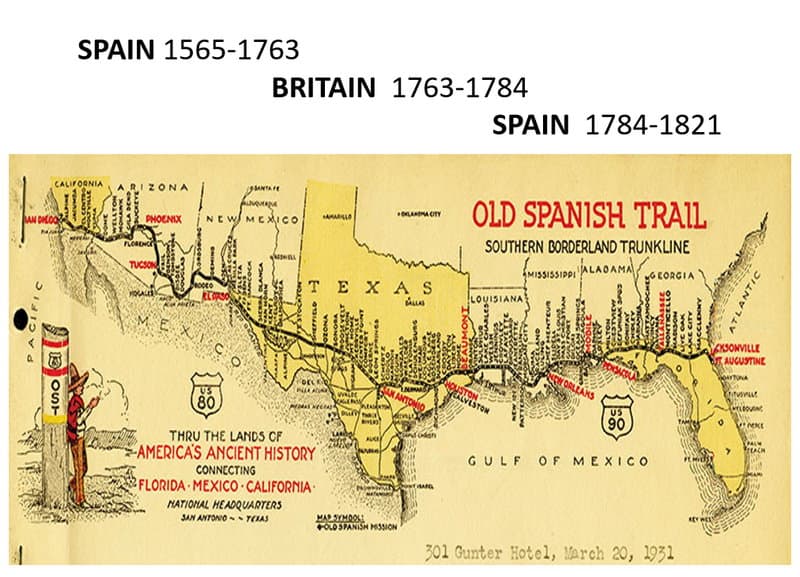
The climactic Seven Years’ War (known as the French and Indian War in North America) dramatically altered the balance of power. Great Britain emerged victorious, gaining vast territories in North America. To compensate Spain for its losses, particularly the strategically vital port of Havana in Cuba, which the British had captured, Spain ceded Florida to Great Britain in the Treaty of Paris of 1763. This marked a significant, albeit temporary, end to 250 years of uninterrupted Spanish rule.
Under British administration, Florida was divided into two distinct provinces: East Florida, with its capital at St. Augustine, and West Florida, governed from Pensacola. The British actively promoted settlement and economic development, encouraging agricultural expansion and offering land grants. While relatively brief, the British period introduced new administrative structures and a greater emphasis on commerce, leaving a legacy of infrastructure development and a more robust colonial economy than the Spanish had managed. Many loyalists fled to British Florida during the American Revolutionary War, further diversifying its population.
Spain Reclaims Florida (1783): A Brief Return
The American Revolutionary War once again reshuffled the colonial deck. Spain, siding with France against Great Britain, saw an opportunity to regain lost territories. Spanish forces successfully captured Pensacola in 1781 and launched incursions into East Florida. At the war’s conclusion, the Treaty of Paris of 1783, which recognized American independence, also returned Florida to Spanish control. This re-established Spanish sovereignty, but the region’s geopolitical context had fundamentally changed.
The “Second Spanish Period” (1783-1821) was marked by weakness and instability. Spain struggled to effectively govern the territory, which was now bordered by an ambitious and rapidly expanding United States. Frontier disputes, particularly along the border of West Florida and the newly formed American states of Georgia and Alabama, became a constant source of tension. The Spanish authorities found it difficult to control the indigenous populations, such as the Seminoles, and to prevent American settlers from encroaching on Spanish land. This period laid the groundwork for the inevitable confrontation between Spain and the burgeoning American republic over Florida’s future.
The Path to American Acquisition: Border Disputes and Geopolitical Maneuvers
As the 19th century dawned, the fate of Florida became inextricably linked with the expansionist ambitions of the young United States. The desire for secure borders, access to the Gulf of Mexico, and the suppression of perceived threats from Native American groups fueled American determination to acquire the territory.
West Florida Controversies and American Expansionism
The Louisiana Purchase of 1803 ignited significant controversy regarding the exact boundaries of the newly acquired territory, particularly concerning West Florida. The United States claimed that the purchase included parts of West Florida west of the Perdido River, a claim vehemently denied by Spain. American settlers, many with a strong sense of entitlement and Manifest Destiny, began to populate the disputed areas.
This simmering border dispute came to a head in 1810 when American settlers in West Florida revolted against Spanish rule, declaring the short-lived Republic of West Florida. President James Madison swiftly annexed the territory west of the Perdido River, asserting the American claim based on the Louisiana Purchase. This act, while contested by Spain, effectively solidified American control over a significant portion of what was formerly Spanish Florida, setting a precedent for further expansion. The strategic importance of the Mississippi River and the port of New Orleans, which required a secure western flank, drove much of this American push.
The First Seminole War and Jackson’s Incursions
The instability of Spanish Florida presented an ongoing security concern for the United States. The territory became a refuge for runaway slaves and a base for Seminole and Creek raids into American Georgia. In 1818, under the pretext of curbing these raids and pursuing hostile Seminoles, General Andrew Jackson led American forces into Spanish East Florida in what became known as the First Seminole War.
Jackson’s campaign was audacious and controversial. He seized Pensacola and St. Marks, executed British subjects suspected of inciting Native American resistance, and effectively dismantled Spanish authority in the region. Although Jackson’s actions were a blatant violation of international law, they demonstrated Spain’s inability to control its own territory and served as a powerful lever in ongoing diplomatic negotiations. The incursions underlined the precariousness of Spanish rule and heightened the urgency for a definitive resolution regarding Florida’s future.
The Adams-Onís Treaty of 1819: Florida Becomes American
The culmination of years of diplomatic wrangling, border conflicts, and American strategic maneuvering arrived with a landmark agreement that permanently transferred Florida to the United States.
Negotiations and the Treaty’s Terms
The chaotic situation in Florida, coupled with Spain’s preoccupation with its crumbling Latin American empire, created an opportune moment for the United States to finalize its acquisition goals. Negotiations were led by U.S. Secretary of State John Quincy Adams and Spanish minister Don Luis de Onís. Adams, a shrewd diplomat, leveraged Jackson’s military successes and Spain’s weakened state to secure highly favorable terms.
Signed on February 22, 1819, the Adams-Onís Treaty, also known as the Transcontinental Treaty, was a comprehensive agreement. Under its provisions, Spain ceded East Florida and its remaining claims to West Florida to the United States. In return, the United States agreed to assume up to $5 million in claims by American citizens against Spain. Crucially, the treaty also defined the western boundary of the Louisiana Purchase, extending it to the Pacific Ocean and relinquishing American claims to Texas while Spain gave up its claims to the Oregon Country. This agreement was a triumph for American diplomacy, securing Florida and establishing a clear continental boundary.
Ratification and Formal Transfer
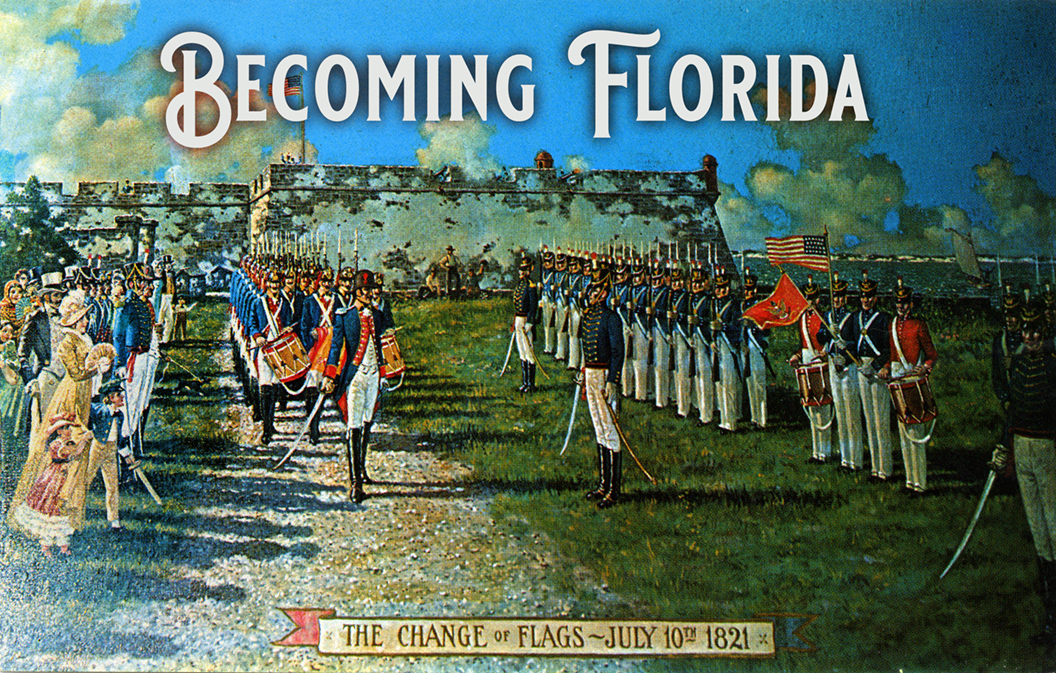
Despite being signed in 1819, the Adams-Onís Treaty faced delays in ratification, primarily due to internal political instability in Spain and concerns about American recognition of new Latin American republics. However, after intense pressure from the United States, Spain finally ratified the treaty in 1821. On July 17, 1821, at St. Augustine, and on July 21, 1821, at Pensacola, ceremonial transfers officially handed over the territories of East Florida and West Florida to the United States.
With these formal acts, Florida transitioned from being a foreign outpost to an American territory. Andrew Jackson, a central figure in the acquisition process, was appointed as its first territorial governor, signaling a new chapter for the sun-drenched land. The question “When did we get Florida?” can thus be definitively answered as 1819 with the signing of the treaty, and formally by 1821 with its ratification and physical transfer.
Florida’s Legacy: From Frontier Territory to Modern Icon
The acquisition of Florida was a pivotal moment in American history, marking a significant territorial expansion and setting the stage for its subsequent development into a vibrant and distinctive state.
Statehood and Development
Following its acquisition, Florida was organized as a U.S. territory, and settlers from other parts of the United States began to pour in, seeking new opportunities in agriculture, particularly cotton and citrus. The territorial period was marked by ongoing conflicts with the Seminole people, culminating in the costly and protracted Second Seminole War (1835-1842), which largely resulted in the removal of most Seminoles from the peninsula. On March 3, 1845, Florida was admitted to the Union as the 27th state, solidifying its place within the American republic. Its strategic location and fertile lands continued to drive its growth, evolving from a frontier outpost to a burgeoning agricultural and, eventually, a tourism powerhouse.
A Landmark of History and Culture
Today, Florida stands as a testament to its complex and multifaceted history. Its Spanish heritage is visible in the architecture of St. Augustine, the names of its cities and rivers, and elements of its culture. The legacy of the British period contributed to its land-use patterns, while the enduring presence of the Seminole and Miccosukee tribes speaks to a resilience forged through centuries of struggle. The American acquisition brought about rapid demographic changes, economic shifts, and infrastructural development that transformed the state.
From the sandy shores explored by Ponce de León to the modern bustling metropolises, Florida’s journey is a microcosm of American expansion. It is a land shaped by diverse influences, each layer of its history contributing to its unique character. Thus, “getting Florida” was not merely a transaction but a historical saga that endowed the United States with one of its most geographically, historically, and culturally rich landmarks.
LifeOutOfTheBox is a participant in the Amazon Services LLC Associates Program, an affiliate advertising program designed to provide a means for sites to earn advertising fees by advertising and linking to Amazon.com. Amazon, the Amazon logo, AmazonSupply, and the AmazonSupply logo are trademarks of Amazon.com, Inc. or its affiliates. As an Amazon Associate we earn affiliate commissions from qualifying purchases.