
For anyone planning a visit to the vibrant metropolis of Miami Dade, understanding the local school calendar might seem like a niche detail, but its implications for tourism are profound. The rhythm of school life significantly impacts everything from crowd levels at popular attractions to the cost of accommodation and the overall atmosphere of the city. Whether you’re a family seeking the perfect vacation window, a couple desiring a tranquil escape, or a solo adventurer on a budget, knowing when local students are in or out of class can be the key to unlocking an optimal Miami experience. This guide delves into the academic schedule of Miami Dade and offers insights into how you can leverage this knowledge to enhance your tourism journey.
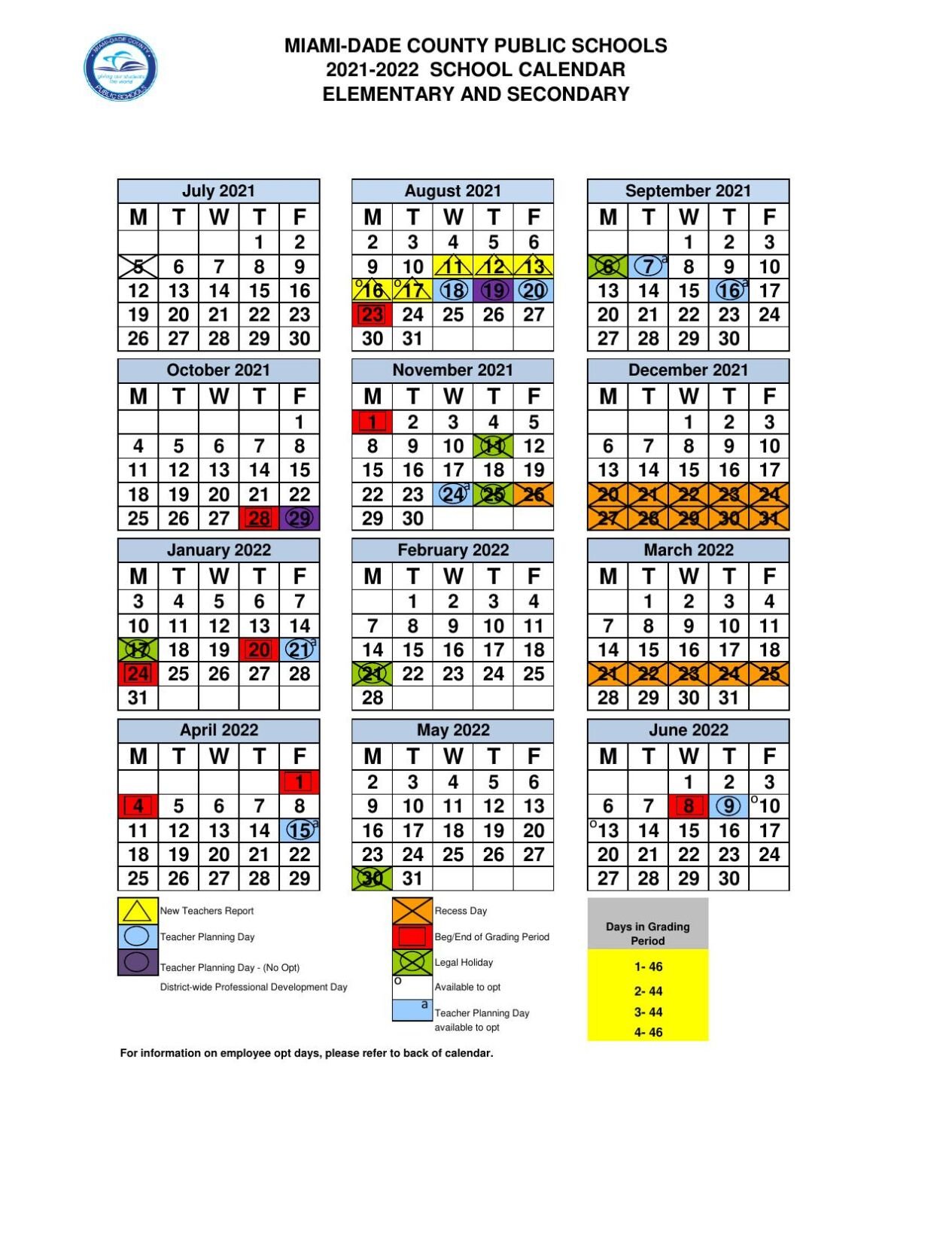
Understanding the Academic Calendar in Miami Dade
The Miami-Dade County Public Schools district, one of the largest in the United States, sets the pace for much of South Florida’s seasonal ebb and flow. Its academic calendar is typically consistent year after year, with minor adjustments, making it a reliable reference for tourists.
Typical Start and End Dates
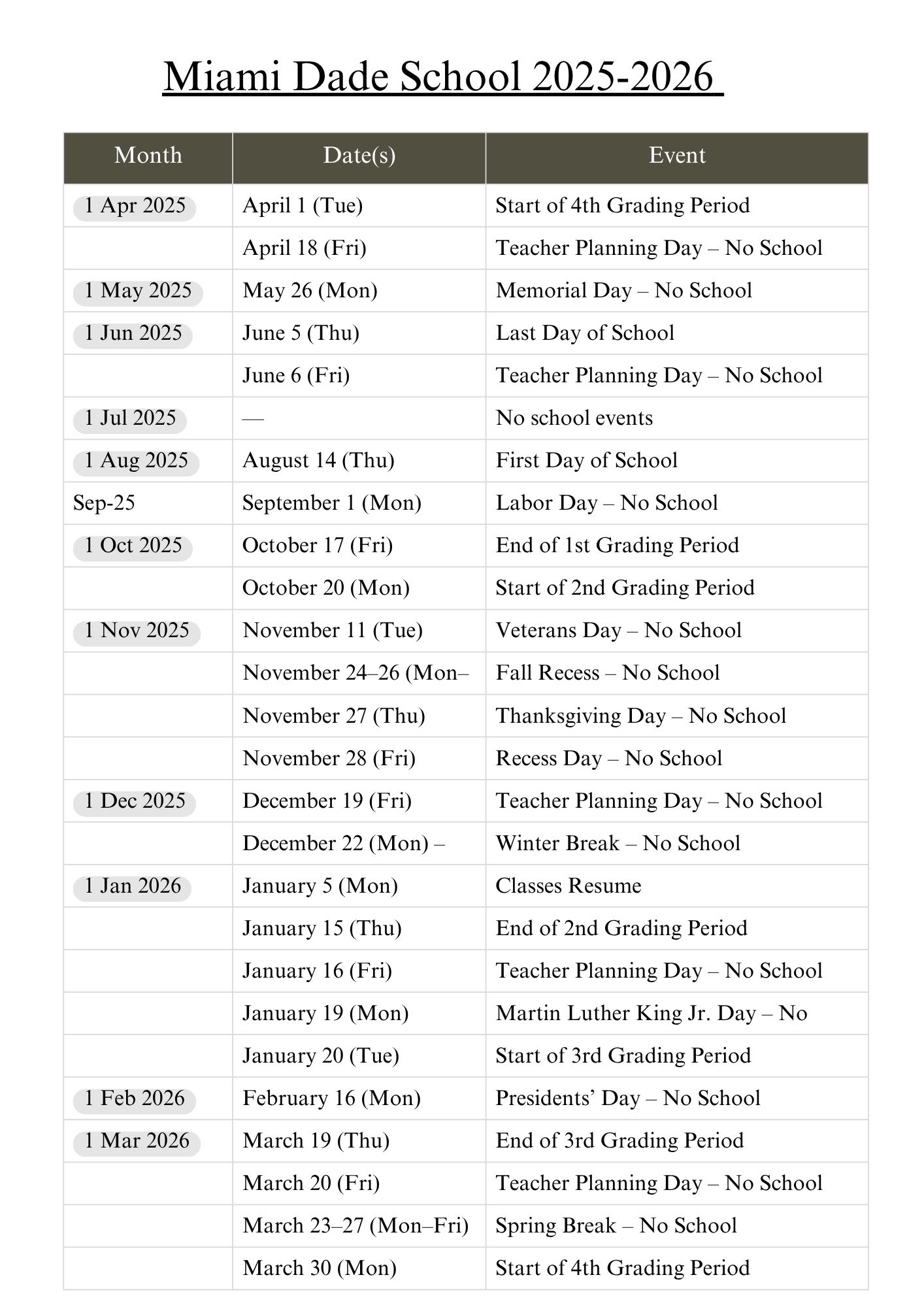
Historically, public schools in Miami Dade commence their academic year in mid-to-late August. While the exact date can shift slightly each year, it generally falls within the second or third week of August. This timing marks a significant transition from the bustling summer tourist season. The school year then typically concludes in early June, usually within the first two weeks of the month. This period immediately following the end of school signifies the official start of the summer vacation rush, bringing with it increased visitor numbers and heightened activity.
Key Breaks and Holidays
Beyond the primary start and end dates, the academic calendar is punctuated by several significant breaks that directly influence tourism trends:
- Thanksgiving Break: A short, typically one-week break around the last week of November. This often sees a surge in domestic travel.
- Winter Break (Christmas/New Year): A two-week hiatus spanning late December into early January. This is one of the busiest and most expensive times to visit Miami, as both local and international tourists flock to the sunny destination for holiday celebrations.
- Spring Break: Usually occurring in March, this one-week break is infamous for attracting a large influx of college students and families. While Miami Beach is a popular hub, the entire region experiences increased activity.
- Teacher Planning Days and Other Public Holidays: Shorter, often long-weekend breaks (e.g., Martin Luther King Jr. Day, Presidents’ Day) also contribute to mini-surges in local tourism, as families take advantage of the extended weekend.
The Miami-Dade County Public Schools System
The sheer scale of the Miami-Dade County Public Schools system means that when school is in session, local families are more rooted, leading to a noticeable decrease in local family tourism. Conversely, during school breaks, these families often become tourists within their own region or travel elsewhere, contributing to the overall movement and demand for services. Keeping an eye on the official Miami-Dade County Public Schools calendar, typically released months in advance, is a smart move for any prospective visitor.
The Impact on Miami Tourism: What Visitors Need to Know
The ebb and flow of the academic calendar directly shapes the tourist experience in Miami. Understanding these patterns can help you make informed decisions about when to visit and what to expect.
Peak vs. Off-Peak Seasons
- Peak Season (School Breaks & Summer): The periods when Miami-Dade County Public Schools are on break, particularly during winter holidays, spring break, and the heart of summer (late June through July), typically represent Miami’s peak tourist seasons. During these times, the city is at its most vibrant, but also its most crowded and expensive. Attractions, restaurants, and beaches are teeming with visitors, and a lively, festive atmosphere prevails.
- Shoulder Seasons (Early Fall & Late Spring): The weeks immediately following the start of school in August/September and the period in May before schools let out are often considered shoulder seasons. These are golden opportunities for tourists. The weather is still excellent, but the crowds have thinned, and prices begin to stabilize or drop.
- Off-Peak Season (Mid-Fall & Winter excluding holidays): Late September, October, and early November (before Thanksgiving) typically see fewer tourists. January (after New Year’s) and early February also offer a quieter experience before the Spring Break rush. These times are ideal for those seeking a more relaxed, budget-friendly trip.
Crowd Levels at Attractions
The impact of school schedules on crowd levels is perhaps the most tangible for tourists. Iconic destinations like South Beach, Zoo Miami, the Phillip and Patricia Frost Museum of Science, and Everglades National Park experience significant fluctuations in visitor numbers. During school holidays, expect longer lines, fuller parking lots, and a generally more bustling environment. Conversely, visiting during regular school weeks often translates to shorter waits, easier access, and a more intimate experience with Miami’s attractions. Even walking through the Art Deco Historic District or exploring the murals of Wynwood Walls can feel markedly different with fewer people around.
Accommodation and Travel Pricing
Economic principles dictate that higher demand leads to higher prices. This holds true for Miami tourism, where school holidays directly correlate with increased costs. Hotels, vacation rentals, and even airfare to Miami International Airport (or nearby Fort Lauderdale-Hollywood International Airport) tend to surge during peak academic breaks. Families traveling with children often have no choice but to travel during these periods, contributing to the price inflation. For budget-conscious travelers or those with flexible schedules, targeting school weeks for their visit can result in substantial savings on accommodation, flights, and even some local activities.
Planning Your Miami Trip Around School Schedules
Strategic planning based on the Miami Dade school calendar can significantly enhance your travel experience, ensuring it aligns with your preferences and budget.
Best Times for Families with Young Children
Families whose children are not yet of school age, or who are homeschooled, have a distinct advantage. They can enjoy Miami during the quieter, more affordable school weeks. Late August/early September, October, and late January/early February offer beautiful weather and fewer crowds at family-friendly attractions like Zoo Miami, the Phillip and Patricia Frost Museum of Science, and the calmer parts of South Beach. Traveling outside of major school breaks allows for a more relaxed pace, easier navigation, and often better deals on family suites and experiences.
Ideal Periods for Solo Travelers and Couples
For adults traveling without children, the school year, especially outside of major holidays, presents the perfect opportunity for a sophisticated Miami getaway. The weeks of September and October, and again from mid-January through February (excluding Presidents’ Day weekend), offer pleasant weather, vibrant nightlife without excessive crowds, and more serene experiences at art museums like the Pérez Art Museum Miami or while exploring the culinary scene in Little Havana. This is when you can truly immerse yourself in Miami’s unique cultural tapestry without feeling rushed.
Navigating Local Events and Festivals
Miami is a city of perpetual festivities, and many major events are strategically scheduled to either coincide with or avoid school breaks. Art Basel, for instance, typically occurs in early December, just before the major winter break rush. The South Beach Wine & Food Festival usually takes place in February, again, outside of most school holidays. However, many local community festivals and events geared towards families might pop up during long weekends or shorter school breaks. Checking a local events calendar in conjunction with the school schedule will allow you to either participate in specific celebrations or skillfully avoid large crowds, depending on your preference.
Maximizing Your Visit: Tips for Different Traveler Types
Regardless of your travel style, a keen awareness of the Miami Dade school calendar equips you with the knowledge to craft a tailored and memorable trip.
Budget-Conscious Travelers
For those looking to stretch their travel budget, the periods when Miami-Dade County Public Schools are in session are your best bet. Look at late August/early September, October, and then again from mid-January through February. During these times, not only are accommodations and flights often cheaper, but many attractions may offer off-peak discounts, and dining out can be a more relaxed and less expensive affair. Consider bundling activities or looking for local deals that might not be available during peak holiday seasons. Exploring free attractions like the beaches, public parks, and window shopping in areas like the Design District becomes even more enjoyable with fewer crowds.
Seeking Tranquility and Local Immersion
If your ideal vacation involves peaceful strolls, uncrowded natural beauty, and a chance to experience Miami through a local lens, aim for mid-week visits during the school year. You’ll find fewer crowds at Everglades National Park, a calmer atmosphere along the shores of Biscayne Bay, and more authentic interactions in neighborhoods like Little Havana. This is the time to savor long lunches, explore art galleries at your leisure, and truly soak in the unique blend of cultures that defines Miami Dade.
Family Adventure Seekers
Families tied to the school calendar will inevitably travel during peak times. The key here is proactive planning. Book flights and accommodations well in advance to secure better rates and availability. Consider visiting popular attractions right when they open or closer to closing to avoid the mid-day rush. Utilizing fast passes or online ticketing services for major parks and museums can save valuable time. Exploring lesser-known, but equally engaging, family-friendly spots during peak hours can also offer a respite from the crowds. Think about a day trip to the charming towns of the Florida Keys, perhaps a visit to Key Largo or even Key West, which, while also popular, might offer a different pace than metropolitan Miami during busy periods.
Beyond the Classroom: Seasonal Activities and Events
The school calendar also influences the types of activities and events available, shaping the seasonal character of Miami.
Summer Delights in Miami
When schools are out, Miami fully embraces its summer identity. This period (June to mid-August) is characterized by extended hours at water parks, vibrant beach scenes, and a plethora of indoor activities to escape the heat, such as visits to the Pérez Art Museum Miami or the Phillip and Patricia Frost Museum of Science. While it’s the rainy season in Florida, afternoon showers are often brief, making way for sunny skies. Many summer camps and family-focused events are also in full swing, catering to the local school-aged population.
Fall and Winter Festivities
As schools resume in August, Miami transitions into a more temperate and culturally rich season. Fall brings pleasant weather, ideal for outdoor exploration. This is when many major art exhibitions, music festivals, and culinary events begin to dot the calendar, often aiming to attract an adult audience outside of school holidays. The winter break, however, transforms Miami into a major holiday destination, with lavish decorations, special performances, and a generally festive atmosphere dominating the city until early January. The slightly cooler temperatures make exploring outdoor attractions like the Vizcaya Museum & Gardens particularly enjoyable.
Spring Break Buzz
While Spring Break often signifies an influx of college students to South Beach, it also coincides with family vacations. This short but intense period in March sees an explosion of energy across the city. Many events and special promotions cater to both younger adults and families, ranging from outdoor concerts to themed parties. Beyond the traditional hotspots, other areas of Miami Dade remain vibrant but perhaps a little less frenetic. Exploring neighborhoods like Coral Gables or enjoying a day trip to the calmer beaches north of Fort Lauderdale can provide a pleasant contrast.
In conclusion, the start and end dates of schools in Miami Dade, along with their associated breaks, are much more than just academic markers. They are powerful indicators of tourism trends, offering a roadmap for visitors to plan their ideal Miami adventure. By aligning your travel dates with these rhythms, you can significantly influence everything from your budget to the crowd levels you encounter, ensuring a truly unforgettable experience in this dynamic Florida paradise.
LifeOutOfTheBox is a participant in the Amazon Services LLC Associates Program, an affiliate advertising program designed to provide a means for sites to earn advertising fees by advertising and linking to Amazon.com. Amazon, the Amazon logo, AmazonSupply, and the AmazonSupply logo are trademarks of Amazon.com, Inc. or its affiliates. As an Amazon Associate we earn affiliate commissions from qualifying purchases.