
Arizona, often synonymous with scorching desert heat, holds a surprising secret for those seeking a unique winter experience. Unlike much of the United States, winter in Arizona doesn’t typically usher in a blanket of snow across the entire state. Instead, it offers a fascinating duality: mild, sunny days in the southern deserts juxtaposed with crisp, snowy landscapes in the northern mountains. For travelers planning a visit, understanding when winter truly begins in Arizona is key to unlocking the perfect seasonal adventure, whether you’re chasing the sun or seeking powdery slopes.
Understanding Arizona’s Unique “Winter” Defined
Defining “winter” in Arizona is less about a calendar date and more about a shift in climatic patterns that begins to manifest as early as late October and extends through February, sometimes even into early March. While meteorological winter officially starts in December, the change in Arizona’s weather is a gradual, welcome transition from the intense heat of summer and the pleasant warmth of fall. This period is often considered the peak travel season for many parts of the state, drawing visitors from colder climates seeking respite and outdoor opportunities.

A Tale of Two Climates: Desert vs. High Country
The vast geographical diversity of Arizona means that “winter” isn’t a monolithic experience. The state is broadly divided into two distinct climate zones: the low-elevation deserts and the high-elevation mountains and plateaus.
In the desert regions, encompassing major cities like Phoenix, Tucson, and Yuma, winter begins subtly. By late October and early November, the oppressive summer heat gives way to delightfully moderate temperatures. Daytime highs typically range from the low 60s to mid-70s Fahrenheit (15-24°C), with nights cooling down significantly, often into the 40s (4-9°C). This is a stark contrast to the dramatic snowfalls and freezing temperatures experienced across much of the country. For these areas, “winter” means ideal conditions for outdoor activities, with abundant sunshine and clear skies becoming the norm. The iconic Sonoran Desert transforms into a verdant oasis after any winter rains, making it an exceptionally beautiful time to explore.
Conversely, in Arizona’s high country, including towns like Flagstaff, Prescott, and the White Mountains, winter arrives with a more traditional flourish. Here, elevations routinely exceed 5,000 feet, and temperatures drop considerably. The first snowfalls can occur as early as October, dusting the peaks and signaling the impending ski season. By November, sustained cold fronts begin to establish themselves, leading to consistent snowfall throughout December, January, and February. Daytime temperatures often hover around freezing, with nights dipping well below zero. This creates a legitimate winter wonderland, complete with opportunities for skiing, snowboarding, and other snow-based recreation.
Defining the Seasonal Shift
For desert dwellers and visitors, the end of daylight saving time, typically in early November, often feels like the unofficial start of winter. The days grow shorter, and the angle of the sun shifts, providing a softer, more pleasant warmth. The saguaros stand tall against crisp blue skies, and the desert floor, once shimmering with heat, now invites long walks. This period, from November through February, represents the quintessential “winter” experience for those drawn to Arizona’s arid beauty. It’s when the snowbirds descend, escaping the harsh winters elsewhere, and when locals embrace the outdoor lifestyle they’ve yearned for during the summer months.
In the mountains, the defining shift is the arrival of consistent cold temperatures and the accumulation of snow. Ski resorts like Arizona Snowbowl near Flagstaff and Sunrise Park Resort in the White Mountains eagerly await these conditions, often opening for the season by late November or early December, depending on snowpack. Thus, “winter” in Arizona is a dynamic, multi-faceted season, offering diverse experiences that begin to unfold long before the calendar officially declares it so.
Typical Weather Patterns and Temperatures Across the State
Understanding the varied weather patterns during Arizona’s winter is crucial for any traveler. The state’s diverse topography creates microclimates, meaning you can experience radically different conditions within a few hours’ drive. This makes Arizona a unique destination where you can ski in the morning and golf in the afternoon, provided you choose your locations wisely.
The Mild Desert Winter: Phoenix, Tucson, and Scottsdale
For much of the population and the majority of “snowbird” visitors, the desert winter is the primary draw. In cities like Phoenix, Tucson, and Scottsdale, the period from November to February is characterized by abundant sunshine and comfortably warm temperatures. Daytime highs typically range from 60°F to 75°F (15°C to 24°C), making it ideal for outdoor activities. Mornings can be crisp, often dipping into the 40s (4°C to 9°C), and occasionally even lower during cold snaps. However, the sun quickly warms things up, leading to pleasant afternoons. Humidity is generally low, and rainfall is infrequent, though occasional winter storms can bring much-needed moisture to the desert, creating a lush, green landscape, particularly in the Sonoran Desert regions. This predictable, mild weather is why Arizona is such a popular escape from the colder climates further north, offering a reliable dose of sunshine and warmth.
Snowy Retreats: Flagstaff, Prescott, and Sedona’s Dustings
Travelers seeking a more traditional winter experience will find it in Arizona’s higher elevations. Flagstaff, situated at nearly 7,000 feet, transforms into a true winter wonderland. Here, average daytime temperatures in December and January hover around 35°F to 45°F (2°C to 7°C), with nighttime lows frequently dropping into the teens or single digits (-12°C to -7°C). Flagstaff receives an average of over 100 inches of snow annually, providing excellent conditions for skiing, snowboarding, and snowshoeing at Arizona Snowbowl and within the surrounding Coconino National Forest.
Prescott, at an elevation of about 5,300 feet, experiences a milder but still distinct winter. Temperatures are generally a few degrees warmer than Flagstaff, with daytime highs in the 40s and 50s (4°C to 12°C), and nights in the 20s and 30s (-6°C to -1°C). Prescott typically receives several snowfalls each winter, creating picturesque scenes, especially around its historic downtown and Courthouse Plaza.
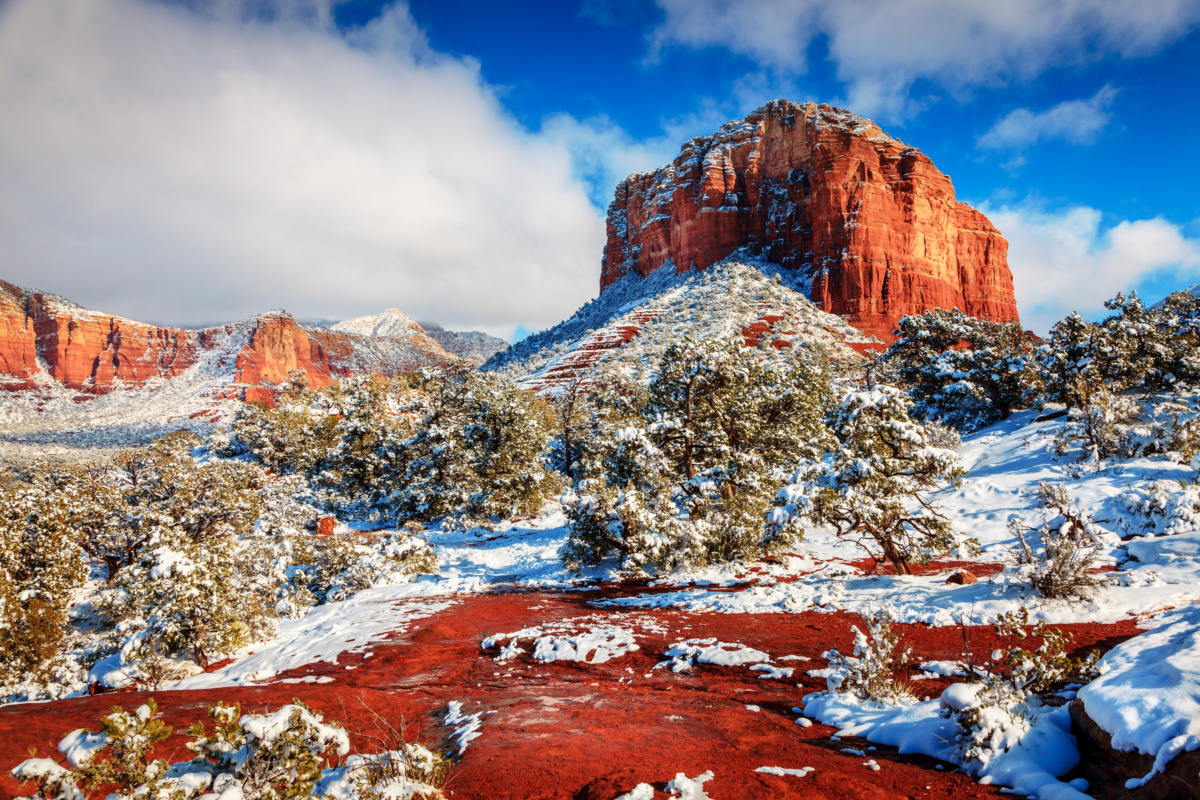
Even Sedona, famous for its red rock formations, can see occasional snow. While it doesn’t receive the heavy snows of Flagstaff, dustings on the red rocks are a magical sight, usually melting within a day or two due to its lower elevation (around 4,500 feet) and slightly warmer temperatures (daytime 50s, nighttime 30s). The Grand Canyon South Rim also sees significant snow, making for breathtaking, ethereal views, though some roads and facilities may be impacted by weather.
Rainfall and Clear Skies
Overall, Arizona’s winter is characterized by low precipitation, particularly in the desert areas. When rain does occur, it’s often part of gentle, widespread systems that pass through, leaving behind remarkably clear and crisp air. This contributes to the exceptional visibility often experienced in the state, making distant mountain ranges and stunning sunsets even more vibrant. Snow in the high country is generally dry and light, ideal for winter sports. While occasional heavy storms can bring significant moisture, prolonged periods of cloudy or rainy weather are rare, ensuring that sunshine remains a consistent feature of an Arizona winter.
Why Winter is Prime Travel Season in Arizona
The unique characteristics of Arizona’s winter make it an overwhelmingly popular time to visit, transforming the state into a premier destination for a diverse array of travelers. From those fleeing colder climates to outdoor enthusiasts and cultural explorers, the winter months offer an unparalleled combination of ideal weather and a vibrant calendar of events.
Escaping the Chill: Snowbird Paradise
For many, Arizona’s winter represents the ultimate escape. The term “snowbird” perfectly encapsulates the influx of visitors, particularly retirees, who migrate from northern states and Canada to enjoy the consistently mild and sunny weather of cities like Phoenix, Tucson, Mesa, and Yuma. This seasonal migration ensures a bustling atmosphere in the desert communities, with golf courses thriving, hiking trails active, and outdoor patios filled with diners enjoying the perfect climate. The comfortable temperatures allow for a continuation of an active, outdoor lifestyle that would be impossible in many other parts of the country during these months. This demographic plays a significant role in shaping the winter travel landscape, creating a demand for long-term rentals, RV parks, and a wide array of leisure activities.
Outdoor Adventures Galore
Winter in Arizona opens up a spectacular world of outdoor adventures that are simply too hot to enjoy during the rest of the year. The Sonoran Desert comes alive, offering perfect conditions for hiking, mountain biking, trail running, and rock climbing. Popular spots like South Mountain Park and Preserve, Camelback Mountain, and Papago Park in Phoenix, as well as Saguaro National Park near Tucson, are at their peak. Golf enthusiasts flock to the state’s hundreds of championship courses, many of which are considered among the best in the nation.
For those craving snow, the northern part of the state provides excellent opportunities. Skiing and snowboarding at Arizona Snowbowl or Sunrise Park Resort are popular, as are snowshoeing and cross-country skiing in the extensive national forests surrounding Flagstaff and the White Mountains. Even sightseeing at the Grand Canyon takes on an ethereal quality with a dusting of snow, offering a unique photographic opportunity and a more serene, less crowded experience than in peak summer.
Festive Events and Cultural Highlights
Beyond the weather and outdoor recreation, Arizona’s winter calendar is packed with world-class events and cultural festivities, making it an engaging time to visit. The Phoenix metropolitan area, in particular, becomes a hub for major sporting events, including college football bowl games like the Fiesta Bowl and professional golf tournaments such as the Waste Management Phoenix Open, which attracts enormous crowds.
Throughout the state, local communities host holiday light festivals, art shows, and seasonal markets. Old Town Scottsdale buzzes with energy, and Sedona often hosts spiritual retreats and arts festivals against its stunning backdrop. Tucson celebrates its rich cultural heritage with various events and festivals, reflecting its blend of Native American, Mexican, and Anglo influences. The ideal weather facilitates outdoor concerts, food festivals, and car shows, ensuring there’s always something engaging to do, appealing to a wide range of interests and cementing winter as Arizona’s prime travel season.
Top Winter Destinations and Activities in Arizona
Arizona’s winter climate makes it a chameleon of a state, offering vastly different experiences depending on your chosen destination. From sun-drenched desert trails to snow-covered mountain peaks, the options for winter activities are incredibly diverse, catering to every type of traveler.
Desert Delights: Hiking, Golf, and Sightseeing
The desert regions truly shine during the winter months. With comfortable temperatures, the desert becomes a playground for outdoor enthusiasts.
- Hiking: The cooler weather is perfect for exploring the extensive trail networks. In Phoenix and Scottsdale, popular hikes include the iconic Camelback Mountain for panoramic city views, Piestewa Peak for a challenging ascent, and the expansive South Mountain Park and Preserve with hundreds of miles of trails. Near Tucson, Saguaro National Park offers stunning trails through forests of the giant cacti, while the trails in the Catalina Mountains provide higher elevation options with breathtaking views.
- Golf: Arizona is a world-renowned golf destination, and winter is prime time. Courses in Scottsdale, Mesa, and Phoenix are meticulously maintained, offering lush greens against dramatic desert backdrops. The Waste Management Phoenix Open in February is a major highlight, attracting both professional players and massive crowds.
- Sightseeing and Attractions: Winter provides the ideal climate for exploring open-air attractions. Visit the Desert Botanical Garden in Phoenix to see native plants in bloom, wander through the charming art galleries and boutiques of Old Town Scottsdale, or explore the historic neighborhoods of Tucson. Road trips through the Sonoran Desert, perhaps to Lake Havasu City or Yuma, are also comfortable and scenic.
Mountain Majesty: Skiing, Snowboarding, and Cozy Getaways
For a completely different winter scene, head north.
- Skiing and Snowboarding: Arizona boasts legitimate ski resorts. Arizona Snowbowl near Flagstaff offers over 2,300 feet of vertical drop and ample terrain for all skill levels. Further east, Sunrise Park Resort in the White Mountains provides another excellent option for downhill enthusiasts. Both resorts also offer tubing and other snow play activities.
- Snowshoeing and Cross-Country Skiing: The national forests around Flagstaff (like the Coconino National Forest) and in the White Mountains offer miles of groomed and ungroomed trails for those who prefer human-powered winter sports.
- Cozy Mountain Towns: Towns like Flagstaff and Prescott offer a charming, cozy winter atmosphere. Enjoy craft breweries, local eateries, and boutique shops, often with festive decorations during the holiday season. The historic downtown of Prescott is particularly enchanting with its annual “Christmas City” lights.
Iconic Landmarks in Winter
Many of Arizona’s most famous landmarks take on a special beauty during winter, often with fewer crowds.
- Grand Canyon: The South Rim remains open year-round, and a winter visit to the Grand Canyon is a truly unforgettable experience. Imagine the vast chasm dusted with snow, creating stark contrasts and a profound sense of serenity. Fewer visitors mean more peaceful viewpoints and easier access. Be prepared for cold temperatures and potential road closures due to snow.
- Sedona: While it doesn’t always snow, a light dusting on Sedona’s vibrant red rocks is a sight to behold. Even without snow, the cooler temperatures make hiking the famous vortex trails like Boynton Canyon or Cathedral Rock Trail far more enjoyable than in the heat.
- Petrified Forest National Park: This unique park is accessible year-round. Winter offers pleasant temperatures for exploring the colorful badlands and ancient trees, often with fewer crowds.
- Monument Valley: While further north and potentially subject to colder temperatures, a winter visit to Monument Valley on the Navajo Nation can be incredibly dramatic, with clear skies enhancing the stark beauty of the buttes and mesas.
From desert warmth to snowy peaks, Arizona’s winter season promises an array of unforgettable travel experiences.
Essential Winter Travel Tips for Arizona
Embarking on an Arizona winter adventure requires a bit of foresight, given the state’s dramatic climatic shifts. Proper planning ensures that your trip is comfortable, safe, and allows you to fully enjoy the diverse experiences Arizona has to offer during its most popular travel season.
Packing Smart for Diverse Climates
The most crucial advice for winter travel in Arizona is to pack in layers and be prepared for extremes. If your itinerary includes both desert and mountain regions, your packing list will need to accommodate everything from warm sun to potentially freezing snow.
For the desert areas (Phoenix, Tucson, Scottsdale):
- Daytime: Light jackets, long-sleeved shirts, and comfortable pants or shorts are generally sufficient. Sunscreen, hats, and sunglasses are essential year-round due to the intense Arizona sun.
- Evenings/Mornings: Temperatures drop significantly. Pack sweaters, heavier jackets, and perhaps even a light scarf for outdoor dining or early morning activities.
- Footwear: Comfortable walking shoes or hiking boots for trails, and sandals for casual wear.
For the high country (Flagstaff, Grand Canyon, White Mountains):
- Layers are key: Base layers, insulating mid-layers (fleece or down), and a waterproof/windproof outer shell.
- Accessories: Warm hats, gloves or mittens, and thermal socks are crucial.
- Footwear: Waterproof, insulated boots with good traction are a must for snow and ice.
- Gear: If planning skiing or snowboarding, ensure you have appropriate gear or plan to rent.
Regardless of your destination, staying hydrated is important, even in cooler temperatures. Always carry a water bottle, especially if hiking.
Booking Accommodations and Flights in Advance
Winter is undeniably Arizona’s high season, particularly from January through March, due to the influx of snowbirds, major events, and pleasant weather.
- Accommodations: Hotels, resorts, vacation rentals, and even RV parks in popular desert destinations can book up months in advance, and prices are typically at their peak. For events like the Waste Management Phoenix Open or the Fiesta Bowl, securing lodging well in advance (6-12 months out) is highly recommended. The same applies to mountain resorts during prime ski season weekends.
- Flights: Airfares into major airports like Phoenix Sky Harbor International Airport (PHX) or Tucson International Airport (TUS) also see increased demand and prices during this period. Booking flights as early as possible can help secure better rates.
- Flexibility: If your travel dates are flexible, consider visiting in early November or late February/early March to potentially find better deals and fewer crowds, especially in the desert regions.
Road Trip Considerations and Safety
Many Arizona itineraries involve driving across different climate zones, so be prepared for varying road conditions.
- Vehicle Preparation: If you plan to drive into the high country, especially to places like Flagstaff or the Grand Canyon South Rim, ensure your vehicle is winter-ready. Check tire tread, fluid levels, and consider having emergency supplies like blankets, water, and snacks. Four-wheel drive or all-wheel drive vehicles are advantageous, and carrying tire chains may be legally required or strongly recommended during snowstorms.
- Weather Monitoring: Always check road conditions and weather forecasts from the Arizona Department of Transportation (ADOT) before heading into mountainous areas. Roads like US-180 to the Grand Canyon or I-17 and I-40 around Flagstaff can experience closures or delays due to heavy snowfall.
- Driving Habits: Reduce speed on wet or icy roads, maintain a safe distance from other vehicles, and be aware of potential black ice, especially on shaded sections of roads or bridges.
By keeping these tips in mind, your Arizona winter getaway can be a seamless and deeply rewarding experience, allowing you to fully appreciate the state’s incredible diversity and beauty during its most celebrated season.
LifeOutOfTheBox is a participant in the Amazon Services LLC Associates Program, an affiliate advertising program designed to provide a means for sites to earn advertising fees by advertising and linking to Amazon.com. Amazon, the Amazon logo, AmazonSupply, and the AmazonSupply logo are trademarks of Amazon.com, Inc. or its affiliates. As an Amazon Associate we earn affiliate commissions from qualifying purchases.