
The discovery of gold in California in 1848 stands as a pivotal moment in American history, not merely for the precious metal it yielded, but for the profound and irreversible transformation it wrought upon the state’s landscape, demography, and cultural identity. What began as a chance find quickly escalated into the famed California Gold Rush, an epic saga of human ambition, migration, and the establishment of enduring landmarks that continue to tell the tale of a bygone era. These sites, from the very spot of the initial discovery to the boomtowns that sprang up overnight, offer tangible connections to the frenetic days when the promise of instant wealth reshaped an entire frontier. Understanding these landmarks is key to appreciating the monumental impact of gold on California and the nation.

The Fateful Discovery at Sutter’s Mill
The spark that ignited the California Gold Rush occurred on January 24, 1848, a day that would forever alter the course of California. James W. Marshall, a carpenter working for Swiss pioneer John Sutter, was overseeing the construction of a sawmill on the American River near present-day Coloma. While inspecting the tailrace, the channel that carried water away from the mill’s waterwheel, he spotted shimmering flecks in the riverbed. Upon closer inspection, Marshall realized these were gold nuggets.
The site of Sutter’s Mill, now the centerpiece of the Marshall Gold Discovery State Historic Park in Coloma, remains an iconic landmark. Though the original mill no longer stands, a faithful reconstruction, built on the historic site, helps visitors visualize the scene of Marshall’s momentous find. The Gold Discovery Site itself is marked, allowing individuals to stand at the precise location where the first gold ignited a global phenomenon. The surrounding park preserves the natural beauty of the American River and offers a rich interpretive experience through museums, period buildings, and living history demonstrations. This landmark serves as a powerful reminder of the humble beginnings of an event that would draw hundreds of thousands of people from across the globe, transforming a quiet, sparsely populated territory, recently ceded to the United States following the Mexican-American War and confirmed by the Treaty of Guadalupe Hidalgo, into a bustling hub of opportunity and enterprise. The initial effort by Sutter to keep the discovery a secret proved futile, and by late 1848, news had spread, setting the stage for one of the largest mass migrations in human history.
The Gold Rush: A Torrent of Humanity and the Birth of Towns
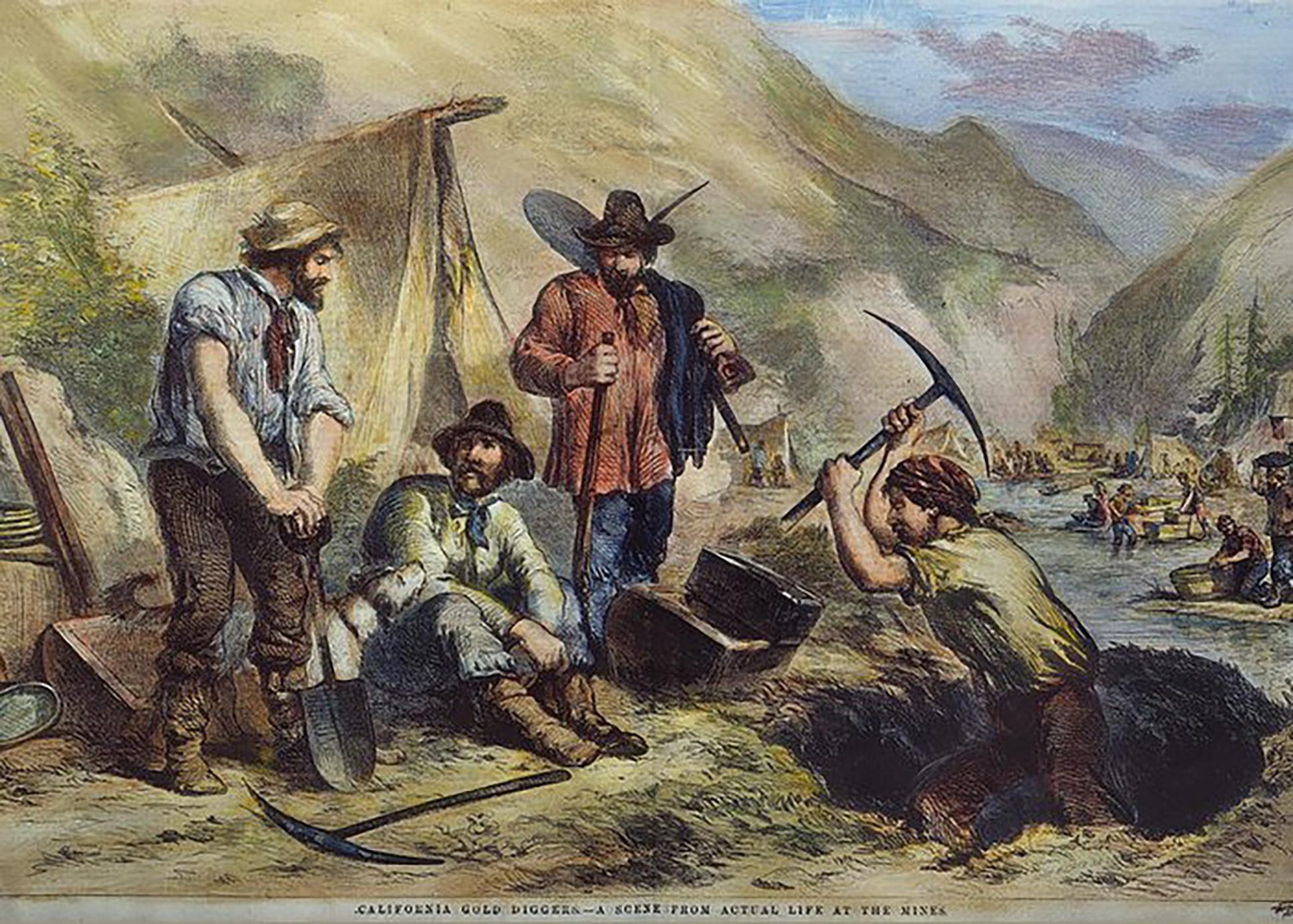
The news of gold in California spread like wildfire, reaching the East Coast and Europe, and soon, adventurers from every corner of the world began their perilous journeys. This massive influx of prospectors, known as “forty-niners” for the peak year of migration in 1849, transformed the landscape of California almost overnight. Travel routes, whether the grueling Overland Trail across the continent or sea voyages around Cape Horn or across the Isthmus of Panama, became legendary odysseys. As these hopefuls arrived, rudimentary settlements quickly evolved into bustling towns and cities, driven by the demands of the mining population.
Emergence of Urban Centers
The established settlement of Sacramento, located at the confluence of the American and Sacramento Rivers, became a crucial supply hub for miners heading into the Sierra Nevada foothills. Its strategic location made it a gateway to the goldfields, and its population exploded. Today, Old Sacramento State Historic Park preserves the original waterfront and many of the buildings that date back to this boom era. Its wooden sidewalks, brick buildings, and horse-drawn carriages evoke the lively atmosphere of a 19th-century frontier city, illustrating how logistics and trade were as vital as mining itself.
Further west, the sleepy port town of San Francisco experienced an even more dramatic transformation. From a population of around 1,000 residents in 1848, it surged to over 25,000 within two years. The bay was soon filled with abandoned ships, their crews having deserted to seek their fortunes in the goldfields. San Francisco became the primary entry point for sea-borne Argonauts and a financial and cultural center for the burgeoning state. While many of its original Gold Rush-era structures were lost to fires and subsequent development, the city’s unique character and rapid growth are a direct legacy of the gold rush, with certain districts and historical markers pointing to its foundational period.
The Rise of Mining Towns

Innumerable mining camps and towns sprang up throughout the Mother Lode, the 120-mile-long gold-bearing region in the western foothills of the Sierra Nevada. These towns, such as Columbia, Sonora, Grass Valley, and Nevada City, were often characterized by their rapid construction, a mix of temporary tents and more permanent structures, and a boisterous, often lawless, atmosphere. Their existence was intrinsically linked to the viability of nearby gold deposits. When the gold ran out, many of these towns were simply abandoned, becoming the ghost towns that are now fascinating landmarks in their own right.
Enduring Landmarks of the Gold Rush Era
The California Gold Rush left behind a rich tapestry of historical sites, each telling a piece of the story. These landmarks serve not only as repositories of history but also as evocative spaces where visitors can walk in the footsteps of the forty-niners and gain a deeper appreciation for the era’s challenges and triumphs.
Preserved Gold Rush Towns
Among the most captivating landmarks are the meticulously preserved Gold Rush towns. Columbia State Historic Park stands out as one of the best examples. Once dubbed the “Gem of the Southern Mines,” Columbia was a bustling town with a peak population of 15,000. Today, it operates as a living history museum, where visitors can experience what life was like in the 1850s. Original brick buildings house shops, restaurants, and saloons, with costumed interpreters portraying historical figures. Everything from the blacksmith’s shop to the stagecoach rides offers an immersive journey back in time, allowing one to envision the vibrant community that gold built.
Another significant landmark is Bodie State Historic Park, located in Mono County on the eastern side of the Sierra Nevada. Bodie represents the stark reality of a ghost town, preserved in a state of “arrested decay.” Unlike Columbia’s lively recreation, Bodie offers a chillingly authentic glimpse into an abandoned boomtown. Over 100 structures remain, filled with original furnishings and goods, appearing as if the inhabitants simply walked away one day. The untouched condition of its buildings, from saloons and a general store to a schoolhouse and a church, provides an unparalleled window into the harsh realities and fleeting prosperity of mining life.
Mining Operations and Infrastructure
Beyond the towns, the physical remnants of the mining operations themselves constitute important landmarks. The Empire Mine State Historic Park in Grass Valley is one of the oldest, largest, and richest gold mines in California, operating continuously from 1850 until 1956. Visitors can explore the mine owner’s estate, tour the elaborate grounds, and witness the entrance to thousands of miles of underground tunnels. The site provides insights into the technological advancements in hard-rock mining and the immense scale of industrial operations that succeeded the initial placer mining. The impressive scale of the operations and the preservation of its structures showcase the evolution of gold extraction and the enduring impact on the landscape.
Other significant sites include numerous stamp mills, hydraulic mining remnants (though often controversial due to environmental damage), and historical dredges found along various rivers. These engineering marvels and their often-scarred landscapes tell a powerful story of human ingenuity, environmental impact, and the relentless pursuit of wealth.
Legacy and Preservation: Protecting California’s Golden Past
The legacy of the California Gold Rush extends far beyond the gold that was extracted. It shaped California’s identity, accelerated its statehood, and fueled its economic and demographic growth, drawing diverse populations from around the globe. Today, the preservation of its landmarks is crucial for understanding this transformative period. Organizations like California State Parks play a vital role in safeguarding these historical treasures, ensuring that future generations can connect with this defining chapter.
From the quiet discovery site at Coloma to the vibrant living history of Columbia and the haunting solitude of Bodie, these landmarks serve as powerful educational tools. They illustrate the human cost and reward of the rush, the challenges of frontier life, and the ingenuity and resilience of those who sought their fortunes. Many of these sites are listed on the National Register of Historic Places, recognizing their profound national significance. They remind us that the allure of gold was not just about riches; it was about dreams, daring, and the forging of a new society. Visiting these sites allows for a tangible connection to the past, offering insights into the indelible mark the California Gold Rush left on the landscape and the collective memory of California and beyond. These landmarks are not just old buildings or dusty artifacts; they are windows into the soul of a pivotal historical epoch, preserving the stories of the thousands who gambled everything for a chance at a golden future.
LifeOutOfTheBox is a participant in the Amazon Services LLC Associates Program, an affiliate advertising program designed to provide a means for sites to earn advertising fees by advertising and linking to Amazon.com. Amazon, the Amazon logo, AmazonSupply, and the AmazonSupply logo are trademarks of Amazon.com, Inc. or its affiliates. As an Amazon Associate we earn affiliate commissions from qualifying purchases.