
Navigating the intricate landscape of employment law can be a daunting task, especially in a state as progressive and employee-centric as California. For both employers and employees, understanding the specific circumstances under which a doctor’s note is required for work is crucial for maintaining compliance, protecting rights, and fostering a healthy workplace environment. While the premise of a doctor’s note might seem straightforward, its application is anything but, intertwined with a complex web of federal and state regulations, employer policies, and individual medical situations.
This guide aims to demystify the requirements surrounding doctor’s notes for work in the Golden State, offering clarity on when they are legally mandated, when an employer might reasonably request one, and the vital rights employees possess. For those who frequently travel for business, are considering a long-term stay, or are simply curious about the nuances of California‘s employment framework, grasping these details is essential for seamless professional life. From short-term absences to extended medical leaves, the rules vary significantly, impacting everything from paid sick leave to job protection.
The Legal Landscape of Doctor’s Notes in California
California stands out with some of the most comprehensive and protective labor laws in the United States. This means that while federal laws like the Family and Medical Leave Act (FMLA) provide a baseline, California often offers additional or broader protections through its own legislation. For employees, this generally translates to more robust rights regarding medical leave and job security; for employers, it means a higher standard of compliance and meticulous record-keeping. The requirement for a doctor’s note is often triggered by specific provisions within these laws, designed to balance an employee’s need for time off due to illness or family medical needs with an employer’s legitimate interest in managing their workforce and ensuring the health and safety of their operations.
It’s important to distinguish between an employer’s general policy regarding absences and specific legal mandates. An employer might have a policy requiring a doctor’s note for any absence exceeding three days, for example. However, the legal weight and implications of such a request are entirely different when tied to state or federal statutes that confer specific rights and protections. Without understanding these underlying laws, both parties risk misinterpreting their obligations and entitlements, potentially leading to disputes, legal challenges, or unintended hardships. The goal is to navigate these requirements with transparency and a clear understanding of the ‘why’ behind the ‘what.’
General Employer Policies vs. Legal Requirements
Many companies, regardless of their location, implement general policies that dictate when an employee must provide a doctor’s note. These policies are typically outlined in employee handbooks and often serve as a tool for attendance management and to prevent abuse of sick leave. For instance, a common policy might state that a doctor’s note is required for absences of three consecutive workdays or more. Some employers might even request a note for shorter absences if they suspect a pattern of abuse or if the employee’s role involves critical public health or safety responsibilities.
However, an employer’s policy cannot override or diminish the rights granted to employees under state and federal law. If a law specifies that a doctor’s note is not required for a particular type of leave or only under certain conditions, then the employer must adhere to the law, even if their internal policy is more stringent. Conversely, if a law mandates the provision of a doctor’s note for a specific type of leave, then the employer has a legal right to request it, and the employee has a legal obligation to provide it (within the scope allowed by privacy laws). The key distinction lies in enforceability and the associated protections. A request based solely on company policy, while perhaps reasonable, carries fewer legal implications than a request tied to a statutory entitlement to leave.
Key California Labor Laws Governing Medical Leave
Several critical laws in California directly impact when a doctor’s note is required for work, providing a framework for medical leave and protecting employees’ jobs and benefits during such periods.
-
Family and Medical Leave Act (FMLA): This federal law applies to employers with 50 or more employees within a 75-mile radius. Eligible employees can take up to 12 workweeks of unpaid, job-protected leave in a 12-month period for specific family and medical reasons, including an employee’s own serious health condition or to care for a family member. Under FMLA, a doctor’s note (often called a “medical certification”) is almost always required to substantiate the serious health condition and confirm the necessity of the leave. This certification outlines the medical facts, the probable duration of the condition, and if the employee can perform their job duties or requires intermittent leave.
-
California Family Rights Act (CFRA): CFRA is California’s state-level equivalent to FMLA, but it often provides broader coverage. It applies to employers with 5 or more employees and grants similar job-protected leave for an employee’s own serious health condition, caring for a family member, or for specific military exigencies. Like FMLA, CFRA typically requires medical certification to verify the need for leave. One significant distinction is that CFRA allows leave to care for a broader definition of “family members” than FMLA, including domestic partners, grandparents, grandchildren, and siblings.
-
Paid Sick Leave (Healthy Workplaces, Healthy Families Act of 2014): California’s Healthy Workplaces, Healthy Families Act mandates that most employees working in California are entitled to paid sick leave. Employees accrue at least one hour of paid sick leave for every 30 hours worked, and can use this leave for their own illness, injury, or medical condition, or to care for a family member. For short absences, generally three days or less, employers cannot require a doctor’s note as a condition for using paid sick leave. If the absence extends beyond three days, an employer may then reasonably request a doctor’s note, but they must also inform the employee of this requirement.
-
Workers’ Compensation: If an employee suffers an injury or illness that is work-related, they are covered by California’s Workers’ Compensation system. In such cases, medical documentation from the treating physician is not just required but central to the entire claims process. This includes initial reports, ongoing progress notes, and return-to-work certifications, all of which are essential for receiving benefits and managing the employee’s recovery and reintegration into the workplace.
-
Pregnancy Disability Leave (PDL): California’s Pregnancy Disability Leave law allows employees disabled by pregnancy, childbirth, or related medical conditions to take up to four months of job-protected leave. Medical certification from a healthcare provider is necessary to establish the period of disability, including the beginning and end dates of the leave, and to justify any need for accommodation.
-
Americans with Disabilities Act (ADA) and Fair Employment and Housing Act (FEHA): While not directly about leave, these laws (federal ADA and California’s FEHA) require employers to provide reasonable accommodations to employees with disabilities, which might include modified work schedules or leave. In these situations, employers can request medical documentation to confirm the disability and the need for accommodation, but the inquiry must be job-related and consistent with business necessity.
When Employers Can Legally Demand a Doctor’s Note
Understanding the specific scenarios where an employer’s request for a doctor’s note is legally justifiable is paramount. This isn’t just about company policy; it’s about adherence to federal and state statutes designed to protect both the employer’s operational needs and the employee’s rights. These instances often arise when an employee’s absence or medical condition has a significant impact on their ability to perform their job, their availability for an extended period, or presents potential safety concerns within the workplace. For travelers often on the go, navigating these requirements becomes even more critical when managing schedules across different time zones or returning to work after a medical incident while abroad.
Extended Absences and Serious Health Conditions
When an employee needs to take an extended absence due to their own serious health condition or to care for a qualifying family member, particularly under FMLA or CFRA, a doctor’s note is almost always required. The purpose of this “medical certification” is to provide the employer with sufficient information to determine if the leave qualifies under the relevant laws. This isn’t a simple note stating “sick”; it usually involves a form completed by a healthcare provider detailing the nature of the condition, the anticipated duration of the leave, and whether the employee is unable to perform their job functions or if the family member requires care.
Employers can request this certification within a reasonable timeframe (typically 15 calendar days) after the leave request. If the initial certification is incomplete or insufficient, the employer must give the employee an opportunity to cure the deficiency. They can also, under specific circumstances, require a second or third opinion (at the employer’s expense) if they have reason to doubt the validity of the initial certification. This framework ensures that employees receive job protection for legitimate medical needs while preventing abuse of these important leave entitlements.
Return-to-Work Certifications
After an employee has been on leave for a serious health condition, especially under FMLA or CFRA, an employer has the right to require a fitness-for-duty certification from the employee’s healthcare provider before allowing them to return to work. This “return-to-work” note ensures that the employee is medically cleared to resume their essential job functions and that their return will not pose a safety risk to themselves or others. The certification typically needs to state that the employee is able to perform the essential functions of their position.
This requirement is particularly relevant in professions where physical demands or specific certifications are necessary (e.g., pilots, construction workers, healthcare professionals). The employer’s policy regarding fitness-for-duty certifications must be uniformly applied and should specify the essential job functions the employee must be able to perform. This helps to prevent discrimination and ensures a smooth, safe transition back into the workplace for employees after a period of recovery.
Workplace Safety Concerns

In situations where an employee’s illness or medical condition could pose a direct threat to the health or safety of themselves or other employees, clients, or the public, an employer may legitimately require a doctor’s note. This is often applicable in roles involving food handling, healthcare, operating heavy machinery, or direct contact with vulnerable populations. For example, if an employee is exhibiting symptoms of a highly contagious illness, an employer might request a doctor’s note clearing them to return to work to prevent an outbreak.
This type of request must be job-related and consistent with business necessity, as dictated by laws like the ADA and FEHA. The employer must have an objective, reasonable belief that the employee’s medical condition poses a significant risk. The request should be narrowly tailored to address the specific safety concern, respecting the employee’s privacy while ensuring a safe working environment for everyone.
Intermittent Leave
Intermittent leave, where an employee takes leave in separate blocks of time for a single qualifying reason (e.g., ongoing medical treatments, flare-ups of a chronic condition), is often permitted under FMLA and CFRA. For intermittent leave, a doctor’s note or medical certification is crucial for documenting the medical necessity and expected frequency or duration of these intermittent absences. The certification helps the employer understand the nature of the condition and how it necessitates intermittent time off, allowing them to manage staffing and operations accordingly. The medical certification for intermittent leave often requires more detail, including the likely schedule of treatments or the probable duration of flare-ups.
Employee Rights and Protections
While employers have legitimate reasons to request doctor’s notes in specific circumstances, employees in California are also afforded significant rights and protections concerning their medical information and employment status during medical leave. These safeguards are designed to ensure privacy, prevent discrimination, and protect employees from unfair treatment or retaliation. For individuals whose lifestyle involves frequent travel, understanding these protections is particularly important, as medical emergencies or conditions can arise anywhere, and the process of obtaining and submitting documentation might require careful coordination.
Privacy Concerns (HIPAA)
The Health Insurance Portability and Accountability Act (HIPAA) is a federal law that establishes national standards to protect sensitive patient health information from being disclosed without the patient’s consent or knowledge. While HIPAA directly applies to healthcare providers, health plans, and healthcare clearinghouses, its principles indirectly influence what an employer can request in a doctor’s note. An employer is generally entitled to know only the information necessary to justify the leave or accommodation, such as confirmation of a serious health condition, the dates of incapacity, and any work restrictions.
Employers are not entitled to a detailed diagnosis, treatment plans, or other sensitive medical history that is not directly relevant to the employee’s ability to perform their job or the need for leave. Employees have the right to request that their doctor limit the information provided in the note to only what is absolutely necessary for the employer to make an informed decision about leave or accommodation. Furthermore, employers are required to keep any medical information they receive confidential and separate from the employee’s general personnel file.
Reasonable Accommodations
Under the ADA and California’s FEHA, employers must provide reasonable accommodations to qualified employees with disabilities, unless doing so would cause an undue hardship. A doctor’s note plays a critical role here, as it serves as the primary documentation to establish the existence of a disability and the need for specific accommodations. The medical documentation should clearly describe the nature of the disability, how it limits major life activities, and suggest potential accommodations that would enable the employee to perform the essential functions of their job.
The process often involves an “interactive process” where the employer and employee communicate to identify effective accommodations. During this process, the employer can request further medical information if the initial documentation is insufficient or unclear regarding the disability or the necessity of the requested accommodation. However, these inquiries must remain within the bounds of being job-related and consistent with business necessity.
Protection Against Retaliation
Employees are legally protected from retaliation for exercising their rights under FMLA, CFRA, ADA, FEHA, or for using their paid sick leave. This means an employer cannot fire, demote, suspend, or otherwise discriminate against an employee simply because they requested or took medical leave, sought an accommodation for a disability, or refused to provide medical information beyond what is legally required.
If an employee believes they have been retaliated against, they have the right to file a complaint with the appropriate state or federal agency (e.g., the California Department of Fair Employment and Housing, or the U.S. Equal Employment Opportunity Commission) or pursue legal action. Employers must be mindful of these protections and ensure their actions are based on legitimate business reasons, not punitive measures for an employee exercising their protected rights.
Navigating Doctor’s Notes: Tips for Employees and Employers
The landscape of doctor’s notes in California is undeniably complex, shaped by a blend of federal and state laws, company policies, and the unique circumstances of each medical situation. Effectively navigating these requirements demands proactive engagement and a clear understanding of roles and responsibilities from both employees and employers. For those managing a lifestyle that includes exploring Los Angeles‘ vibrant culture or the serene beaches of San Diego, or even engaging in business travel to San Francisco, unexpected health issues can arise. Knowing how to handle documentation efficiently can prevent disruptions to both personal and professional plans.
Clear Communication is Key
Open and honest communication is the cornerstone of effectively managing medical leave requests and the submission of doctor’s notes. Employees should inform their employers as soon as practicable about the need for leave, the expected duration, and if a doctor’s note will be provided. Employers, in turn, should clearly communicate their policies regarding doctor’s notes, the specific information required (without requesting excessive or irrelevant medical details), and the timeframe for submission.
Providing employees with the necessary forms for FMLA, CFRA, or accommodation requests, and guiding them through the process, can significantly reduce confusion and ensure timely compliance. Likewise, employees should not hesitate to ask for clarification if any aspect of the employer’s request is unclear. A proactive dialogue can prevent misunderstandings and ensure all parties are aware of their obligations and rights.
Documentation Best Practices
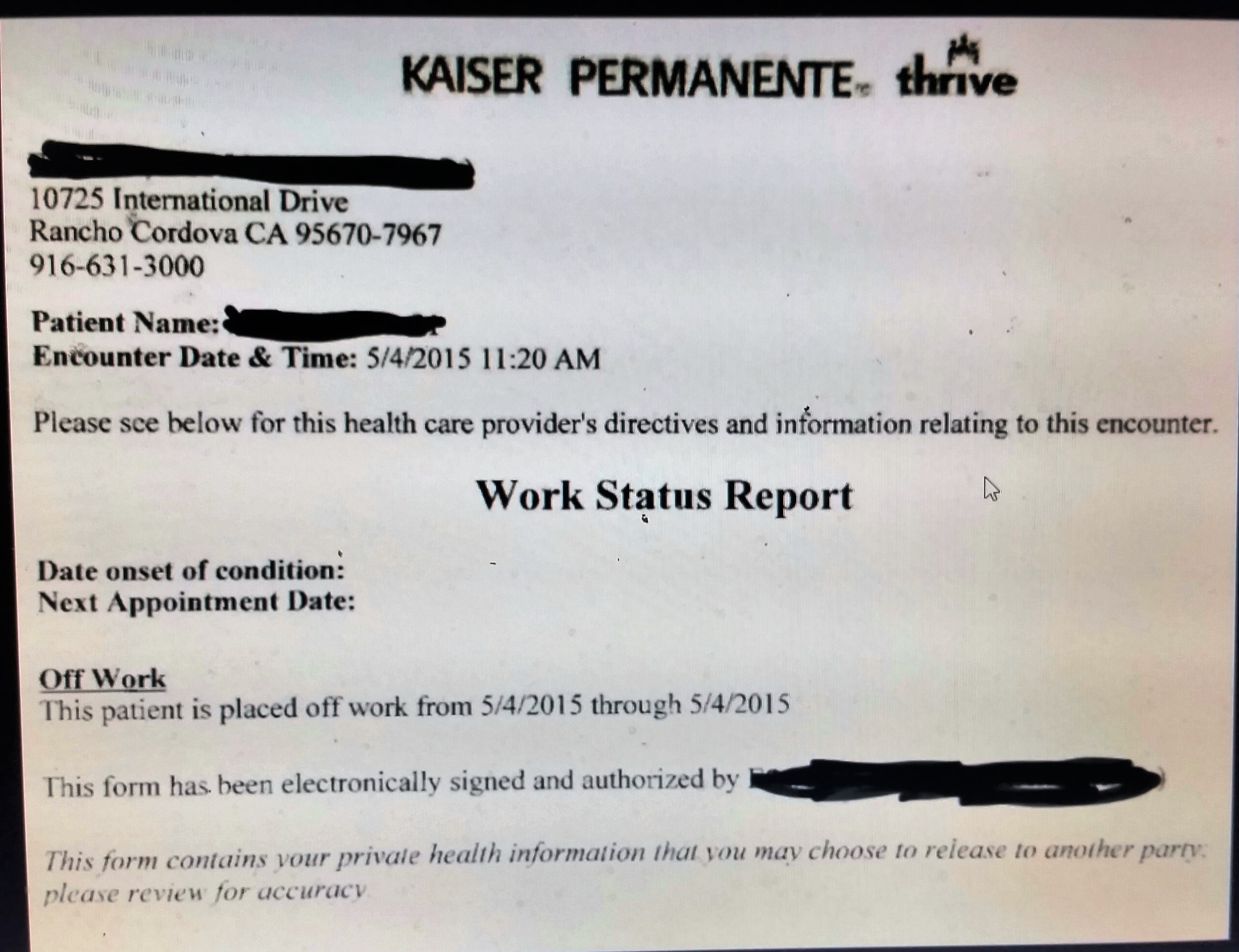
For employees, it is crucial to understand what constitutes a valid doctor’s note. Generally, it should be from a licensed healthcare provider, on official letterhead, and include:
- The date of examination.
- The dates of absence from work (or anticipated duration of leave).
- A statement that the employee was seen by a healthcare provider.
- Confirmation of the employee’s inability to work due to illness, injury, or to care for a family member.
- For FMLA/CFRA, the specific details required by the medical certification form.
- Any necessary work restrictions or accommodations for return to work.
Employers should ensure their requests for documentation are legally compliant and focus only on the information necessary to validate the leave or accommodation. They should avoid requesting overly intrusive or personal medical details. Maintaining strict confidentiality of all medical documentation is also paramount, storing it separately from other personnel records.

Seeking Legal Counsel
Given the complexity of California and federal employment laws, situations regarding doctor’s notes can sometimes escalate into disputes. If an employee feels their rights have been violated (e.g., wrongful denial of leave, retaliation, or excessive demands for medical information), or if an employer is unsure about their obligations or an employee’s request, seeking legal counsel is highly advisable. Employment attorneys specializing in California labor law can provide expert guidance, clarify legal nuances, and represent either party in the event of a dispute. This step can often prevent minor disagreements from turning into costly legal battles.
In conclusion, the requirement for a doctor’s note in California is not a one-size-fits-all rule but a carefully calibrated aspect of employment law. It aims to protect employees’ health and job security while enabling employers to manage their workforce responsibly. By understanding the interplay of federal and state laws, maintaining open communication, and adhering to best practices for documentation, both employees and employers can navigate these requirements effectively, ensuring fair treatment and a productive working environment, whether you’re working locally or managing your career while enjoying the vast experiences life out of the box offers.
LifeOutOfTheBox is a participant in the Amazon Services LLC Associates Program, an affiliate advertising program designed to provide a means for sites to earn advertising fees by advertising and linking to Amazon.com. Amazon, the Amazon logo, AmazonSupply, and the AmazonSupply logo are trademarks of Amazon.com, Inc. or its affiliates. As an Amazon Associate we earn affiliate commissions from qualifying purchases.