
Navigating the complexities of higher education funding is a crucial step for many students and families, particularly in a state as dynamic and populous as California. The Free Application for Federal Student Aid, commonly known as FAFSA, serves as the gateway to federal, state, and institutional financial aid, including grants, loans, and work-study programs. Understanding the deadlines associated with this critical application is paramount to ensuring access to the financial resources necessary for pursuing post-secondary education. This guide aims to demystify the FAFSA timeline specifically for California residents, offering clarity and actionable insights.

The National and State FAFSA Deadlines
The FAFSA application window opens annually on October 1st for the upcoming academic year. This means that for students planning to enroll in the fall, the application becomes available at the beginning of the previous fall. While the federal deadline for submitting the FAFSA is typically in June, states often have their own earlier deadlines to facilitate the allocation of state-specific aid. For California, these state deadlines are of particular importance for maximizing potential financial aid opportunities.
Federal FAFSA Submission Period
The federal government sets a general window for FAFSA submissions. For the 2024-2025 academic year, the FAFSA application opened on December 30, 2023. This delay from the usual October 1st opening was due to significant updates and a redesigned application process. It is crucial for applicants to be aware of these shifts in the opening date, as they can impact planning. The federal deadline for the 2024-2025 academic year is June 30, 2025. However, this is the absolute last day to submit for federal aid, and it is highly recommended to submit much earlier.
California’s State-Specific Aid Deadlines
California is committed to supporting its students in their pursuit of higher education through various state aid programs. To be considered for these programs, such as the Cal Grant, students must meet specific deadlines that are often earlier than the federal ones.
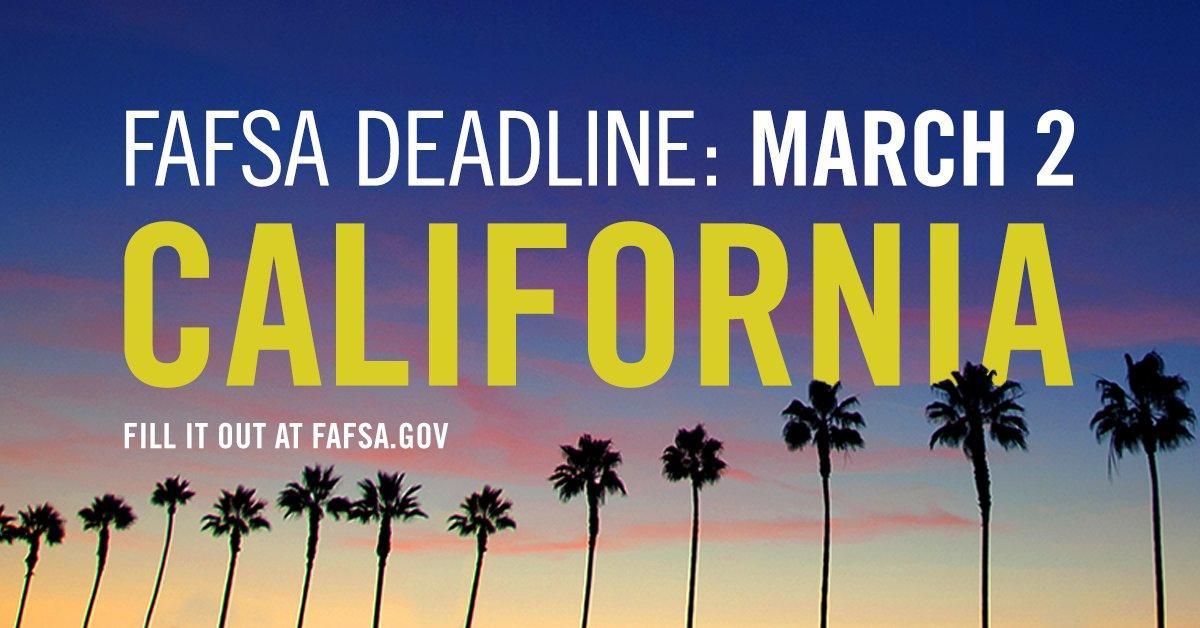
- Cal Grant Program: For the 2024-2025 academic year, the deadline to apply for a Cal Grant was March 2, 2024. This deadline is strict and applies to both the FAFSA and a separate GPA Verification Form if applying for certain Cal Grant programs. Missing this deadline means forfeiting eligibility for these valuable state grants.
- California Chafee Grant: This grant program assists foster youth and former foster youth. The deadline for the California Chafee Grant generally aligns with the Cal Grant deadline, making March 2nd a critical date for many foster youth.
- Other State and Institutional Aid: Many California public and private colleges and universities have their own institutional aid deadlines. These often coincide with the Cal Grant deadline or may have specific dates set by each institution. It is imperative to check the financial aid pages of each college or university an applicant is interested in attending.
It is important to note that these dates are for the upcoming academic year. For example, the deadlines for aid during the Fall 2024 – Spring 2025 academic year have already passed for the Cal Grant. Students planning for the Fall 2025 – Spring 2026 academic year should be preparing their applications to meet the deadlines for that cycle, which will likely be around March 2, 2025, for state aid.
Why Early Submission is Crucial
Submitting the FAFSA as early as possible, especially before the state and institutional deadlines, offers several significant advantages. This proactive approach can lead to a more favorable financial aid package and a less stressful application process.
Maximizing State and Institutional Aid
State aid programs and institutional grants are often awarded on a first-come, first-served basis, or are allocated based on financial need as determined by the FAFSA submission date. By submitting early, applicants increase their chances of receiving a portion of these limited funds before they are depleted. This is particularly relevant for California, where state aid plays a significant role in making higher education accessible.
Avoiding the Rush and Potential Technical Glitches
The FAFSA website, like many government portals, can experience high traffic, especially as deadlines approach. Submitting early helps avoid the frustration of encountering website errors, slow loading times, or system crashes that can occur during peak periods. This reduces the risk of missing a deadline due to technical difficulties.
Time for Corrections and Follow-Up
Mistakes can happen on any application. Submitting early provides ample time to review the application for accuracy, receive and address any errors flagged by the Department of Education, and make necessary corrections. It also allows for timely follow-up with financial aid offices at prospective institutions if any discrepancies or questions arise.
Key Considerations for California Applicants
Beyond the application deadlines, there are specific nuances for students in California that warrant attention.
The California Student Aid Commission (CSAC)
The California Student Aid Commission (CSAC) is the primary administrator of state financial aid programs. Familiarizing oneself with the CSAC website is essential for understanding eligibility criteria, available programs, and the specific requirements beyond the basic FAFSA submission. As mentioned, the GPA Verification Form is a critical component for many Cal Grant awards and must be submitted by the same deadline as the FAFSA if required.
Dreamers and Undocumented Students
For undocumented students in California, including Dreamers, the application process differs. These students should complete the California Dream Act Application (CADAA) instead of the FAFSA. The CADAA is used to apply for state and institutional financial aid, and it has its own set of deadlines, which are typically similar to the state FAFSA deadlines. For the 2024-2025 academic year, the CADAA deadline was also March 2, 2024. It is crucial for eligible students to correctly identify and utilize the appropriate application.
Community College Students
Students planning to attend a California community college are also eligible for federal and state aid. The FAFSA is the primary application for these funds. While community colleges may not always offer the same breadth of institutional aid as four-year universities, federal Pell Grants and state grants can significantly reduce the cost of tuition and living expenses. It is still advisable to meet the state aid deadlines to be considered for programs like the California College Promise Grant (formerly the BOG Fee Waiver), which waives enrollment fees.
Preparing Your FAFSA Application
To ensure a smooth application process and meet deadlines, thorough preparation is key.
Gather Necessary Documentation
Before you begin, collect all required documents. This typically includes:
- Social Security numbers for yourself and your parents (if you are a dependent student).
- Your driver’s license number, if you have one.
- Alien Registration Numbers if you are not a U.S. citizen.
- Federal income tax returns, W-2s, and other records of money earned.
- Records of other untaxed income.
- Bank account balances, business and investment records.
- IRS Data Retrieval Tool (or manual input) for tax information.
Understand Dependency Status
The FAFSA requires you to determine if you are a dependent or independent student. This determination affects the information you need to provide from your parents. Factors like age, marital status, and enrollment status are considered. If you are a dependent student, you will need your parents’ financial information.

Seek Assistance
Navigating financial aid can be complex. Don’t hesitate to seek help from:
- High School Counselors: They are excellent resources for guidance on completing the FAFSA and understanding state aid.
- College Financial Aid Offices: Most colleges offer assistance to prospective and current students applying for aid.
- CSAC Resources: The California Student Aid Commission provides extensive online resources, workshops, and helplines.
- Non-profit Organizations: Many community-based organizations offer free assistance with financial aid applications.
By understanding the specific deadlines for California, prioritizing early submission, and preparing thoroughly, students can significantly enhance their chances of securing the financial support needed to achieve their educational aspirations within the Golden State.
LifeOutOfTheBox is a participant in the Amazon Services LLC Associates Program, an affiliate advertising program designed to provide a means for sites to earn advertising fees by advertising and linking to Amazon.com. Amazon, the Amazon logo, AmazonSupply, and the AmazonSupply logo are trademarks of Amazon.com, Inc. or its affiliates. As an Amazon Associate we earn affiliate commissions from qualifying purchases.