
San Francisco, a city synonymous with innovation, iconic landmarks, and a vibrant lifestyle, draws millions of visitors each year seeking its unique blend of history and modernity. From its cable cars rattling up steep hills to the majestic Golden Gate Bridge, the city by the bay offers an unparalleled travel experience. Yet, beneath its contemporary allure lies a rich and complex history, a tale of exploration, settlement, and explosive growth that transformed a remote outpost into a global metropolis. Understanding when San Francisco was founded is not merely about marking a date on a calendar; it’s about tracing the footsteps of its earliest inhabitants and settlers, comprehending the geopolitical forces that shaped its destiny, and appreciating the serendipitous events that catapulted it onto the world stage. This journey back in time reveals how a strategic bay, a spiritual mission, and the glimmer of gold combined to lay the foundation for one of America’s most beloved cities, a story that continues to resonate through its tourism, accommodation, and cultural fabric today.
The Dawn of a New World: Early Explorations and Claims
Before its official founding, the land that would become San Francisco was far from empty. For thousands of years, indigenous peoples thrived along the California coast, their sophisticated cultures harmonizing with the rich natural resources of the region.
Indigenous Roots and First European Sightings
The Ohlone people, comprising various tribal groups, were the original custodians of the land around San Francisco Bay. They lived in harmony with the environment, utilizing its abundant marine life, game, and plant resources. Their intricate understanding of the land and its cycles allowed for a sustainable lifestyle long before European contact.
The first European encounters with the California coast date back to the 16th century. In 1542, Portuguese explorer Juan Rodriguez Cabrillo, sailing under the Spanish flag, was the first European to navigate the coast of what is now California, though he did not sight the bay itself. Decades later, in 1579, English privateer Sir Francis Drake landed further north, claiming the area for England and calling it Nova Albion. He, too, missed the entrance to the vast bay. Another Spanish explorer, Sebastian Vizcaíno, charted the California coast in 1602, contributing significantly to geographical knowledge but still failing to detect the bay’s narrow entrance. For centuries, this natural wonder remained largely hidden from European eyes, shrouded in the persistent coastal fog and guarded by its deceptive gateway.
Spain, having established a strong presence in Mexico and the American Southwest, viewed California as a crucial northern frontier, primarily to protect its existing colonies from potential incursions by other European powers like Russia and England. However, the sheer remoteness and rugged terrain of Alta California made settlement a formidable challenge.
The Elusive Golden Gate
The entrance to San Francisco Bay, today famously known as the Golden Gate, proved remarkably difficult for early European navigators to find. The frequent fog, the relatively narrow and unassuming strait, and the prevailing currents all contributed to its concealment. Ships sailing along the coast could easily pass by without realizing the immense inland sea that lay beyond.
It wasn’t by sea, but by land, that the bay was finally discovered by Europeans. In 1769, the Spanish Crown launched the Portolà expedition, led by Governor Gaspar de Portolà, with the primary goal of reaching Monterey Bay and establishing a mission and presidio there. After overshooting their target due to miscalculations, a scouting party from Portolà’s overland expedition, led by Sergeant José Francisco Ortega, stumbled upon the massive inland bay on November 4, 1769. From a vantage point high above what is now San Bruno Mountain, they gazed upon the shimmering expanse of water, a discovery that would forever change the course of California’s history. This monumental discovery ignited Spain’s interest in establishing a permanent presence in what was clearly one of the world’s greatest natural harbors, setting the stage for the city’s eventual founding.
Establishing Spanish Presence: Mission and Presidio
Following the discovery of San Francisco Bay, Spanish authorities recognized its immense strategic value. The bay offered an unrivaled natural harbor, perfectly positioned to serve as a vital defensive outpost and a hub for future colonization efforts in Alta California. The Spanish strategy for colonization revolved around two key institutions: the presidio (military fort) to assert control and protect Spanish interests, and the mission (religious outpost) to convert indigenous populations and integrate them into the colonial system.
The Vision of Junípero Serra and José de Gálvez
The driving force behind the systematic colonization of Alta California was a collaboration between ecclesiastical and political powers. Father Junípero Serra, a Franciscan missionary, was instrumental in establishing the chain of missions that would stretch along the California coast. His unwavering zeal for converting the indigenous peoples and expanding the Catholic faith was a primary motivator. Working in tandem with Serra was José de Gálvez, the Spanish Inspector General, who was tasked with reorganizing Spain’s colonial administration and securing its northern territories. Gálvez provided the strategic vision and logistical support, recognizing that a strong Spanish presence in Alta California was essential for defending the empire against perceived threats from Russia and Britain.
Their ambitious plan called for the establishment of a presidio and a mission at San Francisco Bay. This dual approach aimed to civilize and Christianize the native inhabitants while simultaneously providing military protection and a supply network for future settlements. The expeditions organized by Serra and Gálvez were grueling, involving overland treks and sea voyages, but they laid the groundwork for the enduring Spanish legacy in California.
Founding the Presidio and Mission San Francisco de Asís
The actual founding of San Francisco took place in 1776, a year of profound historical significance across the globe. Under the command of Lieutenant José Joaquín Moraga, a group of soldiers, settlers, and their families embarked on an overland journey from Monterey to establish the northernmost outpost of the Spanish empire.
On June 29, 1776, Moraga’s party formally established the Presidio of San Francisco on the northern tip of the peninsula overlooking the Golden Gate. This strategic location was chosen for its commanding views of the bay entrance, providing a defensive stronghold against any potential intruders. The presidio served as the military, governmental, and administrative center for the region, housing soldiers, their families, and other Spanish colonial administrators. Today, the Presidio of San Francisco is a magnificent national park, offering visitors a glimpse into its military past while providing extensive recreational opportunities and some of the best accommodation options in former military buildings, blending history with modern lifestyle amenities.
A few months later, on October 9, 1776, the religious component of the settlement was founded a few miles inland: the Mission San Francisco de Asís, more commonly known as Mission Dolores. Founded by Father Francisco Palóu (in Serra’s absence), it was the sixth of the 21 California missions. The mission’s primary purpose was to evangelize the local Ohlone people, converting them to Christianity and teaching them Spanish agricultural methods and crafts. Mission Dolores stands today as the oldest surviving building in San Francisco, a solemn landmark offering a poignant window into the complex and often tragic early interactions between Spanish colonizers and indigenous populations. Its beautiful cemetery and preserved chapel are significant draws for tourism, reflecting the layers of history embedded in the city.
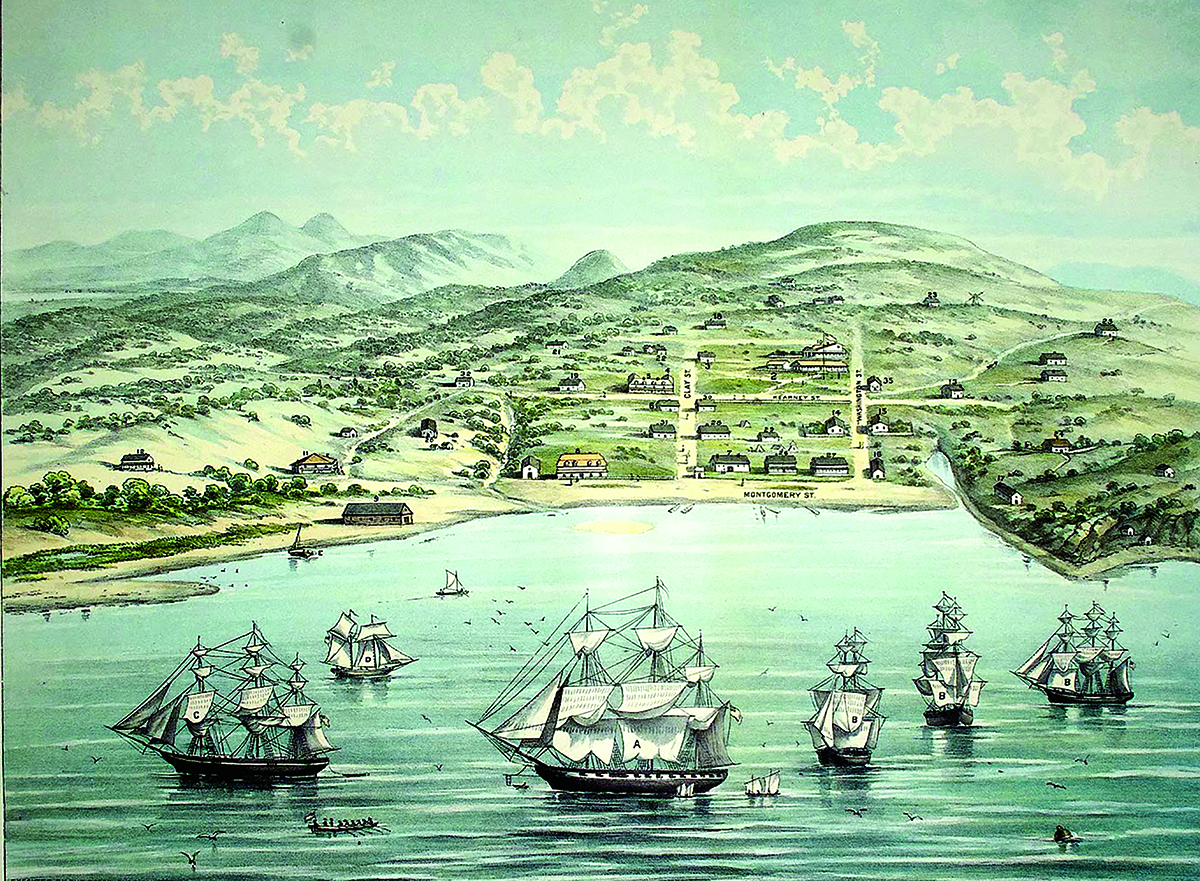
In the ensuing years, a small civilian settlement began to grow around a cove near the mission and presidio. This hamlet, known as Yerba Buena (Spanish for “good herb,” referring to a local mint-like plant), would eventually become the commercial heart of the future city. Initially, it was little more than a collection of scattered dwellings, but its sheltered location offered potential for future trade and maritime activities.
Mexican Rule and the American Arrival
The early decades of San Francisco’s existence under Spanish rule were marked by slow growth and relative isolation. However, geopolitical shifts across the North American continent would soon dramatically alter its trajectory, bringing it first under Mexican sovereignty and then, decisively, into the American fold.
From Spanish Colony to Mexican Territory
The winds of change began to blow strongly with the Mexican War of Independence, which raged from 1810 to 1821. After more than a decade of conflict, Mexico achieved its independence from Spain, and Alta California, including the fledgling settlement of Yerba Buena, became part of the new Mexican republic.
Under Mexican rule, the status of the missions underwent a significant transformation. In 1833, the Mexican government enacted a series of secularization laws, gradually transferring mission lands from ecclesiastical control to private ownership. This process had a profound impact on the indigenous populations who had been forced to live and work at the missions, often leaving them dispossessed and vulnerable. For the nascent settlement of Yerba Buena, secularization opened up new opportunities for economic development, particularly in ranching and hide and tallow trade, as former mission lands were parceled out.
During this period, Yerba Buena slowly grew as a port and trading post. American and European whalers and traders began to frequent the bay, recognizing its strategic potential for commerce. The village remained modest, primarily serving as a supply point for ships and a modest administrative center, but its burgeoning international contacts hinted at its future as a global port. Early merchants and traders began to establish rudimentary businesses, laying the groundwork for the city’s commercial future, though still far from the bustling hotels and vibrant tourism of later eras.
The American Flag Over Yerba Buena
The mid-19th century witnessed increasing American interest in California, driven by the concept of Manifest Destiny and the desire for westward expansion. Tensions between the United States and Mexico escalated, ultimately leading to the Mexican-American War (1846-1848).
In July 1846, as part of the broader American military campaign in California, Captain John B. Montgomery of the USS Portsmouth sailed into San Francisco Bay. On July 9, 1846, he formally claimed Yerba Buena for the United States, raising the American flag in the plaza that now bears his ship’s name, Portsmouth Square. This act effectively ended Mexican rule in the area and marked the beginning of San Francisco’s American chapter.
The most symbolic change occurred shortly thereafter. In 1847, Washington Bartlett, the first American alcalde (mayor) of Yerba Buena, officially changed the name of the settlement to San Francisco. This renaming was a deliberate act to honor the bay and the mission, but also to assert American control and perhaps even to associate the emerging town with the grand potential of the entire bay area, distinguishing it from the smaller, less strategic settlements. With its new name and new national allegiance, San Francisco stood on the precipice of an unimaginable boom. The quiet port town was about to be transformed by an event that would reshape not only its future but the course of American history.
The Gold Rush: San Francisco’s Explosive Growth
If the discovery of the bay and the establishment of the mission and presidio laid the foundational stones of San Francisco, it was the discovery of gold that ignited an unprecedented explosion of growth, turning a sleepy port into a bustling, chaotic, and utterly magnetic urban center. This single event, more than any other, defined San Francisco’s early identity and set its trajectory as a city of opportunity and rapid change.
A Spark Ignites a Boom
The pivotal moment arrived on January 24, 1848, when James W. Marshall discovered gold flakes at Sutter’s Mill near Coloma, in the Sierra Nevada foothills. Initially, news of the discovery spread slowly, but by the end of 1848, verified reports began to filter out, reaching the East Coast of the United States and then the rest of the world. What followed was one of the largest mass migrations in human history: the California Gold Rush.
Thousands upon thousands of “forty-niners” from every corner of the globe — Europe, Asia, South America, and the eastern United States — embarked on arduous journeys by land and sea, all driven by the dream of striking it rich. San Francisco, with its superb natural harbor, became the primary gateway for these fortune seekers. The city’s population, which was a mere few hundred at the beginning of 1848, swelled to over 25,000 by 1850.
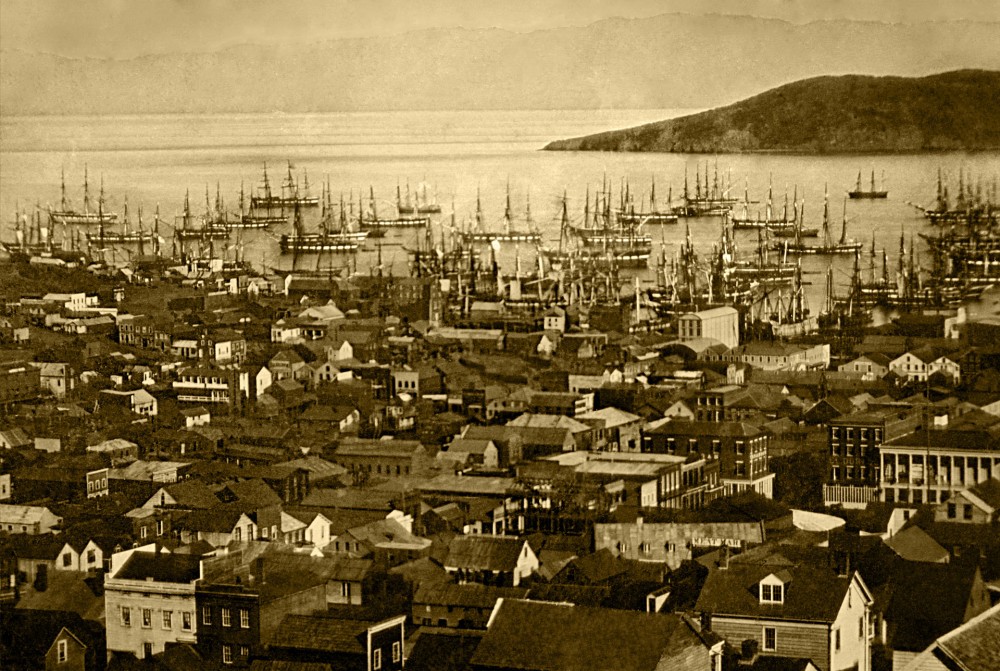
This demographic explosion brought an economic frenzy. The demand for goods and services skyrocketed. Ships laden with eager prospectors and supplies jammed San Francisco Bay, often abandoned by their crews who rushed to the goldfields themselves, leaving a forest of masts in the harbor. The quiet village was transformed almost overnight into a teeming, makeshift city of tents, shanties, and hastily constructed wooden buildings. The infrastructure struggled to keep pace with the influx, leading to exorbitant prices for everything from food and water to shelter.

A City Forged in Fire and Fortune
The Gold Rush era was a period of both incredible opportunity and immense challenge for San Francisco. The rapid growth necessitated the quick development of facilities. While luxury hotels as we know them today were still a distant concept, rudimentary accommodation sprang up, ranging from canvas tents to basic rooming houses. Entrepreneurs flocked to the city, not just to mine gold, but to provide services to the miners and new residents. Shops, saloons, gambling houses, and brothels proliferated, creating a boisterous and often lawless atmosphere.
The city became a vibrant, chaotic melting pot of cultures. People speaking dozens of languages mingled in its muddy streets, creating a unique cosmopolitan character that still defines San Francisco today. This era laid the groundwork for future tourism, albeit in a very raw and opportunistic form. The allure of the West, the promise of fortune, and the wild, free-spirited lifestyle became enduring myths born from this period.
However, rapid growth also brought significant problems. Fire was a constant threat in a city built largely of wood, and San Francisco was ravaged by several devastating fires in its early years. Law enforcement struggled to maintain order amidst the transient population and widespread gambling and vice. Despite these challenges, the spirit of innovation and resilience prevailed. The city quickly rebuilt after each fire, its residents demonstrating an indefatigable optimism and determination. Wharves were extended, streets were laid, and a semblance of order began to emerge from the chaos. This period of intense development and adaptation firmly established San Francisco as the dominant urban center in California, a position it would leverage to become a major player in national and international commerce.
The foundational story of San Francisco is a compelling narrative of discovery, geopolitical strategy, and the unpredictable forces of nature and human ambition. From the ancient lands of the Ohlone people to the strategic vision of Spanish missionaries and soldiers, and finally to the explosive, transformative power of the Gold Rush, each chapter built upon the last, shaping the city we know today. What began as a remote Spanish presidio and mission in 1776, established to secure a vital bay, evolved through Mexican independence and American annexation into a quiet trading post. It was the electrifying discovery of gold in 1848 that truly unleashed its potential, turning it into a global magnet for opportunity and adventure.
Today, visitors exploring San Francisco can still trace these historical layers. The enduring structures of Mission Dolores and the historic grounds of the Presidio of San Francisco stand as tangible landmarks of its Spanish origins. The vibrant neighborhoods and diverse culinary scene reflect the waves of immigrants drawn by the promise of the Gold Rush. Its modern hotels and sophisticated accommodation options cater to a thriving tourism industry that celebrates this rich past while embracing a forward-looking lifestyle. The story of San Francisco’s founding is not just a historical account; it’s a testament to resilience, innovation, and the enduring human spirit that continues to define this extraordinary city by the bay.
LifeOutOfTheBox is a participant in the Amazon Services LLC Associates Program, an affiliate advertising program designed to provide a means for sites to earn advertising fees by advertising and linking to Amazon.com. Amazon, the Amazon logo, AmazonSupply, and the AmazonSupply logo are trademarks of Amazon.com, Inc. or its affiliates. As an Amazon Associate we earn affiliate commissions from qualifying purchases.