
Understanding the Kansas Growing Climate
Growing potatoes successfully in the Sunflower State requires an intimate knowledge of local weather patterns, soil conditions, and regional microclimates. Sprouting tubers are remarkably resilient, but they have distinct preferences when it comes to temperature and moisture. To master the art of potato cultivation in this region, gardeners must first understand the diverse geographical zones spanning from the humid eastern borders to the arid high plains of the west.
Frost Dates and Soil Temperature
The single most important factor in determining the right moment to put seed potatoes into the ground is soil temperature, rather than air temperature alone. Potatoes thrive when the earth begins to warm up after the harsh winter months.

- Ideal Soil Temperature: The soil should consistently reach 45°F to 50°F at a depth of four inches before planting.
- The Danger of Premature Planting: Putting seed pieces into cold, wet dirt often results in rotting before the roots have a chance to establish. Conversely, planting too late exposes the developing tubers to the scorching heat of mid-summer, which stunts their growth.
Regional Variations Across the State
Because Kansas spans several USDA hardiness zones—ranging from Zone 5b in the northwest to Zone 7a in the south-central and southeast regions—the planting calendar varies significantly depending on your exact location.
Gardeners residing near Wichita or Topeka will experience an earlier spring thaw compared to those cultivating plots in higher-elevation areas near Goodland. As a general rule of thumb, growers in the southern tier can begin preparing their beds by late February to mid-March, while those in the northern and western counties should wait until late March or even early April.
The Ideal Spring Planting Window
Timing is everything in agriculture and home gardening alike. Planting potatoes too early invites frost damage to the tender green shoots that emerge above the soil line, while late planting forces the tubers to mature during the stress of peak summer temperatures.
Early Spring Schedule
For the vast majority of Kansas growers, early spring is the premier window for main-crop potatoes.
- Late February to Mid-March: Suitable for southern and eastern regions where winter loosens its grip sooner.
- Late March to Early April: The standard timeframe for central and northern locations.
Aiming for St. Patrick’s Day is a long-standing traditional guideline for many growers in the Midwest, though modern horticulturists emphasize checking actual soil thermometer readings over relying strictly on calendar dates.
Fall Harvest Considerations
While spring is the dominant season for potato production, some regions with milder autumns can also attempt a secondary late-summer planting.
- Second Crop Window: Planting in July allows for a second harvest just before the first hard autumn freeze.
- Maturity Length: Most potato varieties require roughly 90 to 120 days from planting to harvest, meaning fall crops must be timed carefully to avoid premature destruction by freezing temperatures.
Preparing Seed Potatoes and Soil
Success depends just as much on preparation as it does on timing. Selecting the right tubers and conditioning the earth will dramatically improve your eventual yield.
Selecting and Chitting Seed Potatoes
Always start with certified disease-free seed potatoes rather than grocery store spuds, which may be treated with sprout inhibitors or carry latent pathogens.
- Cutting Seed Pieces: Cut larger tubers into chunks roughly the size of a golf ball, ensuring each piece contains at least one or two healthy “eyes” (buds).
- Healing (Suberization): Allow the cut pieces to sit at room temperature for two to three days in a well-ventilated area. This forms a protective callus that prevents rotting in damp soil.
- Chitting: Some gardeners practice “chitting”—pre-sprouting tubers in a cool, bright indoor space for a few weeks before planting to give them a head start.
Soil Preparation and Amendment
Potatoes demand loose, well-draining soil to expand properly. Heavy clay, which is prevalent in many parts of Kansas, can restrict tuber growth and lead to misshapen or stunted harvests.
- Tilling and Aeration: Work organic matter such as compost, aged manure, or peat moss deep into the bed to loosen compacted earth.
- pH Levels: Potatoes prefer a slightly acidic soil environment, ideally between 5.8 and 6.5. This acidity also helps deter common soil-borne diseases like scab.
- Drainage: Avoid low-lying areas of the garden where water pools after spring rainstorms, as standing water is fatal to developing roots.
Planting Techniques and Ongoing Care
Once the soil is prepped and the window of opportunity opens, proper planting depth and subsequent maintenance will ensure a robust harvest.
Step-by-Step Planting Methods
There are several methods for getting seed potatoes into the ground, including traditional trenching, hill planting, and growing in containers or straw mulch.
- Digging Trenches: Dig trenches about 4 to 6 inches deep, spaced roughly 24 to 36 inches apart.
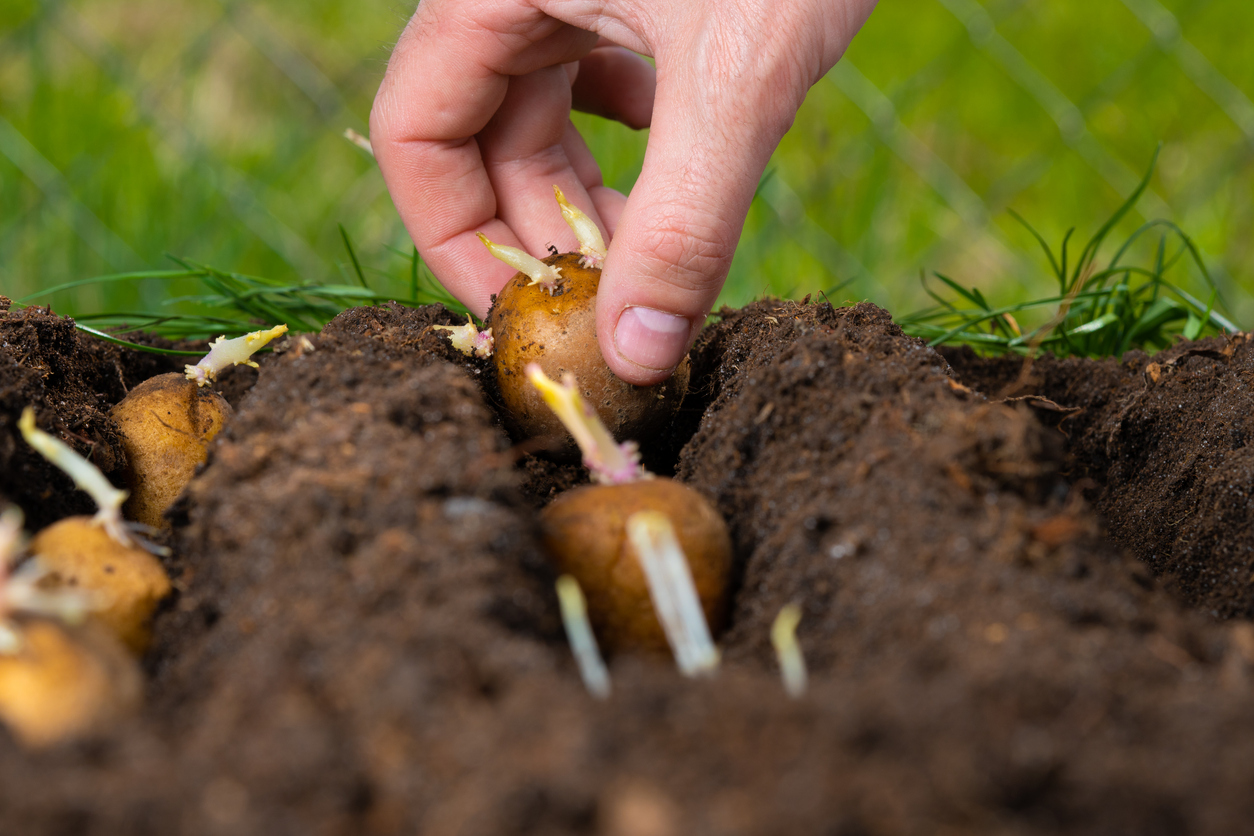
- Placement: Place the seed pieces with the eyes facing upward, spacing them about 12 inches apart within the trench.
- Initial Coverage: Cover the pieces with only 2 to 3 inches of soil initially. As the green shoots grow upward, continue to pull surrounding earth up around the stems—a process known as “hilling.”

Managing Weeds, Water, and Pests
Maintaining a healthy patch requires vigilance throughout the spring and early summer growing season.
- Moisture Control: Potatoes need consistent moisture—about one inch of water per week either from rain or irrigation. Uneven watering can result in cracked or hollow-hearted tubers.
- Hilling for Yield: Continue hilling soil or mulch around the base of the plants as they grow. This keeps developing tubers covered from sunlight, which prevents them from turning green and producing toxic solanine.
- Pest Monitoring: Keep an eye out for the Colorado potato beetle, flea beetles, and wireworms. Companion planting with marigolds or using floating row covers can help mitigate pest pressures naturally.
By matching your planting schedule to local weather patterns, preparing your beds thoroughly, and maintaining attentive care throughout the season, you will enjoy a bountiful harvest of fresh, delicious potatoes right from your own backyard.
LifeOutOfTheBox is a participant in the Amazon Services LLC Associates Program, an affiliate advertising program designed to provide a means for sites to earn advertising fees by advertising and linking to Amazon.com. Amazon, the Amazon logo, AmazonSupply, and the AmazonSupply logo are trademarks of Amazon.com, Inc. or its affiliates. As an Amazon Associate we earn affiliate commissions from qualifying purchases.