
Navigating the regulatory landscape of establishing a business presence in a foreign jurisdiction can be a complex undertaking. For entities looking to operate within the vibrant economic ecosystem of California, understanding the legal requirements for foreign business registration is paramount. This guide delves into the critical factors and timelines that dictate when a foreign business must formally register with the state of California, ensuring compliance and facilitating smooth operations within this key global market.
Understanding Foreign Business Registration in California
In the context of California, a “foreign business” refers to any business entity that is organized or incorporated under the laws of a state other than California or a foreign country. This definition encompasses a wide range of entity types, including corporations, limited liability companies (LLCs), limited partnerships, and general partnerships. The requirement to register is not merely a bureaucratic formality; it is a legal imperative designed to ensure that these entities are subject to California’s laws and regulations, and that there is a clear point of contact for legal and tax purposes.
What Constitutes “Transacting Business” in California?
The trigger for mandatory registration is the act of “transacting business” within California. This phrase is deliberately broad and can encompass a variety of activities. It’s crucial to understand that physical presence is not always a prerequisite.
Key Indicators of Transacting Business:
- Physical Presence: Owning or leasing real property in California, maintaining an office, warehouse, or retail space, or having employees who regularly work within the state.
- Contracts and Agreements: Entering into contracts that are to be performed in California, such as sales agreements, service contracts, or construction projects.
- Sales and Marketing: Regularly soliciting sales or conducting marketing activities within California, even if sales are finalized outside the state. This can include advertising through local media or employing sales representatives who operate in California.
- Providing Services: Offering and delivering services to clients or customers located in California. This is particularly relevant for professional services, consulting, and technology companies.
- Financial Transactions: Engaging in financial transactions with California residents or businesses that go beyond isolated or occasional dealings.
It is important to note that certain activities are generally not considered transacting business. These often include maintaining an action or defense in California courts, holding meetings of directors or shareholders, maintaining bank accounts, or creating or acquiring indebtedness. However, these exclusions are not absolute and can depend on the specific circumstances. Consulting with legal counsel is highly recommended to assess whether a particular activity constitutes transacting business.
The Consequences of Non-Compliance
Failing to register when required can lead to significant penalties and limitations. The most critical consequence is the inability to initiate or defend lawsuits in California courts. This can be detrimental to a business that needs to enforce contracts, protect its intellectual property, or defend itself against legal claims. Furthermore, non-compliant businesses may be subject to substantial fines, back taxes, and interest. The California Franchise Tax Board (FTB) and the Secretary of State are the primary agencies responsible for enforcing these regulations.
When to Register: Key Timelines and Triggers
The precise moment a foreign business must register in California is not always a fixed date but rather tied to the commencement of activities that constitute transacting business. The general rule is that registration should occur before or as soon as a foreign business begins transacting business in the state.
Proactive Registration: The Safest Approach
The most prudent approach for any foreign business intending to operate in California is to register proactively. This means initiating the registration process once the decision to engage in significant business activities within the state has been made, even if those activities have not yet fully commenced. This proactive stance ensures that the business is legally compliant from its first day of operation in California, avoiding potential pitfalls and demonstrating good faith.
Reactive Registration: Understanding the Threshold
If a foreign business has inadvertently begun transacting business without registering, it should rectify the situation as quickly as possible. The law generally expects registration to occur within a reasonable time after commencing business activities. However, relying on a “reasonable time” can be subjective and risky. The moment a business realizes it is transacting business in California, it should begin the registration process immediately. Delaying registration after recognizing the obligation can amplify penalties and legal complications.
Specific Entity Types and Registration Deadlines
The registration process and associated forms differ depending on the legal structure of the foreign business.
Corporations:
Foreign corporations typically register by filing a Certificate of Qualification with the California Secretary of State. This filing requires information about the corporation’s name, principal office, agent for service of process in California, and other corporate details. The qualification should be completed before or upon commencing business in California.
Limited Liability Companies (LLCs):
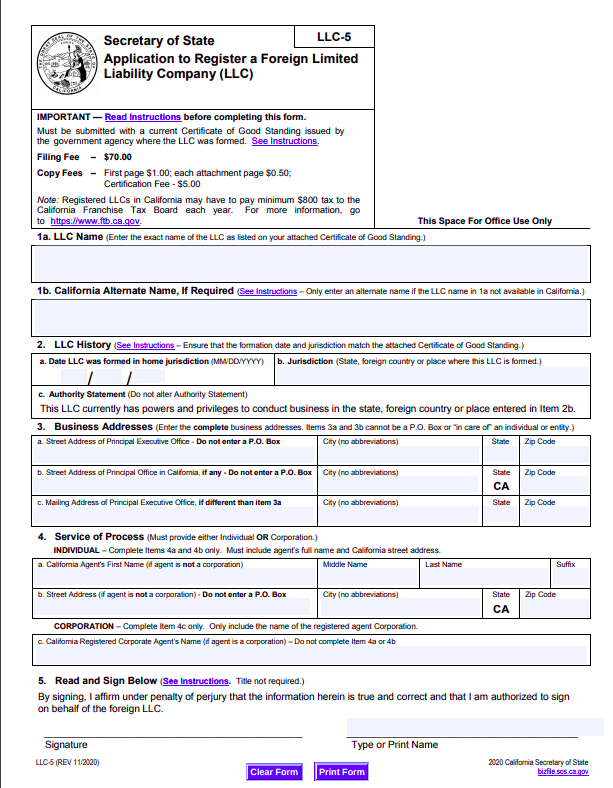
Foreign LLCs register by filing a Certificate of Registration with the California Secretary of State. Similar to corporations, this involves providing details about the LLC’s name, jurisdiction of formation, and its designated agent for service of process in California. Registration is required upon engaging in business in the state.
Partnerships:

Foreign general partnerships and limited partnerships also have registration requirements, typically involving filings with the California Secretary of State. The specifics vary by partnership type.
The Registration Process: What to Expect
The registration process for a foreign business in California involves several key steps, regardless of the entity type.
Step 1: Appoint a Registered Agent
One of the most critical requirements is to appoint and maintain a registered agent for service of process in California. This agent is a person or company designated to receive official legal documents and notices on behalf of the foreign business. The agent must have a physical street address within California. Many businesses opt to use a professional registered agent service to ensure compliance and provide a reliable point of contact.
Step 2: Obtain an EIN (If Applicable)
If the foreign business plans to hire employees in California or engage in certain financial transactions, it will likely need an Employer Identification Number (EIN) from the Internal Revenue Service (IRS). This is a federal requirement and a prerequisite for many state-level registrations and tax filings.
Step 3: File Registration Documents with the Secretary of State
The core of the registration process involves filing the appropriate document with the California Secretary of State. This typically includes:
- Certificate of Qualification (Corporations)
- Certificate of Registration (LLCs)
- Statements of Partnership Authority (Partnerships)
These documents require detailed information about the foreign entity, its operations, and its designated agent. The filing fees vary depending on the entity type and the complexity of the filing.
Step 4: Obtain a Seller’s Permit (If Applicable)
If the foreign business will be selling tangible personal property in California, it must obtain a seller’s permit from the California Department of Tax and Fee Administration (CDTFA). This permit allows the business to collect and remit sales tax.
Step 5: Register with the Franchise Tax Board (FTB)
In addition to registering with the Secretary of State, foreign entities transacting business in California are generally subject to state income or franchise tax. This requires registering with the California Franchise Tax Board (FTB). Even if a business has no net income in California, it may still be subject to a minimum annual franchise tax.
Ongoing Compliance and Considerations
Registering is just the first step. Foreign businesses operating in California must maintain ongoing compliance with state laws and regulations.
Annual Filings and Reports
- Statement of Information: Foreign corporations and LLCs are required to file a Statement of Information annually (or biennially for LLCs) with the Secretary of State. This report updates basic information about the entity, including its principal business address, agent for service of process, and names of officers or managers.
- Tax Filings: Businesses must comply with all California tax filing requirements, including income tax, franchise tax, sales tax, and employment taxes.
Business Licenses and Permits
Depending on the industry and the specific activities undertaken, foreign businesses may need to obtain additional local or state business licenses and permits. These can include permits for specific professions, environmental permits, or local city business licenses.
Staying Informed
The regulatory landscape is subject to change. Foreign businesses operating in California should stay informed about any updates to state laws and regulations that may affect their operations. This might involve subscribing to updates from relevant state agencies or engaging legal and tax professionals for regular guidance.

When to Seek Professional Guidance
The intricacies of foreign business registration in California can be daunting. Consulting with experienced legal counsel specializing in business law and taxation is highly recommended. Professionals can provide tailored advice, ensure accurate filings, and help businesses navigate complex compliance issues, thereby safeguarding their operations and reputation within the dynamic California market. This proactive approach is crucial for any business aiming for sustained success and legal security.
LifeOutOfTheBox is a participant in the Amazon Services LLC Associates Program, an affiliate advertising program designed to provide a means for sites to earn advertising fees by advertising and linking to Amazon.com. Amazon, the Amazon logo, AmazonSupply, and the AmazonSupply logo are trademarks of Amazon.com, Inc. or its affiliates. As an Amazon Associate we earn affiliate commissions from qualifying purchases.