
The story of Caesars Palace is not merely a chronicle of bricks and mortar; it is the definitive narrative of the evolution of Las Vegas. As a landmark that redefined the concept of luxury and thematic entertainment, understanding when and how this iconic establishment came to be provides a window into the golden age of the American desert resort.
The Conception of an Imperial Vision
Long before the modern glass towers that define the contemporary Las Vegas Strip, the vision for a Roman-themed playground was born in the mind of Jay Sarno. A colorful entrepreneur with a penchant for high-stakes gambling and grand ideas, Sarno sought to move away from the traditional, stark hotel designs of the late 1950s.

The Construction Timeline
The construction of Caesars Palace began in 1962. It was a project defined by ambition, financed in part by the Teamsters Union pension fund, which at the time was a primary source of capital for large-scale development in Nevada. After four years of intensive labor, the resort officially opened its doors to the public on August 5, 1966.
At the time of its grand opening, the resort consisted of a single 14-story tower featuring 680 rooms. While humble compared to its current footprint, the debut was a cultural phenomenon. It promised to treat every guest like an emperor, setting a standard for service and opulence that competitors in the United States struggled to match for decades.
Architectural Significance and the Roman Theme
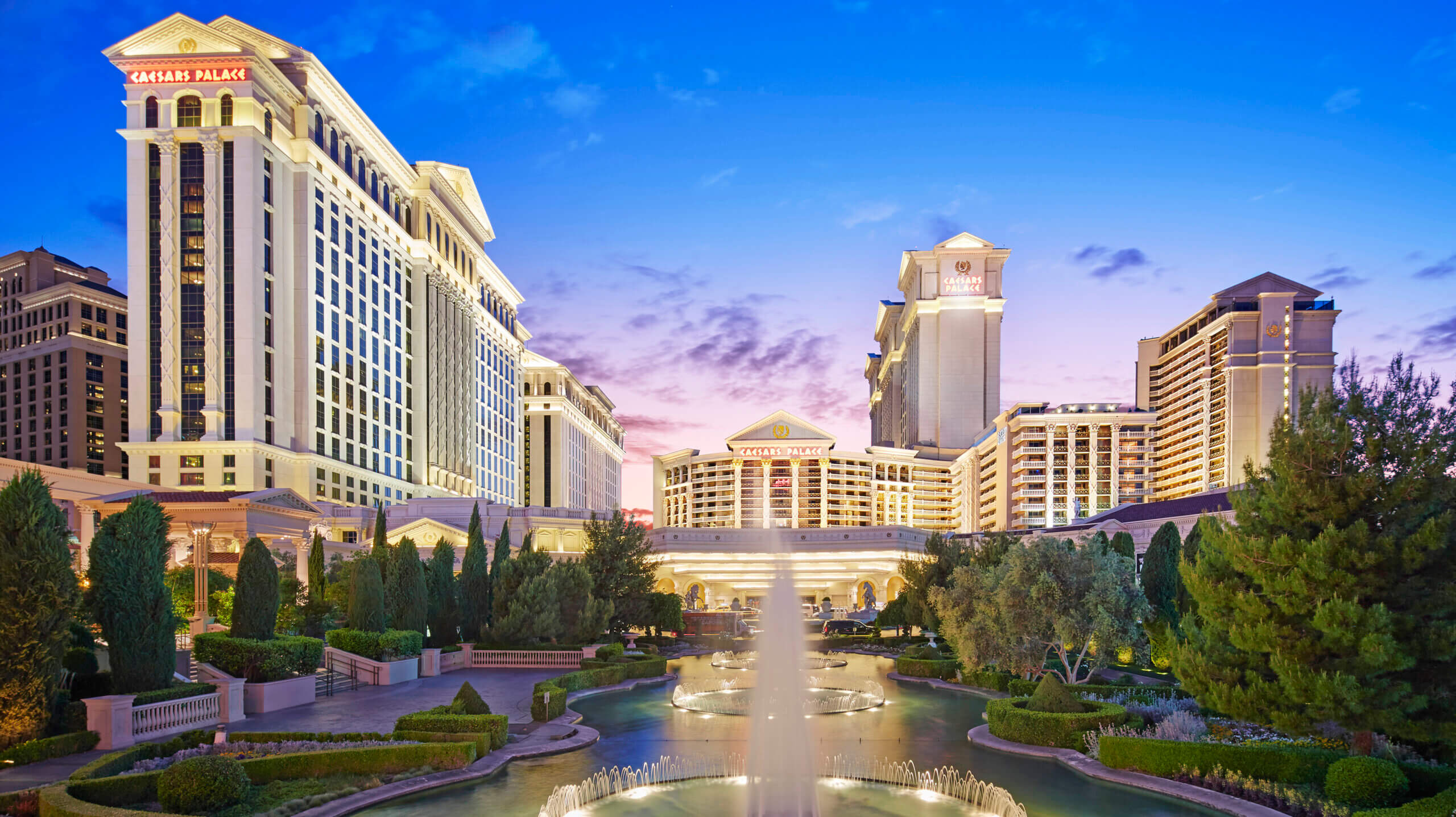
The architectural identity of the resort was designed to transport guests away from the harsh, arid reality of the Mojave Desert and into an idealized version of ancient Rome. This was a revolutionary concept in destination architecture.
Designing the Imperial Aesthetic
Sarno and his team prioritized spectacle. The original complex featured grand fountains, statues of Roman figures, and ornate mosaics that became synonymous with the Las Vegas aesthetic. The goal was to create a “total environment”—an immersive experience where the architecture, the uniforms of the staff, and the culinary offerings all adhered to the classical theme.
This commitment to theme design paved the way for the era of “mega-resorts.” Before Caesars Palace, most hotels in the region were focused purely on gambling utility. By integrating lush landscaping, sprawling swimming pools, and theater-style performance venues, the resort established the blueprint for the modern integrated resort model found globally today.
The Evolution of the Landmark
Since its inception in the mid-1960s, the property has undergone constant metamorphosis. The initial building was soon followed by expansion after expansion, most notably the construction of the Centurion Tower, the Forum Tower, and later, the Palace Tower and Octavius Tower. Each addition was designed to maintain the grand architectural scale that defined the original structure while updating the luxury offerings to meet the tastes of contemporary travelers.

Cultural Impact and Global Recognition
Beyond its structural history, the resort became a cultural touchstone. Throughout the 1960s and 70s, it served as the center of gravity for the entertainment industry.
The Hub of High-Stakes Entertainment
Caesars Palace became the premier stage for the world’s most famous performers. Legends such as Frank Sinatra and Celine Dion have headlined at this venue, turning the resort into a global stage. The addition of the Colosseum at Caesars Palace further solidified its reputation as a premier entertainment destination, capable of hosting world-class productions that draw millions of visitors to Nevada.
A Landmark in Film and Media
The distinct architecture and the “emperor” branding have made the resort a favorite location for major motion pictures. Its presence in films has cemented its status not just as a business, but as a quintessential landmark of American pop culture. The visual language of the white marble-clad buildings and the famous fountain displays are globally recognized, acting as a shorthand for luxury travel and the excitement of the Las Vegas Strip.
The Legacy of the 1966 Opening
Looking back at the question of when this massive complex was built, we find that the date—1966—is a dividing line in the history of global tourism.
Why the Date Matters
When it opened, the Las Vegas landscape was primarily a desert outpost defined by small-scale casinos. The success of Caesars Palace proved that tourists were willing to travel vast distances not just for gaming, but for a high-end, immersive environment. It shifted the economic model of the region from a focus on the floor to a focus on the experience.
The resort’s success prompted a wave of developments that defined the late 20th century, leading to the construction of other legendary properties in North America. It proved that if you built a monument to excess and historical fantasy, the world would come to visit.
Preserving the Roman Spirit
Even as the property continues to expand and renovate, the core identity established in 1966 remains intact. The commitment to providing a “palatial” experience is still the guiding principle of the resort today. From the Appian Way Shops to the Garden of the Gods Pool Oasis, the elements that define the property are a testament to the visionaries who broke ground in the Mojave Desert over fifty years ago.
For travelers and architecture enthusiasts alike, visiting this landmark today offers a unique opportunity to walk through a history of American commercial architecture. The layers of construction, representing different decades and different trends in luxury design, show how one hotel managed to remain relevant across half a century.
In summary, while the foundation was laid in 1962 and the ribbon was cut in 1966, the life of Caesars Palace is an ongoing project. It stands as a testament to the power of thematic design and serves as the heartbeat of the Las Vegas Strip, proving that even in a city of transient trends, a well-conceived vision can truly stand the test of time. Whether viewed as an architectural marvel or a historical site of entertainment, the resort remains the gold standard for what a luxury hotel in the United States can achieve. Its history is, in many ways, the history of the modern vacation—a pursuit of leisure, a demand for spectacle, and an enduring fascination with the grandeur of the ancient world brought to life in the modern era.
LifeOutOfTheBox is a participant in the Amazon Services LLC Associates Program, an affiliate advertising program designed to provide a means for sites to earn advertising fees by advertising and linking to Amazon.com. Amazon, the Amazon logo, AmazonSupply, and the AmazonSupply logo are trademarks of Amazon.com, Inc. or its affiliates. As an Amazon Associate we earn affiliate commissions from qualifying purchases.