
The story of Connecticut is deeply woven into the fabric of American history, representing a pioneering spirit of self-governance and democratic ideals that predates the very nation itself. Often celebrated as the “Constitution State,” its formal establishment as a distinct political entity is not a singular event but rather a fascinating progression of early settlements, foundational legal documents, and a persistent drive for autonomy. Understanding when Connecticut was established requires delving into the early colonial period, exploring the motivations of its founders, and appreciating the groundbreaking principles they enshrined into law.
While there isn’t one definitive “establishment date” like a modern state’s admission to the Union, the period between 1633 and 1639 marks the critical genesis of what would become the Colony of Connecticut. It was during these formative years that English Puritan settlers migrated from the Massachusetts Bay Colony to the fertile Connecticut River Valley, establishing independent towns and, crucially, forming a unified government that would lay the intellectual groundwork for American democracy. This exploration will trace this historical journey, highlighting the key milestones that collectively define when Connecticut was truly established in both spirit and law.

The Dawn of a Colony: Early Settlements and Indigenous Roots
Before the arrival of European settlers, the land that would become Connecticut was a vibrant landscape inhabited by various Native American tribes, each with its own distinct culture, language, and territorial claims. These indigenous communities played a crucial, though often overlooked, role in the early history of the region, interacting with and, at times, clashing with the arriving colonists. The story of Connecticut’s establishment is inseparable from understanding these initial encounters and the rich pre-colonial history of the land.
Pre-Colonial Landscape and Native American Tribes
For thousands of years prior to European contact, the Connecticut River Valley and surrounding areas were home to numerous Algonquian-speaking peoples. Prominent among these were the Pequot, Mohegan, Sachemdom of Quinnipiac (later known as the Quinnipiac or New Haven Indians), Wangunk, Podunk, Tunxis, and Paugussett tribes. These tribes had sophisticated societies, relying on a combination of agriculture (corn, beans, squash), hunting, fishing, and gathering. Their extensive knowledge of the land, its resources, and the intricate river systems was invaluable to the early European newcomers, who often relied on their guidance and trade for survival.
The Connecticut River served as a vital thoroughfare for trade and communication among these tribes. European interest in the region was initially spurred by Dutch traders, who established a trading post, Fort Goede Hoop, near present-day Hartford in 1633. However, it was the English Puritans seeking more fertile land and greater religious freedom than was available in the Massachusetts Bay Colony who would ultimately establish permanent settlements and lay the groundwork for Connecticut’s unique political identity.
Pioneering English Settlements: Windsor, Wethersfield, and Hartford
The English colonization of the Connecticut River Valley began in earnest in the mid-1630s. Driven by a desire for better agricultural land, a more flexible political structure, and the charismatic leadership of figures like Reverend Thomas Hooker, groups of settlers embarked on journeys westward from Massachusetts.
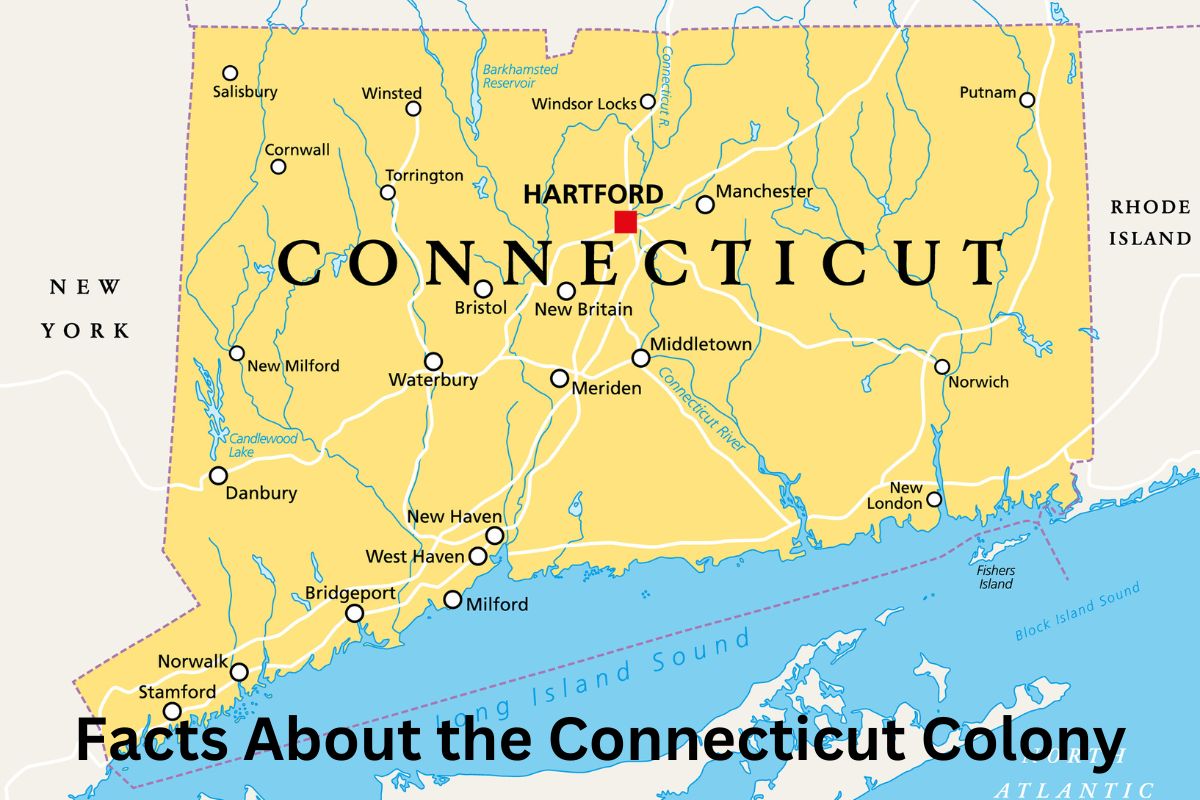
The first permanent English settlement was established in Windsor in 1633 by a small contingent from the Plymouth Colony. This was swiftly followed by groups from Watertown, Massachusetts, who founded Wethersfield in 1634. The most significant migration occurred in 1636, when Reverend Thomas Hooker led his congregation from Newtowne (later Cambridge) to establish the settlement of Hartford. These three towns—Windsor, Wethersfield, and Hartford—formed the nucleus of what would become the Connecticut Colony, often referred to as the “River Towns.”
These early settlements were not isolated outposts but rather burgeoning communities facing common challenges and sharing a vision for a society built on Puritan principles, yet with a greater emphasis on congregational self-governance than they perceived in Massachusetts. Their proximity and shared goals naturally led to a need for a unified system of government, a necessity that would soon give birth to one of America’s most significant founding documents.
Forging a Government: The Fundamental Orders of Connecticut
The true establishment of Connecticut as a distinct political entity can be firmly placed in 1639 with the adoption of the Fundamental Orders of Connecticut. This document was revolutionary for its time, articulating a system of government based on the consent of the governed and defining the powers of both the legislature and the executive. It was a bold step towards self-rule that deeply influenced subsequent American political thought.
The Birth of Self-Governance: A Revolutionary Document
On January 14, 1639, representatives from Hartford, Windsor, and Wethersfield gathered and formally adopted the Fundamental Orders of Connecticut. This written constitution is considered by many historians to be the first written constitution in North America, and indeed, a precursor to the United States Constitution.
What made the Fundamental Orders so groundbreaking was its explicit establishment of a representative government elected by the freemen of the towns. Unlike other colonial charters, which were typically granted by the crown or proprietors, the Fundamental Orders were an agreement among the inhabitants themselves, creating a government “of the people.” It outlined the powers of a general court (the legislature) and an elected governor, defining their roles and limitations. Crucially, it did not require church membership for voting rights, a significant departure from the practices in the Massachusetts Bay Colony, thereby broadening the base of political participation. This document effectively consolidated the scattered River Towns into a cohesive political unit, establishing the framework for what would become the Colony of Connecticut.
Key Figures and Their Vision: Thomas Hooker and the Founders
The intellectual and spiritual force behind the Fundamental Orders was largely Reverend Thomas Hooker. A prominent Puritan minister, Hooker preached extensively on the principles of popular sovereignty and the importance of government deriving its authority from the consent of the governed. In a famous sermon delivered in 1638, he articulated the idea that “the choice of public magistrates belongs unto the people by God’s own allowance.” This sermon served as a direct philosophical underpinning for the Fundamental Orders.
Other key figures, though less prominently remembered, also contributed to this visionary act of governance. Leaders like Roger Ludlow, who is often credited with drafting the Fundamental Orders, and the various magistrates and freemen who participated in its adoption, were instrumental in translating these democratic ideals into practice. Their collective vision for a self-governing commonwealth, distinct from the more centralized authority of Massachusetts, marked a pivotal moment in the establishment of Connecticut and foreshadowed the democratic aspirations of the future American nation.
From Colony to State: Defining Connecticut’s Borders and Identity

While the Fundamental Orders established Connecticut’s internal governance, its external boundaries and recognition as a legitimate colony were still in flux. The path from an independent group of towns to a recognized royal colony, and eventually a state, involved complex negotiations, territorial disputes, and significant political maneuvering with both neighboring colonies and the English Crown.
Inter-Colonial Conflicts and Boundary Disputes
The nascent Connecticut Colony did not exist in a vacuum. Its early years were marked by territorial overlaps and rival claims. To the east, the Rhode Island Colony posed boundary challenges, while to the west, the Dutch claims on the Connecticut River persisted. Perhaps the most significant rivalry was with the powerful New Haven Colony, established in 1638, which operated under an even stricter Puritan theological framework and saw itself as a separate, independent entity. For decades, Connecticut and New Haven vied for influence and territory, eventually leading to their consolidation.
Furthermore, interactions with Native American tribes, particularly in the aftermath of the Pequot War of 1637, significantly shaped colonial expansion and land policies. The brutal conflict, which decimated the Pequot tribe, secured English dominance in the region and opened up vast tracts of land for settlement, further solidifying the geographical footprint of Connecticut.
The Charter of 1662 and its Significance
The crucial step in securing Connecticut’s legal and political legitimacy in the eyes of the English Crown came in 1662. Governor John Winthrop the Younger, an astute diplomat, successfully petitioned King Charles II for a royal charter. This charter was remarkably liberal, granting the Connecticut Colony vast self-governing powers, largely ratifying the system established by the Fundamental Orders.
Critically, the Charter of 1662 also officially incorporated the New Haven Colony into Connecticut, despite initial resistance from New Haven leaders. This consolidation greatly expanded Connecticut’s territory and population, establishing its borders largely as they are known today, stretching from the Narragansett Bay in the east to the boundary with New York in the west. The Charter of 1662 thus marks a definitive moment of official establishment and recognition for the Colony of Connecticut within the British Empire.
The Path to Statehood: American Revolution and Beyond
While the Charter of 1662 solidified Connecticut’s colonial status, its ultimate establishment as a sovereign state came with the American Revolution. Connecticut played a vital role in the struggle for independence, providing crucial supplies, troops, and leadership. Its long tradition of self-governance, born from the Fundamental Orders and preserved by the liberal Charter, meant that it transitioned relatively smoothly from a self-governing colony to an independent state.
On July 4, 1776, Connecticut voted for independence, and later ratified the United States Constitution on January 9, 1788, becoming the fifth state to do so. This final act completed its journey from pioneering settlements to a foundational member of the new American republic, firmly establishing its place in the nation’s history.
Connecticut’s Enduring Legacy: A Foundation for American Democracy
The historical establishment of Connecticut is not merely a chronicle of dates and documents; it is a testament to enduring principles that continue to resonate today. From its earliest days, Connecticut embodied a radical vision of government by the people, influencing generations of political thought and shaping the very structure of American democracy. This legacy is proudly reflected in its nickname, the “Constitution State,” and is visible in the historical landmarks that dot its landscape.
The “Constitution State” and its Influence
The moniker “Constitution State” is a direct homage to the Fundamental Orders of Connecticut. This pioneering document is widely recognized as a blueprint for modern constitutional government, emphasizing principles such as popular sovereignty, limited government, and the separation of powers. Its influence can be traced through colonial political thought, the drafting of state constitutions during the Revolutionary War, and ultimately, to the framers of the United States Constitution.
Connecticut’s early commitment to a written framework of government, one that derived its authority from the consent of the governed rather than from a monarch, set a powerful precedent. It demonstrated that a government could be effectively organized and operated based on a mutual agreement among its citizens, a truly revolutionary concept in the 17th century. This profound contribution to democratic theory remains Connecticut’s most significant historical legacy.
Historical Landmarks Reflecting Early Establishment
Today, visitors to Connecticut can experience the echoes of its establishment through numerous historical landmarks and sites. The very towns founded in the 1630s – Hartford, Windsor, and Wethersfield – retain much of their colonial charm and host buildings that stand as silent witnesses to the state’s formative years.
- The Old State House in Hartford: While built later (1796), this iconic building stands on the site where the Fundamental Orders were adopted and where the Connecticut General Assembly met for centuries. It now serves as a museum dedicated to Connecticut’s rich political history.
- The Butler-McCook House & Garden in Hartford: Offers a glimpse into life in one of the original River Towns, showcasing domestic history from the colonial era through the 20th century.
- Webb-Deane-Stevens Museum in Wethersfield: Features three meticulously preserved 18th-century homes, offering insight into the lives of early Connecticut residents.
- Palisado Avenue in Windsor: Lined with historic homes and churches, including the First Church in Windsor, which traces its roots back to the founding congregation.
These landmarks, among many others, serve as tangible reminders of the perseverance, foresight, and revolutionary spirit of those who established Connecticut and laid the groundwork for its enduring democratic traditions. Exploring these sites allows one to connect directly with the very origins of a state that played a disproportionately significant role in shaping the political landscape of the United States.
Preserving the Past: Museums and Historical Societies
Beyond specific sites, Connecticut boasts a robust network of museums and historical societies dedicated to preserving and interpreting its rich past. Institutions like the Connecticut Historical Society, various town historical societies, and university archives house invaluable documents, artifacts, and records that tell the story of the state’s establishment and evolution. These organizations ensure that the profound lessons and pioneering spirit of Connecticut’s founders continue to be accessible and understood by future generations. They highlight how the historical act of establishing Connecticut was not merely a local event but a foundational chapter in the larger narrative of American liberty and self-governance.
LifeOutOfTheBox is a participant in the Amazon Services LLC Associates Program, an affiliate advertising program designed to provide a means for sites to earn advertising fees by advertising and linking to Amazon.com. Amazon, the Amazon logo, AmazonSupply, and the AmazonSupply logo are trademarks of Amazon.com, Inc. or its affiliates. As an Amazon Associate we earn affiliate commissions from qualifying purchases.