
The shimmering spires of Cinderella Castle, the thrilling rush of Space Mountain, and the enchanting sights of a thousand stories brought to life are all synonymous with Walt Disney World Resort in Florida. For millions of visitors each year, this sprawling entertainment complex represents the pinnacle of travel destinations, a place where imagination knows no bounds and every moment is infused with magic. Yet, behind the seamless experiences and captivating attractions lies a monumental feat of vision, engineering, and sheer determination. To understand when Disney World was built is to delve into a fascinating saga that began long before its gates officially opened, a story of an audacious dream transforming vast tracts of Central Florida swampland into the world’s most famous vacation kingdom.
While the idea for a second Disney theme park began to take shape in the early 1960s, spurred by the immense success of Disneyland Park in California, the physical construction of Walt Disney World Resort commenced in 1967. This monumental undertaking culminated in its grand opening on October 1, 1971, with the initial phase primarily featuring Magic Kingdom Park and two resort hotels. However, this simple timeline only scratches the surface of the ambition and innovation that characterized its creation. The true answer to “When was Disney World built?” lies in the decades of planning, the clandestine land acquisitions, the groundbreaking construction, and the continuous evolution that has shaped it into the global landmark it is today. This article will explore the full scope of its development, from its visionary beginnings to its current status as a beacon of tourism and an ever-evolving lifestyle destination.
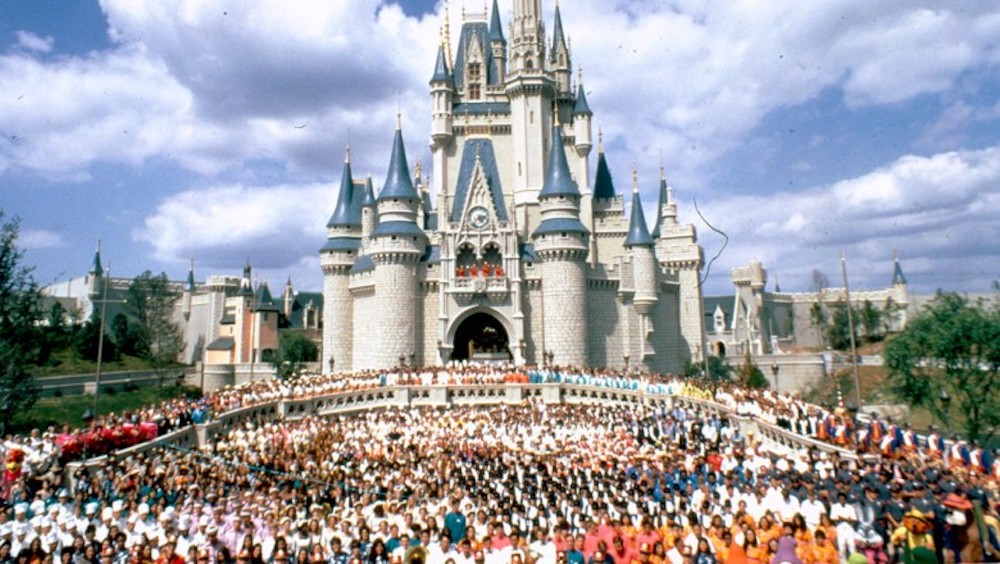
The Visionary Behind the Magic: Walt Disney’s Dream
The genesis of Walt Disney World Resort is inextricably linked to the visionary mind of Walt Disney himself. After the overwhelming popularity of Disneyland Park, which opened in Anaheim, California, in 1955, Walt Disney quickly realized the limitations of his initial park. Disneyland was a huge success, attracting millions, but the rapid commercial development that sprang up around it—uncontrolled hotels, garish roadside attractions, and competing businesses—began to compromise the immersive experience he had so carefully crafted within the park’s gates. He envisioned a much larger project, a place where he could control every aspect of the guest experience, from the moment they arrived to the moment they departed. This desire for total environmental control, coupled with an ambition to build not just a theme park but an entire community of the future, laid the groundwork for what would become Walt Disney World.

From Disneyland to a “Vacation Kingdom”
Walt Disney’s experiences with Disneyland Park taught him valuable lessons. He wanted more space, significantly more space, to ensure the magic would never be encroached upon by the outside world. This led him to conceptualize the “Florida Project,” which was initially shrouded in extreme secrecy. His ambition was not merely to replicate Disneyland on a grander scale but to create an entire “Vacation Kingdom.” This kingdom would encompass not only theme parks but also diverse accommodation options, recreational facilities, and experimental urban planning. The most revolutionary aspect of his vision was the Experimental Prototype Community of Tomorrow, or EPCOT, a living, breathing city designed to showcase American innovation and urban planning, constantly evolving with new ideas and technologies.
Unlike Disneyland, which was a singular park, the Florida project aimed to integrate travel, leisure, and a forward-thinking community model. This holistic approach meant that hotels, transportation systems, and even waste management were meticulously planned from the ground up, all designed to enhance the guest’s overall experience. Walt Disney tragically passed away in December 1966, just as active construction was about to begin. However, his meticulous planning, detailed vision, and the dedication of his brother Roy O. Disney ensured that the project moved forward, striving to fulfill Walt’s grand dream. It was Roy who famously insisted the entire complex be named Walt Disney World Resort to honor his brother’s enduring legacy and vision.
The Early Days: Acquisition, Construction, and Opening
The actual “building” of Walt Disney World Resort was an unparalleled undertaking, a Herculean effort that transformed uninhabitable swampland into a pristine, magical environment. The first critical step, initiated by Walt Disney himself, was the acquisition of an enormous landmass, far larger than anyone anticipated for a mere theme park.
Secret Land Purchases in Central Florida
Beginning in 1964, agents for Walt Disney Productions discreetly began purchasing vast tracts of land in Florida under various dummy corporations and shell companies. The goal was to avoid speculation that would drive up land prices if the true buyer, Disney, was known. Over the course of approximately two years, the company amassed around 27,500 acres (about 43 square miles) of undeveloped and largely marshy land, primarily in Orange County and Osceola County, southwest of Orlando. The strategic location offered excellent access via major interstate highways, ample space for expansion, and proximity to other budding tourism markets. This vast land acquisition, costing approximately $5 million at the time (roughly $185 per acre), was crucial for realizing Walt’s vision of a completely controlled environment, free from the external commercial clutter that had plagued Disneyland.
The scale of the project necessitated not only land acquisition but also significant legislative action. To facilitate the development and operation of the Walt Disney World Resort as a virtually self-governing entity, the Florida State Legislature established the Reedy Creek Improvement District in 1967. This special taxing district granted the company broad powers and responsibilities, including zoning, infrastructure development, utility services, and emergency services, effectively allowing Disney to act as its own county government within its property. This unique arrangement was a foundational element, enabling the rapid and comprehensive development of the resort.
Bringing the Dream to Life: Construction Milestones
With the land secured and the necessary legal frameworks in place, actual construction began in 1967. This was not merely building structures but an extensive civil engineering project. The initial phase involved draining significant portions of the swamp, digging miles of canals, and establishing a sophisticated drainage system. To support the heavy infrastructure of the theme park, tons of earth were moved and compacted, essentially raising the ground level of Magic Kingdom Park by several feet. This allowed for the construction of the famous “utilidors” – a complex underground network of tunnels that house utilities, supply routes, and staff areas, keeping the illusion of the park pristine above ground.
The primary focus of this initial construction phase was Magic Kingdom Park, which mirrored many beloved elements of Disneyland while incorporating new technologies and design principles made possible by the expansive site. Iconic landmarks like Cinderella Castle, Main Street, U.S.A., and early attractions such as “it’s a small world” and “The Haunted Mansion” were meticulously crafted. Alongside the park, two flagship resort hotels were simultaneously brought to life: the futuristic Contemporary Resort and the South Pacific-themed Polynesian Village Resort (now Disney’s Polynesian Village Resort). These hotels were designed to be integral parts of the guest experience, offering immersive accommodation and easy access via monorail to the Magic Kingdom.
After four intense years of construction, costing hundreds of millions of dollars, Walt Disney World Resort officially opened its gates on October 1, 1971. On that momentous day, guests were welcomed to the Magic Kingdom, the Contemporary Resort, the Polynesian Village Resort, and the Fort Wilderness Resort & Campground. This grand unveiling marked the beginning of a new era in tourism and entertainment, establishing Florida as a premier travel destination.
A Kingdom Expands: Growth and Evolution Through the Decades
The opening of Magic Kingdom Park in 1971 was just the beginning for Walt Disney World Resort. The initial vision of a comprehensive “Vacation Kingdom” meant that continuous expansion and innovation were always part of the plan. Over the subsequent decades, the resort grew exponentially, adding new theme parks, water parks, accommodation options, and countless attractions, solidifying its status as a global leader in travel and tourism.
The 1980s and 1990s: New Parks and Experiences
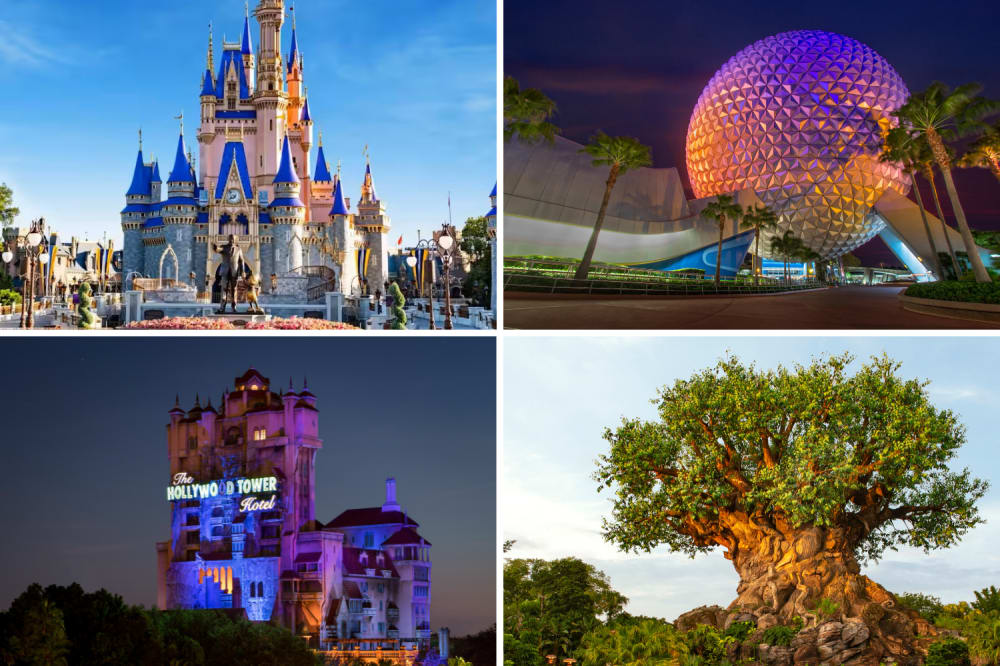
The 1980s saw significant growth, with the realization of Walt Disney’s ambitious EPCOT concept, albeit in a modified form from his original urban prototype. On October 1, 1982, exactly eleven years after the Magic Kingdom’s debut, EPCOT Center (now simply Epcot) opened to the public. It was designed with two distinct areas: Future World, focusing on technological innovation and scientific discovery, and World Showcase, celebrating international culture, cuisine, and heritage. This park introduced a more educational and globally-minded dimension to the Disney experience, attracting a different segment of travelers interested in both learning and leisure.
The end of the 1980s brought another major addition with the opening of Disney-MGM Studios (now Disney’s Hollywood Studios) on May 1, 1989. This park was dedicated to the magic of movies and television, offering behind-the-scenes glimpses into filmmaking and exciting stunt shows. Its debut further diversified the resort’s offerings, appealing to film enthusiasts and those seeking more thrilling entertainment. Complementing these theme parks, two massive water parks, Typhoon Lagoon (opened 1989) and Blizzard Beach (opened 1995), were also added, providing refreshing options for guests looking to cool off in the Florida sun.
The 1990s culminated in the opening of Disney’s Animal Kingdom Theme Park on April 22, 1998, Earth Day. This park combined traditional theme park attractions with a strong focus on natural environments, wildlife conservation, and education. It transported guests to immersive landscapes reminiscent of Africa and Asia, offering unique animal encounters and thrilling rides. Throughout these decades, the resort also saw a proliferation of themed resorts, from the grand Disney’s Grand Floridian Resort & Spa to more budget-friendly options, catering to a wide range of accommodation needs and lifestyle preferences.
Modern Era: Innovation and Continued Expansion
The 21st century has seen Walt Disney World Resort continue its relentless pursuit of innovation and immersive storytelling. Recent years have brought breathtaking new lands and state-of-the-art attractions that push the boundaries of themed entertainment. Highlights include Pandora – The World of Avatar at Disney’s Animal Kingdom, which opened in 2017 and transports guests to the stunning alien moon of Pandora, featuring the groundbreaking Flight of Passage attraction.
Perhaps the most anticipated recent expansion was Star Wars: Galaxy’s Edge, which debuted at Disney’s Hollywood Studios in 2019. This highly immersive land allows guests to live out their own Star Wars adventures on the planet Batuu, complete with custom droids, unique food and beverage offerings, and two signature attractions: Millennium Falcon: Smugglers Run and Star Wars: Rise of the Resistance. Looking forward, the resort continues to evolve, with recent additions like TRON Lightcycle / Run at Magic Kingdom Park (opened 2023) showcasing the latest in ride technology and interactive experiences.
This continuous cycle of expansion ensures that Walt Disney World Resort remains a dynamic and fresh destination, prompting repeat visits and maintaining its position at the forefront of global tourism. The evolution isn’t just about new rides; it encompasses innovative dining, enhanced digital integration for guest services, and a constant reimagining of existing areas to keep the magic alive for every generation.
The Enduring Legacy and Impact on Travel and Tourism
From its humble beginnings as a vast tract of Florida swampland, Walt Disney World Resort has blossomed into an economic powerhouse and an unparalleled global landmark. Its construction and subsequent expansion have profoundly shaped the landscape of Central Florida and set new benchmarks for the travel and tourism industry worldwide.
A Premier Travel Destination
Today, Walt Disney World Resort stands as one of the world’s most visited and celebrated tourist attractions, drawing tens of millions of guests annually from across the globe. Its presence transformed Orlando from a relatively quiet agricultural town into a thriving metropolis and the “Theme Park Capital of the World.” The economic impact is immense, generating thousands of jobs, fueling the hospitality sector, and attracting significant investment in infrastructure, transportation, and ancillary businesses. For travelers, it represents a complete vacation package. The resort boasts four major theme parks (Magic Kingdom Park, Epcot, Disney’s Hollywood Studios, and Disney’s Animal Kingdom Theme Park), two water parks (Typhoon Lagoon and Blizzard Beach), dozens of themed hotels, a vibrant dining and shopping district (Disney Springs), and numerous recreational activities.
Accommodation options within the resort are incredibly diverse, catering to every type of traveler and budget. From luxury suites at high-end resorts like Disney’s Grand Floridian Resort & Spa and Disney’s Contemporary Resort to family-friendly villas, moderate-priced hotels, and even campgrounds like Fort Wilderness, there is a suitable choice for everyone. Beyond the sheer variety, the immersive theming and exceptional guest service elevate the resort experience, making it much more than just a place to stay; it becomes an integral part of the overall adventure. This extensive range of facilities and experiences makes Walt Disney World Resort a one-stop destination for families, couples, and even business travelers, fulfilling its original promise as a comprehensive “Vacation Kingdom.”
More Than Just Theme Parks: A Lifestyle Destination
Beyond its role as a premier collection of attractions and accommodations, Walt Disney World Resort embodies a unique lifestyle destination. It caters to a myriad of travel styles and preferences, reflecting the diverse aspirations of its visitors. For families, it offers unparalleled bonding experiences, creating cherished memories that last a lifetime. For those seeking luxury travel, the deluxe resorts provide exquisite dining, world-class spas, and concierge services, ensuring a pampered escape. Couples find romantic settings, from intimate dinners at Epcot’s World Showcase to magical moments watching fireworks over Cinderella Castle.
Moreover, Disney World has become a hub for conventions, business stays, and special events, leveraging its extensive conference facilities and unique venues. The meticulously designed environments, the emphasis on storytelling, and the consistent commitment to guest satisfaction have established a benchmark for immersive experiences that transcends typical tourism. It’s a place where local culture is celebrated within the World Showcase and where innovative technology shapes the future in Epcot’s Future World. The “Disney magic” isn’t merely a marketing slogan; it’s a carefully cultivated atmosphere, a blend of meticulous planning, fantastical architecture, and dedicated cast members that allows guests to step out of their everyday lives and into a world of wonder. This constant evolution and commitment to quality ensure that Walt Disney World Resort remains an iconic landmark and a continually inspiring travel destination for generations to come.
In essence, the building of Walt Disney World Resort was not a single event but a continuous process driven by an extraordinary vision. From the initial secret land acquisitions in the mid-1960s to the groundbreaking opening of Magic Kingdom Park on October 1, 1971, and through decades of ambitious expansion that brought us Epcot, Disney’s Hollywood Studios, and Disney’s Animal Kingdom Theme Park, it has grown into a vast, intricate ecosystem of entertainment, accommodation, and innovation. What began as Walt Disney’s dream to create a controlled “Vacation Kingdom” has evolved into a global phenomenon, a testament to the power of imagination and persistent dedication, continuing to shape the landscape of travel and inspire countless visitors worldwide.
LifeOutOfTheBox is a participant in the Amazon Services LLC Associates Program, an affiliate advertising program designed to provide a means for sites to earn advertising fees by advertising and linking to Amazon.com. Amazon, the Amazon logo, AmazonSupply, and the AmazonSupply logo are trademarks of Amazon.com, Inc. or its affiliates. As an Amazon Associate we earn affiliate commissions from qualifying purchases.