
The question “When was Disneyland Florida built?” is a common one, often stemming from a slight misnomer. While the original Disneyland Park proudly stands in Anaheim, California, the sprawling magical kingdom in the Sunshine State is, in fact, the Walt Disney World Resort. This colossal entertainment complex, which began with the opening of its flagship park, Magic Kingdom, on October 1, 1971, represents an ambition far grander than its Californian predecessor.
The story of Walt Disney World Resort is one of audacious vision, engineering marvels, and a relentless pursuit of immersive storytelling. It’s a tale that transforms a vast, undeveloped tract of land in central Florida into one of the world’s premier travel destinations, redefining not just amusement parks but also the entire concept of resort travel, diverse accommodations, and integrated tourism experiences. From its humble beginnings as a secret land acquisition to its current status as a global icon, the evolution of Walt Disney World Resort mirrors a journey of innovation that continues to captivate millions.
The Visionary Behind the Magic: Walt Disney’s Dream
The genesis of Walt Disney World Resort can be traced directly back to the unparalleled imagination and strategic foresight of its namesake, Walt Disney. Following the immense success of Disneyland Park, which opened in 1955, Walt Disney quickly realized the limitations of his original theme park. He found himself constrained by the relatively small parcel of land in Anaheim and frustrated by the uncontrolled commercial development that sprung up just outside its gates, detracting from the immersive experience he meticulously crafted within. His ambition stretched beyond merely building another amusement park; he envisioned an entire self-sufficient community, a sprawling canvas where his creative control would be absolute, ensuring that the magic extended far beyond the park turnstiles.
From California to the Sunshine State
Walt Disney began searching for a second location in the early 1960s, a place that offered not just land, but enough land for his grandest dreams. His team scoured potential sites across the United States, eventually setting their sights on central Florida. The decision to choose Orlando was strategic. The area boasted a warm climate conducive to year-round operations, excellent accessibility with new interstate highways, and, crucially, vast expanses of undeveloped, affordable land — primarily swamps and citrus groves.
To avoid a repeat of the commercial sprawl that plagued Disneyland Park, the land acquisition process was shrouded in secrecy. Shell companies were used to quietly purchase over 27,000 acres (approximately 43 square miles) of land, an area roughly twice the size of Manhattan Island, at an average price of less than $200 per acre. This clandestine operation, known internally as “Project X,” maintained its cover until October 1965, when local newspapers uncovered the massive purchases, confirming that Walt Disney was indeed behind the mysterious transactions. The revelation sent shockwaves of excitement through the region, promising unprecedented growth and tourism for the relatively quiet agricultural hub of Orlando.
Project X and the Experimental Prototype Community of Tomorrow (EPCOT)
Walt Disney’s vision for his Florida project went far beyond a collection of theme parks. He dreamed of an Experimental Prototype Community of Tomorrow, or EPCOT Center, a living, breathing city where technological innovation and urban planning would seamlessly integrate. This futuristic city would be a test bed for new ideas, a place where people would live, work, and interact with the latest advancements in technology and urban design. It would feature innovative transportation systems, climate-controlled environments, and a commitment to perpetual improvement, serving as a blueprint for future cities.
Sadly, Walt Disney passed away in December 1966, before construction on his Florida project had truly begun. His brother, Roy O. Disney, stepped in to ensure Walt Disney’s dream would be realized, dedicating the project to his brother’s memory and renaming it Walt Disney World Resort. While the original concept of a functioning residential community in EPCOT Center was never fully implemented, its spirit of innovation, education, and global understanding would eventually manifest in the park known as EPCOT, which opened in 1982. The initial phase, however, focused on building the first theme park and its accompanying resort infrastructure, laying the groundwork for the monumental complex we know today.
Building the World: Construction and Grand Opening
Bringing Walt Disney’s vision to life was an undertaking of epic proportions, requiring unprecedented engineering feats and a meticulously choreographed construction effort. The initial focus was on transforming the raw Florida landscape into the magical world of Magic Kingdom and its surrounding infrastructure.
The Mammoth Task of Site Preparation
The first challenge was the land itself. Much of the acquired acreage was marshy and unsuitable for heavy construction. To overcome this, engineers embarked on a massive drainage and earthmoving project. Thousands of acres were drained, canals were dug, and millions of cubic yards of soil were relocated to create a stable foundation. One of the most ingenious aspects of this early development was the construction of a utilidor system beneath Magic Kingdom. This network of underground tunnels allowed for discreet movement of cast members, utilities, and refuse, ensuring that the magic on the surface remained undisturbed by the logistics required to support it. This foresight epitomized Walt Disney’s dedication to seamless guest experiences and operational efficiency.
To maintain maximum autonomy and control over the development, the Walt Disney Company lobbied the Florida legislature for special municipal powers. In 1967, the Reedy Creek Improvement District was established, granting Disney the authority to act as its own county government. This district, still in operation today, allowed Disney to manage its own services, including zoning, infrastructure development, utilities, and emergency services, without interference from surrounding municipalities. This unprecedented level of control was crucial for realizing Walt Disney’s holistic vision for the resort.
The Birth of Magic Kingdom
Construction of Magic Kingdom officially began in 1967. Over the next four years, an army of workers transformed the landscape around Bay Lake and Seven Seas Lagoon. Iconic structures began to rise, most notably Cinderella Castle, a fairytale beacon standing 189 feet tall, visible from miles around. The park was designed with six themed lands: Main Street, U.S.A., Adventureland, Frontierland, Fantasyland, Liberty Square, and Tomorrowland, each filled with meticulously crafted attractions and immersive environments.
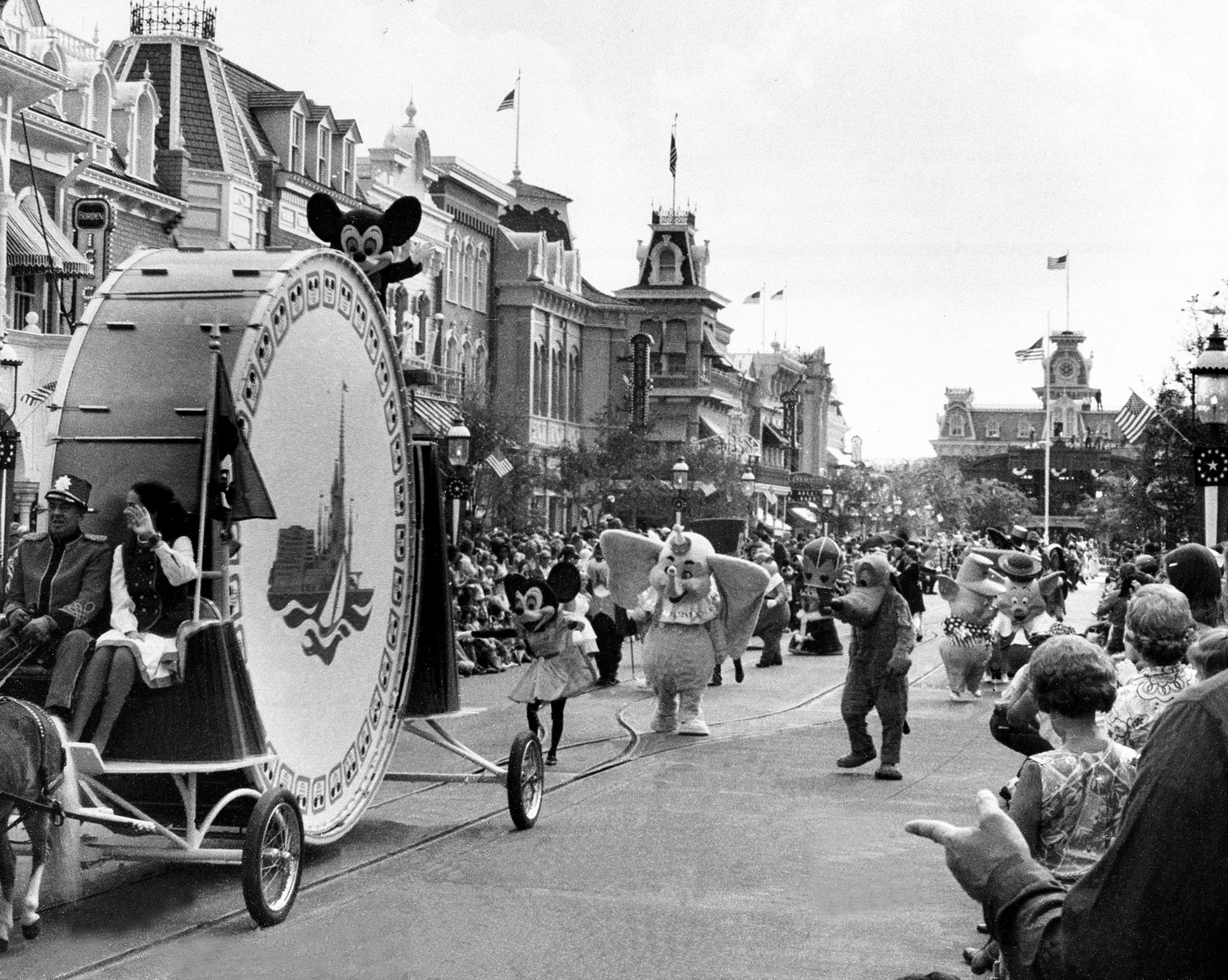
The moment of truth arrived on October 1, 1971. On this historic day, Walt Disney World Resort officially opened its gates to the public, welcoming its first guests to Magic Kingdom. Despite its grand scale, the initial opening was a relatively subdued affair compared to Disneyland Park’s star-studded premiere. Roy O. Disney, then 78 years old, delivered a heartfelt dedication speech, recognizing his brother’s enduring vision. He stated, “May Walt Disney World Resort bring joy and inspiration and new knowledge to all who come to this happy place… a tribute to the philosophy and life of Walter Elias Disney and to the talents, the dedication, and the loyalty of the entire Disney organization.” This day marked not just the opening of a new theme park, but the inauguration of an ambitious resort destination that would profoundly impact global tourism for decades to come.
Accompanying the Magic Kingdom were two flagship resort hotels: the futuristic Contemporary Resort and the tropical Polynesian Village Resort. These accommodations were revolutionary for their time, offering guests direct access to the park via monorail and providing a fully immersive vacation experience that extended beyond the theme park gates, a concept that would define Walt Disney World Resort’s approach to hospitality and lifestyle.
Expanding the Dream: Walt Disney World Resort’s Evolution
The grand opening of Magic Kingdom on October 1, 1971, was merely the first chapter in the unfolding saga of Walt Disney World Resort. Over the subsequent decades, the resort blossomed into a multi-park, multi-resort metropolis, consistently expanding its offerings and cementing its status as a world leader in travel, tourism, and entertainment.
Beyond Magic Kingdom: New Parks and Experiences
The initial success of Magic Kingdom paved the way for the realization of more of Walt Disney’s sprawling vision, albeit in modified forms.
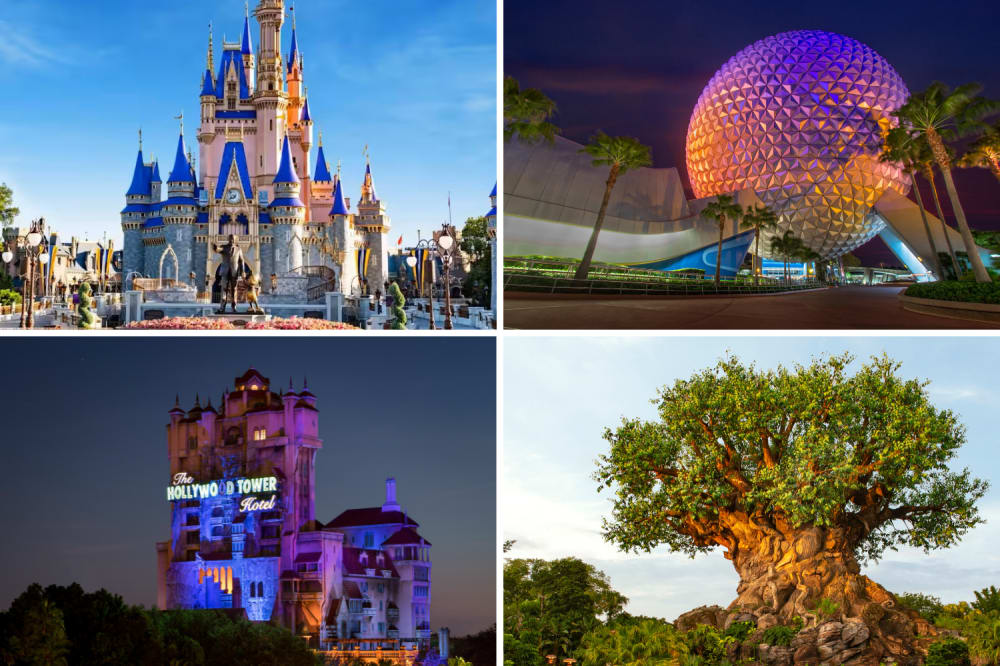
The second theme park to join the resort was EPCOT, which opened on October 1, 1982. This park honored Walt Disney’s dream of innovation and global understanding. It is uniquely divided into two distinct realms: Future World, showcasing technological advancements and scientific discovery, and World Showcase, a permanent world’s fair celebrating international cultures, cuisine, and achievements. EPCOT offered a fundamentally different experience than Magic Kingdom, focusing on education and inspiration rather than purely fantasy.
In 1989, Disney-MGM Studios (now known as Disney’s Hollywood Studios) opened its doors. This park was conceived as a celebration of Hollywood’s golden age, offering guests a behind-the-scenes look at moviemaking, complete with live shows, thrilling rides, and immersive environments inspired by iconic films and television. Its evolution has seen it transform to embrace modern blockbusters and franchises, becoming a crucial component of the resort’s diverse attractions.
The newest of the four main theme parks, Disney’s Animal Kingdom, debuted on Earth Day, April 22, 1998. This park broke new ground by blending a theme park experience with a dedication to wildlife conservation, environmental education, and authentic animal encounters. Its flagship attraction, Kilimanjaro Safaris, transports guests to a simulated African savanna teeming with real animals, offering a truly unique blend of adventure and appreciation for the natural world.
Beyond these four theme parks, Walt Disney World Resort also introduced two themed water parks: Typhoon Lagoon (opened 1989), designed as a tropical paradise struck by a legendary typhoon, and Blizzard Beach (opened 1995), themed as a melted ski resort. These additions further diversified the resort’s appeal, offering more options for recreation and relaxation to millions of annual visitors.
A World of Accommodation and Lifestyle
From its inception, Walt Disney World Resort was designed to be a comprehensive vacation destination, and its array of accommodations plays a central role in this experience. Beyond the initial Contemporary Resort and Polynesian Village Resort, the resort has developed an extensive collection of Walt Disney World Resort hotels, catering to every budget and travel style. Guests can choose from luxurious villas and suites, moderate resorts with unique theming, or value resorts offering economical yet fun-filled stays. Each resort is meticulously designed to immerse guests in different stories and atmospheres, from the African savanna feel of Disney’s Animal Kingdom Lodge to the Victorian charm of Disney’s Grand Floridian Resort & Spa.
These accommodations are more than just places to sleep; they are integral to the Walt Disney World Resort lifestyle experience. Many offer unique dining options, elaborate swimming pools, recreational activities, and convenient transportation options like buses, monorails, and boats directly to the theme parks. This integrated approach to hospitality ensures that the magic of a Disney vacation continues even after leaving the parks, enhancing the overall experience and making it a true destination for family trips, luxury travel, or even business stays that incorporate leisure.
Complementing the parks and hotels is Disney Springs, a vibrant entertainment, dining, and shopping district. Formerly known as Downtown Disney, this reimagined area offers a wide array of world-class restaurants, unique boutiques, and live entertainment, providing a fantastic option for evenings or non-park days. Disney Springs embodies the resort’s commitment to offering diverse activities, supporting local culture through food and artisan crafts, and providing a dynamic urban center within the expansive property in Lake Buena Vista.
Planning Your Magical Florida Escape
For those captivated by the history and allure of Walt Disney World Resort, planning a visit is an exciting prospect. Understanding the scope and evolution of this incredible destination can greatly enhance the travel experience, allowing visitors to appreciate the intricate details and the grand vision behind it all.
Tips for First-Time Visitors
Embarking on a journey to Walt Disney World Resort requires some thoughtful planning to maximize your enjoyment. First, consider the best time to visit; off-peak seasons (typically late January to early March, late August to late September) often offer lighter crowds and more pleasant weather. Researching the various Walt Disney World Resort hotels is crucial, as staying on-site provides perks like early park entry, complimentary transportation, and a fully immersive experience. However, numerous excellent off-site hotels and villas in the Orlando area also offer competitive rates and amenities for budget travel or longer stays.
Familiarize yourself with the My Disney Experience app, which is essential for mobile ordering, checking wait times, and managing your park reservations. Utilizing tools like Genie+ can help navigate the parks efficiently, ensuring you hit all your must-do attractions. Don’t forget to factor in travel guides, dining reservations, and comfortable walking shoes – the resort is vast, and you’ll be covering a lot of ground!

Beyond the Theme Parks
While Walt Disney World Resort is undeniably the star attraction, the broader Orlando area and the state of Florida offer a wealth of additional experiences for travelers. For thrill-seekers, the nearby Universal Orlando Resort, home to The Wizarding World of Harry Potter, provides another world-class theme park adventure. Space enthusiasts can take a day trip to the Kennedy Space Center Visitor Complex, a landmark of human achievement and a fascinating look into space exploration history.
Beyond the major attractions, Florida boasts incredible natural beauty, from pristine beaches on both the Atlantic and Gulf coasts to the unique ecosystem of the Everglades. Visitors interested in local culture can explore Orlando’s diverse culinary scene, vibrant arts districts, and numerous botanical gardens. Whether you’re seeking a luxury travel experience or a budget-friendly family trip, the region surrounding Walt Disney World Resort offers an abundance of activities to enrich your vacation, making it a truly comprehensive tourism destination.
The question “When was Disneyland Florida built?” ultimately leads us to the monumental Walt Disney World Resort and its initial grand opening of Magic Kingdom on October 1, 1971. This date marks the culmination of Walt Disney’s unparalleled vision and the beginning of an extraordinary journey that transformed acres of Florida swampland into a global beacon of imagination and joy. From its pioneering construction to its continuous evolution with new parks, resorts, and immersive experiences, Walt Disney World Resort stands as a testament to the power of dreams, making it an enduring landmark and a timeless destination for travelers worldwide.
LifeOutOfTheBox is a participant in the Amazon Services LLC Associates Program, an affiliate advertising program designed to provide a means for sites to earn advertising fees by advertising and linking to Amazon.com. Amazon, the Amazon logo, AmazonSupply, and the AmazonSupply logo are trademarks of Amazon.com, Inc. or its affiliates. As an Amazon Associate we earn affiliate commissions from qualifying purchases.