
The history of the Hawaii islands is a testament to the extraordinary courage and navigational genius of the ancient Polynesians. Long before European explorers ventured into the vast expanse of the Pacific Ocean, a sophisticated maritime culture had already identified, settled, and cultivated the most isolated archipelago on Earth. Understanding when Hawaii was discovered requires a deep dive into archaeological evidence, linguistic patterns, and the oral traditions that have preserved the story of these remarkable voyages for centuries.
The Chronology of Discovery: Debating the First Arrivals
Determining the exact date of the first human landfall in the Hawaiian archipelago remains one of the most intriguing puzzles in Pacific history. For decades, the academic consensus shifted between various centuries, fueled by evolving technology in radiocarbon dating and new archaeological discoveries at key historical sites.
Early Settlement Hypotheses (400 AD – 800 AD)
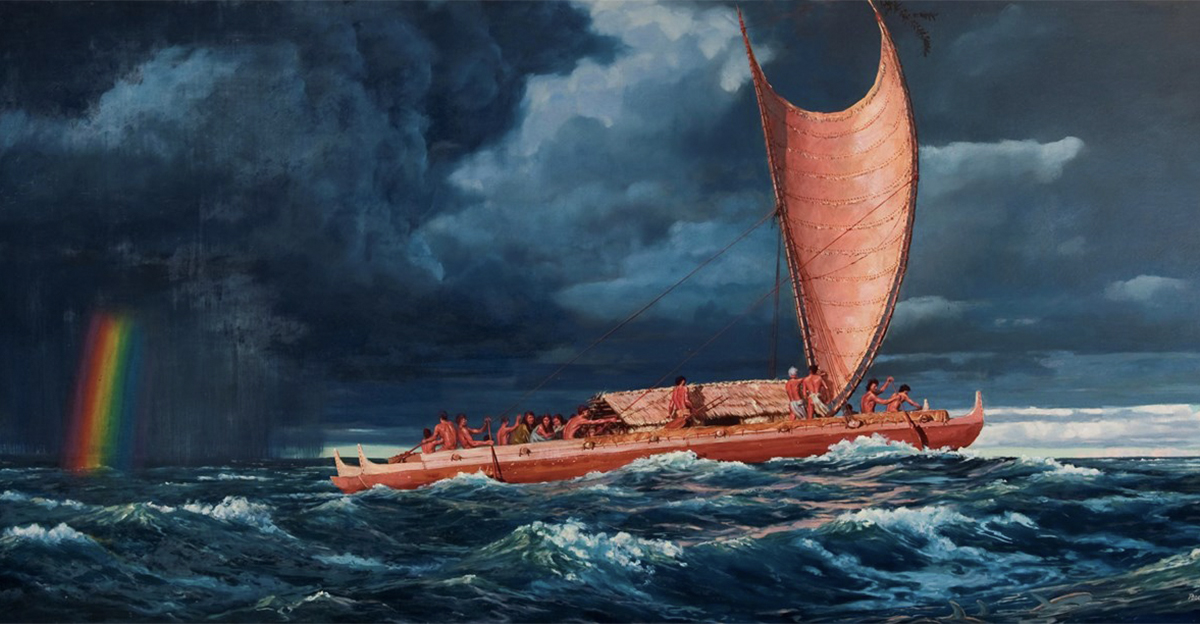
For much of the 20th century, historians and anthropologists believed that the first Polynesians arrived in Hawaii as early as 400 AD. This theory was primarily based on initial radiocarbon dating of charcoal found in early habitation sites and the assumption that the expansion from the Marquesas Islands happened in a rapid, steady wave. These early settlers were thought to have brought with them the essential “canoe plants”—such as taro, sweet potato, and breadfruit—which transformed the volcanic landscape into a sustainable environment for human life.
During this era, the first small communities likely established themselves on the windward sides of the islands, where freshwater was abundant. Landmarks such as the lush valleys of the Big Island and the fertile plains of Kauai served as the foundation for what would become a complex social hierarchy.
The Modern Scientific Consensus (1000 AD – 1200 AD)
In recent years, more rigorous testing and “chronometric hygiene” protocols have suggested a later date for the discovery of Hawaii. Modern researchers, utilizing high-precision dating of short-lived plant remains, now argue that the primary settlement of the islands occurred between 1000 AD and 1200 AD. This timeframe aligns more closely with the broader “Great Migration” that saw the settlement of New Zealand and Easter Island, completing the vast Polynesian Triangle.
This revised timeline does not diminish the achievement of the early navigators; rather, it highlights a period of intense, highly organized maritime exploration. The discovery of Hawaii was not a singular accident but the result of a deliberate, well-planned expansion from the South Pacific.
The Voyage of Discovery: Navigational Mastery
The journey to find Hawaii was an architectural and intellectual feat that rivaled any contemporary achievement in Europe or Asia. The Polynesians did not simply drift with the currents; they were master wayfinders who read the language of the sea.
Wayfinding and Celestial Navigation
Ancient Hawaiian navigators used a system known as wayfinding, which relied on the observation of stars, sun, moon, and ocean swells. Without the aid of compasses or metal instruments, they memorized the rising and setting points of celestial bodies. The “Star Compass” was a mental construct that divided the horizon into houses where specific stars would appear.
Navigators also observed the flight patterns of migratory birds, such as the Pacific Golden Plover, which they knew flew toward land. They read the “refraction” of waves—how swells bounced off distant islands—and looked for specific cloud formations that gathered over high volcanic peaks like Mauna Kea or Haleakala. These natural landmarks acted as beacons for voyagers crossing thousands of miles of open water.
The Wa’a Kaulua: The Vessel of Discovery
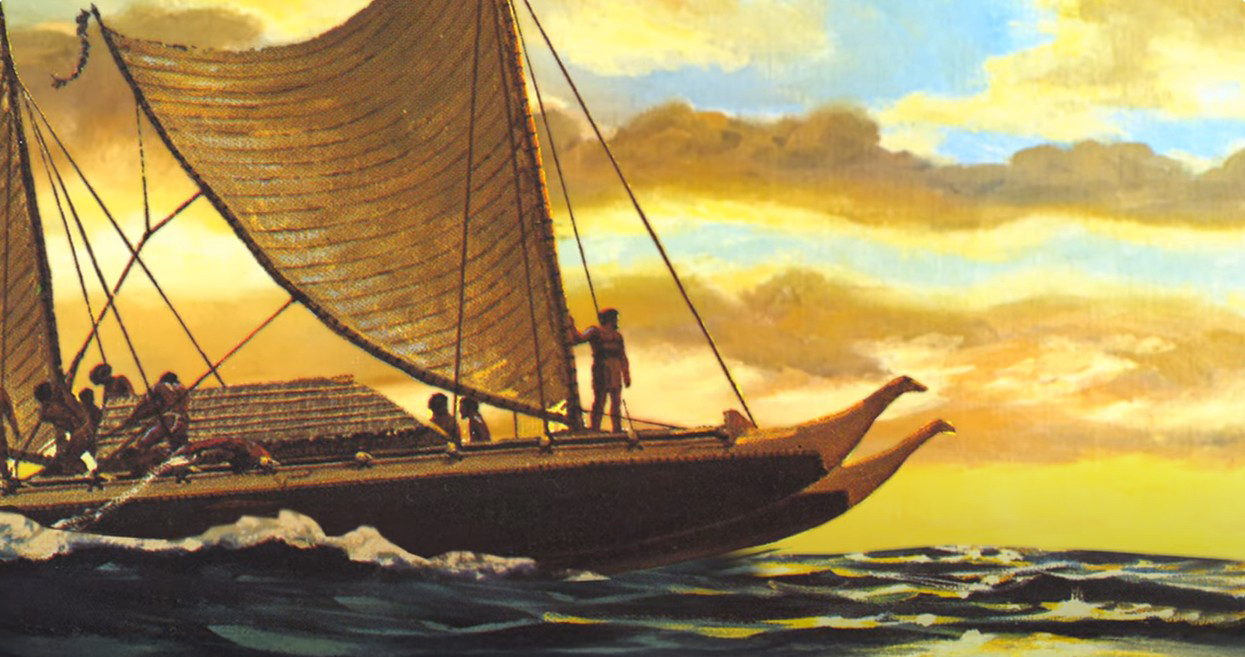
The primary vehicle for this discovery was the double-hulled canoe, or wa’a kaulua. These massive vessels, some reaching over 60 feet in length, were constructed from native timbers and lashed together with intricate cordage made from coconut husks. The hulls were designed to be flexible yet incredibly strong, allowing them to withstand the brutal pressures of the open Pacific Ocean.
These canoes were capable of carrying dozens of people, livestock (such as pigs and chickens), and enough supplies to sustain a months-long voyage. The design of the sails, often in a “crab-claw” shape, allowed for efficient travel both with and against the wind, a necessity for exploring the vast reaches of North America-facing currents and beyond.

Establishing Life in the Hawaiian Archipelago
Once the islands were discovered, the Polynesians faced the monumental task of turning a remote volcanic chain into a home. This period saw the construction of some of the most enduring landmarks in Hawaii today.
The First Landings and Coastal Settlements
While debate continues on the exact landing spot, many traditions point to the southern tip of the Big Island, specifically the area around Ka Lae (South Point). The archaeological remains at this site show evidence of early tool-making and fishing techniques that mirror those found in the Marquesas Islands.
From these initial beachheads, the population expanded to other islands. On Oahu, early settlers found the natural harbors and fertile soils of the Honolulu region to be ideal. Landmarks like Diamond Head (Le’ahi) served as vital coastal lookouts, while the high ridges provided protection and a vantage point to monitor the surrounding seas.
Sacred Architecture and Heiaus
As the society grew more complex, the Polynesians began constructing massive stone temples known as heiaus. These landmarks were the center of religious and political life. One of the most famous is the Mookini Heiau on the Big Island, which according to legend, was built in a single night by a line of men passing stones from miles away.
These structures were not just religious sites but also feats of engineering, built without mortar and aligned with astronomical events. The Puuhonua o Honaunau National Historical Park remains one of the best-preserved examples of this era, offering a glimpse into the “Place of Refuge” where those who broke the sacred laws (kapu) could find absolution.
Cultural Evolution and Later Waves of Migration
The discovery of Hawaii was followed by a period of relative isolation, but historical records and oral chants suggest a second major wave of migration occurred several centuries later.
The Influence of Tahiti and the Society Islands
Between 1200 AD and 1400 AD, a second wave of voyagers arrived from Tahiti and the Society Islands. This migration is often associated with the high priest Pa’ao, who is credited with introducing a more rigid social structure and new religious practices to the islands. This era saw the introduction of the feathered cloaks and helmets that would become symbols of Hawaiian royalty (Ali’i).
This cultural infusion changed the landscape of the islands. Larger irrigation systems were built on Maui and Molokai to support a growing population. The interaction between the original Marquesan settlers and the newer Tahitian arrivals created the unique Hawaiian culture that would eventually encounter the Western world in 1778.
The Ahupua’a System: Historical Land Management
One of the most significant legacies of the Polynesian discovery was the development of the ahupua’a system. This was a method of land division that extended from the mountain peaks (uka) to the sea (kai). Each slice of land provided the community with everything they needed: timber and birds from the mountains, taro and crops from the valleys, and fish from the reefs.
This system respected the natural landmarks of the islands, ensuring that resources were managed sustainably. Even today, many of the modern boundaries on Lanai and other islands still follow these ancient divisions, a lasting mark of Polynesian ingenuity on the physical and social geography of Hawaii.
The Enduring Legacy of the First Voyagers
The discovery of Hawaii by Polynesians remains one of the greatest human adventures in history. It was a feat of exploration that required not just bravery, but a profound understanding of the natural world. The timeline, whether it began in 400 AD or 1200 AD, represents a triumph of the human spirit over the isolation of the sea.
Today, the spirit of these first discoverers lives on in the revitalized practice of traditional voyaging. The landmarks they built—from the massive heiaus to the intricate fishponds—continue to stand as monuments to a civilization that flourished in the middle of the Pacific Ocean for nearly a millennium before the rest of the world knew of its existence. By visiting these historical sites and understanding the timeline of their creation, we honor the legacy of the navigators who looked at the horizon and saw not a barrier, but a path to a new home.
LifeOutOfTheBox is a participant in the Amazon Services LLC Associates Program, an affiliate advertising program designed to provide a means for sites to earn advertising fees by advertising and linking to Amazon.com. Amazon, the Amazon logo, AmazonSupply, and the AmazonSupply logo are trademarks of Amazon.com, Inc. or its affiliates. As an Amazon Associate we earn affiliate commissions from qualifying purchases.