
Hurricane Katrina, a name etched into the collective memory of the United States, dramatically impacted the city of New Orleans and the surrounding Gulf Coast region. While the storm made landfall on August 29, 2005, its presence was felt in the days leading up to and following this catastrophic event. Understanding the timeline of Hurricane Katrina is crucial for appreciating its devastating effects and the subsequent recovery efforts that shaped the Louisiana landscape.
The Genesis and Approach of a Superstorm
Formation and Intensification
The story of Hurricane Katrina began as a tropical depression on August 23, 2005, over the southeastern Bahamas. Within 24 hours, it had intensified into Tropical Storm Katrina. Its path was ominous, trending northwestward towards southern Florida, where it made its first landfall as a Category 1 hurricane on August 25th. Although it weakened slightly over land, it quickly regained strength in the warm waters of the Gulf of Mexico.

Rapid Strengthening Over the Gulf
The conditions in the Gulf of Mexico proved exceptionally conducive to rapid intensification. Sustained exceptionally warm sea surface temperatures fueled Katrina’s growth, propelling it from a Category 3 storm to a Category 5 monster in a matter of hours. By August 28th, Katrina was a formidable Category 5 hurricane with sustained winds of 175 mph and higher gusts, posing a severe threat to the densely populated coastlines of Louisiana, Mississippi, and Alabama.
The Evacuation Orders
As the intensity and projected path of Hurricane Katrina became clear, authorities in New Orleans recognized the immense danger. On August 28th, Mayor Ray Nagin issued a mandatory evacuation order for the city, particularly for residents in low-lying areas. This was the first mandatory evacuation order in the city’s history. However, for many, particularly those without personal transportation or with limited resources, leaving the city proved to be an insurmountable challenge. Approximately 1.2 million residents were urged to evacuate the New Orleans metropolitan area, with around 70% of the city’s population heeding the call.
Landfall and Devastation in New Orleans
The Storm’s Arrival
The early morning hours of August 29, 2005, marked the most critical phase of Hurricane Katrina’s impact on New Orleans. The hurricane made its official landfall near Buras, Louisiana, approximately 45 miles south of the city, with sustained winds of 125 mph (Category 3). While the eye of the storm did not directly pass over New Orleans, the city was battered by powerful winds, heavy rainfall, and, most critically, a devastating storm surge.
The Breach of the Levees
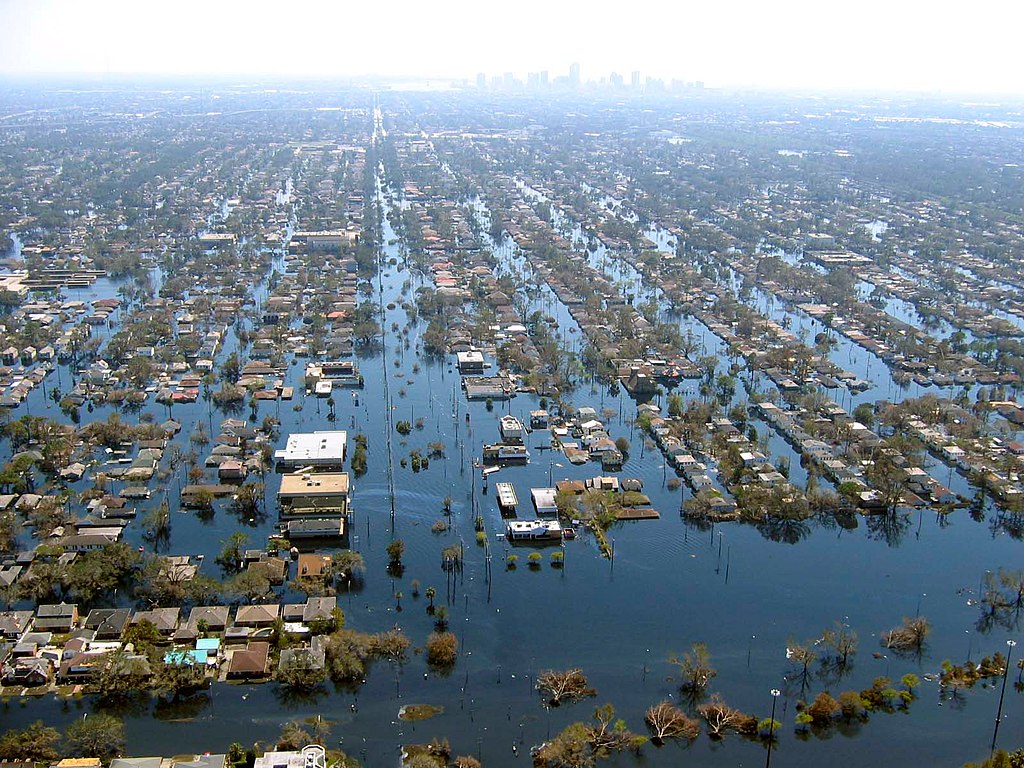
The catastrophic failure of the city’s levee system, designed to protect it from flooding, was the primary cause of the widespread destruction within New Orleans. Multiple breaches occurred throughout the day on August 29th, including major failures in the 17th Street Canal levee, the London Avenue Canal levee, and the Orleans Avenue Canal levee. These breaches allowed vast quantities of water from Lake Pontchartrain to inundate the city.
The Floodwaters Rise
By August 30th, approximately 80% of New Orleans was submerged under floodwaters that, in some areas, reached depths of up to 20 feet. This unprecedented inundation trapped tens of thousands of residents who had been unable or unwilling to evacuate. The city, a vibrant hub of culture and history, transformed into a scene of desperate survival, with people seeking refuge on rooftops, in attics, and on higher ground. The iconic neighborhoods of the French Quarter and the Garden District, though somewhat protected by their higher elevation, still experienced significant damage.
The Immediate Aftermath and Recovery
Rescue and Relief Efforts
The days and weeks following the landfall of Hurricane Katrina were characterized by massive, albeit initially slow, rescue and relief operations. The scale of the disaster overwhelmed the capacity of local and state resources, necessitating a significant federal response from agencies like FEMA and the U.S. Coast Guard. Helicopters, boats, and numerous volunteers worked tirelessly to evacuate stranded individuals, provide essential supplies like food and water, and offer medical assistance.
Temporary Housing and Displacement
The displacement of residents was one of the most profound consequences of Hurricane Katrina. Hundreds of thousands of people were forced to leave New Orleans, many of whom would never return. Temporary housing solutions were established across the nation, with states like Texas and Georgia opening their doors to evacuees. The social fabric of the city was severely strained, with families separated and communities disrupted.
The Long Road to Rebuilding
The physical and economic damage to New Orleans was immense. Infrastructure, including roads, bridges, power grids, and communication networks, was severely damaged or destroyed. The iconic Superdome, which served as a refuge for thousands, sustained damage as well. The rebuilding process was, and continues to be, a long and arduous journey, involving extensive engineering projects to repair and reinforce the levee system, restore essential services, and revitalize the city’s economy. The resilience of the people of New Orleans, however, became a defining characteristic of the recovery narrative.

Lessons Learned and Future Preparedness
The events of Hurricane Katrina served as a stark reminder of the vulnerability of coastal cities to extreme weather events and the critical importance of robust infrastructure and emergency preparedness. The disaster prompted significant reviews of levee construction and maintenance, evacuation strategies, and disaster response protocols. The lessons learned from Hurricane Katrina have influenced disaster planning and mitigation efforts across the United States and the world, aiming to prevent a similar tragedy from unfolding again. The memory of the storm also underscores the enduring spirit of communities in the face of adversity and the collective effort required for recovery and resilience.
LifeOutOfTheBox is a participant in the Amazon Services LLC Associates Program, an affiliate advertising program designed to provide a means for sites to earn advertising fees by advertising and linking to Amazon.com. Amazon, the Amazon logo, AmazonSupply, and the AmazonSupply logo are trademarks of Amazon.com, Inc. or its affiliates. As an Amazon Associate we earn affiliate commissions from qualifying purchases.