
The question of when interracial marriage was legalized in California is more than a simple historical query; it’s a gateway into understanding the evolving social and legal landscape of the United States, particularly in a state known for its progressive spirit. While the federal Loving v. Virginia Supreme Court decision in 1967 is widely recognized as the moment when anti-miscegenation laws were struck down nationwide, California’s journey to legalizing interracial marriage began much earlier, intertwined with its own unique history and legal challenges. This exploration delves into the specific legislative and judicial actions that paved the way for marriage equality in California, long before the landmark federal ruling.

The Precursors to Marriage Equality: Early Legal Challenges
Before the mid-20th century, many states, including California, enforced laws that prohibited interracial marriage, often referred to as anti-miscegenation laws. These statutes were rooted in racial prejudice and a desire to maintain racial hierarchies. In California, the legal framework surrounding marriage and race was complex and evolved over time.
The California Miscegenation Law of 1850
Immediately after its admission to the Union, California enacted its own version of anti-miscegenation laws. The California Miscegenation Law of 1850, passed in the nascent years of statehood, specifically prohibited marriages between “white persons” and “Negroes,” “Mulattoes,” or “Mongolians” (a term then used to encompass people of East Asian descent). This law was a clear reflection of the racial attitudes prevalent at the time, influenced by broader national sentiments and the state’s own demographic makeup, which included a significant Chinese immigrant population and a history of Black slavery and discrimination.
The intent behind such laws was to prevent the formation of families that crossed racial lines, thereby upholding a rigid social order. These prohibitions were not merely theoretical; they had direct legal consequences for couples who defied them, including the nullification of their marriages and potential legal penalties. The historical context is crucial to understanding how deeply entrenched these discriminatory practices were within the legal system.
The Shifting Legal Landscape: Towards Repeal
Despite the initial enactment of these restrictive laws, the legal and social climate in California began to shift over the decades. Several factors contributed to this gradual change, including evolving societal norms, increased activism, and a growing recognition of the inherent injustice of racial discrimination.
One significant turning point came with the passage of legislation that began to chip away at the specific racial categories targeted by the original law. While the 1850 law was quite explicit, subsequent legal interpretations and amendments gradually broadened the scope of permissible marriages, often in response to specific court cases or legislative efforts.
The Crucial Year: 1948 and the End of California’s Miscegenation Law
The most pivotal moment in California’s fight against anti-miscegenation laws occurred in 1948. This was the year when the California Supreme Court declared the state’s ban on interracial marriage unconstitutional. This landmark decision, Perez v. Sharp, predated the U.S. Supreme Court’s Loving v. Virginia ruling by nearly two decades.

Perez v. Sharp: A State-Level Victory
The case of Perez v. Sharp involved Andrea Perez, a woman of Mexican descent, and Sylvester Perez, a Black man, who were denied a marriage license in Los Angeles County because of the existing anti-miscegenation statute. Their case was championed by civil rights attorneys who argued that the law violated the Equal Protection Clause of the Fourteenth Amendment to the U.S. Constitution, as well as California’s own constitutional provisions guaranteeing equal rights.
In its ruling, the California Supreme Court found that the state’s law prohibiting marriages between “Negroes” and “Mongolians” (which had been interpreted to include people of Mexican descent in earlier cases) was unconstitutional. The court reasoned that such laws were not necessary to preserve the public health, morals, or general welfare, and that they violated the fundamental right to marry without regard to race. This decision was a monumental victory for civil rights and a significant step towards racial equality in California.
The impact of Perez v. Sharp was profound. It immediately legalized interracial marriages within California, allowing couples who had been prevented from marrying by state law to do so legally. This ruling set a precedent for other states to reconsider their own discriminatory marriage laws and highlighted the power of state courts to interpret constitutional rights in ways that advanced social justice.
The National Context: Loving v. Virginia
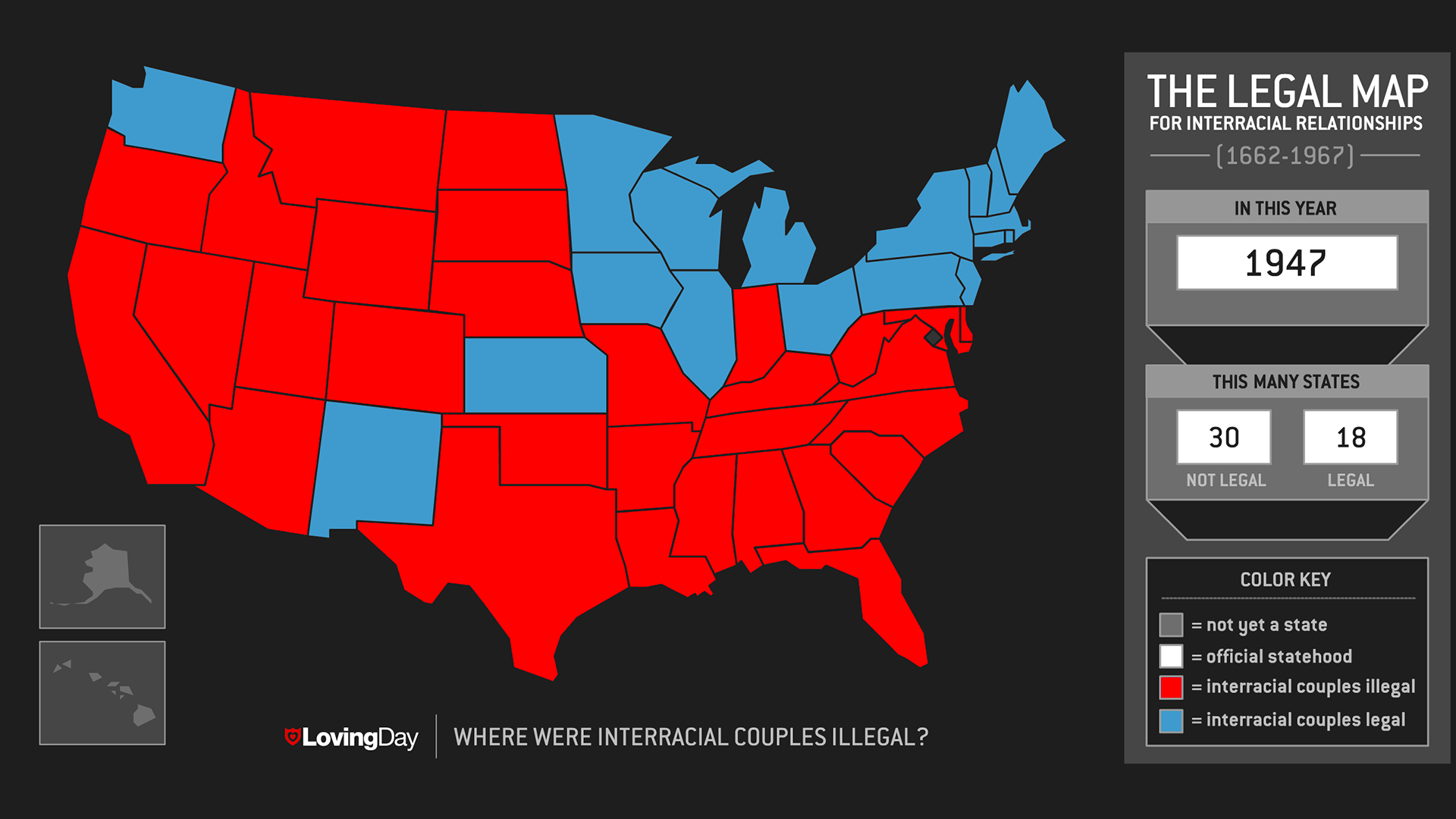
While Perez v. Sharp was a decisive victory for California, the issue of interracial marriage remained a legal battleground across the United States. For many years, nineteen states still upheld laws that prohibited interracial marriage. It took a national Supreme Court decision to definitively end these practices nationwide.
The Supreme Court’s Ruling
In 1967, the U.S. Supreme Court unanimously ruled in Loving v. Virginia that laws prohibiting interracial marriage (anti-miscegenation laws) were unconstitutional. The Court held that these laws violated the Equal Protection and Due Process Clauses of the Fourteenth Amendment. Mildred and Richard Loving, an interracial couple from Virginia, had been convicted of violating Virginia’s anti-miscegenation statute. Their courageous fight reached the highest court in the land, leading to a ruling that recognized marriage as a fundamental human right, free from racial discrimination.
The Loving v. Virginia decision effectively invalidated all remaining state laws that banned interracial marriage, making such unions legal in every state of the Union. This was a watershed moment in American civil rights history, symbolizing a major stride towards equality and the dismantling of centuries of racial segregation and prejudice in the legal system.
Legacy and Conclusion
The legalization of interracial marriage in California through the Perez v. Sharp decision in 1948 was a pioneering legal achievement that anticipated the broader national change brought about by Loving v. Virginia in 1967. These legal battles and victories underscore the long and arduous path toward achieving marriage equality and racial justice in the United States.
Today, interracial marriage is not only legal but also increasingly common, reflecting the evolving demographics and social attitudes of California and the nation. The historical context of these legal struggles provides valuable insight into the ongoing quest for equality and serves as a reminder of the progress made and the work that still remains in ensuring that all individuals are afforded equal rights and protections under the law. The journey from discriminatory statutes to full legal recognition of interracial unions in California is a testament to the power of legal challenges and the persistent pursuit of justice.
LifeOutOfTheBox is a participant in the Amazon Services LLC Associates Program, an affiliate advertising program designed to provide a means for sites to earn advertising fees by advertising and linking to Amazon.com. Amazon, the Amazon logo, AmazonSupply, and the AmazonSupply logo are trademarks of Amazon.com, Inc. or its affiliates. As an Amazon Associate we earn affiliate commissions from qualifying purchases.