
The question of “When Was Louisiana Founded?” is more complex than a single date might suggest. Like many regions with rich and layered histories, the founding of Louisiana is not a singular event but rather a process, a series of significant moments that shaped its identity, culture, and borders. From its earliest indigenous inhabitants to its colonial past and eventual statehood, the story of Louisiana is a fascinating tapestry woven with threads of exploration, conquest, and the enduring spirit of its people. Understanding its founding requires delving into the early European claims, the establishment of permanent settlements, and the pivotal moments that cemented its place on the map of the United States.
The narrative of Louisiana‘s founding is intrinsically linked to the Age of Exploration and the competing ambitions of European powers vying for control of the vast territories of North America. While indigenous peoples had thrived in this region for millennia, their complex societies and established ways of life form the pre-colonial bedrock upon which later events unfolded. The arrival of Europeans marked a dramatic turning point, introducing new cultures, languages, and political systems that would irrevocably alter the trajectory of the land and its inhabitants.
The Dawn of European Claims and Early Exploration
The earliest European claims to the vast territory that would become Louisiana are often attributed to France. In 1682, the French explorer Robert de La Salle embarked on a pivotal expedition down the Mississippi River. Reaching its mouth at the Gulf of Mexico, he claimed the entire drainage basin of the Mississippi for King Louis XIV of France, naming it La Louisiane in his monarch’s honor. This act of claiming the territory, while not establishing a permanent settlement, was a crucial step in defining the geographical scope of French ambitions in the region.
However, it’s important to recognize that La Salle‘s claim was not the first European contact. Spanish explorers had ventured into parts of the region earlier. Hernando de Soto is believed to have explored parts of what is now Louisiana in the mid-16th century, though his expedition was more about exploration and conquest than establishing a lasting French or Spanish presence. Nevertheless, these early explorations laid the groundwork for future colonial endeavors.
The First Permanent Settlements and Colonial Struggles
While La Salle‘s claim was significant, it was the establishment of permanent settlements that truly marked the beginning of Louisiana as a European colony. Following La Salle‘s expedition, France recognized the strategic and economic importance of the Mississippi River valley. The first permanent French settlement, and arguably the true birth of colonial Louisiana, was Fort Maurepas (later renamed Old Biloxi) near present-day Ocean Springs, Mississippi, established in 1699 by Pierre Le Moyne d’Iberville. Shortly thereafter, in 1714, Fort Saint Jean Baptiste was established at the site of present-day Natchitoches, marking the first permanent European settlement within the modern-day borders of Louisiana.
The most significant and enduring settlement, however, was New Orleans, founded in 1718 by Jean-Baptiste Le Moyne de Bienville. Its strategic location at the mouth of the Mississippi River made it a vital port and a natural capital for the vast territory. The colony’s early years were marked by hardship, disease, and struggles to establish a viable economy. The French Crown initially struggled to find colonists willing to endure the harsh conditions and the allure of the more established colonies.
Shifting Colonial Powers and the Louisiana Purchase
The history of Louisiana‘s founding is also a story of changing hands. Following the costly Seven Years’ War (known as the French and Indian War in North America), France ceded Louisiana to its ally, Spain, in 1762 through the Treaty of Fontainebleau. The Spanish administration brought a different cultural influence and legal framework to the colony, further enriching its diverse heritage. Under Spanish rule, New Orleans continued to grow as a vital port and a center of trade.

However, Spain‘s control was not to last indefinitely. In 1800, under the secret Treaty of San Ildefonso, Spain retroceded Louisiana back to France. This period of French resurgence under Napoleon Bonaparte was short-lived. Facing financial difficulties and preoccupied with conflicts in Europe, Napoleon decided to sell the entire Louisiana territory to the United States in 1803.
This monumental transaction, known as the Louisiana Purchase, effectively doubled the size of the young United States and was a pivotal moment in American history. The purchase was not about the founding of Louisiana as a distinct entity, but rather its incorporation into a new nation. The sale price was $15 million, a remarkable sum that secured control of the crucial Mississippi River and vast undeveloped lands stretching to the Rocky Mountains. For the United States, the Louisiana Purchase represented a monumental leap in westward expansion, securing vital trade routes and opportunities for growth. For the inhabitants of Louisiana, it signaled a new era, with an uncertain future under a new sovereign.
The Evolution of Louisiana’s Identity
The founding of Louisiana is not solely defined by European claims and territorial transfers. The deep roots of the indigenous peoples who inhabited this land for thousands of years are an integral part of its origin story. Tribes such as the Caddo, Natchez, Choctaw, and Chitimacha had complex societies, sophisticated agricultural practices, and rich cultural traditions long before the arrival of Europeans. Their knowledge of the land, its resources, and its waterways was instrumental in the survival and development of early settlements, even as their lives were tragically impacted by European diseases and colonization.
From Territory to Statehood
Following the Louisiana Purchase, the United States began the process of organizing and governing the newly acquired territory. This involved surveying land, establishing legal systems, and preparing for eventual statehood. The Territory of Louisiana was created in 1804, and its boundaries evolved over time. The process was not without its challenges, as the United States grappled with governing a vast and diverse population, including French Creoles, Spanish colonists, enslaved Africans, and various Native American tribes.
The unique cultural blend that defines Louisiana began to solidify during this period. The interplay of French, Spanish, African, and indigenous influences created a distinctive Creole culture, evident in its language, music, cuisine, and traditions. New Orleans, in particular, became a melting pot of these diverse influences, fostering a vibrant and unique identity.
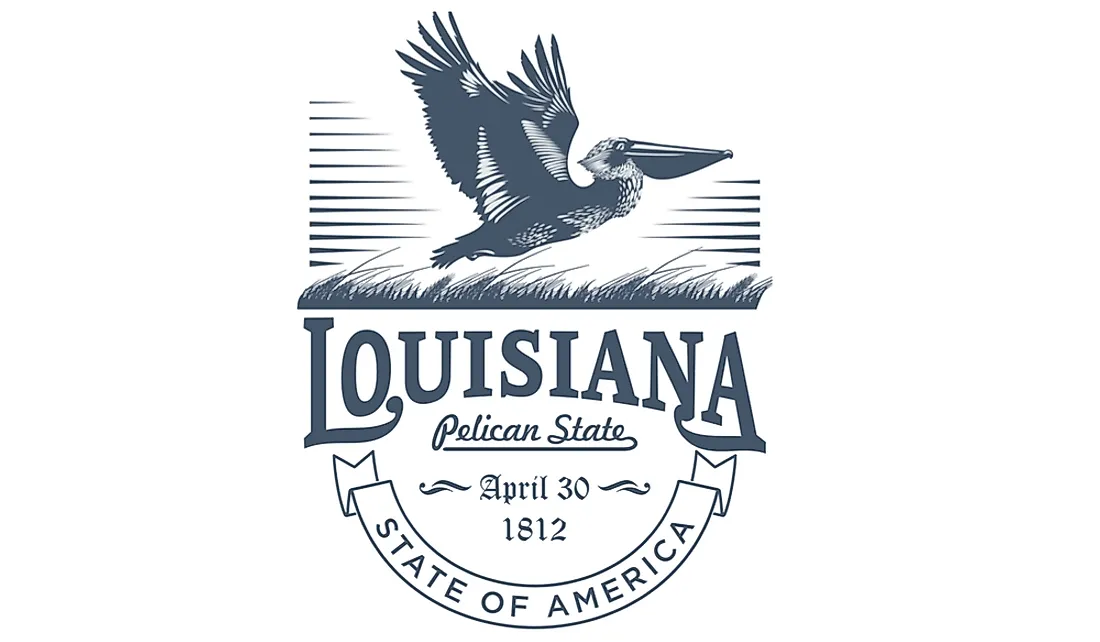
The path to statehood for Louisiana was a significant milestone. On April 30, 1812, Louisiana officially became the 18th state to join the Union. This date marks the formal integration of Louisiana into the United States as a sovereign state, completing a crucial chapter in its founding narrative. The process involved drafting a constitution and meeting the requirements set forth by Congress. The state’s early years were shaped by the War of 1812, with the pivotal Battle of New Orleans in 1815 further cementing the state’s importance to the young nation.

The Enduring Legacy of Louisiana’s Founding
The question “When Was Louisiana Founded?” therefore elicits a multifaceted answer. If we consider the first European claim, it dates back to Robert de La Salle‘s expedition in 1682. If we focus on the establishment of the first permanent European settlement within the modern borders of Louisiana, it would be the founding of Fort Saint Jean Baptiste in 1714. However, the most transformative event, and one that reshaped the destiny of the entire region, was the Louisiana Purchase in 1803, which brought Louisiana under United States control. Finally, its formal entry into the United States as a state occurred in 1812.
Each of these dates represents a critical juncture in the formation of Louisiana. The state’s rich history is a testament to the confluence of indigenous heritage, colonial ambitions, and the enduring spirit of its people. From the vibrant culture of New Orleans to the diverse landscapes of its bayous and plains, Louisiana continues to be a unique and captivating destination, a living embodiment of its storied past. Understanding its founding is an invitation to explore a complex and compelling history that has shaped not only the state but also the broader narrative of North America. Visitors to Louisiana can immerse themselves in this rich history through its historic landmarks, its diverse culinary scene, and its vibrant cultural festivals, experiencing firsthand the legacy of a place founded through a series of profound transformations.
LifeOutOfTheBox is a participant in the Amazon Services LLC Associates Program, an affiliate advertising program designed to provide a means for sites to earn advertising fees by advertising and linking to Amazon.com. Amazon, the Amazon logo, AmazonSupply, and the AmazonSupply logo are trademarks of Amazon.com, Inc. or its affiliates. As an Amazon Associate we earn affiliate commissions from qualifying purchases.