
The question of when Texas was officially incorporated into the United States is a pivotal moment in the history of both the Lone Star State and the nation. This momentous event, the culmination of years of political maneuvering and national ambition, officially occurred on December 29, 1845. However, understanding this date requires delving into the complex journey that led Texas from an independent republic to the 28th state of the Union. The story is not just about a single declaration, but a narrative woven with threads of revolution, independence, economic aspirations, and the ever-expanding vision of Manifest Destiny that captivated the United States in the mid-19th century.
The annexation was a hotly debated topic, fraught with challenges and resistance, both within Texas and from powerful political factions in Washington D.C. The path to statehood was far from a straight line, and the period preceding it was marked by significant diplomatic and political struggles. This article will explore the historical context, the key players, and the immediate aftermath of Texas’s annexation, shedding light on why this event was so significant for the future of America.
The Road to Independence and Statehood
Before Texas could even contemplate joining the United States, it had to forge its own identity as a sovereign nation. The Texan Revolution, a rebellion against the centralist government of Mexico, was the crucible in which the Republic of Texas was born. Key battles like the Alamo and San Jacinto became legendary, symbolizing the fierce determination of the Texan settlers. Following their victory, Texas declared its independence on March 2, 1836.
For nearly a decade, Texas existed as an independent republic. During this period, the nascent nation faced numerous challenges. It struggled with economic stability, border disputes with Mexico, and internal political divisions. However, the dream of joining the United States was a persistent one for many Texan citizens, particularly those who had migrated from the U.S. and retained strong ties to their former homeland. They envisioned a more prosperous future, greater security, and an alignment with a powerful and expanding nation.
The prospect of annexation was not universally welcomed. In Texas, there were factions that preferred to remain independent, cherishing the unique identity and sovereignty they had fought so hard to achieve. Concerns were raised about potentially losing some of this distinctiveness.
Navigating the Political Currents of Annexation
The United States, however, was not immediately ready to embrace Texas as a state. The primary obstacle was the issue of slavery. Texas was a slave-holding republic, and its admission into the Union would have significantly tipped the balance of power between free and slave states. This was a deeply contentious issue that had already led to political turmoil and compromises within the United States. The administration of President Andrew Jackson initially hesitated, wary of the political repercussions of such a move.

Later, President John Tyler, an advocate for expansion, pushed for annexation. He believed it was in the best interest of both nations, citing geopolitical advantages and the potential for economic growth. However, his efforts faced stiff opposition in the United States Senate. The debate raged on, with anti-slavery factions vehemently opposing the expansion of slave territory. The debate intensified during the presidency of Martin Van Buren and was a significant issue during the 1844 presidential election.
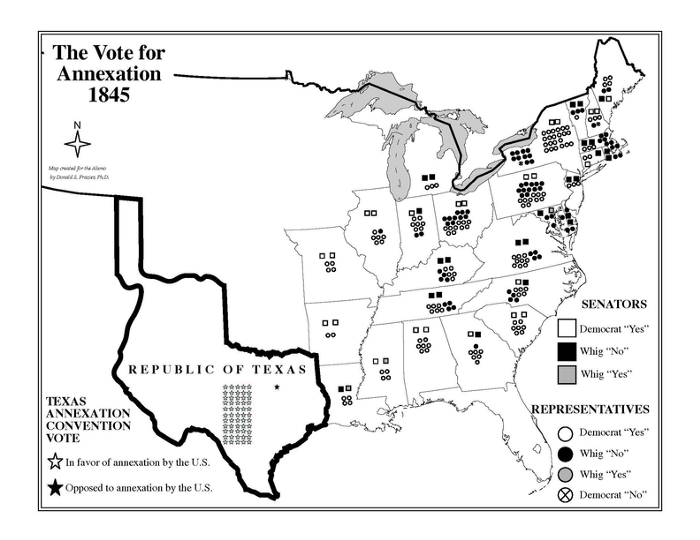
The election of James K. Polk in 1844 proved to be a turning point. Polk was an ardent expansionist, and his victory was widely interpreted as a mandate for the annexation of Texas. His administration wasted no time in pursuing the goal. After a period of intense negotiation and political maneuvering, a joint resolution to annex Texas was passed by both the U.S. House of Representatives and the U.S. Senate. This resolution, signed into law by President Polk on March 1, 1845, offered Texas the terms of annexation.

The Official Act of Annexation and its Immediate Aftermath
Texas, now presented with the official offer, debated the resolution. On June 23, 1845, the Texan Congress accepted the annexation terms. This acceptance was then ratified by the people of Texas in a public referendum held on October 13, 1845. It was this vote of acceptance by the citizens of Texas that finalized their decision to join the Union.
The official date of Texas’s annexation into the United States is December 29, 1845, when President Polk signed the bill admitting Texas as the 28th state. This marked the end of the Republic of Texas and its beginning as a U.S. state. However, the borders of the new state were not immediately settled. Mexico, which never formally recognized Texas’s independence, still claimed the territory up to the Rio Grande River. This lingering dispute over territory became a major catalyst for the Mexican-American War, which erupted in 1846.
The annexation brought Texas under the protection and governance of the United States, providing it with greater economic opportunities and a more stable political framework. It also significantly expanded the territory of the United States, fueling the westward expansion and reinforcing the concept of Manifest Destiny. The decision had profound implications for the demographics, economy, and political landscape of both Texas and the United States for generations to come. The legacy of this period continues to shape the identity and character of Texas, a state known for its independent spirit and its integral role in the fabric of American history.
The integration of Texas into the United States was not merely a geographical acquisition; it was a complex geopolitical and social process. The decision to annex Texas was driven by a confluence of factors: the strategic desire to prevent European powers from establishing a foothold in the region, the economic potential of the vast Texan territory, and the powerful ideological currents of Manifest Destiny. This expansionist fervor was a driving force behind American foreign policy and territorial growth during the 19th century.
The immediate aftermath of annexation saw a surge in migration to Texas from other U.S. states and even from abroad. Settlers were drawn by the promise of fertile land, economic opportunity, and the chance to be part of a rapidly growing nation. This influx of people contributed to the diversification of Texan society and laid the groundwork for its future development.
The Mexican-American War, triggered by the annexation and the ensuing border dispute, was a significant conflict that resulted in the United States acquiring vast territories, including present-day California, Nevada, Utah, Arizona, and parts of Colorado, Wyoming, and New Mexico. This war fundamentally reshaped the map of North America and cemented the United States as a continental power.
The period of Texas independence and its subsequent annexation offer a compelling case study in nation-building and the dynamics of international relations. It highlights the interplay of political ambition, economic interests, and ideological beliefs that shaped the expansion of the United States. Today, the story of Texas’s annexation is an essential chapter in understanding the historical development and the unique identity of the Lone Star State within the broader American narrative. The echoes of this pivotal moment can still be felt in the state’s proud heritage and its enduring contributions to the United States.
LifeOutOfTheBox is a participant in the Amazon Services LLC Associates Program, an affiliate advertising program designed to provide a means for sites to earn advertising fees by advertising and linking to Amazon.com. Amazon, the Amazon logo, AmazonSupply, and the AmazonSupply logo are trademarks of Amazon.com, Inc. or its affiliates. As an Amazon Associate we earn affiliate commissions from qualifying purchases.