
The vibrant metropolis of Chicago, a global hub for culture, commerce, and architectural innovation, stands proudly on the shores of Lake Michigan. Today, millions of travelers flock to this iconic Illinois city, drawn by its world-class museums, towering skyscrapers, and an unparalleled culinary scene. Yet, beneath the modern facade of bustling streets and shimmering glass, lies a rich tapestry of history that traces its origins back to a single, pivotal settlement. While the precise founding of Chicago as an incorporated town or city came much later, the roots of its existence, the very first permanent non-indigenous settlement, can be attributed to the late 18th century, thanks to a visionary individual named Jean Baptiste Point du Sable. His establishment of a trading post transformed a strategic portage into the embryonic stages of what would become one of the United States’ most significant urban centers. Understanding when Chicago was founded requires delving into the intricate layers of its early geography, indigenous heritage, and the enterprising spirit of its first residents. This journey through time not only reveals the city’s foundational moments but also illuminates how these beginnings shaped its unique identity as a prime travel destination, a center for diverse accommodations, and a landmark-rich testament to American resilience and innovation.
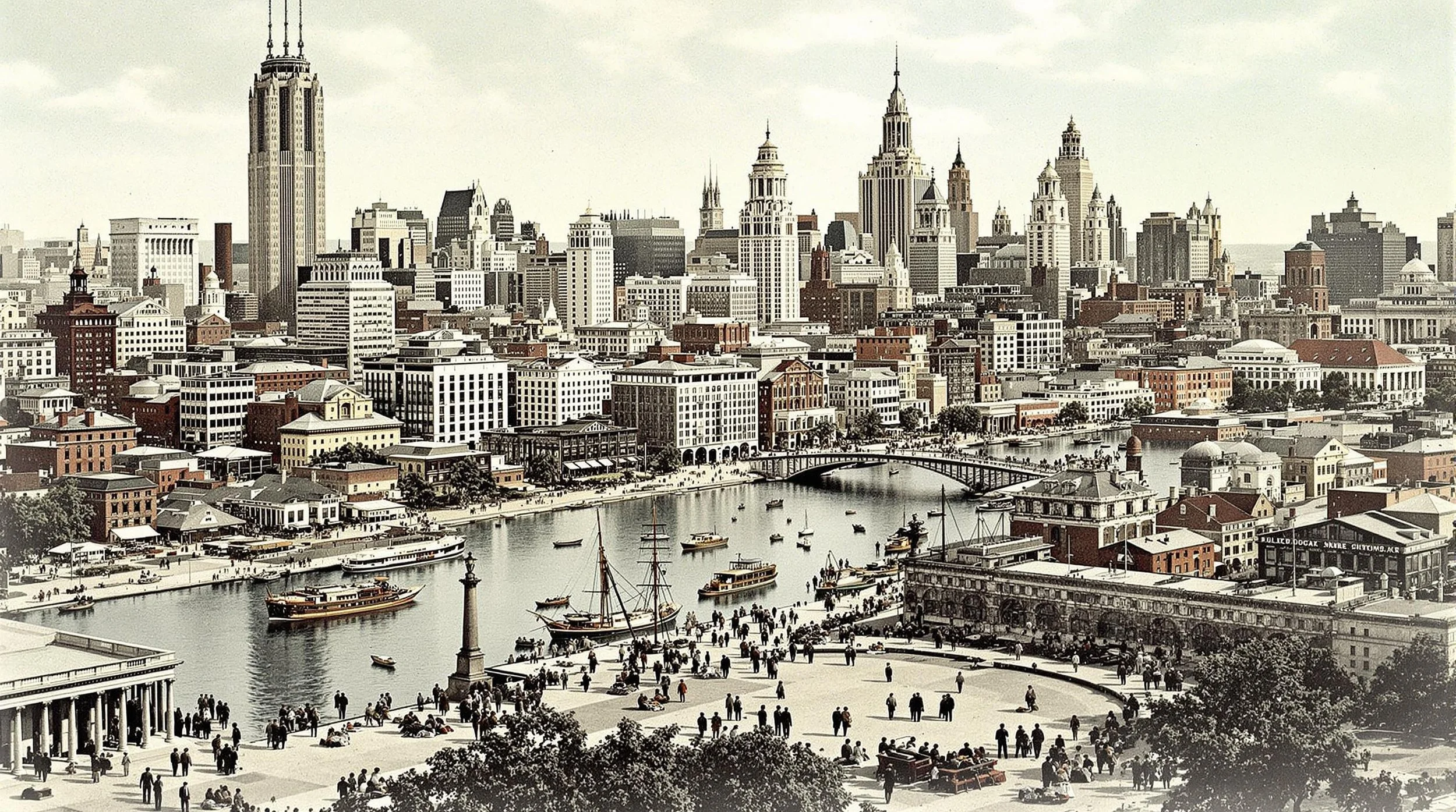
The Dawn of a Metropolis: Early Origins and Founding Principles
The genesis of Chicago is deeply intertwined with its exceptional geographic location, a natural advantage recognized by both indigenous peoples and early European explorers. This strategic position, at the nexus of major waterways, predestined the area for prominence long before any permanent structures dotted its landscape.
Indigenous Roots and Early European Contact
Before any European set foot near the future site of Chicago, the land was home to various Native American tribes for thousands of years. The area was particularly important to the Potawatomi, Miami (referring to the tribe), and Illinois (referring to the confederation of tribes) peoples, who utilized the fertile lands and abundant waterways for hunting, fishing, and trade. The name “Chicago” itself is believed to be derived from a French transliteration of the Miami-Illinois word “shikaakwa,” meaning “wild garlic” or “wild onion,” referring to the plants that grew prolifically along the Chicago River banks. This rich natural resource underscored the area’s value.
The first documented European exploration of the area came in 1673 with French-Canadian explorer Louis Jolliet and Jesuit missionary Father Jacques Marquette. They recognized the incredible strategic importance of the “Chicago Portage,” a narrow strip of land separating the Great Lakes basin from the Mississippi River system via the Des Plaines River and Illinois River. This portage offered the potential for a continuous water route from the St. Lawrence Seaway to the Gulf of Mexico, fundamentally linking the eastern colonies with the vast Mississippi Valley and its trade networks. While Jolliet and Marquette did not establish a permanent settlement, their reports highlighted the site’s unparalleled strategic value, planting the seed for future development.

Jean Baptiste Point du Sable and the First Permanent Settlement
The true “founder” of Chicago, in terms of establishing the first permanent non-indigenous settlement, is widely recognized as Jean Baptiste Point du Sable. Of African and French descent, believed to have been born in Haiti or the Dominican Republic around 1745, Du Sable arrived in the Chicago area sometime in the late 1770s, establishing a prosperous trading post near the mouth of the Chicago River on the north bank. His settlement, operational by the 1780s and possibly as early as 1779, included a home, a barn, a mill, and various outbuildings, serving as a critical hub for trade between Native Americans and European settlers. Du Sable traded furs, agricultural products, and other goods, fostering relationships across diverse communities. His mixed heritage and entrepreneurial spirit allowed him to navigate the complex social and economic landscape of the frontier, making his settlement a stable and vital point of contact in the Great Lakes Region.
While Chicago wasn’t officially incorporated until decades later, Du Sable’s establishment laid the undisputed foundation. He recognized the immense potential of the site and created a thriving enterprise that demonstrated the viability of a permanent community. He sold his property in 1800, but his legacy as the “Founder of Chicago” remains a cornerstone of the city’s history, celebrated today at institutions like the Pointe du Sable Museum of African American History.

Fort Dearborn and Early American Presence
Following Du Sable’s departure, American interest in the strategic portage grew, especially after the United States acquired the territory. In 1803, the United States Army established Fort Dearborn at the mouth of the Chicago River, on the south bank, further solidifying an American presence. The fort’s primary purpose was to protect American trading interests and exert control over the newly acquired frontier lands. However, its early existence was fraught with conflict. During the War of 1812, the fort was attacked by Potawatomi warriors allied with the British, leading to the Fort Dearborn Massacre in 1812 and the fort’s subsequent destruction.
Despite this setback, the strategic importance of the site remained undeniable. Fort Dearborn was rebuilt in 1816, and its presence gradually attracted more settlers, traders, and speculators to the area. The surrounding land was officially ceded by Native American tribes to the United States through the Treaty of St. Louis in 1816, paving the way for organized American settlement and development. By the 1830s, the small community around the fort began to take on a more formal structure, preparing for its future as a burgeoning urban center.
From Frontier Outpost to Bustling City: Chicago’s 19th-Century Growth
The 19th century witnessed Chicago’s explosive transformation from a small frontier settlement into a major American city, fueled by ambitious infrastructure projects and a relentless spirit of enterprise.
Incorporation and Rapid Expansion
The pivotal moment for Chicago’s official founding came on August 5, 1833, when it was incorporated as a town. At this time, its population was a modest 350 residents. Just four years later, on March 4, 1837, with its population having surged to over 4,000, Chicago was officially incorporated as a city. This rapid growth was not accidental but a direct result of aggressive infrastructure development, most notably the construction of the Illinois and Michigan Canal.
Conceived as early as Jolliet’s and Marquette’s explorations, the canal project aimed to permanently connect the Great Lakes with the Mississippi River system, bypassing the portage. Construction began in 1836 and, upon its completion in 1848, the Illinois and Michigan Canal revolutionized trade and transportation in the Midwest. It allowed goods and people to flow effortlessly between New York City (via the Erie Canal) and New Orleans, firmly establishing Chicago as the vital link between East and West, and North and South. The city quickly became a dominant force in grain, livestock, and lumber markets, attracting a continuous influx of immigrants and investment. Its strategic position at the heart of the emerging national rail network further solidified its status as a transportation and economic powerhouse.
The Great Chicago Fire of 1871 and Rebirth
Chicago’s meteoric rise faced a catastrophic challenge on October 8, 1871, with the outbreak of the Great Chicago Fire. Fueled by a long drought, strong winds, and the city’s predominantly wooden structures, the fire raged for three days, destroying over three square miles of the city, killing hundreds, and leaving more than 100,000 people homeless. The legend of Mrs. O’Leary’s cow kicking over a lantern as the cause persists, though historical evidence suggests otherwise. Regardless of its origin, the fire was a devastating blow that threatened to erase all of Chicago’s progress.
However, true to its indomitable spirit, Chicago responded with an extraordinary display of resilience and ambition. The city quickly embarked on an unprecedented rebuilding effort, attracting architects and urban planners from around the world. This period of reconstruction, often referred to as the “Chicago Renaissance,” gave birth to the world’s first skyscrapers and established Chicago as a crucible for modern architecture. New building codes mandated fire-resistant materials, and innovative structural techniques led to revolutionary designs. This period not only rebuilt Chicago but redefined urban development, setting new standards for city planning and architectural grandeur that continue to inspire visitors and residents alike.
A Modern Urban Icon: Chicago as a Global Destination
From its humble beginnings as a trading post, Chicago has evolved into a global city, renowned for its architectural heritage, vibrant cultural scene, and dynamic lifestyle, making it a premier destination for travelers.
Architectural Marvels and Iconic Landmarks
Chicago’s commitment to innovation, born from the ashes of the Great Chicago Fire, is best exemplified by its stunning skyline and numerous architectural landmarks. Visitors can embark on architecture boat tours along the Chicago River to admire the intricate details and groundbreaking designs of structures like the Willis Tower (formerly the Sears Tower), once the tallest building in the world. Other notable sites include the Cloud Gate sculpture (affectionately known as “The Bean”) in Millennium Park, offering iconic reflections of the city skyline.
Beyond its towering achievements, Chicago boasts world-class museums that are destinations in themselves. The Art Institute of Chicago, consistently ranked among the best museums globally, houses an encyclopedic collection spanning centuries and cultures. The Museum Campus is home to the Field Museum, the Shedd Aquarium, and the Adler Planetarium, offering immersive experiences for all ages. For entertainment and leisure, Navy Pier provides stunning Lake Michigan views, Ferris wheel rides, and diverse dining options, representing a quintessential Chicago experience.
Cultural Hub and Culinary Delights
Chicago’s cultural vibrancy extends far beyond its museums. It’s a city steeped in musical history, renowned as a birthplace of electric blues and a significant center for jazz. Live music venues across neighborhoods like Wrigleyville keep the tradition alive. The theater scene is equally robust, from the grand stages of the Loop to intimate storefront productions.
The city also boasts a rich literary tradition, influencing and attracting authors like Ernest Hemingway, and later becoming home to media moguls like Oprah Winfrey and political figures such as Barack Obama. These varied cultural facets contribute significantly to Chicago’s appeal as a tourism destination, encouraging visitors to explore its local culture and diverse activities.
No visit to Chicago is complete without indulging in its celebrated culinary landscape. While famously known for its Deep Dish Pizza, the city offers far more, from Michelin-starred fine dining restaurants to diverse ethnic eateries and trendy gastropubs. Food tours are a popular way to sample everything from classic Chicago hot dogs to gourmet delights, reflecting the city’s reputation as a foodie paradise.
Accommodation and Lifestyle in the Windy City
Chicago caters to every type of traveler, offering a diverse array of accommodation options to suit various lifestyles and budgets. For those seeking luxury travel and impeccable service, renowned hotels like the Four Seasons Hotel Chicago and The Peninsula Chicago provide exquisite experiences with world-class amenities. Boutique hotels such as Thompson Chicago or Virgin Hotels Chicago offer unique designs and personalized service, often reflecting the local character of their neighborhoods.
For business stays or large conferences, hotels like the Hyatt Regency Chicago or the historic Palmer House Hilton offer extensive facilities and convenient downtown locations. Budget travel options are also plentiful, with numerous mid-range hotels, hostels, and vacation apartments available for booking. Families traveling with children can find family-friendly suites or resorts near attractions like Lincoln Park Zoo or Grant Park, often with amenities tailored for younger guests. Long-term stays are also well-supported, with a range of serviced apartments and extended-stay hotels offering home-like comforts. Whether travelers are seeking a opulent escape, a comfortable base for exploration, or an affordable urban adventure, Chicago’s diverse accommodation landscape ensures a perfect fit for every preference and purpose.
Planning Your Trip to Historic Chicago
Visiting Chicago means stepping into a city that continuously reinvents itself while honoring its profound past. Its history is not just confined to museums; it’s etched into the very fabric of its streets, buildings, and cultural identity.
Best Time to Visit and Getting Around
The ideal time to travel to Chicago largely depends on preferred activities. Summer (June to August) offers warm weather, numerous outdoor festivals, and bustling Navy Pier activities, though it’s also peak tourist season. Spring (April to May) and Fall (September to October) provide pleasant temperatures, beautiful foliage, and fewer crowds, making them excellent times for sightseeing and enjoying outdoor spaces like Millennium Park. Winter (November to March) transforms the city into a festive wonderland with holiday markets and ice skating, but visitors should be prepared for cold weather.
Navigating Chicago is remarkably easy thanks to its efficient public transportation system, the CTA (Chicago Transit Authority), which includes both elevated trains (“L” trains) and an extensive bus network. Taxis, rideshares, and bicycle rentals are also readily available. The city is served by two major airports: O’Hare International Airport (ORD) and Midway International Airport (MDW), both offering convenient connections to downtown.
Embracing Chicago’s Legacy
From Jean Baptiste Point du Sable’s foundational trading post to the resilient rebirth after the Great Chicago Fire, Chicago’s history is a compelling narrative of vision, perseverance, and continuous evolution. The city’s official incorporation in 1837 marked its formal entry onto the national stage, but its spirit of enterprise and innovation was forged much earlier. Today, when you walk through Millennium Park, gaze up at the Willis Tower, or enjoy a meal in a historic neighborhood, you are engaging with layers of history that began with a crucial portage and a pioneering spirit. Chicago not only stands as a testament to its past but also as a vibrant, forward-looking global city that continues to shape modern urban living, making it an endlessly fascinating place to explore, stay, and experience.
LifeOutOfTheBox is a participant in the Amazon Services LLC Associates Program, an affiliate advertising program designed to provide a means for sites to earn advertising fees by advertising and linking to Amazon.com. Amazon, the Amazon logo, AmazonSupply, and the AmazonSupply logo are trademarks of Amazon.com, Inc. or its affiliates. As an Amazon Associate we earn affiliate commissions from qualifying purchases.